Guest Blog, Author at Facilities Management Forum | Forum Events Ltd
Posts By :

Guest Blog

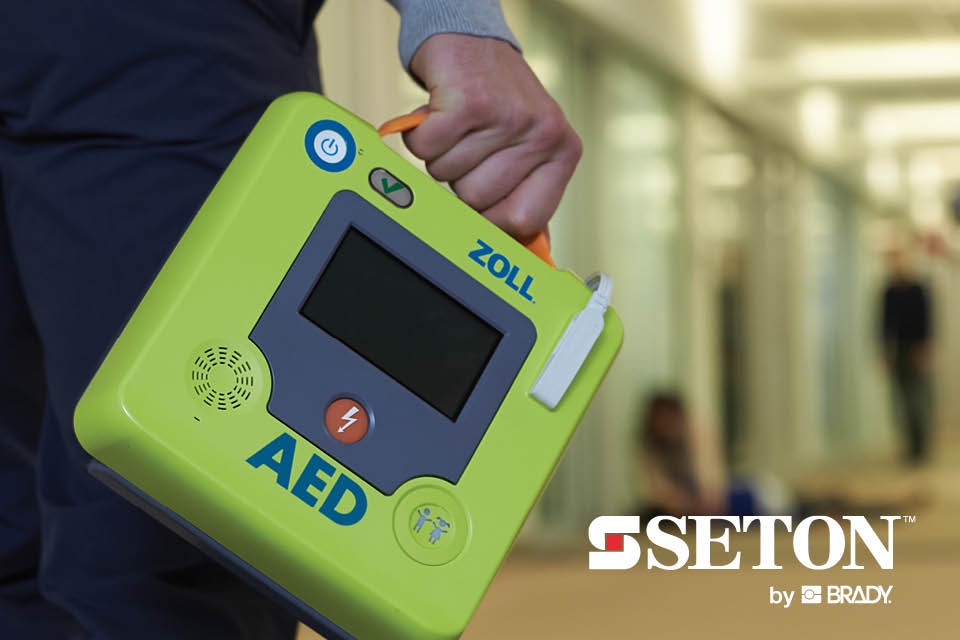
Selecting the correct AED

In the UK, over 30,000 individuals experience cardiac arrests outside hospitals each year in settings such as homes, workplaces, and public areas. Shockingly, only one in 10 people survive. Immediate CPR and defibrillation significantly enhance survival chances, emphasising the necessity of on-site automated external defibrillators (AEDs).

An AED is a life-saving device that reads heart rhythms and delivers electric shocks (defibrillation) to correct irregular rates. While not legally required, having an AED in the workplace can be pivotal in saving lives.

Choosing the right AED for your environment is crucial due to the myriad of options available. We delve into the key features to help you to make an informed decision and ensure the safety of your team.

Semi-automatic vs. fully automatic

Semi-automatic AEDs require human intervention for defibrillation and can cost slightly less than a full automatic AED. Semi-automatic AEDs are suitable for workplaces where there are trained CPR / AED personnel on site. Fully automatic AEDs deliver shocks automatically after monitoring, eliminating the need for a trained operator. Certain AED models include integrated CPR coaching functions, guiding first-aiders through CPR steps with voice prompts and indicators for chest compressions.

AED use for adults and children

Models differ in adapting to CPR and defibrillation for adults and children. Some AEDs use the same electrode pads for all ages with a mode selection switch, while others require different pad sizes.

Storage, size and weight

The choice of AED is influenced by where you will store it. Higher Ingress Protection (IP) ratings offer better protection against solids and liquids, crucial for environments with contamination, water risks or those stored externally.

In portable settings like search and rescue operations, AED size and weight play a crucial role in ease of transport.

Safety signs and extras

Defibrillators are needed in emergency situations where time is of the essence. Ensure responders can easily find the equipment with AED signs.

For more information about AEDs, visit seton.co.uk. With over 65 years’ experience, Seton is one of the leading manufacturers and distributors of safety and facilities management solutions.

Five FM trends that will save you time in 2024

In this article, experts from TAP, a leading property management software company, share five current key trends that can speed up your work and improve outcomes in 2024 and beyond…

  1. Improving efficiency through automation in Facilities Management

For Facilities Managers, leveraging technology to enhance efficiency remains pivotal—an evolution that doesn’t mean relinquishing control to robots but rather embracing software capable of automating repetitive, labour-intensive, or error-prone tasks.

For example, TAP’s property management platform is a robust system designed to seamlessly alleviate the burden of manual tasks. Our permit tool streamlines the entire permit process, starting from request initiation, progressing RAMs collection, contractor check-ins, and securely storing the associated paper trail.

  1. Unlocking the power of data in the property sector

In today’s world, data is ubiquitous, and is integral to most industries. In recent years, the property sector has begun to embrace the transformative potential of data and analytics.

The TAP platform not only collects data but also provides comprehensive analytics through an intuitive dashboard. This powerful tool reports and analyses a wide range of property operations, from identifying peak periods to monitoring permit requests on a monthly basis, and even tracking energy consumption.

  1. Empowering facilities managers with proactive maintenance solutions

Preventive and predictive maintenance strategies are aimed at bolstering building performance while mitigating unforeseen repair expenditures. Regular upkeep ensures operational efficiency and safeguards against sudden, unexpected repair costs.

TAP’s helpdesk module and its innovative analytics dashboard is designed to facilitate optimal maintenance planning. This advanced software enables FMs to strategically schedule maintenance during opportune times, reducing disruptions for tenants and capitalising on quieter periods.

  1. The rise of IoT technology

The FM industry is poised to embrace IoT technology to a greater extent in the upcoming years. The Internet of Things refers to connected devices that engage with the physical environment through sensors, facilitating seamless data transfer. Integrating your property management software with these devices wherever feasible can significantly enhance the automation of data collection processes.

  1. Sustainable benefits for commercial property management

The focus on sustainability in commercial property isn’t a passing trend; it’s an imperative that continues to increase in significance. It is also poised to become increasingly pivotal from a building compliance standpoint, with the expansion of ESG reporting and likelihood of more stringent legislation. Energy efficiency is a key focus area both ethically and economically.

TAP’s sustainability module serves as a comprehensive tool, providing an encompassing overview of a building’s energy usage, allowing for the identification of areas that can be improved.

Visit: www.tap-in.co.uk/

Easily print your UHF/NFC RFID labels on the fly

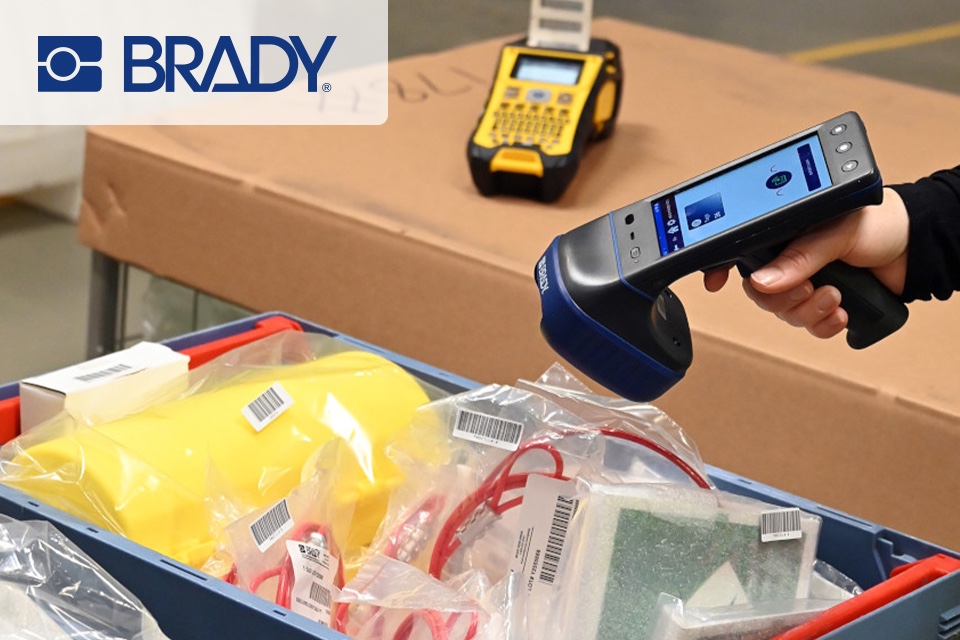
Redoing missing tags and flagging up cables on the fly has never been easier. Brady introduces new UHF and NFC RFID labels which can be printed as and when needed.

The New UHF Label

Brady’s new label is not just a barcode label but also contains a UHF RFID chip and antenna. Portable printers such as the tried and tested Brady M610 recognize this label as one of the standard labels and perform printing as usual.

Two gaps are closed with this product: Firstly, this is an easy emergency solution which allows warehouse staff to replace an RFID label that has fallen off. They quickly redo one label rather than an entire batch of labels. Secondly, this label also represents a comfortable entry into the world of RFID for users who have not used it so far.

“It‘s a plug and play kind of application”, explains Louis-Emile Lammertyn, EMEA Senior Product Manager at Brady. “This way, customers can start testing the possibilities of RFID without having to buy all the expensive hardware for a complete installation.”

A Two-Step Process

The UHF RFID label works in conjunction with a portable printer and a handheld reader. In the first step, the label is prepared for printing using apps such as Nordic ID’s Encoding Toolbox which are installed on the reader. The human readable text which can include a barcode or QR code is then printed.

In the second step, the software on the reader is used to encode the label. The barcode, for example, can be married with the EPC value, or other information is put on the label. Asset management represents an ideal typical use case for this. “Imagine a big office building, for example”, says Louis-Emile Lammertyn, “in which a new open-plan office needs to be set up. With this system and the new label, staff label everything as they go, encode the labels and generate digital lists which detail exactly which item goes into which cubical. It’s very simple.”

Discover more about Brady RFID labels >>

Brady Corporation

www.brady.co.uk

Green Energy Legislation – How your business can keep up

Britain’s commitment to its net zero targets has been called into jeopardy in recent weeks. Internal divisions within the Conservative party have seen Rishi Sunak look to weaken some of the nation’s commitments to reaching net zero emissions.

However, evidence shows that customers remain more environmentally conscious than ever. A Deloitte survey found that 35% of UK adults were more likely to trust a business with a transparent, accountable and socially and environmentally responsible supply chain.

So, what can your business do to maintain or grow its sustainability credentials whilst staying in line with green and traditional legislation? The asset finance experts at Anglo Scottish Finance discuss some of the steps UK businesses can take to protect themselves against ever-changing legislation.

Why operating sustainably is more important than ever

In spite of the Conservative party’s stance on the nation’s net zero targets, strong green credentials remain crucial for businesses to appeal to an increasingly eco-conscious public. 29% of UK adults are likely to prioritise a business with a strong public perception, record and reputation around climate change and sustainability over a business without.

It’s not just B2C businesses that have grounds to be concerned. UK companies operating internationally should also be watching the situation closely. The new proposal threatens to undermine UK investment from abroad and weaken our international standing with clients and business partners alike, leaving business leaders furious and investors ‘spooked’.

The EU’s Carbon Border Adjustment Mechanism came into play in October 2023, creating a further divergence between the UK and Europe’s green legislation. EU companies are now responsible for compiling reports on the carbon emissions attached to certain goods, such as steel, aluminium and fertilisers.

So, though the British government may be content with relaxing our net zero commitments, UK businesses operating in Europe cannot be. The onus has been placed upon UK businesses to increase their sustainability credentials or risk being left behind.

Interrogate your operating practices

Companies looking to operate more sustainably are often faced with the initial challenge of identifying exactly where and how the company can become greener. Modern software solutions, however, are making this simpler.

Products such as Microsoft’s Sustainability Manager have given businesses the tools to interrogate their own working practices, acting as a hub for data intelligence from across the organisation. Allowing business owners to precisely calculate the sources of their emissions, this tool enables organisations to record, report and actively reduce their environmental impact.

This level of visibility is a huge benefit to businesses operating in a range of different countries. Even before the Prime Minister’s latest comments, concerns persisted about the UK’s failure to align its sustainability rules with the EU and US.

With the implementation of the EU green tax, international alignment of your business’s green policies is more important than ever. Sustainability Manager allows total visibility over emissions in an international supply chain, allowing your company to strengthen its foothold in the green economy.

Maximise your impact with collaboration – safely

This month, the Competition and Markets Authority (CMA) released new guidance to help businesses better understand how they can collaborate to meet sustainability goals without falling foul of competition law. The Green Agreements Guidance explains how competition law applies to sustainability agreements between firms operating at the same level of the supply chain.

Such examples might include farmers aiming to improve or protect biodiversity by reducing usage of pesticides, or fashion companies agreeing to stop using certain fabrics that contribute to microplastic pollution.

The impact that multiple businesses can have on the environment outranks that of a single business in isolation, so collaboration can be a strong route to improve sustainability practices – but it’s important to do so legally. The CMA has adopted an ‘open-door policy’ regarding business collaboration in the name of sustainability, so be sure to consult them before carrying out a project like this.

Avoid greenwashing – or pay the price

There’s no substitute for real, meaningful change. Given the importance of sustainability to the consumer, some less scrupulous businesses have been caught out by greenwashing – using unproven environmental assertions to sell products or enhance their public perception.

Earlier in 2023, the CMA were given new powers to impose direct civil penalties on companies who have been making misleading environmental claims. Your business could face fines of up to 10% of global turnover for breaches of consumer law in this manner – so any claims related to your business’s sustainability credentials must be thoroughly investigated before going public.

Support the sustainability push with external funding

In many cases, making your business more sustainable is an endeavour which requires significant operational change – and implementing such change can be a costly investment. Businesses should not be afraid of utilising external facilities like green loans or bonds to realise these changes.

Green loans and bonds are subject to an international standard known as the Green Loan Principles, which ensure the transparency of your borrowing and the environmental impact of your changes. This can protect your business against accusations of greenwashing and keep you focused on the task at hand.

Global green finance increased tenfold between 2012 and 2022, indicating just how many businesses are utilising external funding to become more sustainable. Don’t be afraid to explore your options – improving your sustainability credentials could be more achievable than expected.

Charlotte Enright, Head of Renewables at Anglo Scottish, commented: “In light of these changes to the UK’s renewable commitments, it can be difficult for UK businesses to keep informed on their responsibilities. That’s why it’s more important than ever for these companies to be proactive and drive change from within.”

Photo by Micah Hallahan on Unsplash

INDUSTRY SPOTLIGHT: Brady M511 Label Printer – Work smarter. Label larger

Print bigger, clearer messages. Go edge to edge. Design and print on the fly, or a PC. Plus, share files, import data and connect up to 5 users simultaneously.

Communicate better with the M511’s edge-to-edge printing and on-demand labelling. Ideal for big, bold, easy-to-read safety messages. Perfect for text-heavy labels for the lab or compliance. With the M511, you print right where the work happens, skipping rework and saving time. Its Bluetooth capabilities connect more users in more ways to ensure you move through work faster.

Label creation is just a tap away – you can seamlessly design, view and print labels right from Brady’s industry-leading app. The M511 Printer paired with Express Labels mobile app provides a seamless on-demand experience for maximum on-site efficiency.

Key features & benefits:

  • Ideal for larger applications – print up to 38.10 mm labels
  • Less waste – go edge to edge with text, graphics and barcodes
  • Longer battery life with an internal Li-ION battery – 8+ hours of work; 1,000 labels on a single charge
  • More durable – resists 1.8 m drops, shocks, 115 kg crushes and blowing sand and dust (MIL-STD-810G)
  • Prints anywhere – Bluetooth 5.0 (20 m range); connects up to 5 users simultaneously
  • Uses label creation software – Express Labels app via Bluetooth on a phone/tablet; Brady Workstation on a PC
  • Saves time; saves space – features an auto label cutter and prints upright or on its side

Watch the printer in action on Brady’s website!

BRADY Corporation

www.brady.co.uk

Bizarre Financing: Experts reveal the strangest financed assets

Financing goods is an understandable practice – especially for high-value items that you or your business may struggle to pay off in one go.

As time has gone on, financing has become increasingly popular. Checkout repayment services such as Klarna, PayPal Credit and Sezzle have made even the most mundane items financeable – from toothbrushes to shampoo.

But what about the less mundane, the specialist and the downright bizarre financed items? We spoke to the asset finance specialists at Anglo Scottish to get an insider perspective into the occasionally strange world of B2B financing.

These are the financed items that have stuck in their minds.

Equine saltwater treadmill

Financed for a whopping £200,000, this treadmill is a little different from your standard gym equipment. An equine water treadmill is used for the rehabilitation and training of horses, particularly to help improve aerobic muscles.

Financing this kind of specialist equipment is understandable – they don’t come cheap, and if you have an injured horse then it’s likely you’ll need one in a hurry. It’s still a really niche item and definitely deserves a spot on the list.

Diving equipment

Some of the most popular items to finance are cars – getting from A to B quickly is a must for many with commuting jobs. Unless you work in Atlantis, you’re far less likely to finance diving equipment, but that’s exactly what a few businesses have done.

Diving equipment is expensive, but it really adds up once you take into account the full gear. Underwater cameras and video lights, torches, dive computers, scuba gear and more can quickly rack up a huge price tag – so financing this equipment seems much more normal once you consider the full cost.

1927 Fairground organ

Coming up to a century old, a 1927 fairground organ was bought on finance by one lucky buyer. Often auctioned, these instruments can be incredibly expensive (one eBay listing has a vintage organ listed for almost £19,000!) and are sought after by collectors and enthusiasts alike.

They’re either charming or creepy, depending on who you ask. One thing’s for sure, it’s definitely not your usual financed purchase.

Cow pop

One of the more disgusting concoctions you could dream up, cow pop is essentially a cow slurry that’s converted into energy via renewables. As gross as it might seem, there are plenty of positive ways in which a cow pop biofuel could be used.

There’s plenty of demand for green finance solutions from modern businesses looking to reduce their carbon footprint or become more sustainable – but these finance agreements are usually reserved for more traditional forms of green energy like solar panels…

We’ll trust in the process with this one.

Inflatable obstacle course

Who doesn’t love an obstacle course? This bit of kit was financed by a company looking to organise an action-packed team-building day.

A team-building activity that can also be done at a child’s birthday party is usually a good sign that your company does work outings correctly. Next time your office’s Christmas party organiser is getting worried about costs, point them to a reliable broker!

100 portable toilets

Ideal for pairing with your big obstacle course team-building day, one company financed 100 portable toilets. Your bog-standard portable toilets are usually hired for around £50 a fortnight, rather than being bought outright.

For businesses that organise lots of large-scale events, it makes sense to buy portable toilets to save on hiring costs. As strange as it seems at first glance, financing may be the best way to go when organising events in a hurry.

Ferris wheel

The largest item on this list, one company bought a £300,000 Ferris wheel on finance. Probably one of the more difficult items to repossess if payments stopped, financing a Ferris wheel is a testament to how far financing has come in recent years.

If you can buy it – you can probably finance it.

Fish insemination machine

Saving the strangest for last, a company bought an artificial insemination machine for use on fish. Research equipment is very expensive, so financing is a good option when a substantial outlay like this can hurt the company’s cash flow.

The machine in question used injections to inseminate fish eggs – lovely. Financing such an item certainly makes explaining your company’s direct debit statement a bit easier for the finance team.

There we have it, the weirdest and most unexpected financed items recalled by industry experts. Financing has become so versatile that it’s worth considering for the needs of any business or individual, especially when in a hurry.

Next time you’re unsure if your business card can take the strain, perhaps it’s time for you to consider financing.

Photo by Towfiqu barbhuiya on Unsplash

Examining the business case for AI 

By Mattia Sanna and Peter Cooke, Senior Data Analysts at Methods Analytics

Artificial Intelligence (AI) refers to computer systems and machines that can perform tasks that typically require human intelligence, such as learning, reasoning, problem-solving, perception, and language processing. While the term may conjure images of robots and machines taking over human jobs, the reality is that AI is enhancing human capabilities. Common examples are automating routine and tedious tasks so employees can focus on more strategic initiatives or extracting actionable insights from large volumes of complex data to support decision-makers. 

Implementing AI can deliver tremendous value for companies looking to streamline operations and it is already transforming businesses of all sizes, across all industries, making them more efficient, productive and profitable. The current technology landscape contains nearly endless business use cases for AI. Thus, focusing on high-impact applications that align with core business goals and capabilities is crucial.  

With a strategic approach, AI can drive tangible improvements in performance, competitiveness, and, ultimately, unlock its true value. 

Drive Efficiency

AI has the ability to increase efficiency in existing business processes. Through the use of correctly implemented AI algorithms, processes can be completed quicker and more accurately. For example, companies working with large and/or complex data sets can utilise AI to quickly pre-process and collate that data. This has a dual benefit of allowing businesses to utilise this data in ways they were previously unable to and reduce the burden on the employees, freeing them up to focus on more cognitively complex tasks.  

Improve Decision Making

As well as increasing efficiency, AI can be used to help improve decision making. Artificial Intelligence can provide insights from data well above the ability of more commonly seen dashboards and reports, allowing patterns and trends to be better analysed to draw correlation and causation from complex datasets. This can prove invaluable in areas such as project planning and resourcing, where AI can be used to assist in ensuring that those with the best possible combination of skills for the task are recruited and deployed effectively. 

Boost Innovation

Artificial intelligence is enabling a wave of innovation, unlocking entirely new business models, products, and ways of generating value. Companies that harness AI as an innovation engine will be able to manage customer relationships in new ways, stay ahead of emerging needs, and reshape entire industries. For example, AI allows companies to create hyper-personalised recommendations tuned to each customer’s preferences. Media platforms leverage AI to recommend content viewers will love, while retailers use it to suggest purchases shoppers are most likely to make. 

One of the most powerful aspects of Artificial Intelligence is its ability to play out millions of hypothetical scenarios to uncover insights humans would never think of. AI can model the impact of countless minor tweaks and changes that would be impossible to test manually. This empowers businesses to make better strategic decisions and envision novel solutions to complex problems.  

Generative AI

Generative AI is revolutionising business operations unlike any technology before it. Tools like ChatGPT enable businesses to create content at unbelievable speeds. By inputting commands into the AI generator, you can create entirely new pieces of work – from written words, images and video to even website and code development. While current systems still require human guidance to correct errors, the available technology can hugely reduce the time required to generate high-quality content. These efficiencies increase businesses’ productivity significantly, meaning they can service more clients more effectively. As the technology matures, generative AI promises to become an indispensable engine powering growth. 

Humans and AI Working Together

AI is at its best when it is implemented alongside humans. When applied in the right way, humans and AI can work together to complete tasks at a faster pace whilst delivering more accurate results. Utilisation in areas such as automation of repetitive tasks, complex dataset collation and drawing insights from data enables AI to assist humans in increasing and improving their performance, making more informed decisions and ultimately driving more business value. 

A widely used application of this can be found in companies using AI chatbot assistants. These chatbots can filter out the majority of easily answered questions, freeing up the employees to work on the more complex and challenging customer queries. 

Forging Your Future

Though AI delivers immense opportunities, simply adopting tools is not enough. To fully benefit, companies must invest in proper implementation and training. Partnering with experienced AI specialists is key to successfully integrating solutions with existing workflows. They can help identify high-impact AI applications tailored to your business and provide hands-on guidance for maximising value. The future competitive landscape will reward those embracing AI’s capabilities while mitigating its limitations with human wisdom. 

Photo by Hitesh Choudhary on Unsplash

Easily improve workplace safety and optimise your performance

Colour your way to an improved workplace with the S3700 Sign and Label Printer. With multicolour print and shape cutting capabilities, this printer creates impactful identification that fits your application and workspace needs.

Because safety and efficiency are the pulse of your operations, you need an industrial label printer that delivers both. Put multicolour brilliance, transformative shape cutting, and seamless create-and-print capabilities at the heart of your labelling. Empower any user to make signs, labels, and tags for just about any application. Let your labelling take shape with the BradyPrinter S3700 Multicolour & Cut Sign and Label Printer.

Put colour at the core of your labelling for safety, Lean and work-in-process visuals that truly pop. Auto-adjusting multicolour panel ribbons last up to 60% longer and print colour labels on a single cartridge.

Enjoy straighter lines, smoother curves and tighter connection points thanks to the precision XY plotter cutter. Plus, stack pipe markers and pack multiple shapes per label to minimise waste.

Create and print faster than ever before with time-saving onboard templates, intuitive PC labelling software and a mobile app, plus 20-second material changeovers and 127mm-per-second print speed.

Watch the video and discover the S3700 Sign and Label printer from Brady!

Brady Corporation

Wildmere Industrial Estate

Banbury, Oxon OX16 3JU

T: +44 (0) 1295 228 288

E: csuk@bradycorp.com

www.brady.co.uk 

Is the UK ready for the smart city technology of the future?

It’s no secret that smart technology and artificial intelligence are becoming more widespread. With 54% of the world’s population living in cities, a figure predicted to rise to 66% by 2050, there is a clear need for technological advancements to keep up with the increase in population.

So-called smart cities focus on making life easier for all inhabitants, encouraging advancements not only in technology but also sustainability. Lower emissions, reduced energy usage and carbon neutrality have possible via technological advancements. There are roughly 140 smart cities already operating across the world and this number is only predicted to grow!

Zurich is currently the leading smart city in the world, closely followed by Oslo, Canberra and Copenhagen. London achieves the sixth spot, providing smart solutions such as an advanced 5G network and heavy investment in AI. But how ready is the UK for our technologically-advanced future?

Electric cars

Lower emissions and a reduction in the use of fossil fuels are some of the key markers of a sustainable, smart city. Electric cars are leading the charge when it comes to minimising emissions.

At the end of last year, there were a total of 2.7 million public charging points for electric vehicles worldwide. China boasts over 1.7 million of these chargers, with Europe installing around 530,000. The United States is lagging behind in terms of EV charger availability, with the lowest growth rate among the major market players at only 9%.

The UK government have committed to a plan for 100% electric vehicle dominance by 2035, with a ban on the sale of petrol and diesel cars coming into effect in 2030. With a total of 11.6% of all new UK car registrations relating to electric cars in 2021, it does seem that the UK is moving towards an all-electric future.

But the current number of electric charging points across the country totals just 44,400, with 13,382 of these in London. This provision is not enough to keep pace with the number of electric cars predicted to be on the roads in the coming years. In order for the UK to reach its target of 300,000 charging points, our monthly installation rate needs to increase by a huge 288%!

The reliability of charging points is also uncertain, with recent research revealing problems with accessibility and functionality. 30% of Londonderry’s charging points experience extended downtimes. Newcastle follows close behind, with over 21% of charging points within the city non-functional.

Further technological innovations need serious consideration and investment to combat this issue. For example, anti-vandal measures, such as toughened touch screens, will reduce the number of broken charging points. The UK government’s proposal of a streetlamp capable of charging an electric vehicle and selling power back to the National Grid also provides hope for a smarter, more sustainable future.

Sustainable advancements

Sustainability is an essential part of the smart city, as technology strives to make urban life easier and more efficient. The UK must be net zero by 2050. Denmark, Finland and Spain are currently leading the race towards carbon neutrality, but it seems Copenhagen will be the first city to claim the title. To reach the goal, 100% of a city’s heating must come from sustainable, renewable sources.

Initiatives such as Copenhagen’s CopenHill are setting them apart from other cities. CopenHill is a sports centre which sits atop a waste-to-energy plant that supplies power to a large number of homes and businesses within the city. Lahti in Finland are also making strides with their carbon-free symphony orchestra – a world first achieved by cutting down on transportation and energy usage!

Many of these initiatives are possible with AI and the ability this technology holds to help reduce emissions. In the last two years, the use of AI to attain granular data on a business’ carbon performance and improve power efficiency has helped reduce greenhouse gases by 13%!

The UK aren’t far behind, with Nottingham unveiling plans to achieve carbon neutrality by 2028. Recent encouraging findings reveal the city has reduced its emissions by 52.3% since 2005 – the highest reduction of any UK core city! The city is also following in Copenhagen’s footsteps by turning waste into energy used to power over 5,000 homes and 200 businesses.

Smart transport

There’s more to smart transport than just electric cars. Advancements in technology now allow for larger vehicles, such as buses, to run on low-carbon biogas and hireable e-scooters are currently undergoing a trial period across 23 areas within the UK, including London and Newcastle.

Newcastle’s bright orange scooters have proven popular with locals, travelling more than a million miles during their trial period! However, the trial has seen a number of extensions and there are frustrations around the government’s willingness to fully introduce the sustainable travel method. With 97% of users viewing the scooters as having a positive impact on the local economy, it surely makes sense for them to be fully legalised, enhancing the sustainability factor of the city.

Hull is another UK city looking to technology to enhance the experience of its community. Their Smart Bus trial began at the start of this year, communicating essential information to passengers waiting at bus stops in an accessible fashion. The ‘Sm@rt’ app is available to download from the app store and gives customers the option to access timetables and important updates from their own phone or to have it read aloud. This will open up the bus service to a wider range of passengers, thereby increasing the efficiency of transport whilst also encouraging a more sustainable method of transportation than a car or taxi.

Nottingham has harnessed technology to achieve their net carbon reduction, installing over 130 EV charging ports, ensuring 46% of taxis and 30% of public buses run on either low-carbon biogas or electricity.

Mark Cambridge, CEO at Zytronic, comments: “The vision of cities such as Newcastle and Nottingham and their use of technology is encouraging when it comes to the UK meeting our net zero goal.

If the UK continues to innovate and reaches the proposed targets for the coming years, our cities will become truly smart and capable of thriving within the technologically focused future.”

Undervalued, overlooked: The ‘cordless phone’. Yet still effective . . .

Effective communication across organisations drives team productivity. And, today, there are a plethora of tools available on the market to support better team and customer communication – and experience. The array of options available includes email, project and task management tools, intranets, instant messaging chat functions, issue tracking and ticketing software, among others. Within this mix, however, there is one undervalued and overlooked communication tool that drives communication and productivity for many teams.

That is: the use of Digital Enhanced Cordless Telephones (DECT) – they are still as important today as when they came out years ago, before more “attractive” technologies emerged. 

Most people would typically recognise a DECT as a “cordless phone” – the kind you’d often see in peoples’ homes or traditional office spaces. However, today’s modern IP DECT systems – as opposed to domestic DECT – can be used by multiple people (hundreds if necessary) operating across entire premises or sites.

Chris Potts (pictured), Marketing Director, ANT Telecom explains more and shares five ways that an IP DECT system can improve business operations…

General improvements throughout the business

IP DECT systems can be integral to mobile teams. They enable them to collaborate more easily, making them and their businesses more efficient and productive. DECT phones are used by all types of professional people: including office-based staff – such as IT teams that need to roam a site to support their colleagues, or workers that operate in sectors like hospitals, manufacturing and retail, where teams are predominantly more mobile than desk based staff.

Giving mobile teams the freedom to make and receive calls anywhere on site usually results in an increase in efficiency and productivity. Staff can respond more quickly and resolve problems on the spot first time round; without the need to make call backs, or find the nearest telephone after receiving a paging message, or hearing a tannoy announcement.

DECT phones can replace desktop phones for those people that don’t really need one or work alongside them. Features like “double call” or “twinning” make the DECT phone ring at the same time as desktop. This makes it easy to reach the intended person as the caller only has one number to try.

Improving Staff Protection and Lone Worker Safety  

Working alone is quite common and can help businesses operate effectively especially when tasks don’t require two people – as twice as much can get done.   Of course, where lone working does take place it is important that any activity is done safely and procedures must be implemented to train staff properly too. Further, when incidents or accidents happen in the workplace, colleagues are likely to see or hear something and immediately offer assistance, especially if it seems serious. However, that’s unlikely to be the case for lone workers as incidents would go unnoticed, and therefore puts them at greater risk.

The Health and Safety Executive (HSE) recommends that companies should implement processes to ensure lone workers are supervised regularly throughout the day. However, usually these methods become onerous and after a while the “checking in” becomes less frequent until it finally stops – leaving both the lone workers and business at risk.

The HSE also recommends using technology where appropriate. DECT handsets are a good way to protect lone workers. They provide them a way to call a colleague if they need help. SOS buttons can be integrated on the side of DECT handsets too. When activated, alerts are presented to a responder group as an emergency message, on their DECT phones, all at the same time ensuring a reaction. The name of the person that triggered the alert, their location and number appear in the message, making it really easy to contact or locate and support their colleague. Once the alarm is acknowledged and the response team updated, further escalation messages seize. DECT handsets can also come with tilt sensors that raise alarms automatically if a user is rendered unconscious and the handset tilts beyond a certain angle.

Improving Security and Site Access

Many industrial companies restrict access to their premises by installing security gates. However, manning these gates is expensive especially when footfall to a site is low.

Access control systems are often used as a cost-effective alternative, as these systems have control mechanisms that open doors and gates automatically with a code or card.  However, effective as they are for employees, they can be a nuisance for visitors like delivery drivers that don’t have the code. Instead, visitors press a button on a gate panel to speak with an employee inside the premises to open the gate. However, if no one answers, which can often be the case, as the access phone is usually installed near an entrance door, where it is not easily accessible, the delivery driver has to wait until they give up and go onto the next job.

By integrating the DECT with a door entry system, or other access control systems, calls can be presented to the DECT handsets that workers carry with them at all times. Staff can speak directly to the visitor and open the gate, all from their DECT phone without leaving their spot.

Improving response and fix times to alarms, machine and equipment failures

Many industrial companies have automated facilities using machinery to manufacture their products. These processes are very smooth and often require very little manual input. However, when equipment and machinery fail, companies don’t have the same seamless procedures in place to notify the maintenance or engineering team, and cause unnecessary delays, bottlenecks, additional waste and higher production costs as a result.

Manufacturing companies use systems like SCADA and PLC to monitor specific conditions of all their machinery and equipment. When parameters have been met, these systems will signal a fault by displaying a red light by the machine itself or on the display monitor. However, to notice the alarm, operators have to be monitoring the screen itself or be by the machine, which isn’t always the case. When alarms are seen, operators then have to call members of the maintenance team to find someone that can manage the incident.

Alternatively, integrating a DECT system with a monitoring platform provides a far more robust and cost effective, automated method of managing machine alarms. Presenting alarms directly on the response teams’ DECT phones provides an immediate notification. Each member of the team is alerted simultaneously; acknowledging it updates the rest of team and prevents further escalation.  Alert messages detail which machine has an issue, the type of fault and its location. When operators do eventually see the alarm information on their screen, they’ll see that it has been acknowledged and by whom, and know who to follow up with for further updates if required.

Improving Task Management with “Push to Talk (PTT)”

PTT stands for Push to Talk. This IP DECT feature provides an effective way for users to communicate with their team (or another) and to share information and distribute tasks. For example, in supermarkets it’s important to clean up spillages immediately, or warn people with a sign to prevent anyone from slipping and injuring themselves. In hotels, the concierge may need colleagues to come quickly to assist guests with their luggage. In both scenarios it’s helpful to communicate directly with the team responsible and hear an instant response.

With PTT users don’t need to ring a number or wait for a call to be answered, they simply push a button on their handset and talk. Their announcement is broadcasted to their group, who all hear it on their handset and can respond in a similar manner.

Conclusion

Over the years IP DECT systems have transformed communications and processes across multiple industries and organisations. They drive general communications within firms; improve security and safety; support with alert management and managing equipment fixes; and enable ad-hoc tasks to be managed across teams. Ultimately, among an array of perceivably more modern technologies, they have been forgotten along the way for their contribution to communications within organisations. Therefore, let’s not take for granted the impact that this technology has on productivity, especially when integrated with other systems. Perhaps now is the time to reconsider the important role these technologies play?