Guest Blog, Author at Facilities Management Forum | Forum Events Ltd - Page 3 of 9
Posts By :

Guest Blog

Extreme heat in the workplace: How to keep factory & warehouse staff safe and comfortable

With England experiencing its first ever red warning for extreme heat this week, raised temperatures in the workplace have the potential to become a health and safety issue as employers struggle to keep working areas within the recommended temperatures.

In line with this concern, the Trades Union Congress (TUC) has called for a legally enforceable limit, suggesting a maximum temperature of 30C for regular indoor work and 27C for strenuous work.

The TUC says employers should act to bring down temperatures if they exceed 24C, however.

Slingsby, one of the UK’s leading suppliers of industrial and commercial equipment, has some simple and practical tips on how employers can keep factory and warehouse staff safe and comfortable at work during the soaring temperatures of the current heatwave:

  1. Check air conditioning and ventilation units are working at their optimum level – there may not be time to install new systems, but some quick maintenance checks could make all the difference. If more localised air cooling is required, in the case where conditioning systems are not adequate or, air conditioning systems are not installed within industrial environments, then a combination of fans, mobile air coolers and evaporative air coolers can be adopted.
  2. Place plastic PVC strip curtains over open building entrances to help block out harmful UV rays and maintain temperatures.
  3. Solar-control window film can be installed quickly and will work to deflect the sun’s heat, especially on windows that you know receive a lot of direct sunlight. This method can help to reduce your reliance on air-conditioning and work to save on your energy bills.
  4. Keep machinery and electrical equipment switched off overnight and when not in use. Heavy machinery generates a lot of heat, and this will help to bring down the room temperature of your warehouse or factory floor. Placing signage near machinery to remind workers to ‘switch off when not in use’ could prove helpful too.
  5. Adding water coolers to communal areas can help staff members stay cool and hydrated.
  6. Encourage employees to take cover away from the direct sunlight during lunch and smoking breaks. Create additional temporary shaded areas outside with parasols if you have the space.
  7. Monitor room temperatures across the different areas of your workplace with thermometers.
  8. During heatwaves and throughout the summer, the pollen count may be high and so, it is worth considering investing in air purifiers for your working environment, to help ensure employees are comfortable, especially those with hay fever.

Is your facility prepared for sudden cardiac arrest?

By ZOLL

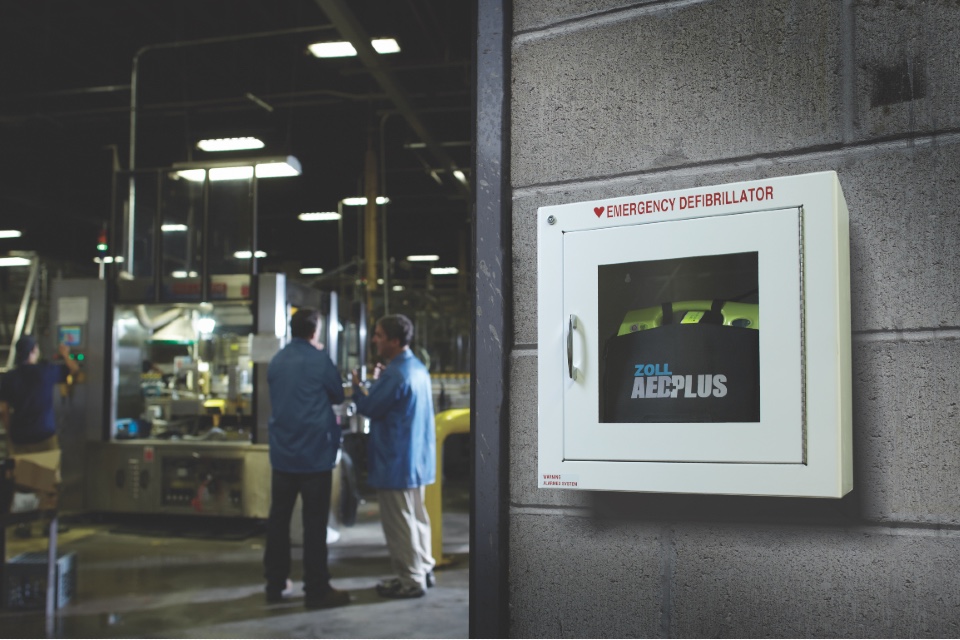
It happens in a split second. A person collapses — the victim of sudden cardiac arrest (SCA) — and the clock starts ticking in the race to restore a normal rhythm to the heart. A rescuer armed with an automated external defibrillator (AED) and performing CPR is the victim’s best chance for survival until medical personnel arrive.

Having an AED on-site in the case of a sudden cardiac arrest can be a life-saving decision. Learn more about SCAs in the workplace with our free educational flyer.

Is your facility prepared for a sudden cardiac arrest? | ZOLL Medical

OPINION: EU carbon market in the crossfire of the energy crisis and legislative changes

By Riham Wahba, Market Analyst at Vertis Environmental Finance
The EU ETS, covering Europe’s carbon-intensive industries, establishes emission reduction targets for more than 11,000 installations. Such entities were responsible for more than 1.3 billion tons of CO2 emissions in 2021.
Besides these companies, in 2018, the European Commission opened the market to financial entities; hence, EUAs (in practice, a “permit” to emit 1 ton of CO2) shared some traits with financial derivatives. However, the allowances have always had more in common with energy commodities than traditional financial instruments. The move, nevertheless, improved the carbon market’s liquidity and sent a stronger price signal to those covered by the system.
Carbon prices in Europe on a roller coaster ride
EUAs experienced a steep price increase, initially driven by its market reform, that later turned into a surge following the covid market turmoil in 2020. On March 18th, 2020, as lockdowns phased out across continental Europe, the price of one ton of CO2 tumbled to as low as €15. Since then, the price curve has only been trending upward. Reaching almost €100 in February 2022, a more than significant 554% increase compared to March 2020.
All market participants anticipated a carbon price of €100 by the end of the compliance cycle in April 2022. It took a war for the price to descend from highs to as low as €55 beginning March 2022. The Inflationary pressure from rising energy prices in the repercussions of the war created a demand-destruction paradox that may or may not prove correct in the long term.
The War in Ukraine and subsequent concerns over shortages had a knock-on effect on industries in Europe. Businesses fretted about the higher cost of inputs, supply chain disruptions, and consumers’ Incomes diminishing purchase power due to the high inflation rate of 8.1% in May.
Impact on the industry and energy production
Volatility continued to grip energy commodities and, by extension, carbon futures as the EU approved several sanctions against Russia. Gas has been red-hot as traders feared supply cuts from Russia in retaliation of European sanctions. The benchmark Dutch TTF gas contract reached an all-time high above €200/MWh in March, and German baseload power neared €500/MWh.
Companies covered by the EU ETS have struggled with these rapidly rising gas and electricity prices, especially in the Mediterranean countries of the EU, Romania and the Netherlands, where the excessive financial burden has taken some companies to bankruptcy or activity suspension. For businesses, it is a real challenge to decarbonize their processes in this economic environment, but just as with Darwin theory, those companies that can adapt the better to the new energy landscape are the ones that will move forward, but at least in the short term they will do it at the expense funnel down their costs increase to end consumers, exacerbating- even further- the cost of living.
The energy transition is not on hold
In some cases, business leaders are well ahead of politicians in term of the environmental ambition of their companies. At the beginning of May, in an open letter signed by 140 CEOs of some of Europe’s largest companies, the Commission was urged to meet the Green Deal targets and increase renewable energy capacity in Europe. The war has not delayed the achievement of these objectives. Rather, it served as a wake-up call for those responsible. Last year’s ‘Fit for 55’ package proposals would have reduced gas demand by 100 bcm.
Now, the REPowerEU proposal aims to reduce consumption by 155 bcm, which is equivalent to imports from Russia in 2021. Financing these plans is, of course, a challenge. Still, the European Commission has developed a detailed strategy which includes, for example, raising EUR 20 billion from auctioning allowances from the market stability reserve, and this must be done without disrupting the proper functioning of the carbon market.
What is coming next?
For the Fit for 55 proposals to become binding law, the EU Council and the Parliament (EP) should adopt the legislative proposal either in its original form or amended.
The European Parliament has largely deemed the Commission’s proposal to lack ambition and came up with counter proposals that aim to tighten the system further. In a surprise vote during June 8th plenary, the Conservatives, Social Democrats, and Greens reverted the EU ETS reform report by Peter Liese to the ENVI Committee. MEPs bout over the cap reduction and the pace of phasing out free allowances to industries. The rejected amendments have no legislative standing but offer a glimpse into different parties’ leaning in the EP.
The ENVI Committee had a procedural vote on June 14th, which ensured that the line-by-line amendment votes carried out during the last session would be voted on again in the next plenary session scheduled for June 22nd and 23rd. Negotiations between MEPs on the reforms will be informal until the ballot date.
Unlike the Parliament, the Council seems to side with the Commission’s initial proposals for the carbon market. France, the current holder of the EU rotating presidency, asked national governments to endorse key parameters of the EU ETS overhaul that the EU Commission proposed. It also requested environment ministers to agree on a common position at their meeting on June 28th. Similar calls emerged from other ten member states, including Germany, Spain and the Netherlands. The countries called the bloc nations against watering down the climate and energy plan.
The final shape of the system overhaul will be decided on in trialogue talks involving the European Council, Commission, and Parliament, most probably after the summer recess. The clock to cut the dependence on Russian fuels is ticking, with energy prices hitting the industry and consumers’ pockets.
The energy transition is not only necessary but -even more- urgent.

Staying compliant: How to navigate hybrid working and electrical testing 

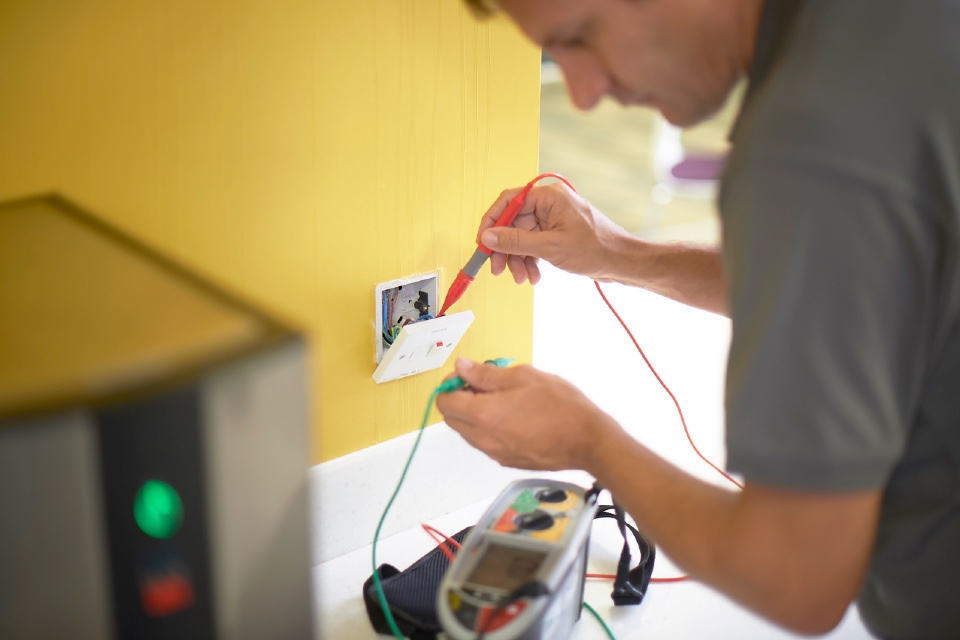
With many businesses now settled into a hybrid working structure, employers are being reminded of their legal obligation to ensure electrical equipment is safe even when being used by workers at home.  

Dan Lee, Managing Director of phs Compliance, one of the UK’s leading providers of facilities management and compliance services, says that many businesses are not ensuring compliance of employees’ home offices alongside equipment in the main office. 

He said: “It’s fairly standard now across many sectors for employees to be spending some of the working week in the office and some at home, but your responsibilities for health and safety don’t end when employees leave the site.  

“Under the Health & Safety at Work Act 1974, employers are responsible for the health, safety and well-being of all employees, whether they work on site or remotely. The Electricity at Work Regulations 1989 also state that all electrical equipment in the workplace must be suitable for use and maintained to ensure it is safe, including any equipment used at home to carry out their job.  

“It’s a difficult situation for businesses. They are still liable if employees injure themselves at home, but mitigating the risks remotely is more challenging. Employees may not understand the risks that electrical equipment like laptops, printers and extension leads can pose, and dangerous practices, like overloading sockets or leaving laptops charging on sofas, can be commonplace.  

“All users of electrical equipment should have some basic training in how to use the equipment safely, as well as what danger signs to be aware of. Users should feel confident in visually checking the equipment regularly for obvious signs of damage, as well as potential risks, such as cables trapped under desks or water hazards. 

“However, the best way to protect your employees, and demonstrate your compliance with legislation, is to carry out regular PAT testing on all electrical equipment, whether on site or used remotely.  

“PAT testing (Portable Appliance Testing) involves an examination of portable electrical equipment and appliances to ensure they are safe to use.  This should be carried out by a competent person with the correct training and equipment. It is strongly recommended to employ an experienced and qualified PAT tester to test equipment every year. 

A great opportunity is for colleagues to bring their equipment back into the office for testing when there is a staff meeting, as several pieces of equipment can be tested in one session to save costs.   

“If you are unsure how to meet your health and safety obligations for electrical testing, phs Compliance can help with advice, guidance and over 400 experienced and trained engineers across the UK ready to start testing wherever you are.” 

Click to view phs Compliance’s free PAT Testing Guide. 

With over 50 years’ experience, phs Compliance is one of the UK’s leading providers of facilities management and compliance services. As well as electrical, mechanical and fire safety testing and maintenance services, phs Compliance also provides specialist electrical and mechanical project services, including design, supply and installation for everything from power to lighting. 

Moving to the cloud shouldn’t be daunting for Local Authorities

Local Authorities are under intense pressure to escalate Digital Transformation strategies while also dramatically reducing IT costs, achieving public sector sustainability goals and extending citizen self-service access to key services. With stretched in-house resources and a widely acknowledged skills shortage, the existing IT team is dedicated to keeping the lights on for as long as possible.

With many councils asking where they can find the time, resources or confidence to advance a cloud-first strategy, Don Valentine, Commercial Director, Absoft outlines five reasons for why embracing ERP in the cloud right now will actually solve many of the crisis facing public sector IT…

Unprecedented Challenge

Local Authority IT teams are facing incompatible goals. Is it possible to cut the IT budget by £millions per year over the next five years while also replacing an incredibly extensive legacy infrastructure with an up to the minute cloud based alternative? Or improve operational processes and ramp up citizen self-service while also ensuring stretched staff across departments have constant, uninterrupted access to the information and systems they need to be effective and productive?

With so many stakeholders to satisfy, the future looks daunting. But there are many reasons why Local Authorities should be confident to embrace a cloud-first strategy and the latest ERP solutions.

Reason 1: A Cloud Migration can be Tactical

With growing numbers of local authorities reducing building space to cut costs, IT teams are under intense pressure to accelerate cloud migration strategies. With tight deadlines to close on premise data centres, a tactical cloud migration offers tangible benefits, not least a chance to address the punitive cost base. At Barnsley Metropolitan Borough Council, building closure created a 12 week deadline to migrate its SAP estate, including 128 interfaces, to Microsoft Azure.

By taking a tactical approach, rather than a more complex cloud migration that includes an overview of operational processes, Local Authorities can very quickly achieve a cost effective, future proof IT infrastructure that can become the foundation for on-going innovation and change.

Reason 2: Budgetary Goals can be Achieved

Replacing expensive, dated on premise equipment with a secure, UK based cloud service immediately removes the heavy maintenance costs associated with keeping legacy solutions up and running. It eradicates the burden of perpetual license costs – often for solutions that are no longer required. Moving to a subscription based model also delivers a far more manageable, flexible and predictable annual IT budget. The tactical migration to the cloud undertaken by Barnsley Metropolitan Borough Council led to an immediate saving of £125,000 in ongoing operational support fees and the enablement of the internal team.

Reason 3: Complexity is Reduced

Far too many Local Authorities have over-specified ERP deployments dating back to the pre-austerity era. Times have changed – and so has the core functionality of ERP solutions. There is no longer any need for expensive add-ons – from payroll to procurement, cloud-based ERP technology delivers the vast majority of operational functionality. This allows a significant rationalisation of the software solution set, minimising complexity and avoiding the expensive upgrade costs that can devastate IT budgets. One large local authority was able to achieve a 40% reduction of server hosts through landscape rationalisation, leading to a 50% cut in hosting costs once in the cloud.

Reason 4: Providing a Foundation for Operational Transformation

Rationalising IT systems also frees up talented staff from tedious and stressful maintenance and support activities to focus on innovation. With access to a state-of-the-art ERP solution, individuals can work to streamline processes and improve automation – especially in areas such as citizen self-service.

This, in turn, will release staff across the local authority from time consuming manual activities, ensuring they can use their experience to deliver the more complex services and provide support to vulnerable citizens. Furthermore, with better information councils can embark upon essential business modelling – a key requirement given the impact of inflation and the collapse in business rates – as well as exploring new areas to add revenue streams, such as expanding existing payroll services to schools and academies.

Reason 5: Achieving Sustainability Goals

Local authorities are also tasked with addressing their carbon footprint, along with the rest of the public sector. Moving away from dedicated on-premises data centres to the cloud will be more efficient and support the sustainability goals. Cloud-based data centres offer far more effective energy consumption: one study confirmed that using the Microsoft Azure cloud platform can be up to 93% more energy efficiency and up to 98% more carbon efficient than on-premises solutions. Plus with a commitment to using 100% renewable energy by 2025, to be water positive by 2030, achieve zero-waste certification by 2030 and to be net-zero on deforestation from new construction, the cloud provider’s investment in sustainability will help the council continually improve its position.

In addition, a fully integrated ERP system provides detailed insight to help understand the broader carbon footprint, from procurement to travel, allowing councils to monitor, report and provide transparency around CO2 emissions.

Conclusion

Any significant IT strategic change can appear daunting – especially for stretched IT teams under huge pressure to cut costs while managing out of date and unsuitable legacy systems. The shift to the cloud, however, is not just achievable; it can be made within a tight timeframe and deliver immediate benefits to both budget and resources. Plus, of course, it provides the foundation for on-going digital transformation and provide access to an array of innovative technologies.

Optimise Building Security with Verkada’s Access Control, AI CCTV, Alarms, Sensors and Visitor Management solutions

Verkada simplifies and modernises facility management by combining all physical security needs onto one easy–to–use platform.

Thousands of facility managers globally are utilising Verkada to protect people, assets and facilities, whilst aggregating data onto one platform for actionable insights to ensure efficiency and productivity.

Video Security: Hybrid cloud cameras offer onboard storage and edge–based processing to reliably deliver insights in real–time.

Environmental Sensors: With a collection of eight onboard sensor readings, monitor for the health and safety of all environments.

Access Control: Manage doors, credentials and users across sites at ease with global access and active directory integrations.

Alarms: Catch and respond to break–ins with cloud–managed intrusion detection. 

Visitor Management: Personalise the check–in experience for all types of visitors while integrating with cameras and access control.

Key Benefits of Verkada’s Hybrid Cloud Solution for Facility Managers

  • Oversee all sites on one cloud–based platform, easily accessible through any web browser or mobile device. 
  • Receive instant SMS alerts when a Person of Interest is on–premise or unusual activity is detected afterhours. 
  • Speed up investigations with AI-powered analytics to quickly filter footage based on what is in frame, including people and vehicles.
  • Eliminate unpredictable costs with no NVRs and DVRs, unlimited user seats, and an industry-leading 10-year warranty.
  • Monitor the usage of a space from Occupancy Trends to optimise business operations. 
  • Protect employee health by identifying environmental changes that can lead to air quality and health issues.
  • Share live feeds, floor plans or archived footage via SMS, MP4, or direct link.

If you’re interested in learning more, sign up for a personalised demo today!

Water-saving will help on energy costs – get additional support from our experienced Advanced Services team

Reducing resource use and improving efficiency are key steps organisations will need to take to retain credibility on green steps they’re taking on their Scope 1, 2 and 3 emissions, to help lower impacts on the environment. 

Although water is under Scope 3 on your emissions, it shouldn’t be looked at last as it can help lower energy costs too. Getting more data on where water is used is an important first step.

Green Apple Environment Award winner Water Plus installed more than 400 data loggers on water meters in the space of six months in 2021 – providing further information on how it’s used across buildings.

Mark Taylor, Advanced Services Operations Manager in England for Water Plus, said: “With energy costs in the news, there are some areas where there are low-cost opportunities and options for organisations, particularly if the number of people at sites is fluctuating through a year. This is why tracking what water is used throughout a year is important.

“As there are carbon emissions linked to the water you get through taps, and the wastewater taken away and treated, it also shows that by just boiling the water you need in work kitchen kettles – to reducing water waste from any leaks, including dripping taps, running toilets from cisterns – and elsewhere at your site – soon adds up to lowering running costs, creating less carbon overall and using less energy too.”

Here’s where water-saving can make an impact:

  • In January 2022, a site had a 12 cubic metre an hour water leak but was not sure where on their pipes. They contacted Water Plus Advanced Services, who located the source of the issue and carried out the repair work. The leak, which data loggers on the water meter and the online portal also tracked, would have cost £22,000 in a month.

Work with organisations by Water Plus is also being recognised this year. The water retailer is shortlisted for Water Efficiency Project of the Year in the Water Industry Awards 2022 and was named a Finalist in the Environment Award at the Better Society Awards 2022.

To contact our team, please email hello@water-plus.co.uk – and include “FM Briefing” in the email subject heading. More tips to #BeWiseOnWater on the FM Forum website here – and at: www.water-plus.co.uk/sustainability .

Do employers need to be concerned about monkeypox?

By Kate Palmer, HR Advice and Consultancy Director at Peninsula

Monkeypox is a rare disease that is caused by infection with monkeypox virus. It can pass between humans through close intimate contact, household contact or changing the bedding of someone who has it when not wearing appropriate PPE.

The Government has issued advice for anyone who has come into close contact with someone who has monkeypox to self-isolate for 3 weeks.

An important point to make is that monkeypox is not another Covid. We might be drawn to think this because of the use of ‘isolation’ but experts say it poses a very low threat to the wider public. It is not as easily transmissible as Covid, and recovery is fully expected. However, as we saw during the pandemic, things can change quickly so employers should be prepared.

It goes without saying that if an employee has a confirmed case of monkeypox, they should be treated under normal sickness rules. Most symptoms clear up within 14-21 days so they would receive SSP or sick pay, whichever is stipulated in their contract of employment, as with any other illness, if they met the qualifying criteria.

Issues could arise where an employee is advised to self-isolate – although currently this is only advised rather than being a legal requirement.

Currently the advice is that those who have had unprotected direct contact or high-risk environmental contact with a confirmed case should isolate for 21 days including exclusion from work. If the person can work from home, that appears to be the most sensible solution.

Those who have unprotected exposure to infectious materials including droplet or airborne potential route should be excluded from work for 21 days if their work involves contact with immunosuppressed people, pregnant women, or children. Again, working from home could be a solution here, or moving the employee to different duties which does not involve contact with those people.

If the person cannot work from home, then the question of pay crops up. SSP will not be payable for the isolation period unless the employee gets too ill to work during it. In a similar way to the current Covid isolation position, employers will have to decide whether they will require close contacts with a confirmed case to not come to work for the 21 days or whether they will still require them to come in.

If they require them to stay at home then this should be on full pay. Anything less than that is likely to risk an unlawful deduction claim as it’s the employer’s choice to temporarily withdraw work from the employee.

There is no legal requirement to inform an employer that you are a close contact with someone with monkeypox, but employers can make it a contractual requirement if they choose. Data on this should always be processed in line with rules on processing health data.

Although monkeypox is not generally passed through the air, colleagues may be concerned if they become aware that someone they are located near to is a close contact. Employers who don’t require close contacts to isolate should consider some adjustments to where they sit or work. This is particularly pertinent if any colleagues are immunosuppressed or pregnant.

Close contacts with a confirmed case are advised to notify the contact tracing system. Employees claiming to be a close contact should be able to provide their employer with evidence of their contact with the contact tracing system.

Lithium batteries for emergency lighting: What you need to know

By René Joppi, Managing Director, Mackwell

Rechargeable lithium battery technology first emerged in commercial products in the early 1990s and has since grown in popularity. The development of lithium batteries was driven by the need for higher energy density, with portable electronic devices and electric vehicles being the main application areas.

However, lithium batteries are now also one of the preferred solutions for powering emergency lighting standby applications. Not only will this article uncover the many reasons behind why lithium batteries are popular when compared to alternative technologies, but it will also outline some of the considerations that must be made when specifying battery technology…

The Rise in Lithium Technology in Emergency Lighting

Lithium technology competes with the more established Nickel Cadmium (NiCd) and Nickel Metal Hydride (NiMH) technologies, and is often specified due to its potential for longer cycle life and increased energy efficiencies. This, in turn, allows for longer warranties to be offered. Furthermore, due to its lightweight and compact design, the technology is easily installed and can operate at high temperatures.

In today’s emergency lighting market, only one type of lithium chemistry – lithium iron phosphate (LiFePO4) – is recommended as opposed to lithium-cobalt and lithium-manganese systems more commonly used in portable electronics and electric vehicle applications. This is due to the ‘standby’ nature of emergency lighting applications, where the batteries are not regularly charged and discharged, instead operating in a state of ‘constant top-up’. LiFePO4 batteries are less prone to internal degradation of electrodes and electrode-electrolyte interfaces when used in this way compared to the other lithium chemistries.

Barriers to Safe Lithium Batteries

When handling emergency lighting batteries, safety must always remain front of mind.

Lithium is highly flammable in air and moisture, and great care must be taken when manufacturing and using lithium batteries – especially ensuring temperature limits are not exceeded to prevent fires. Lithium fires result from thermal runaway and are dangerous as they can be particularly difficult to extinguish. This is another reason why it is favoured to opt for LiFePO4 as it has a lower temperature rise in a thermal runaway situation compared to other lithium systems, making it inherently safer.

Instilling Robust Thermal Management

It is highly recommended to only use lithium technology in emergency lighting applications where there is a robust method of thermal management implemented, in particular, thermal monitoring of the battery case temperature through life. Where only a small number of suppliers of lithium battery systems for emergency lighting currently offer this, it is a safety measure not to be overlooked.

It must be noted that the extended lifecycles offered by lithium are still prone to be reduced by poor battery charge regimes and unintentional cycling of charge and discharge during the construction and installation phase. In this respect, lithium systems are no different to NiCd and NiMH. Therefore, choosing systems where the emergency driver has smart-charge and construction protection features is crucial to ensure that the benefits of choosing lithium can be fully realised. 

There is no doubt that the emergency lighting industry can benefit from the implementation of lithium battery technology due to its many benefits, such as long cycle life and increased energy density. This can often result in extended warranties being available, something that has traditionally not been offered for other emergency lighting battery systems.

Yet, lithium batteries do not come without their challenges. Great care must be taken when manufacturing and using lithium batteries within the industry, especially with respect to thermal management. Manufacturers need to adhere to safety compliance in the form of temperature monitoring circuits to ensure 100% safety!

Facilities managers looking to reap the benefits of lithium batteries without the safety concerns can look to specialised suppliers of lithium batteries and technology that offer thermal monitoring of the battery case.

Workers want their managers to have leadership skills

New research by LMS provider Digits into skills in the workplace has revealed a list of the most important skills that workers expect a manager to possess, with leadership right at the top of what they want.

Around half (51% of men and 45% of women) of the 2,048 working-age adults polled thought leadership skills were the most essential.

Verbal communication and teamwork skills ranked joint second for over a third (35%) of people, closely followed by empathy and problem-solving skills (30% and 29% respectively).

Surprisingly, written communication skills came last on the list (8%) – proving to be less popular than a strong work ethic (21%), good time management (18%), and conflict resolution (15%).

Just one in 10 of those surveyed reported having no specific skill requirements of a manager, suggesting that most people do have pre-existing ideas around what makes a good or competent manager to them. Whether their actual managers meet their expectations, on the other hand, is a matter for another survey.

The most important skills needed by managers, ranked by popularity, are:

  • Leadership skills (48%)
  • Verbal communication skills (35%)
  • Teamwork skills (35%)
  • Empathy (30%)
  • Problem-solving skills (29%)
  • A strong work ethic (21%)
  • Good time management (18%)
  • Conflict resolution (15%)
  • Written communication skills (8%)

Of course, ‘leadership skills’ is an umbrella term that can mean different things to many people. And it can encompass a range of hard skills (job-related knowledge) and soft skills – transferable skills that help individuals work and interact with others – such as adaptability, flexibility, communication, teamwork, time management and problem-solving.

There is no one-size-fits-all, explains Bradley Burgoyne, head of talent at Digits: “We’ve got more generations in the workforce today than we’ve ever had. And, each group of workers prefers slightly different managerial styles and leadership qualities.

“Every individual has their own expectations about how they want their managers to lead them, coach them, support them, relate to them, and empower them. Those skills don’t just happen, even the best managers need to receive regular training and development from their employers.”

He adds: “The challenge for HR and L&D teams is to ensure that their training strategy is broad enough to cater to all levels of employees in the organisation because, I think, everyone benefits from leadership or management development.

“It’s important that employers actively listen to their workforce and find out where the skills gaps are – what training do employees think they need? What training do employees think their managers need and what leadership qualities do they respond best to? They can then utilise the data to create training courses or a series of engaging development activities in their learning management system, that are really relevant to the people within the organisation rather than something that could, potentially, be seen as just a tick-box exercise.”

According to Burgoyne, some of the core leadership skills of a modern manager include:

  • Vision setting – having clear business goals for the team and being able to influence and gain buy-in from team members to work towards that vision. This also includes some change management skills, as setting a vision and taking a team on a journey to reach it, inevitably involves helping people work through change.
  • Empathy and listening – builds trust and connection between individuals and their managers. Managers need to be mindful and show their team that they understand and relate to them as human beings, that they recognise that each person has different needs, different skills, and a different perspective on how they approach different situations at work.
  • Inclusive leadership – managers that want to create a high performing team need to be able to provide high levels of psychological safety within their teams, where feedback is welcome and encouraged. An environment where everyone feels included and safe enough to provide feedback, feels that the feedback that they provide is valid, and that action will happen as a result, helps to build a team with a sense of purpose in what they’re doing and a growth mindset.
  • Coaching skills – rather than always telling people what to do, good managers trust and empower their teams to use their skills and knowledge to find the answers and achieve an outcome. A quality coaching conversation will help someone to realise that they knew the answer all along or feel empowered to go and find the answer. This can support an employee’s sense of purpose and self-validation and create a far more autonomous team.
  • Self-awareness – to lead others successfully requires managers to reflect inwards and understand their management style and learn how to adapt it for different situations. There are multiple challenges facing managers today, many that they may not have experienced before, so it’s important to be really agile, adaptable, and constantly thinking about the wider world and how that might need to change your approach.
  • Collaboration skills – managers don’t need to have the answers to every question. The world of work is too complex and fast-moving for one person to be able to come up with all the solutions all the time. Encouraging collaboration – with other individuals, other teams and other departments – to find answers by working together or reaching a shared goal through a collaborative process, will help improve the performance of the entire organisation.

Generational divides

Further analysis of Digits’ survey results showed clear generational divides between what people at the start of their career considered to be important managerial attributes compared to those who have been in the workforce for a decade (or two). Almost twice as many people over-55 (who’ve probably experienced a few different managers during their working life) than those aged 16-to-24-years-old think leadership skills are a must-have for managers (56% vs 28%).

Although leadership skills are ranked the highest across all age groups, what comes next varies. A strong work ethic is popular with a quarter (25%) of 16 to 24 year-olds, verbal communication skills are preferred by 24 to 34 year-olds and the over-55s (36% and 44% respectively), while teamwork skills are highly rated by over a third (36%) of those aged 35 to 54 years old.

Digits’ soft skills report, including the latest soft skills training statistics for 2022, is available to view at https://www.digits.co.uk/soft-skills-statistics. The results include a survey of 2,048 people in the UK, conducted by Censuswide for Digits, in March 2022.