Guest Blog, Author at Facilities Management Forum | Forum Events Ltd - Page 6 of 9
Posts By :

Guest Blog

Industry Spotlight: phs Compliance

phs Compliance is one of the UK’s leading providers of workplace compliance and building engineering services, offering everything businesses need to stay safe and compliant.

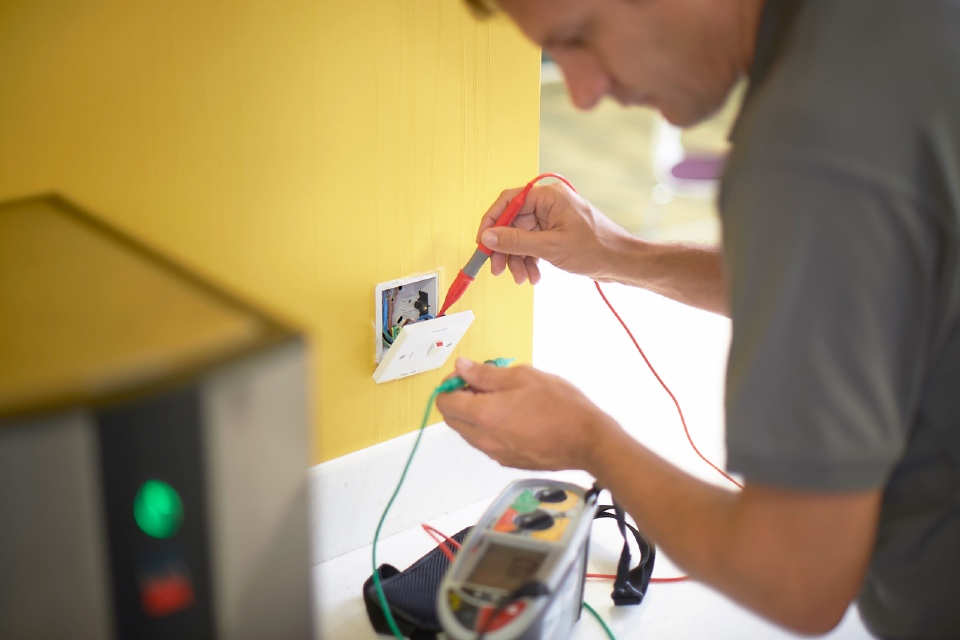
Fully accredited by all leading industry regulatory bodies, phs Compliance has the largest team of specialist statutory testing operators in the industry. It provides statutory electrical services including testing (including PAT tests and fixed electrical testing), inspection services, maintenance, and remedial work. As the UK’s leading provider of electrical testing with nationwide coverage, phs Compliance ensures workplaces of all sizes stay safe and compliant.

phs Compliance also offers a comprehensive project design, installation, commissioning and maintenance service for fire and security systems.

Accredited to the highest standards, phs Compliance offers significant experience, technical expertise and nationwide capability to support customers’ capital expenditure project needs for fire systems and security systems.

phs Compliance also offers expert project management services, including the design, supply and installation of everything from power and lighting to electric vehicle charging points.

With over 400 engineers across the UK, phs Compliance delivers more than 14 million compliance inspections for 35,000 customer sites nationwide every year.

The experienced and professional team pride themselves on delivering their services to the highest standards at times convenient to our customers.


www.phscompliance.co.uk

The Future Workplace – Making it seamless and secure

Rob Hancock, Head of Platform at Giacom

After many months of changing lockdown rules where companies have had to implement remote and hybrid working policies accordingly, businesses are looking to the future beyond COVID-19 as workforces return to their offices. But what will the future workplace look like? 

According to new research, businesses have found that their employees prefer a mixture of remote and office-based working, with over three-quarters of staff wanting a hybrid approach long term. Proving that they can work just as successfully and productively from home, it is now the employer’s job to adapt their business model to support both remote and office-based working. Rob Hancock (pictured), Head of Platform at Giacom explains how the channel can support organisations when making this transition in a seamless and secure way.

An Evolving Landscape

The pace of change businesses in all industries had to undergo over 2020 highlighted the importance of being agile during challenging times. COVID-19 has accelerated the need for digital transformation, as without the right technology in place, organisations will either sink or swim.

The role of the channel has been to continuously support its customers through the journey of adapting to remote working and digitally transforming in order to stay ahead. By educating customers on the importance of security, as well as the available technologies and strategies that can support their transition, they will have the right support system in place to maintain business as usual – or even unlock additional productivity – during unprecedented times.

Organisations are trying to be agile to survive, but there is always room for improvement. Quickly and easily responding to change needs to become a core competence natively for all businesses to be able to adapt, as it’s clear that this is not a problem that’s going to go away overnight. By working with a reliable partner, companies will have the right tools in place in order for them to succeed through the pandemic and into the future.

Leveraging Existing Technologies to Collaborate

Technology plays a key role in the smooth transition to a ‘new normal,’ keeping virtual teams engaged while enabling seamless and secure communication within a dispersed workforce. Digital solutions must be able to support both employees who choose to work from home, as well as those who have returned to the office.

The channel’s role in enabling seamless collaboration and communication is vital in order to combat any further disruption and keep businesses functioning. MSPs must rethink how they can best support their customers, while embracing new and innovative ways of working to fulfil their demands and expectations. Vendors who offer a range of products to fit diverse needs and the tools to deliver outstanding customer service won’t only help businesses right now, but will help unlock long term productivity, security and collaboration.

The pandemic has significantly accelerated the adoption and usage of cloud solutions to support remote working. Many businesses already had these tools in place, but just weren’t using them effectively across their workforce. For example, many companies have Microsoft 365 deployed, which includes Microsoft Teams. These organisations have had access to such video conferencing tools, but had not needed to use it effectively until COVID-19. Since March 2020 Microsoft Teams has experienced a mass surge of users, jumping by 70% to 75 million daily active users.

Additionally, COVID-19 has acted as a catalyst for the interest in virtual desktop solution such as Microsoft Windows Virtual Desktop (WVD), which provides each member of the workforce with the same IT environment, regardless of the device including Bring Your Own Device (BYOD) they’re using and whether they are remote or office-based. The desktop effectively becomes cloud-hosted, providing a more secure electronic perimeter which replicates that of the physical office, making it easier to manage one central location.

The Importance of Security

When implementing a hybrid approach, security becomes a complex issue, as the risk landscape has changed. In the office, it’s easier to manage and control security within a physical perimeter and managed environment. As soon as you have a scattered workforce, this perimeter disappears, and now organisations have to put in place additional digital protocols to mitigate any cyber risks. Having a good quality MSP partner that understands the importance of security, and thinks about it in a proactive way is key for end customers.

Using technologies such as a Virtual Private Network (VPN) to provide secure access from home into remote business systems enables users to securely access systems that the business wants them to gain entry to, but more importantly, making sure that outsiders can’t.

However, fundamentally, the biggest weakness in an organisation’s security infrastructure is the human user. Cybercriminals are always upgrading their tactics, often more quickly than businesses can train their staff. In order to keep up to date, businesses must take a more proactive approach and utilise cybersecurity resources, such as security training and threat detection tools.

Conclusion

Without education and support from the channel, businesses will struggle to keep pace with the amount of change and understand what tools they need to survive and thrive. Reliable partners are needed now more than ever to support companies with workforces working from home and also in the office.

Offices will become places that people visit less frequently, perhaps only to collaborate and to host necessary meetings. Successfully implementing a hybrid approach is still a work in progress for many, and collectively, the channel will begin to find better ways of working and implementing this strategy. Of course, existing and new technologies will continue to play a key role in this transition as we undergo the next digital transformation.

How to take control of your parking problems

By Parkingeye

FM teams have a broad remit, working across many aspects of an estate. Regardless of sector, these teams are incredibly busy, and issues emerging in one area can hinder efficiency.

By leveraging ANPR on your car parks, it’s possible to access a wealth of solutions that can transform how your site operates, remove congestion, complaints and delays from the working day, and give FM teams time back to focus in other areas. Solutions can virtually eliminate complaints, reduce the levels of parking abuse on a site in as little as three months and drive parking revenue increases of up to 40%.

ANPR is generating results for businesses of all sizes, from healthcare and education to retail and hotels – each able to demonstrate incredible time, revenue, and user satisfaction improvements within their estate.

To find out how your business can optimise this hugely valuable capital asset, click here.

The prestige solution to improve glazing performance

By William Smith

Without doubt, the leading window film brand if you’re looking for a spectrally selective optically clear sun control film is 3M Prestige. But what is so good about this product over anything else? How does a spectrally selective film work anyway?

Solar heat comes from two primary sources, the visible light you can see and the infrared light you can feel. Prestige Series window films use non metallized, multi-layer optical film and nano technology to reject up to 97% of the sun’s infrared light, but also reject up to 60% of the heat coming through your windows.

Prestige window films also reject up to 99.9% of damaging UV rays to reduce fading of your furnishings. So, not only do they keep you and your room cool and comfortable, but they also protect your valuables, curtains and carpets from fading too.

3M Prestige window films are constructed of nanolayers of film to be able to be the true definition of spectrally selective. The 3M difference lies in the precision with which light waves are controlled when they pass through or reflect off the hundreds of layers of film.

So if you’re looking for a solution to reduce solar heat gain, fade and glare, you might want to consider an optically clear window film such as 3M Prestige. Get in touch for a free sample and to find out more info@architextural.co.uk.

Click here to download a brochure.

Click here to read more.

How the uptake of IoT at County Councils is driving efficiencies

Local authorities continue to face mounting pressures from the government on wide-ranging initiatives, from targets on climate change, to improving social care and overhauling waste management – all with budgets squeezed tighter than ever. The past 12 months have seen tremendous interest by local governments in IoT technology solution deployments as a mechanism they can use to help meet their aggressive budget and social goals, achieving scale by addressing multiple use cases at once.

Nick Sacke, head of IoT solutions at Comms365, discusses some of the priority challenges local authorities are facing, and how IoT deployments can be rapidly rolled out and scaled to not just overcome such challenges, but exceed them… 

Healthcare and Assisted Living

There remains a singular challenge within healthcare and assisted living, which is to be able to deliver at scale affordable health and social care for an increasingly ageing and vulnerable population. Technology can be a great enabler of this by helping to automate the mapping of activities into a profile around an individual. By taking regular snapshots of what their day-to-day life is like, when they normally make a cup of tea or get out of bed, this information can be collected and mapped onto a profile, which can then be analysed and shared every day with the care organisation and local authority. This insight helps professionals to detect any potential trends and changes in behaviour that may indicate potential problems in near real-time as and when they arise, in turn, enabling streamlining and scale to operations by intervening earlier and with a targeted focus.

Targeted intervention allows expansion of existing resources, and a rapid return on investment in care-assistive technology. By flagging any issues earlier and preventing the escalation of problems while the individual is at home, the need for them to go to the hospital for check-ups or treatment is mitigated in turn, reducing pressure on the public purse. For example, if sensors detect a person hasn’t got out of bed for a while after they usually would, a carer can be sent to visit them. Without that timely intervention, the individual’s health could have deteriorated, resulting in hospital admission, or even worse. This has now been proven in field trials which have, at the time of writing, saved at least one life.

As well as monitoring the physical wellbeing of the individual, environmental information can also be tracked, including temperature and humidity. If there’s a change in such parameters, it can affect the vulnerable in profound ways. The temperature and humidity in the room needs to be appropriate for each individual need. At a basic level, this gives the patient comfort in knowing their environment is suitable for healing, but also mitigates against further potential issues, such as bacteria, infection and high CO2 levels which may enable a breeding ground for Covid-19 and other infections.

Collecting and analysing behavioural and clinical data can empower caregivers with more meaningful information, enabling them to intervene at the right time and deliver targeted individual care. Future developments in technology are expanding to biometric monitoring by putting sensors on the body to monitor vital signs – from heart rate, to temperature and even the pH of the skin, for those who are unwell to those who have exited the hospital – taking healthcare directly into the home. This provides a mechanism to help the NHS with extending their care beyond the hospital, with another significant return on investment.

Waste Management

It’s well publicised that as a nation, we are still producing far too much waste. The old processes for collecting waste from homes and public places are not efficient enough, leaving councils and third-party contractors with a huge challenge. So how can technology help?

Sensor technology can not only indicate how full a bin is, but it can help in the building of a data profile, in turn, creating an optimally efficient route to collect waste from the right bins, at the right time. These sensors can also detect temperature, to see if somebody has thrown something burning in the container, as well as the bin tipping over or being misplaced. Data profiling will provide not only a more efficient collections schedule, but also identify hotspot areas with potential problems including fly tipping.

Technology is also becoming more efficient at determining different types of waste, especially within underground storage, that can be particularly useful for recycling efforts. By deploying IoT solutions, sensors can check how much glass is in a particular container, by comparing the sonic ‘signature’ via intelligent algorithms for different types of waste materials.

IoT can also help third party contractors plan in advance by knowing how much waste they will be collecting, which has the potential to revolutionise payment models for contractors that are paid by weight. This technology will not only determine when is the best time to collect the bins, but also how much they are collecting by real-time monitoring of waste in the bin lorry itself, which can help the business to forecast revenue.

Parking

With 50,000 fewer shops on UK high streets than a decade ago, and a decline which is continuing, local authorities are looking to alternative initiatives to encourage people back to the high street. If shoppers are looking to travel to physical stores once more, the parking experience should be painless – or else they’ll just return to online shopping.

It’s estimated that motorists spend two months of their lifetime searching for a parking space – what if this could be cut down with the use of technology? What if your phone was to tell you in real-time where a parking space was? And better yet, what if you could reserve this space, or set up a subscription model to park monthly? It’s all about data collection and a better, more informed use of this data. By incorporating electric charging and disabled bays, as well as the use of innovative technology, re-engineered and revitalised parking solutions will drive revenue and provide more efficient and customer-pleasing services.

Lighting, pollution and air quality

Within the UK market, we’re seeing a big push towards creating even smarter lighting installations. The deployment of low energy bulbs has already been completed by many councils, but being able to switch on and off certain sections of the lighting estate depending on the activity can go much further in reducing energy consumption.

To do this, streetlights need to have interfaced ‘smart’ controllers that receive and transmit wireless signals to the lighting unit. The push towards smart lighting will use low power IoT networks to connect the lights, which will be undertaken on a huge scale, as even the smallest councils will enable over 10,000 streetlights. With such a focus on reducing energy consumption to meet national targets, this will soon become a priority.

As we strive towards a greener future, and with heavy regulations coming into play around air quality, there is a need for local authorities to be more proactive and involved in the health of their citizens. By tracking environmental elements such as pollution levels, CO2 concentrations in offices and classrooms and chemical pollutants, environmental monitoring will become a big part of both our indoor and outdoor future.

Conclusion

With consistent technological developments, IoT technology is advancing to meet ever more stringent challenges and requirements. We’re not only seeing an uptake in interest and the use of these solutions, but the actual technology itself is becoming increasingly adaptable, cost-effective, simple to deploy and maintain.

Hyper-efficient, agile, deployment and maintenance models are the prime focus. When an upgrade or fix is required, councils don’t want to remove it all – only a part. This means that as well as becoming more efficient, operational models and processes need to become adaptable, more automated, user-friendly and streamlined. The value of technology is now being understood, but there are now moves to make the design and deployment technology even more user-friendly, creating a better customer experience and collecting valuable data for insight. The guiding principle for deploying technology as an enabler of these more streamlined processes is simplicity and invisibility to the user, to ensure any potential barriers to adoption are removed.

Verdantix report – 5 best practices for success in the hybrid working era

When you look back to the beginning of the first lockdown, are you proud of how rapidly your facilities team was able to adapt to enable your business to survive – and possibly even thrive? But what now? Do you have concrete next steps for your workplace strategy?

A growing number of organisations have announced their plans to shift to a hybrid system of remote and in-office work. Corporate real estate and facility management leaders have a key role to play in operationalising these hybrid strategies and implementing change at the building level.

For a limited time, Planon is offering free access to a report by Verdantix which outlines five best practices for success in your future workplace strategies for 2021 and beyond. The report is based on a thorough evaluation of 100 return-to-work strategies and global interviews with 250 corporate heads of real estate on their post-COVID strategies.

Click Here to Request Report

WEBINAR: Get compliant and stay compliant

By Derwent fm

Compliance in facilities management

We all know how important compliance is within facilities management and at Derwent fm it underpins all aspects of our operation. Keeping up with new rules and legislation can be time consuming and is often a challenge for estates, facilities and operational teams.

According to the IWFM (Institute of Workplace and Facilities Management) compliance should take the following points into consideration: law, requirements, rules, standards, transparency, regulations and governance.

We would recommend proactively keeping on top of compliance via a CAFM system which should alert you when attention is needed or works are due to be serviced/completed. This will also ensure that you have a clear audit trail. It’s also a good idea to appoint someone who can stay on top of compliance whether this be someone within your organisation of a professional facilities management company. This is particularly important for efficiency and peace of mind.

Being compliant can make considerable cost savings. If issues are overlooked this can cause far greater problems in the future. We take a proactive approach with our clients which means there are less reactive tasks thus savings our client’s money.

Compliance can ensure that procedures are undertaken efficiently, allowing companies to streamline processes by having strict guidelines to adhere to. Similarly, being compliant in your operation will ensure that you don’t incur any unnecessary fines or penalties thus ensuring your business reputation remains intact.

Reputation can certainly impact on a businesses finances, making things like gaining new business and developing and sustaining existing relationships difficult. In extreme cases, a failure to comply could lead to prosecution which would be detrimental to a any businesses reputation.

If you’d like to find out more how to get and stay compliant take a look at this on demand webinar https://www.derwentfm.com/get-compliant-stay-compliant/ or give us a call on 0113 531 1000 for more information on how we can help you.

This all-in-one solution is a godsend for FM professionals

By Bringme

This smart all-in-one solution combines access, visitor, and delivery management: no solution on the market can match that. It stands out because it consists not only of smart, user-friendly software, but also of ingenious hardware with award-winning design. By doing so, it manages the entire reception.

Virtual receptionist performs all your reception tasks.

With or without staff present.

This is how it works:

  • Couriers and suppliers sign themselves in: the smart bell opens the door safely. No receptionist needed.
  • Afterwards, they can deliver their parcels independently in the Bringme Box. No parcel lost.
  • The smart box signs for receipt, even when there’s nobody around. No more complaints.
  • Visitors receive a preregistration mail with personal QR code and all the necessary info. Nice service, no stress.
  • With this code, they go through an automated welcome process and can let themselves in. No unwanted visitors.
  • As soon as they’ve signed in, the host is notified via the app and can welcome his visitor in person. No time lost.
  • With or without reception staff, everybody can keep focus and work productively. No one is disturbed.


In short: it’s the ultimate user experience. And best of all: it doesn’t cost a thing, on the contrary! By installing this system, companies can save up to up to 45,000 pounds a year.

>> Download the brochure

Making the move to an electric vehicle fleet

Investing in electric vehicles is a big commitment, and with the ban on the sale of petrol and diesel vehicles just a few years away, it is a challenge many businesses now face. However, there is more to think about that just the investment in the vehicles themselves.

Dan Lee, Managing Director of phs Compliance, a leading provider of workplace compliance and building engineering services, says businesses need to ensure they have the right infrastructure in place early on to ensure a smooth transition for their fleet.

“Businesses also need to consider on-going maintenance and their compliance obligations as part of their planning,” he advised.

“A key consideration is your electric vehicle charging points – or EV points.  How many EV points you will need will depend on several factors, including the number of employees or customers, how often your employees need to use their car during the day, the number of off-road parking spaces that are available to you and, of course, budget.

“You’ll also need to think about the type of charging points needed. It’s best to choose charging points that are the most compatible with the widest range of electric vehicles, but this will vary depending on the business and what vehicles you choose. A specialist like phs Compliance can advise you on this.

“Always ensure you use an installer who has been fully approved and accredited by the UK’s Office for Zero Emission Vehicles, also known as the Office for Low Emission Vehicles (OLEV), to install an EV charging point to ensure a safe and compliant service. Like any electrical installation, it requires expertise to install safely.

“And once installation is complete, the ‘duty holder’ is required by law under the Electricity at Work Regulations 1989 to ensure that all EV charging points are safe to use and do not pose any danger to users, just like any other fixed electrical installation.  It is recommended that EV charging stations are tested every year, although more regular testing and inspections may be required if they are heavily used.

“These are all important things to consider as part of the wider strategy. Now is a very good time to plan and start making the investments needed as the government’s Workplace Charging Scheme (WCS) is providing businesses with vouchers that contribute up to 75% of the up-front costs of purchasing and installing electric vehicle charging points – up to the value of £350 per socket for a maximum of 40 sockets – if you use an OLEV approved installer like phs Compliance.”

phs Compliance supports all electrical infrastructure requirements for electric vehicles including the design and installation of EV points and regular maintenance to protect equipment and ensure compliance, with inspections and testing services carried out by experienced and fully qualified engineers across the UK.

See a person, not an object, with PrintFace

By Brady Corporation

Because safety is personal. See a person instead of an object by printing a face directly on your Lockout/Tagout padlocks. Build on the one person, one lock, one key principle for maximum Lockout/Tagout safety! Find out how to fully personalise padlocks.

A Lockout/Tagout padlock is often the last obstacle to prevent a premature machine energisation, and a potential maintenance accident with impact on professionals and on their personal lives. To strongly highlight that Lockout/Tagout padlocks protect people, Brady Corporation now offers PrintFace: a complete padlock personalisation, up to printing coworkers’ pictures directly on their padlocks.

Personal padlocks

By printing a face on padlocks, each Lockout/Tagout padlock can clearly show who it is protecting. PrintFace will help deter padlock tampering and will highlight that safety is very personal. Removing padlocks in Lockout/Tagout should only be done by the padlock owner, who is shown on the lock. Team leaders, or a site safety manager, can step in if necessary, by following an agreed on procedure that maintains safety. Next to adding a picture, other personalisation options are available including adding a company logo, serial number, text and more.

Highly reliable prints

Personalisation can be printed in full colour and in high resolution directly on Brady’s nylon SafeKey-padlocks for Lockout/Tagout. The print is abrasion -, chemical -, and UV-resistant and highly reliable in both in- and outdoor lockouts. In addition, padlock engraving is available to achieve an even higher reliability, at the expense of colour and complex shapes. As a third, standard approach to personalise padlocks, it is also possible to write or print basic information on self-adhesive labels supplied with any Brady padlock.”

Achieve the highest Lockout/Tagout safety

Brady’s SafeKey Lockout Padlocks offer 700% more lock and key combinations than a standard safety padlock. An innovative lock mechanism enables 100 000+ combinations that can optimally support complex key hierarchies including several master and grandmaster keys. All key numbers are charted to ensure no two keys in the same company will open the same lock if so required. This enables a safe, future-proof Lockout/Tagout programme that fully respects the procedure’s one person, one lock, one key principle.”

Discover personalisation options >>