Jack Wynn, Author at Facilities Management Forum | Forum Events Ltd - Page 10 of 11
Posts By :

Jack Wynn

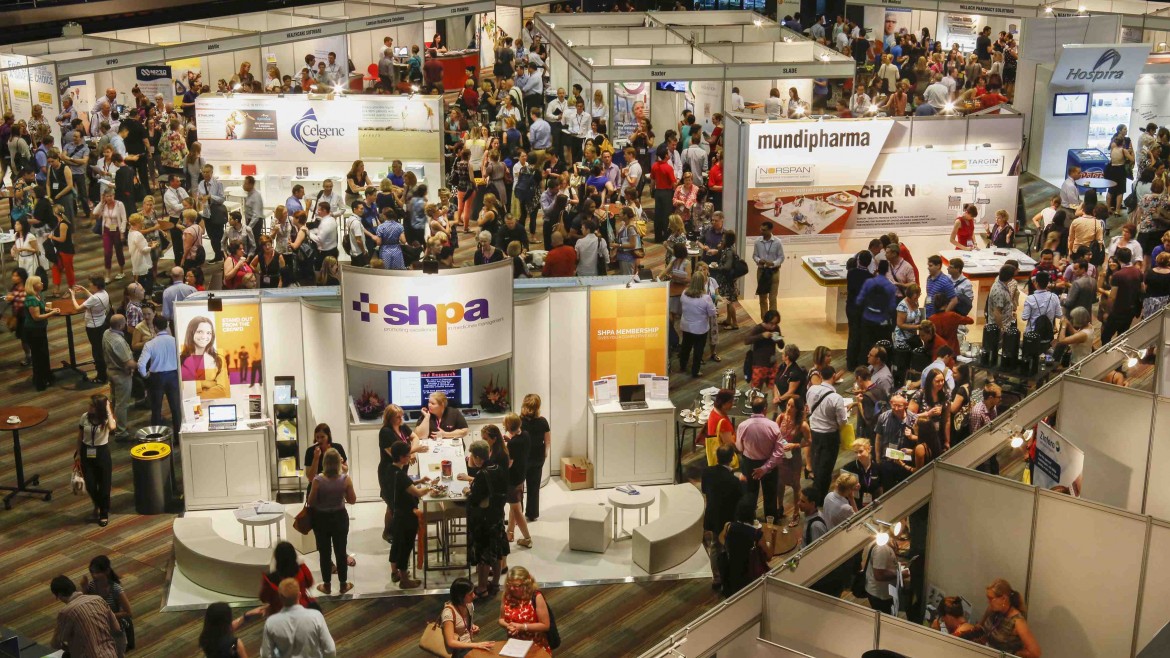
Forum News: The hidden costs of exhibiting at trade shows…

Without the knowledge of other costs involved, the £2000 stand you’ve just booked at your industry trade show looks like a really inexpensive way of generating new business. But is it really justifiable?

Assuming you have just bought a stand and shell scheme, you will still need to consider the following costs:

  • Show services such as lighting and electrics. These facilities are often controlled by the event organisers and can be costly. Also add on furniture hire, even carpeting. Estimated cost: £500-£1000.
  • Then there’s transportation, moving the whole stand together with any literature and other equipment, all will need to be transported to and from the show with another £500 added on to the bill.
  • Paramount to any trade show exhibition is advertising and other promotional materials which can amount to more than £1000. It’s all very well having a lovely brochure, but be aware of the cost of handing them out.
  • Once the stand and everything else is up and running, your staff will need feeding. Five staff members with breakfast, lunch and dinner over the average three days is not cheap.
  • When the exhibition is finally over, the charges keep on coming with clear up costs. Make sure you take your rubbish and leftovers with you or you may well get charged; and if your site is damaged in any way, it will more than likely result in an invoice.
  • Making sure you acquire an adequate insurance policy, not only for your goods on display, but also liability insurance should anyone hurt themselves while on your stand is crucial. And that’s not cheap either, with an expected £150 or more price tag.
  • You’re not finished yet; personnel is considered as one of the biggest costs of an exhibition. In addition, the extra £1,000 an employer will have to pay staff for longer hours, other costs such as accommodation, food, travel and parking also come into the equation.

Look at all the leads we’ve got…

The mountain of business cards you’ve collected; the dozens of quotations you were asked to supply after the event; the hours of organising them and calculating estimates; these are time consuming – as is following them up.

Then there are the decision-makers you met, or were scheduled to meet. Did they even show up to the event? If they did bother to put on an appearance, did they find your booth; did you get the chance to sit down and talk?



JLL awards Interserve with £60m FM contract…

The support services and management company, Interserve, has landed a three-year facilities management contract worth an estimated £60 million with the commercial and residential property services company, Jones Lang LaSalle (JLL).

Currently managing 60 shopping centres across the UK, the contract will see Interserve provide integrated facilities services to 18 of JLL’s shopping centres, and more than 300 people will TUPE transfer to Interserve to deliver security, customer services, cleaning, window cleaning, pest control and electronic security system maintenance.

Chief executive at Interserve, Adrian Ringrose, commented on the deal: “We have a strong relationship with JLL having provided a range of facilities management solutions to them for many years. We look forward to helping JLL create the best possible experience for visitors and employees at their nationwide shopping centres and workplaces across the capital.”

Learn how to do more with less at the Facilities Management Forum…

In today’s age of uncertainty, with many economic challenges ahead, the need to reduce costs across all aspects of business is now more important than ever before. As the world continues to suffer the consequences of the sharp economic decline from the early 2000s and more recently the decision to leave the European Union; businesses need to look internally to keep control of operating costs.

Subsequently, the role of a facilities manager has become increasingly vital to an organisation’s success. Despite initial financial constraints; businesses must continue to invest considerable amounts of time, energy and capital to not only ensure their facilities are properly maintained but also that rising energy costs, life cycle sustainability, aging assets are all kept under control to withstand the challenges that the unpredictable future presents.

It is therefore no surprise that economic and budgetary concerns are the number one issue identified by facilities professionals. Facilities Managers are increasingly required to ‘do more with less’. From the pressure to be more energy efficient to the need to be prepared for emergencies and disasters; the key solution to the challenges facing the industry is employing technological solutions with reliable and innovative service providers. The ability to leverage new technologies is critical to the success of facilities management. Though the cost of these solutions can be intimidating at first glance, these solutions tend to be cost-effective in the long-run.

Here’s where the Facilities Management Forum comes in. Designed to draw on the combined skills, knowledge and expertise of the industry; the Facilities Management Forum helps business discover the latest trends, innovations and technologies available in the industry. The event offers invaluable insight into a wide variety of topics within the industry; bringing together a hand-picked selection of its senior figures; all while providing unparalleled industry access to the latest products and services to help businesses.

Unlike other events in the industry, the Facilities Management Forum is designed to be a smaller, more intimate event, focusing entirely on quality of attendees rather than quantity. The event strives to maximise productivity with pre-arranged face-to-face meetings to bring like-minded delegates and product and service providers together. This year’s event sees the attendance of key decision makers from firms such as Butlins, Coach, SimplyHealth, UPM Kymenne, Volkswagen Group, and more.

As well as the networking opportunities, the event also offers up some fantastic insight into wider trends across the market. The events speaker line-up promises to do just that with industry influencers from Air Treatment, Chartered Association of Building Engineers, Chief Fire Officers Association and more.

So for Facilities Managers looking for a new and innovative way to see what’s new in the industry, learn how to cut costs and make profitable connections, the Facilities Management Forum is the ideal platform. As a representative of Solid Management and previous attendee has said: “Anyone thinking of attending the Facilities Management Forum should just do it. There is no way you won’t learn something or meet someone helpful which makes it time well spent”.

The bi-annual Facilities Management Forum will take place on July 11th and 12th 2016 at Whittlebury Hall Hotel in Northampton. Attendance to the event is exclusively limited to senior Facilities Managers and product and service providers in the industry, to secure your place at the event please contact:

Supplier contact:
Luke Webster

Portfolio Sales Manager
E: l.webster@forumevents.co.uk
T: 01992 374074

Delegate contact:
Mick Bush

Delegate Portfolio Manager
E: m.bush@forumevents.co.uk
T: 01992 374090
.

eeGeo launches ‘highly detailed’ Smart Workplace solution…

The global 3D mapping company, eeGeo, has announced the launch of its Smart Workplace solution, which will enable businesses to transition to a smart environment through optimising space and resource usage.

eeGeo Smart Workplace is supported across web, mobile and VR platforms, allowing businesses to build personalised 3D representations of real estate with seamless transitioning of interior and exterior mapping. Moreover, the solution claims to deliver a clear ROI twofold by encouraging the ‘collaboration’ between staff and management to report ongoing service and facility issues within the workplace.

CEO and Founder at eeGeo, Ian Hetherington, stated: “We worked with Cisco Systems to develop a highly detailed and dynamic 3D interior map of its customer experience centres (CXC). Our aim was to use this space to its full potential and more importantly enhance visitor interaction and experience at the site.”

He continued: “The result is a perfect example of how location based services can deliver engaging personalised mobile experiences for employees. Cisco is now able to provide a better experience of its venue for visitors before, during and after attending briefings as well as enhancing communication of their product and solution information.”


Find out more about Smart Workplace here

Guest Blog, Ian Hetherington: 3D mapping means going green has never been easier…

Our society is more conscious than ever of the detrimental effects our actions have on the environment, and the business world is no different. As a facilities manager, the role of policing the use of energy most likely falls in your lap, and with a wide range regulations around the management of energy, it’s often hard to keep up. 

For example, as a mandatory programme, all large UK businesses are affected by the Energy Savings Opportunity Scheme (ESOS) whereby they are committed to partaking in an energy assessment every four years. The aim of this is to make large organisations aware of their total energy consumption and provide metrics for improvement. Naturally, it’s within facilities managers’ interest to make efforts to work towards reducing energy consumption – not just for corporate responsibility, but also as a cost saving strategy.

But how is it possible to monitor and log energy consumption for one or sometimes multiple buildings? What was once a daunting task is now becoming increasingly easier with technology innovations.

A dynamic 3D map of both the exterior and interior of buildings delivered via a mobile application can provide facilities managers with the means to both visualise data sets relating to asset and resource usage, as well as collect live information on building use. In turn, this will enable FMs to quickly and easily derive actionable insights that can optimise efficiency and reduce costs.

By monitoring assets within the premises, usage patterns can be correlated to gain insight into staff behaviour, informing decision making to help reduce costs and minimise resource wastage. If, for example, a particular meeting room is consistently never used in the afternoon, the lighting could be automatically switched off.

Thus, a mobile app that is accessible to everyone within the building allows facilities managers to engage with staff and push notifications to pass on awareness of unnecessary energy consumption. FMs could even add a gamification element to the app and allow staff to collect points for best practice.

Optimising the use of resources can create direct cost savings as well as helping to meet energy consumption targets. Presenting complex data sets graphically with geographic context enables facilities managers to intuitively extract meaningful understanding and insight from big data.

The Internet of Things (IoT) will massively increase the volume and breadth of data available to environment managers, with all kinds of devices and building components able to report on their own status and that of their surroundings. This additional information has the potential to help in the effective management of facilities, though the collection of data itself is valueless without deriving the insight from it that delivers business benefits.

Key in analysing big datasets is to always remember the business outcomes that you are aiming to distribute. Analysis for the sake of it generally achieves little; ensuring the work provides insights that can be actioned to effect positive change in the chosen areas of the business is vital to deliver a return from the technology investments.

With an increasingly ‘mobile-first’ workforce, environment managers have the opportunity to utilise mobile applications to not only visualise the complex data they have available, but also to use the mobile devices as additional means of data collection.


Ian came to eeGeo from the world of video gaming and is well known for his role in the introduction of games such as Grand Theft Auto and Lemmings. Primarily based in the UK, eeGeo produces apps and technology platforms to allow users to experience and discovery the world around them.

Industry Spotlight: FM managers will enter water contracts ‘with confidence’…

In regards to utilities, water is often considered to be the ‘poor relation’ to gas and electricity, as described by the leading specialist water management company, Waterscan. The moderately low cost of water supply and waste water management – coupled with an inflexible marketplace – has led to it being somewhat misunderstood. However, with relatively recent developments and industry analysis, this is expected to change one year from now.

Although the Water Bill was passed over two years ago in May 2014, it is expected that it is set to ‘revolutionise’ the water market landscape in the UK for the foreseeable future. It provides all commercial and other non-household water users the opportunity for the first time to switch suppliers, negotiate contracts in terms of price and service level, and is hoped to result in improved customer service levels. For bigger, multi-site organisations, the move could also potentially reduce administration due to a ‘cohesive, consolidated’ approach to billing.

OFWAT has cited climate change leading to more droughts and floods, increasing environmental standards and a fast growing population as key drivers for this initiative. The focus is all on water efficiency and this is sorely needed as significant risks to water availability have been reported. According to the Water Resources Group, the global demand for fresh water will exceed supply by 40 per cent by the year 2030.

Making less water go further will not only help to make the supply chain more resilient to future demands, but it can also help to reduce bill costs. As the director of Waterscan, Claire Yeates, explains: “The open water market comes into force in April 2017 and that seems a long way off, but negotiations with water suppliers is scheduled to commence in October 2016 – less than 12 months from now. In order for UK businesses to get the best deal, we cannot stress enough how important it is to be prepared – and that preparation needs to start now.”

She continues: “We are encouraging companies to collate 12 months’ good quality water data and to get under the skin of their water consumption. Knowing the detail behind your bills – how much water you use, where and when – will empower facilities managers to enter negotiations with confidence and structure their water contracts in the most profitable and environmentally sustainable way. These are the companies that will see the greatest benefits from the market reform.”

Waterscan suggests that the problem is that much of this information is buried in what could be as many as 27 different water contracts if you’re a multi-site operation, and all water companies have different ‘charging mechanisms’ making accurate price comparisons ‘difficult at best’.

As a company, Waterscan provides a variety of consultancy services including a free and detailed ‘Water Check’ service which helps clients fully understand their current operational water footprint and importantly, to put it into context by benchmarking against industry norms. With minimal input required from clients, this exercise helps Waterscan to take swift action to address any inefficiencies and correct billing errors, which often results in tens of thousands of pounds saved.


Forum News: 10 ways to succeed at networking events…

Walking into an event room full of people you don’t know can be a scary experience. However, there are proven ways to conquer this fear and make networking an enjoyable and a useful process to do business. Here, we share 10 of the best practices to eradicate those networking nerves.

1. Plan ahead: Try to obtain the attendee list in advance and highlight the people you would like to meet. On arrival, contact the event organiser and say who you are trying to connect with. If they get the chance, an introduction between yourself and the other party will be made upon arrival. It might also be beneficial to go to the registration area to ask if one of your selected visitors has arrived.

2. Get there early: If you are one of the first to arrive, it is much easier to strike up a conversation with a small group of people.

3. Most people are in the same position: If you do not know anyone else attending, it’s good to prepare a few opening questions: ‘Any particular presentation you’re looking forward to hearing today?’; ‘What brought you to this event?’

4. Join a group: Approaching a group of attendees already in full conversation is a daunting prospect. So be bold, confident, and simply ask: “May I join the conversation? I’ve just arrived and I’m keen to learn what’s going on.”

5. Build interesting conversation: Ask topical and relevant questions to the specific event. Be a good listener and don’t dominate the conversation with your own stories and business ideas.

6. Be helpful: Share your knowledge of the industry, your contacts and sources of information. If people perceive you as an experienced and knowledgeable professional, they will want to keep in contact and maintain a relationship.

7. Use your business card as a tactical weapon: I have a friend who renovates old wooden floors, so his business card is made of a thin piece of wood and has proven to be a guaranteed conversation starter. Be imaginative with the design and the job title displayed. Anything that says ‘sales’ or ‘business development’ could cause people to fear a sales pitch is on the way. So try and think of a job title that encourages a productive conversation.

8. Receiving business cards: Be sure to make notes on the back to remind you of the conversation and the person. This could become much use in future interactions.

9. Following up: If you engaged in constructive conversation with an attendee and have agreed to follow up after the event, then set a preferred method of contact and make sure to do so promptly.

10. What not to do: Sales pitches, even if you’re asked ‘what does your company do’, keep your answer to a very brief explanation. Don’t ‘work the room’ rushing from group to group as this is not the way to form business relationships. It’s better to have had four good conversations than a dozen meaningless chats.


Words by Paul Rowney, Director at Forum Events Ltd.

UEA: Investment in energy storage ‘vital’…

Researchers at the University of East Anglia (UEA) has suggested that government subsidies should be used to encourage investment in energy storage systems if renewable power is to be fully integrated into the sector.

The research, led by Dr Konstantinos Chalvatzis and Dr Dimitris Zafirakis of the university’s Norwich Business School and published in the Applied Energy journal; found that the buy cheap, sell expensive approach alone cannot provide adequate revenue to justify investment. However, the study did declare that if the decarbonisation of electricity is to be achieved by increasing renewables, investment in storage has to be encouraged.

Dr Chalvatzis, a senior lecturer in business and climate change, said: “We need sufficient storage and more investment in storage systems in order for renewable energy to reach its full potential. Subsidies would encourage investment, which in turn would enable further integration of renewables into the energy sector. The fact that for some days countries such as Germany and Portugal are running their entire electricity network exclusively on renewable energy shows how far we have come to rely on it as a power source and this will continue to increase.”

With this said, the research claims that investment in energy storage has been limited until now, largely due to the high capital costs of most systems. Therefore, it is suggested that the main focus should be on multiple grid services and associated welfare effects, such as reduced consumer energy costs and increased energy security that energy storage technologies can provide.

You can access the research here

Minimise Energy and OMS sign UK distribution deal…

A new deal between the energy division of the Minimise Group, Minimise Energy and the commercial lighting manufacturer, OMS, will see all lighting products including ceiling recessed lighting, high bay lights and emergency lighting brought to UK businesses.

Currently providing its services to central and Eastern Europe, the deal is expected to benefit architects, engineering consultants, contractors and lighting specifiers with access to an exciting and progressive range of LED luminaires and lighting controls for both internal and external applications.

Sales director at Minimise Energy, Sam Stageman, commented: “We’re excited to bring the full OMS product range to the UK. Since establishing in 1995, OMS has built a dynamic and innovative range which provides specifiers with an unsurpassed portfolio of quality lighting products to choose from. Combining both performance and style, the range is ideally suited to retail, commercial and industrial applications and we expect them to be extremely popular. This really elevates and widens the spectrum of Minimise Energy Lighting Technologies’ proposition.”

Energy management bosses in favour of ‘in’ vote…

The ‘UK Energy Efficiency Trends’ report conducted by the energy efficiency performance and analysis provider, EEVS, demonstrates an overriding support to remain within the EU from the energy management sector, as both suppliers and consumers have shown to be particularly concerned that energy prices would rise if the referendum (June 23) results in a Brexit vote.

In partnership with Bloomberg New Energy Finance, the research found that the majority of suppliers are overwhelmingly in support of an ‘in’ vote; with 79 per cent claiming that staying in the EU will benefit the industry more, 14 per cent are undecided and 7 per cent are opting for the ‘out’ vote. However, even though final results are still high consumer respondents were less certain, with 64 per cent voting ‘in’, 30 per cent undecided, and just 6 per cent opting for ‘out’.

Director at EEVS, Ian Jeffries, commented:From this research we see that the UK energy management sector has planted itself firmly in the ‘remain’ camp on the Brexit debate. As well as an expectation that ‘leave’ would drive up the capital cost of energy saving technologies for consumers and lead to higher energy prices for all, both suppliers and consumers were fearful that the UK government’s poor record on energy efficiency would see well-established and popular EU policies that support energy efficiency, such as energy performance certificates in buildings, being scrapped to the detriment of the sector.”

When asked about the potential impacts of a Brexit vote, 57 per cent of supplier respondents said that they would expect UK energy prices to increase, as well as 42 per cent of consumer respondents also anticipated energy price rises.

Download the full report here