Jack Wynn, Author at Facilities Management Forum | Forum Events Ltd - Page 3 of 11
Posts By :

Jack Wynn

Industry Spotlight: Delivering renewable heat – a 2020 vision…

In my previous column, I looked back on the renewable energy targets that were set across the UK in 2009 and looked ahead to consider the likelihood of these being met by 2020.

The biomass heat sector is experiencing low growth at present, primarily due to the collapse in fossil fuel prices and continuing RHI (Renewable Heat Incentive) uncertainty; so until this changes our renewable heat target won’t be met.  Arguably, there is an inadequate appreciation of the current situation and its impact on progress to meeting renewable heat targets.

The good news is the biomass heat sector is willing and able to respond to demand and can grow its capacity.  But ideally, demand needs to grow at a sustainable pace and in line with realistic targets.

Those of us involved in the sector are looking for some clear policy direction and support. Surely it would be in the interests of government to offer this if they want to deliver anything like the targets set for 2020, let alone anything more after that.

With fossil fuel being so cheap at present, the initial financial carrot (to biomass investment) has been reduced for the time being. Clearly government policy can’t and shouldn’t force up fossil fuel prices (though a strong argument for this approach could be made), but the public sector does buy a massive amount of fossil-sourced heat for its building estate. Maybe it’s time to mandate that a small percentage of this is renewable? The stick rather than the carrot.  

There are 32 local authorities in Scotland, each owning many schools, sheltered housing complexes, leisure centres and civic offices. There are also 14 health boards, numerous housing associations (with high rise flats especially), prisons and a range of other public sector buildings (courts, MOD, higher education sector etc). The development of new public buildings under the Hub process also represents renewable heat investment opportunity.

To put some metrics around this, a typical council spends about £3 million a year on heating and owns, say, 100 buildings.  If 20 of those buildings were converted to renewable heat over four years by our 32 councils, that becomes 160 installation contracts a year. Add in the rest of the public building estate and the new builds described above, and it is possible to imagine 300 to 400 installs a year are achievable although still representing a very small percentage of the total public sector building estate.  Only the ‘low hanging fruit’ would need to be addressed.

A mandated process would mean that biomass heat would contribute an important percentage of the remaining 6,420GWh 2020 target. Without this, demand seems unlikely to pick up ‘naturally’ until fossil fuel prices rise for several consecutive years.  In that period, the installation capacity gained in the sector could be permanently lost, so I think there is a need to act now or lose any opportunity to grow the amount of renewable heat in our energy mix.

The methodology for mandating public sector renewable heat targets would need to be developed and structured to ensure that only appropriate and viable projects are developed. At the moment (with current fossil fuel prices and RHI tariffs), a simple biomass heat install will show a 10 to 15 year payback. That has risen from a six to eight year payback three years ago, when fossil fuels were more expensive and RHI rates were higher. Based upon clear financial guidance, the public building estate might well be looked at in terms of any project with a sub-15 year payback, backed with prudential borrowing limits to enable the capital investment.

The long term economic and carbon benefits are especially strong with biomass heat (it creates many more jobs than other forms of renewable investment and saves more carbon), so mandating a target delivers not only on renewable energy policy, but also saves money long term.  So the only question remains, why not?


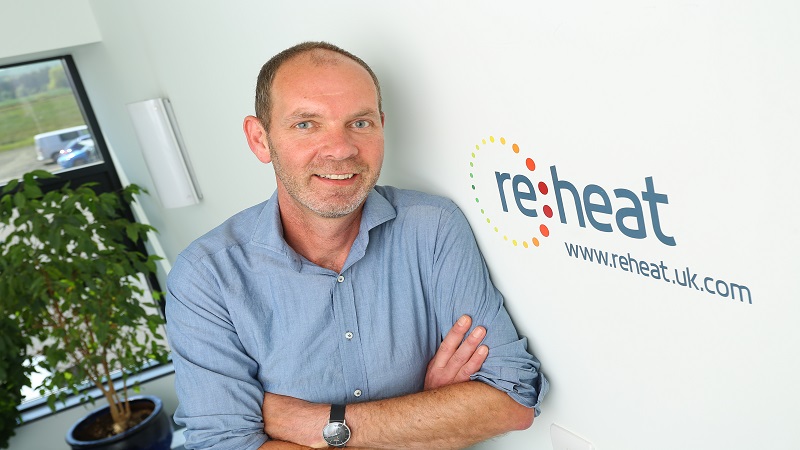
Steve Luker is principal consultant at re:heat, specialists in biomass heat with offices in North East England and Scotland. Before entering consultancy, Steve worked for Scottish Enterprise as a renewables and sustainability consultant. Steve is a recognised expert in bio-energy, advising local and national government, development agencies and the private sector in the UK and overseas on supply chains, energy contracts, tendering and procurement.  For further information, please visit www.reheat.uk.com.


Read part one of Steve’s column here
Looking for a new FM event to attend? You need the Facilities Management Forum…

With the next Facilities Management Forum taking place on January 30 & 31 at the Radisson Blu Hotel, London Stansted, we thought we’d give you a few reasons to book your place at the event nice and early.

Put simply, if you’re looking for a new and informative facilities management focused industry event, you’ve found it.

First and foremost, the Facilities Management Forum provides a platform for highly-targeted one-to-one meetings between industry professionals and trusted suppliers. But it also comes with a full programme of educational seminars, allowing all attendees to increase their industry knowledge and develop their skill sets while on site…

Plus, there’s full hospitality throughout, including lunches, drinks reception and an evening gala dinner, offering copious networking opportunities to build new business relationships.

But we think the enduring success of the event is best summed up by industry suppliers who have attended previously:

“Every Forum we have attended has been extremely beneficial resulting in either direct sales or further discussion.”

Kinnarps (UK) Ltd

“The Forum is an excellent two weeks of work in two days. Where else would you be able to do this?”

BELFOR

“LCC have been attending FM Forums for a number of years. They are a great networking opportunity and a good source of new business.”

LCC SUPPORT SERVICES

“Always well organised with helpful staff and always a good number of quality potential clients.”

INTERFACEFLOR

“An effective way to meet many buyers in a short time. If you look at cost per meeting it is very good value for money”

Delabie


So there you have it. More bespoke than a conference and more focused than an expo, the Facilities Management Forum is the only event you need to attend in 2017.

The next Facilities Management Forum takes place on January 30 & 31, 2017 at the Radisson Blu Hotel, London Stansted.

For more information or to book your place, call Luke Webster on 01992 374074 or email l.webster@forumevents.co.uk.

Alternatively, visit www.facilitiesmanagementforum.co.uk.  

Greener office spaces boost bottom line and staff productivity, says WorldGBC…

A report from the World Green Building Council (WorldGBC) reveals the impact building owners, designers, developers and employers are having by investing in greener office spaces.

Released under the organisation’s ‘Better Places for People’ campaign, the document pinpoints the global drive behind implementing green and healthy office operation and design, and showcases 15 buildings that are ‘leading the way’. 

As a result of improving noise levels, layout, lighting and indoor air quality at its office in Doncaster, Skanska cut sick days by two-thirds; in turn saving the company £28,000 in staff costs in 2015.

Terri Wills, CEO of the WorldGBC said: “While our earlier work presented the overwhelming evidence between office design and improved health and wellbeing of workers, this report breaks new ground by demonstrating tangible action businesses are taking to improve their workspaces. The results are clear – putting both health and wellbeing, and the environment, at the heart of buildings, is a no brainer for businesses’ employees and the bottom line.”

The report identifies eight key factors in creating healthier and greener offices which can impact on the bottom line:

  1. Indoor air quality and ventilation – a well-ventilated office can double cognitive ability.
  2. Thermal comfort – staff performance can fall six per cent if offices are too hot and four per cent if they too cold.
  3. Daylighting and lighting– a study found workers in offices with windows got 46 minutes more sleep a night than workers without them.
  4. Noise and acoustics – noise distractions led to 66 per cent drop in performance and concentration.
  5. Interior layout and active design – flexible working helps staff to feel more in control of their workload and encourages loyalty.
  6. Biophilia and views – processing time at one call centre improved by sven-12 per cent when staff had a view of nature.
  7. Look and feel – visual appeal is a major factor in workplace satisfaction.
  8. Location and access to amenities – a Dutch cycle to work scheme saved €27m in absenteeism.

Beth Ambrose, director within the Upstream Sustainability Services team at JLL, and chair of the WorldGBC Offices Working Group added: “The business case for healthy buildings is being proven. All over the world, companies, both large and small, are redesigning their offices, changing working practices and trialling new technologies, to improve the wellbeing of their staff, tenants and customers.” 
Access the full document here

Remain ‘cash-flow positive’ with Harvard Technology’s solutions…

Harvard Technology is a pioneer in connected smart lighting solutions, developing a suite of web-based, Internet of Things enabled wireless control and management solutions for interior and exterior lighting. Installed around the world, Harvard’s solutions are delivering substantial monetary and energy savings for many blue chip clients, including Oxford Brookes University, EON and Skanska. Harvard can now deliver solutions backed by a finance package allowing clients to realise these benefits whilst remaining cash-flow positive.

E:  Sales@harvardtechnology.com

W:  www.harvardtechnology.com


Logitech Management Services fits around you and your business…

We provide our services throughout the UK and can even accommodate out-of-business working hours to suit all specific requirements. We can help you with:

–       Design and Installation of Air Conditioning Systems
–       Temporary cooling/heating solutions for business critical environments
–       Planned Preventative Maintenance and Servicing Contracts
–       Reactive call out service to diagnose, rectify faults or major breakdown with your systems
–       TM44 Surveys, Audits and Reports
–       System Health Checks, to ensure that your system is energy efficient/compliant
 

–       Integrated M&E Maintenance Solutions
–       Hard and Soft Services
–       Total Facilities Management (TFM)


T: 01992 845066


E: info@logitechms.com

CCS awards Interserve with £40m TFM contract…

Interserve has secured a new five-year total facilities management (TFM) account with six central government departments worth over £40 million.

The deal, awarded through the Crown Commercial Services (CCS) Framework Agreement for Facilities Management Services, will see Interserve deliver a broad range of services including catering, security, front-of-house, as well as mechanical and electrical maintenance.

It is the first time that all six departments’ facilities management services will be handled by a single provider. 

John Manzoni, chief executive of the Civil Service said: “Bringing the support services together under a single overarching account will deliver significant benefits for each department and for the government as a whole. Thanks to the efficiencies that our partnership with Interserve will deliver, we will achieve consistent service level across the estate whilst bringing savings; ensuring we are delivering real value to taxpayers.”

Known as the ‘Affiliate Cluster’, the account covers: the Cabinet Office; the Department for International Development (DFID); the Food Standards Agency (FSA); the Government Actuary’s Department (GAD); the Health and Safety Executive (HSE) and the Office for Standards in Education, Children’s Services and Skills (Ofsted).

Alongside the new cross-departmental deal, Interserve also has pre-existing partnerships with the Home Office (HO), the Foreign & Commonwealth Office (FCO), the Department for Environment, Food and Rural Affairs (DEFRA) and the Health and Safety Laboratory in Buxton (HSE). 

Guest Blog, Liz Allen – The Circular Economy: Re-thinking waste…

We have become used to the idea of recycling.  We do it at home, and more businesses are recognising the financial benefits of waste segregation and recycling in the workplace.  But is this enough? What ‘matchmaking’ could you do for your business waste? Could your unwanted waste material be just what someone else needs?

Each time a material is recycled, its quality is generally reduced leading to a higher demand for virgin raw material.  According to Friends of the Earth, humans today extract and use around 50 per cent more natural resources than 30 years ago – that’s about 60 billion tonnes a year.  If we continue in the same way, the amount could be 100 billion tonnes of raw material by 2030. It’s not just the environmental problems associated with resource extraction, there are often social problems such as human rights violations and poor working conditions linked with these industries which we should be taking into account.

There is nothing wrong with recycling, and we should all keep up the good practice while looking out for opportunities to think a bit wider and add an extra loop into a products’ life cycle.  The challenge is to move away from the ‘take-make-dispose’ linear route, and move to a circular model where the life of products and materials are extended before they are repurposed, reused or reprocessed to provide new or different services.

The beauty of a ‘circular approach’ is that it can be tackled at any point of the value chain – anywhere from extraction of raw materials, design and manufacture, through to use and disposal. This affects everyone and is providing the inspiration for all kinds of new business models which appeal to the millennials, who are less materialistically-minded, and environmentalists alike.

All kinds of organisations are piloting new business models to try and rethink waste.  These range from product leasing – where you hand it back for someone else to use, to improving product performance by building in upgradability, through to remanufacturing.  All these approaches try to keep the original material in use for as long as possible to get the best out of it before recovering or regenerating products and materials at the end of their useful life.

Organisations such as WRAP and the Dame Ellen MacArthur Foundation are championing approaches to support innovative business models.  These are popping up all over the place including a company in Holland called Mud Jeans which lets you lease a pair of jeans for a year. After that, you can return them for repair, get a different style or purchase them. St Albans based office furniture specialist, JPA will collect, repair and refresh your office furniture, rather than it going to landfill, while businesses in the FMCG market are looking at ways to redesign products so they can minimise the use of virgin material.

We are great at accumulating ‘stuff’, and apparently up to 80 per cent of the products made are thrown away within the first six months. As a society, we have gotten used to wanting the latest trend and another bit of kit, but this cannot be sustainable? All these products have used other materials to make them and there is not an inexhaustible supply.  Think about the opportunities; we are happy to download music and no longer own CD’s, therefore eliminating (or at least significantly reducing) the production of plastic discs.  So what else could we do?


Liz Allen is an environmental consultant at Hosking Associates Ltd, and has many years’ experience working with diverse businesses to translate environmental issues into practical actions. She helps organisations prioritise risks and opportunities to reduce costs, and manage compliance. Liz is a chartered environmentalist with experience in designing and delivering CSR, sustainability and stakeholder engagement programmes.

Industry Spotlight: Delivering Renewable Heat – what have targets got to do with it?

In 2009, the UK and Scottish governments of the day set renewable energy targets, theoretically binding, to be reached by 2020.  With just four years to go, how are we doing?

So, as we are only four years away, I wanted to examine where we are with the Renewable Heat Target and the role of biomass heat in delivering this. For this article, I want to focus on the renewable heat target and the role biomass is playing in delivering it.  And I’m going to pay specific attention to Scotland where some intriguing new data has emerged.

The Scottish Renewable Heat Target for 2020 is 11 per cent, while for reasons unbeknown to me; it’s 12 per cent in the rest of the UK. Beyond the obvious question of whether we will actually meet the target, it’s particularly interesting as the Scottish Government is embarking on an energy review and is setting out its objectives for post-2020. 

If the Scottish Renewable Heat Target is going to be met, then 6,420GWhs of annual renewable heat output are needed by that date. At present, Scotland produces 3,031GWhs of renewable heat annually.  Biomass heat contributes 1,716GWhs of that total at present and biomass CHP contributes most of the rest.

We can roughly calculate how many heat only biomass installations 1,716GWhs is equal to, as each MW of installed capacity provides around 2,600MWhs of heat output.  On that basis, the current biomass heat output represents roughly 660MWs of installed capacity. 

In cash terms it represents £561 million of investment in renewable heat capacity.  A great achievement, if somewhat modest compared to many other northern European countries.

However, if we assume biomass heat will constitute the same proportion of our renewable heat in 2020 (57 per cent) and that the 6,420GWhs of heat is actually provided to meet the target, then an additional 2,000GWhs of biomass heat must be provided by 2020.  I should say to assume biomass CHP provides a bit more is perfectly reasonable, but if you ‘do the math’ on all other forms of renewable heat, you’ll see they can’t deliver anything like what is needed – never mind making up any biomass shortfall.  In other words, biomass heat may well need to be more than 57 per cent, but let’s stick with this figure for now…

So biomass has a key role to play in meeting the target and for modelling purposes this can be split into four years, which requires 500GWhs of biomass heat output to be added annually.

That means 192MWs of new installed capacity must be added annually for four years.  That’s going to be quite a challenge.

We know that 1MW of good quality biomass heat capacity costs about £850,000 to install.  As we need 192MWs a year, that requires annual capital investment to run at £163 million for four successive years…totalling more than has been achieved in the last 15 years combined.

If we assume an average installation size of 250kW, it means 768 installation contracts a year, each worth about £212,500.  Bringing that down to monthly figures it comes to 64 installs a month with a monthly spend rate of £13.6 million.

Typically, each MW of biomass heat capacity creates two jobs, so around 1,500 new jobs would be created if 2,000GWhs of biomass heat were produced.

Each scheme will take around four to six months to plan, design and install. Biomass heat installs require a range of design and contracting skills in M&E, civils, architecture, engineering and a co-ordination expert in biomass to oversee this.

There are no reliable figures on how many companies are involved in the design and installation of biomass heat. My own guess is that we have around 10 to 15 specialist biomass companies operating in Scotland, with fewer than 150 direct employees in total. 

Total sector capacity could probably expand quite quickly, but key skills shortages in specialist areas like biomass boiler specification/commissioning and fuel handling system design will hamper progress.  However, even if demand were to actually run at 64 x 250kW installs a month, it is hard to see how the required capacity could be mobilised sufficiently quickly.

I have reached the clear conclusion that unless things change, the Scottish Government will fall way short of its 2020 renewable heat target.  More on that next time…


Steve Luker is principal consultant at re:heat, specialists in biomass heat with offices in North East England and Scotland. Before entering consultancy, Steve worked for Scottish Enterprise as a renewables and sustainability consultant. Steve is a recognised expert in bio-energy, advising local and national government, development agencies and the private sector in the UK and overseas on supply chains, energy contracts, tendering and procurement.  For further information, please visit www.reheat.uk.com.

Forum Insight: Customer engagement methods to maintain strong relationships…

Now more than ever, customer communication methods are becoming varied and diverse. Trade exhibitions, social media platforms, focus groups and surveys, personalised email campaigns – the list is endless. But which methods will prove to be the most effective for your business? Before investing too much time and effort into just one, think carefully about all available options, and ask your customers how they prefer to be contacted…
Keep track of emails: Make it your personal – and even company – goal to respond to all customer emails within a five minute time frame. Not only will it generate appreciative responses, people love fast and efficient customer service, and this level of service will lead to an abundance of recommendations and increased trade. Need more convincing? View Eptica’s ‘Email Management’ article here.

Be active on social media: By now you’re probably tired of the constant emphasis on regular social media use, but inevitably, one of the best ways to connect with customers is through social platforms such as Twitter and Facebook. The good thing about social media is there is no time schedule to follow – you can reach customers at any time of the day. Use your company’s Facebook fan page or Twitter account to engage your followers and keep conversations flowing. Nowadays, social media has been incorporated as a form of customer service, so make your platforms adaptable for staff members to handle customer questions and complaints. Read through Conversocial’s case studies for influential insight.

Answer the phone: If it ain’t broke, don’t fix it! No matter what industry, a significant focus seems to be on new customer channel developments. But whatever happened to the traditional phone conversation? Whether you’re following up, apologising for something that went amiss, or wondering why you haven’t received an order in a while, there’s no better way to strengthen a customer relationship. According to eConsultancy, customers prefer assistance over the phone (61 per cent), followed by email (60 per cent); Live Chat (57 per cent); online knowledge base (51 per cent) and “click-to-call” support automation, (34 per cent).

Start a weekly blog: Why not create a weekly blog to keep your customers up-to-date? If you actively keep up a quality blog, not only will your customers read your blog, but they will respond to your blog. This creates a positive flow of communication and helps build customer loyalty. Find inspiration from these companies that have made blogging a ‘top priority’.

Conduct market research: Surveys allow businesses to identify customer needs. Once acknowledged, companies can steer their offerings towards filling these needs. Surveys are also a good tool to bring in prospective customers who are on the fence about a product/service, i.e. surveys can be used as a platform for prospective customers to voice their needs. Confused about whether to conduct quantitative or qualitative research? Learn more about the differences here.

UK-GBC’s HQ refurb breaks carbon footprint record…

The UK Green Building Council‘s (UK-GBC) headquarters in Central London has achieved the lowest embodied carbon footprint ever recorded for an office refurbishment in the UK.

Working in collaboration with London-based architects, Barr Gazetas, among other organisations, the landmark project has proven to be an exemplar for sustainable office refurbishment and also features a range of innovative wellbeing measures – such as an innovative ventilation system and an automated low-energy LED lighting system – to deliver an environmentally friendly workplace.

Notable statistics collected in the aftermath of the office refurbishment are: 48 per cent decrease in carbon emissions from lighting; 139 kgCO2/m² – embodied carbon footprint 22 per cent below a comparable ‘standard’ fit-out and the lowest ever recorded in the UK (under the SCP database, WRAP database); 98 per cent of original fixtures and finishes reused or repurposed; and 99.4 per cent of construction waste diverted from landfill.

Chief executive of UK-GBC, Julie Hirigoyen said: UK-GBC’s purpose is to accelerate the transformation of places so that people and planet can thrive. In refurbishing our own office space, we had a fantastic opportunity to trial and showcase the very best solutions sourced from our membership. I’m delighted at the outstanding results we have achieved – both to minimise our environmental footprint and to improve the wellbeing and productivity of our staff.

“I’d like to thank all of our innovative product suppliers as well as our outstanding design and delivery team: architect, Barr Gazetas; services engineer and sustainability consultant, Cundall; project manager and quantity surveyor, Currie & Brown; main contractor, Morgan Lovell; and carbon consultant, Sturgis Carbon Profiling.”

The UK-GBC HQ will be subject to a ‘post-occupancy evaluation’ in order to assess its operational performance against performance factors such as energy efficiency and air quality. In addition, staff satisfaction will also be analysed through ongoing surveys, with results compared to previous data collected prior to the refurb.


To view an annotated diagram providing details of the suppliers and products used in the refurbishment, click here