Stuart O'Brien, Author at Facilities Management Forum | Forum Events Ltd - Page 10 of 87
Posts By :

Stuart O'Brien

Key challenges for Net Zero offices laid out in BCO report

Delivering Net Zero Carbon in the Workplace, produced by University College London Consultants (UCLC) for the British Council for Offices (BCO), identifies the barriers that businesses are facing as they strive to drastically reduce their workplace carbon footprint.

The report, informed by over 100 office occupiers and building professionals, outlines the measures that can be taken to overcome these barriers – at low or zero cost. These include:

  • Greener and longer leases, with office occupiers having more say over refurbishments
  • Greater collaboration and data sharing between building owners and occupiers
  • Submetering and the use of sensors to measure exactly where energy is used
  • Use of pre-fabricated, re-used and recycled materials and furniture

Clearly, achieving net zero carbon emissions is a major component of Environmental, Social, and Governance (ESG) strategies in the commercial real estate sector, driven by a growing expectation from businesses, their customers and ultimately the public, to respond to the effects of climate change. The current energy crisis that began in 2022 is also focusing minds and investment on improving energy efficiency.

Yet improving the energy performance of offices is challenging, particularly as 50% of the office building stock in the UK is tenanted – meaning there is little consistency even within single buildings as to how workspaces are designed and used. Only 12% of building professionals and office occupiers consulted for the BCO’s report believe that operational carbon targets are currently being achieved by those involved in designing and developing office buildings.

The reports says that for the office sector to move from ambition to tangible action, there is an urgent need for robust benchmarks and verifiable data, as well as government requirements and incentives to support businesses’ ESG objectives and facilitate the transition to net zero.

The relationship between building owner and occupier is an essential factor in energy management. Tailoring lease agreements to promote lower energy use and carbon emissions, known as ‘green leases’, would be a potential solution to reaching net zero targets collaboratively.

Currently, it is difficult for occupiers to measure their carbon emissions accurately because targets for energy use intensity do not differentiate between different types of office. In addition, dysfunctional metering strategies do not allow for a breakdown of energy use between communal and occupier areas.

Energy wasted through under-utilisation of office space since the COVID-19 pandemic, as shown in the BCO’s recent The Future of Office Densities report, remains a concern that can be alleviated through using smart sensors and responding to demand.

Retrofit is an increasingly popular approach among developers but the works involved make it highly disruptive to any existing occupiers of a building. Careful phasing and use of prefabricated components can mitigate disruption on site – and contribute to a circular economy if designed for disassembly in the future.

The report says it is vital to assess carbon emissions associated with the complete lifecycle of a building in order to strike the right balance between operational carbon[1] and embodied carbon[2] when refurbishing buildings. A clearly defined division of funding responsibility for net zero improvements is also needed to avoid any doubt, or dispute, between building owners and occupiers.

A key issue to address is ‘Category A’ interior fit-outs (which comprise lighting and basic finishes such as flooring) being installed by the building owner and then discarded by the incoming occupier, in favour of their own bespoke fit-out.

The BCO says most office spaces would benefit from ‘Cat A+’ (plug and play) fitouts for shorter and more flexible tenancies in light of the market trends seen since the COVID19 pandemic. Prioritising locally-sourced materials with lower embodied carbon and using recycled, reused and further recyclable furniture can also support more environmentally friendly fit-outs.

Richard Kauntze, Chief Executive of the BCO, said: “The office sector has a significant contribution to make to the UK’s net zero transition. There is a clear desire from those involved in creating and occupying workspace to hit ambitious targets, but we need to see evidence of innovation and improvement which demonstrate meaningful progress.”

Dr Esfandiar Burman, Associate Professor at UCL’s faculty of the Built Environment and author of the report, said: “This report shows that greater energy and carbon accountability and more effective ESG frameworks can be achieved through greater collaboration between building owners and occupiers, along with data sharing and greater transparency.”

Need Energy Management solutions for 2023? FM Forum Recommended Supplier Directory can help!

Looking for a new Energy Management supplier for your building, venue, school or company? The FM Forum Recommended Supplier Directory is home to dozens of trusted partners ready to help make your project a reality!

Put simply, there’s something to suit every requirement.

Start Your Search Now

Are you an FM supplier? Get listed!

The FM Forum Recommended Supplier Directory is the perfect platform to raise your organisation’s profile and extend your reach.

Promoted via the FM Briefing newsletter, website and our renowned meet-the-buyer facilities events – this digital FM directory offers a comprehensive list of industry solution leaders.

Click Here To Get Listed!

Or, for more information, please contact Paige Aitken on 01992 374079 or p.aitken@forumevents.co.uk


Do you specialise in Health & Safety? We want to hear from you!

Each month on FM Briefing we’re shining the spotlight on a different part of the facilities management market – and in January we’ll be focussing on Health & Safety.

It’s all part of our ‘Recommended’ editorial feature, designed to help FM industry buyers find the best products and services available today.

So, if you specialise in Health & Safetyand would like to be included as part of this exciting new shop window, we’d love to hear from you – for more info, contact Paige Aitken on p.aitken@forumevents.co.uk.

Here’s our full features list:

Jan – Health & Safety
Feb – Building Maintenance & Refurbishment
March – Cleaning
Apr – Total FM
May – Energy Management
Jun – Security
July – Air Conditioning
Aug – Waste Management
Sep – Asset Management
Oct – FM Software
Nov – Intruder & Alarm Systems
Dec – Fire & Safety Equipment

Take your FM career to the next level with these excellent online courses

Our selection of online courses tailored specifically for the FM sector will enable you to both learn new skills and improve existing ones in 2023 and beyond – sign up today!

These are specially-curated online courses designed to help you and your team improve expertise and learn new things.

The Management, Leadership & Business Operations online learning bundle provides you with over 50 courses, which cover all areas of both professional and personal development:

  • Costs, Volumes and Profits Certification
  • Agenda Setting Certification
  • Health and Safety in the Workplace (UK) Certification
  • GDPR in The Workplace Certification
  • Project Management Foundation (Small Projects) Certification
  • Project Preparation Certification
  • Making Meetings Matter Certification
  • Marketing Certification Level 2
  • Managing Emotions at Work Certification
  • Managing Your Workload Certification
  • UK Employment Law Certification
  • Workplace Monitoring and Data Protection Certification

And many more!

Find out more and purchase your ticket online here.

Additionally, there are a variety of bundles available on all spectrums;

  • Personal & Professional Development
  • Healthcare
  • Sports & Personal Development
  • Human Resources
  • Customer Services
  • Health & Safety
  • Education & Social Care Skills
  • Sales & Marketing
  • IT & Personal Development

Book your courses today and come out of this stronger and more skilled!

How commercial roof surveys help you to save money

The roof is integral to the building’s protective envelope – it must be designed to keep the weather out and maintain a stable internal temperature. It also has many secondary functions, including aiding fire protection, structural rigidity, and constructional support for other services like air conditioning units, ducting, and insulations.

As capital works and refurbishment budgets are reviewed and finalised ahead of summer projects, it makes sense for estate managers to consider their roofing systems and ensure they are in good working order. 

Building Envelope Health Check

A commercial roof inspection and survey is essential to any organisation’s proactive approach to asset management. From the outset, it is crucial to remember that a survey’s purpose isn’t just to identify the condition of a specific building’s roof but to act as a gauge for the overall health and maintenance programmes for your entire estate. By carrying out a commercial roof inspection, you identify an y potential causes of degradation and potentially head off a costly repair or restoration bill in the future.

Many factors can affect the performance of a roof system over time, including wear and tear, ageing, temperature changes, poor quality installation and exposure to the elements. These roofing issues can lead to changes in appearance and defects, such as splits or cracks forming on the roof’s surface. Other signs include damaged flashings or sealants and penetrations around areas where plant equipment has been mounted.

Minimise Disruption

Regular commercial roof surveys and maintenance programmes help ensure the systems perform at their best for longer. Taking care of your business’s roof will continue to ensure that the occupants will have a safe and comfortable environment to work in, with minimal business disruption, for years to come.

At Garland UK, we strongly recommend that all commercial estates conduct a comprehensive commercial roof inspection of their facilities annually to help safeguard their future. Our Technical Managers are expertly trained and have years of industry experience providing free roof condition surveys as part of their service.

Roof Survey Process

A typical roof condition survey begins with assessing the building’s operational requirements and challenges. Once on-site, a thorough roof condition examination will be underway to investigate any roof defects, locating any areas of water ingress or system issues.

U-Value calculations will help identify the building’s operational thermal performance, and carrying out a core sample will determine the roof’s existing build-up and condition under the surface. Once the roof has been evaluated, a thorough condition report outlining the technical analysis and findings from the site visit will be provided, with a tailored selection of solutions to remedy any issues.

To ensure your roof receives the best possible service and expertise, we recommend choosing a reputable and experienced roofing partner to conduct the survey, preferably accredited by the National Federation of Roofing Contractors (NFRC).

The Benefits

Ben Whitemore, Product Manager at Garland UK, adds, “Identifying a defective roof can be challenging, especially when the source of a building’s leaks can be completely untraceable to the naked eye. We always recommend regular checks on your roof to ensure it stays in optimum condition, year after year.”

www.garlanduk.com

Final call for January’s FM Forum – Register today!

There are just a handful of delegate places left at January’s FM Forum – make sure you register before Christmas to claim yours!

Your pass is entirely free – and allows you to meet with a range of suppliers that can support your upcoming projects, via a series of relaxed meetings.

Plus, you can enjoy insightful seminar sessions presented by industry-thought leaders and full hospitality throughout.

23rd & 24th January

Radisson Hotel & Conference Centre London Heathrow

You can confirm your attendance here via our online booking form.

87% of business leaders expect to increase sustainability investment in short-term

87% of business leaders expect to increase their organization’s investment in sustainability over the next two years. Customers are the primary stakeholder group creating pressure for organizations to invest or act on sustainability issues, selected by 80% of executives, followed by investors (60%) and regulators (55%).

“Sustainability enables businesses to cope with disruption,” said Kristin Moyer, Distinguished VP Analyst, Gartner, which carried out the research. “Economic uncertainty, geopolitical conflict and escalating materials and energy costs are forcing businesses to reexamine all forms of expenditure. This focus on essentialism, in combination with increasing stakeholder desire to see progress on environmental, social and governance (ESG) goals, creates new opportunities for enterprises to grow while mitigating cost and risk.”

The survey was conducted in June and July 2022 among 221 respondents in North America, Europe and Asia/Pacific. Respondents were executives in director roles or above within organizations with enterprise-wide annual revenue of at least $250 million for fiscal year 2021, which are currently engaged in sustainability-related activities.

Sustainability Protects Organizations from Disruption

The survey found that 86% of business leaders see sustainability as an investment which protects their organization from disruption. Additionally, 83% said sustainability program activities directly created both short- and long-term value for their organization, and 80% indicated that sustainability helped their organization optimize and reduce costs.

Specifically, the top areas where survey respondents said sustainability programs are mitigating cost increases are energy consumption, business travel and customer transactions (see Figure 1).

Fig. 1. Top Operations-Related Costs Being Mitigated Through Sustainability Programs

Source: Gartner (November 2022)

“Executive leaders are achieving both operational and supply chain savings through their sustainability programs,” said Moyer. “This kind of ‘two for one,’ where sustainability investment supports a business goal like cost optimization, significantly enhances the program’s impact by creating a virtuous cycle.”

Sustainability Drives Growth and Innovation

Sustainability can also enable new value creation and business growth opportunities. Fifty-seven percent of business leaders said the enterprise sustainability program has a strong connection to the results on the income statement, and 42% of respondents are leveraging their sustainability activities to drive innovation, differentiation and enterprise growth through sustainable products.

“Investing in sustainability can support product differentiation but be wary of greenwashing risks – there are no shortcuts to sustainable growth,” said Moyer. “Focus on product attributes that are important to customers and how these priorities shape buying decisions. When viewed through a strategic lens, sustainability can provide a ray of sunshine for businesses during difficult market conditions.”

The legal changes in electrical testing every landlord needs to know about

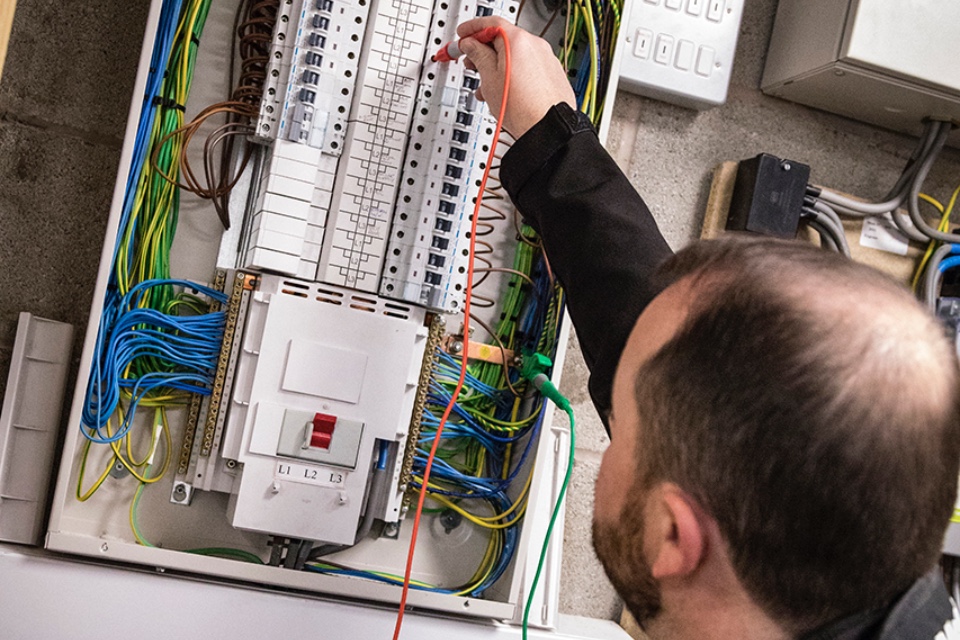
Changes in regulation relating to electrical testing could catch out commercial and private landlords and land them with large fines, says phs Compliance, the UK’s largest provider of electrical safety testing.

In recent years, legislation has not identified a mandatory timeframe for carrying out electrical testing on electrical installations and equipment, instead stating that duty holders must ensure electrical systems are regularly maintained and safe to use, leaving it to them to decide the most appropriate frequency for their tests.

By law, all domestic and commercial landlords must now have an Electrical Installation Condition Report (EICR) completed by a qualified person every 5 years to ensure the safety of their property for tenants. Failure to comply could cost lives and a sizeable fine.

“This applies to all landlords and relates to electrical installations – that is all fixed electrical equipment that is supplied through an electricity meter including cables, accessories, like sockets, switches and light fittings, fuse boxes, circuit breakers and residual current devices,” says Tracy Burtwell, Managing Director of phs Compliance.

“The changes have not been widely publicised, so there is the danger that many landlords are not aware of them and are unintentionally breaking the law.”

An EICR is produced following an assessment of an electrical installation in a building. This assessment inspects the installation, checks components for wear and tear and looks for faulty wiring and anything that could pose a risk. The results are recorded in an EICR and any unsatisfactory outcomes must be fixed and made safe before a satisfactory EICR is achieved.

“The law states that an EICR, which is also called a fixed wire test, must be carried out by a qualified person so we urge businesses to get in touch with us to ensure they are compliant,” says Tracy.

“Although the regulations stipulate a mandatory five year inspection, businesses may need an EICR more frequently in order to ensure they are meeting their health and safety obligations.

“As a guide, most offices, retail spaces, schools or care homes require less frequent testing – usually once every five years.

“However, a higher risk environment, like a swimming pool (exposed to high levels of moisture) or an industrial unit (with high dust levels), would require more frequent testing to ensure safety- usually every year.

“You should always consult a qualified professional to discuss the frequency of your electrical testing to ensure everyone’s safety.”

phs Compliance is an expert in commercial EICR inspections services. They are the UK’s largest and most experienced provider of EICR inspections, certifications and electrical safety testing, with a large, nationwide team of highly experienced engineers.  phs Compliance has full regulatory and industry accreditation.

To learn more about phs Compliance’s EICR services or to book an inspection, visit the EICR Services page.

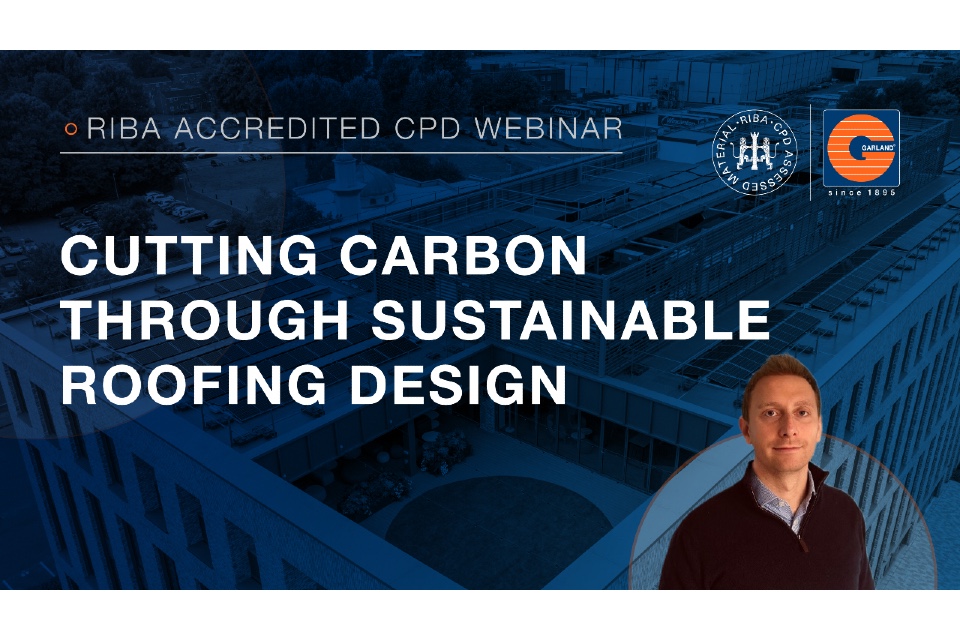
WEBINAR: Garland UK launches CPD to cut carbon with sustainable roofing design

Sustainable building initiatives are now more prevalent than ever before, and the UK has committed to achieving Net-Zero carbon by 2050 across all sectors of the economy. The built environment currently accounts for almost 40% of total carbon emissions and, as such, is an industry that offers significant opportunities for positive climate change.

Specially tailored to specifiers and surveyors, the RIBA-accredited ‘Cutting Carbon through Sustainable Roofing’ CPD by Garland UK gives a masterclass in carbon emissions during the entire lifecycle of your building project, from construction through to operational use and provides clear guidance on how sustainable roofing design can play a pivotal role in reducing emissions in commercial buildings and support your organisation’s key environmental initiatives.

Garland UK has taken a significant step in its commitment to sustainability, with the recent announcement that it will be a net-zero carbon company by 2032, 18 years earlier than the Government’s 2050 net-carbon zero targets. John Mather, National Sales Manager at Garland UK, played an integral role in the development of the Sustainability Commitment, explains, ‘now more than ever, we are working with clients who each have progressive carbon reduction targets to meet in the coming years. There was so much more we could do as a business to be more sustainable. Now, with our Commitment in place, we have a clear path to net zero and a better way to support our customers’ environmental initiatives in the future.’

Garland UK’s Sustainability Lead, Alex Priddle, explained: “The Cutting Carbon through Sustainable Roofing Design CPD has been developed as a direct response to the challenges our customers are currently facing in the industry, to reduce commercial building’s carbon emissions, increase thermal efficiency and, where possible, reduce those ever rising energy bills.”

Alex added: “It is essential for us to keep raising the standard in the industry and keep improving how we educate our customers and peers. We are responsible for ensuring the longevity of our roofing specifications that comply with current legislation and building regulations. We know that this CPD will help to advise the best sustainable roofing practices in the industry today.”

Live CPD Registration

Register via the link below to book your place on Garland UK’s live CPD webinar: Cutting Carbon Through Sustainable Roofing Design, with Sustainability Lead Alex Priddle. The session will be held at 12.00 pm on the 1st of December 2022.

All attendees will receive a personalised RIBA CPD certificate via email after the live session.

Register for the Live CPD Webinar here

www.garlanduk.com

Do you specialise in Fire & Safety Equipment? We want to hear from you!

Each month on FM Briefing we’re shining the spotlight on a different part of the facilities management market – and in December we’ll be focussing on Fire & Safety Equipment.

It’s all part of our ‘Recommended’ editorial feature, designed to help FM industry buyers find the best products and services available today.

So, if you specialise in Fire & Safety Equipment and would like to be included as part of this exciting new shop window, we’d love to hear from you – for more info, contact Paige Aitken on p.aitken@forumevents.co.uk.

Here’s our full features list:

Dec – Fire & Safety Equipment
Jan – Health & Safety
Feb – Building Maintenance & Refurbishment
March – Cleaning
Apr – Total FM
May – Energy Management
Jun – Security
July – Air Conditioning
Aug – Waste Management
Sep – Asset Management
Oct – FM Software
Nov – Intruder & Alarm Systems
Dec – Fire & Safety Equipment