Stuart O'Brien, Author at Facilities Management Forum | Forum Events Ltd - Page 17 of 87
Posts By :

Stuart O'Brien

Three quarters of UK businesses unaware of Plastic Packaging Tax

Research conducted by YouGov, on behalf of Veolia, explored the views of British-based senior decision makers across retail and manufacturing businesses on the incoming Plastic Packaging Tax.

The tax places a £200 per tonne levy on producers or importers of plastic packaging if they do not include 30% recycled content and will come into force from 1 April 2022.

The survey found that only a fifth (22%) of the manufacturing and retail businesses asked had already opted for recycled content in their packaging. To reach the UK’s Net Zero goals, far more businesses must reduce their reliance on virgin materials. The majority of British retail and manufacturing businesses also support an escalator in percentage of recycled content threshold (63%) and cost charge (50%) as an incentive to use recycled content.

The British retail and manufacturing businesses who had made changes to their plastic packaging reported:

  • Two thirds (66%) have reduced the amount of unnecessary or avoidable plastic packaging
  • Over half (58%) now use recycled content
  • 54% have changed the packaging design to make it more recyclable
  • 39% have chosen alternative materials to plastic for their packaging

“The UK’s Plastic Packaging Tax is the right way to start getting businesses to push sustainability up the agenda, but it needs to go further. A tax escalator would make choosing to incorporate recycled content in packaging both economically and environmentally preferable to using virgin materials,” said Gavin Graveson, Veolia’s Northern Europe Zone Senior EVP. “Not only could the UK save up to 2.89 million tonnes of carbon emissions every year if all plastic packaging included 30% recycled content, it would also incentivise investment in domestic infrastructure which could make the UK a world leader in plastics recycling.”


M&A activity drives EMEA corporate real estate market to new highs

Corporate real estate sales across EMEA leapt above EUR 29 billion for the first time on record last year – buoyed by frenetic levels of merger and acquisition activity and the increasing demand for industrial and logistic portfolios.

The latest issue of JLL’s annual – ‘Raising Capital from Corporate Real Estate’ report – reveals 2021 was another bumper year for occupier sales despite the pandemic with corporates generating EUR 29.2 billion across more than 670 disposals.

It marks the third consecutive year in which the total value of corporate disposals exceeded EUR 25 billion. And it came as the sale of industrial and logistics properties raised more than office disposals for the first time.

JLL said growing volumes of capital were targeting long-term income from more specialised, ‘mission critical’ properties such as complex logistics portfolios, research and development facilities and manufacturing centres.

Corporate disposals of industrial and logistics properties raised a record EUR 11.1 billion in 2021 – well ahead of 2020’s previous record high of EUR 7.9 billion.

Notable transactions in 2021 included UK supermarket chain Asda’s EUR 2 billion sale of its distribution network to Blackstone. And in July, In July, real estate investor Hines acquired 11 logistics properties from French retail group Auchan for EUR 286 million.

Nick Compton, Head of Corporate Capital Markets EMEA commented: “Corporates continue to monetise a wide range of property assets, with another record year for sale and leasebacks in 2021 despite the headwinds from the pandemic and the economic uncertainty.

“The growing volumes of capital targeting specialised properties has opened up further routes to monetisation for owner occupiers, with supermarkets looking to raise income from their stores and supply chains, and firms in sectors like energy, life sciences and technology reviewing their asset portfolios.”

Matthew Richards, Capital Markets CEO, EMEA, JLL, added: “We expect another strong year for sale and leasebacks in 2022, with investors taking an increasingly sophisticated approach to transactions – looking beyond corporate credit profiles, focusing on defensive industry sectors and asset criticality as well as the wider context that may impact the value of individual properties.

“Expect to see more capital deployed in sectors such as complex manufacturing, energy repositioning, grocery and non-discretionary retail as they are likely to perform well in the face of rising inflation and higher interest rates.”

Meeting sustainability goals

JLL said that as the market moves into 2022, corporate owner occupiers and potential investors, are being increasingly driven by ESG factors and the adoption of post-Covid hybrid working patterns. The report remarks that corporates are looking to divest older offices that are often too big for their occupational needs, and too energy inefficient to support their sustainability goals.

Firms are also rethinking the types of space they need in light of the pandemic and reviewing where their offices should be located to support employee aspirations about flexible working patterns. An increasing number of corporates are also partnering with investors to forward fund new state of the art facilities to better meet their environmental ambitions.

Mark Caskey, Work Dynamics CEO EMEA, JLL, said: “Without doubt, 2022 is the year where corporates will have to act on ESG and net zero targets. An increased focus on sustainability and the adoption of hybrid working patterns is driving occupiers to divest older office buildings that are too energy inefficient or big for their needs.

“Corporates are working with investors to fund new state-or the art facilities that better meet their business and environmental ambitions – as well as the evolving needs and aspirations of their staff.”

Office sales totalled EUR 8.4 billion in 2021, with British motorsport firm McLaren selling its global headquarters for EUR 197 million to sale and leaseback specialist Global Net Lease. Dutch bank ABN Amro sold its headquarters for EUR 765 million to Victory Group.

The UK, Germany and France continued to be the most active markets for corporate disposals in 2021, accounting for 56 per cent of the total value of transactions, up from 52 per cent in 2020. The value of disposals in the UK alone jumped to EUR 6.6 billion, almost double the volume in France.

JLL’s report notes that despite the record year for sale and leaseback deals, some corporates are deciding to purchase the freehold of their leased properties, taking advantage of some temporary weakness in office pricing. American advertising group Omnicom bought their London headquarters for EUR 523 million (£440m) in November 2021.

UK ranked second globally for B Corps

Research by green energy experts Uswitch has revealed Moodle, an online educational platform designed for distance learning, is the world’s most popular B Corp business, followed by Coursera and TOMS.

B Corp certification is awarded to businesses that meet the highest standards of accountability when it comes to their social and environmental impact, and there are now almost 5,000 B Corp businesses officially achieving B Corp Certification in the world.

The Most Searched For Sustainable Brands

The social and environmental impact of the products we buy, and the companies we buy them from, is now more important than ever to consumers. So, to discover which sustainable businesses are the most well-known around the world, researchers analysed Google search data, to reveal which ones consumers are Googling the most.

Moodle tops the list with over 53.5 million global searches each year. The Australian-based company is hailed as the world’s most popular learning management system and was crucial throughout the pandemic when classrooms were closed.

Coursera, the open online course provider that works with universities to offer qualifications, is second on the list with 35.9 million global annual searches, followed by the sustainable shoewear brand TOMS in third place, receiving over 14.9 million searches every year.

Popular brands such as premium ice-cream manufacturers Ben & Jerry’s and the world’s first carbon-neutral brewery BrewDog also appear in the top 15 most popular B Corp businesses list, ranking in seventh and 15th place respectively.

Top 15 Most Popular B Corps

Rank Company Name Annual search volume
1 Moodle Pty Ltd 53,550,000
2 Coursera 35,930,000
3 TOMS 14,920,000
4 Redbox 14,480,000
5 Athleta, Inc. 13,643,000
6 Warby Parker 11,335,000
7 Ben and Jerry’s 10,281,000
8 Kickstarter PBC 10,257,000
9 Envato 9,384,000
10 Boomera 8,403,000
11 Nature et Decouvertes 6,555,000
12 Vestiaire collective 5,736,000
13 Rentcars LTDA 4,812,000
14 Allbirds, Inc. 4,781,000
15 BrewDog 4,688,000

The Most Searched For Sustainable Food and Drink Brands

The research also looked at food and drinks organisations that have been recognised by B Corp – it reveals the American ice-cream manufacturer, Ben & Jerry’s, is the most popular sustainable food and drink brand in the world with over 10.2 million searches every year.

Scottish-founded BrewDog is the second most popular food and drinks B Corp business, with 4,688,000 searches every year, followed by Thrive Market, the membership-based retailer selling purely organic and natural food products, in third place.

The top five is made up of two subscription services; the UK-based meat delivery company ButcherBox is fourth, and Gousto is fifth with over 2.4 million searches.

Top 10 Most Popular Food & Drink B Corps

Rank Company Name Annual search volume
1 Ben & Jerry’s 10,281,000
2 BrewDog 4,688,000
3 Thrive Market 3,669,000
4 ButcherBox 2,737,000
5 Gousto 2,447,000
6 NATURALIA 2,104,000
7 Jeni’s Splendid Ice Creams 1,719,700
8 Alpro (Alpro SCA) 1,286,500
9 Mindful Chef 1,240,500
10 Tony’s Chocolonely 1,149,000

The Countries With the Most B Corp Certified Businesses

From Australia to Zambia, there are B Corp certified businesses all over the world, and the research also reveals the countries with the most certified B Corps. The United States takes the top spot, with 1,418 in total, followed by the United Kingdom with 590, and then Canada with 323.

Although it might not be a surprise that the USA is on top given the size of the country, it is worth noting that the process to become recognised by B Corp and receive the certification is very tough and incredibly thorough, so it’s only handed out to organisations who really are making a difference.

Top 10 countries with the most certified B Corps 

Rank Countries Total number of certified B Corps
1 United States 1418
2 United Kingdom 590
3 Canada 323
4 Australia 296
5 Brazil 181
6 Chile 136
7 France 151
8 Italy 134
9 The Netherlands 126
10 Argentina 119

To read the full research, please visit: https://www.uswitch.com/gas-electricity/most-popular-bcorps/

Total Security Summit

Do you specialise in Total FM services? We want to hear from you!

Each month on FM Briefing we’re shining the spotlight on a different part of the facilities management market – and in April we’ll be focussing on Total FM.

It’s all part of our ‘Recommended’ editorial feature, designed to help FM industry buyers find the best products and services available today.

So, if you specialise in Total FM and would like to be included as part of this exciting new shop window, we’d love to hear from you – for more info, contact Paige Aitken on p.aitken@forumevents.co.uk.

Here’s our full features list:

Apr – Total FM
May – Energy Management
Jun – Security
July – Air Conditioning
Aug – Waste Management
Sep – Asset Management
Oct – FM Software
Nov – Intruder & Alarm Systems
Dec – Fire & Safety Equipment

UK ranks among most successful countries for CO2 reductions

The United Kingdom is one of the few countries that managed to actually reduce its CO2 emissions in the last 60 years.
The report by Utility Bidder analyses various countries’ emissions from 1959 and 2019, to reveal who has made the most cuts to their emissions, and predict who will be the worst offenders for co2 emissions in 2032.
Top five countries that have cut emissions the most

Rank

Country

1959 emissions (MtCO2)

2019 emissions (MtCO2)

Annual change

Estimated 2032 emissions (MtCO2)

1

Curaçao

11.0

3.7

-1.78%

2.8

2

Moldova

11.0

7.3

-0.66%

6.7

3

the United Kingdom

545.9

370.1

-0.64%

339.5

4

Ukraine

256.5

223.5

-0.23%

217.0

5

Germany

754.8

703.5

-0.12%

692.9

Only five of the 93 nations saw their emissions decrease in the last 60 years, with the Caribbean island of Curaçao achieving the biggest decrease at -1.78% per year.
Moldova’s emissions have fallen by an average of 0.66% over the last 60 years. if they continue to do so at the same rate, they’ll have fallen to 6.7 MtCO2 by 2032.
Whilst still being one of the countries with the highest emissions, the UK has seen its emissions fall in the last 60 years, from 545.9 MtCO2 in 1959 to 370.1 MtCO2 in 2019.
The countries with the biggest emissions increase 

Rank

Country

1959 emissions (MtCO2)

2019 emissions (MtCO2)

Annual change

Estimated 2032 emissions (MtCO2)

1

Saudi Arabia

3.7

582.6

8.66%

1,238.8

2

Thailand

3.7

289.5

7.43%

568.9

3

Malaysia

3.7

249.2

7.16%

481.1
Saudi Arabia’s emissions grew by  578.9 MtCO2 over the last 60 years, and the annual change is estimated at 8.66%. This increase is expected given the country’s role as the leader in the world’s petroleum industry.
Thailand Increased its emissions by 285.8 MtCO2 since 1959, so it could hit 568.9 MtCO2 by 2032. It is largely due to the simultaneous economy and population growth that the country experienced over the last 60 years.
Malaysia Increased its emissions by 245.5 MtCO2, meaning it could hit 481.1 MtCO2 by 2032.
Further findings: 
The countries with the lowest estimated 2032 emissions:
  • As well as being the country that has cut its emissions the most since 1959, Curaçao is also the nation that has the lowest predicted emissions by 2032, at just 2.8 MtCO2.

  • Democratic Republic of the Congo is at the second-lowest estimated emissions, reaching 3.7 MtCO2 by 2032. The DRC is also home to the second-largest tropical rainforest in the world, which acts as a carbon sink.

  • Moldova has the third-lowest estimated emissions for 2032, with 6.7 MtCO2.

Safest day of the week to be in the office is a Wednesday

Workers looking for the lowest virus transmission risk day of the week to go into the workplace should go in on a Wednesday according to findings from an Air Quality Index launched by smart building platform Infogrid. The findings show that only a quarter of working days in 2022 have had a ‘low’ virus transmission risk, showing the effects of winter on the spread of infections like COVID and the flu.

The Infogrid Air Quality Index is based on data points collected in office buildings and workplaces globally including temperature, humidity, office occupancy and CO2 levels and shows how indoor air quality changes over time.

The data, collected between September 2021 and February 2022 shows how virus transmission risk increases around Christmas time. Through September and October virus transmission risk remained ‘low’, however once temperature and humidity start to drop in November, the virus transmission risk doubled with 12 days registering ‘medium’ virus risk.

The impact of Winter is clear as indoor virus transmission risk doubled from September to December 2021 and three quarters of the days in 2022 have been at medium virus transmission risk.

William Cowell de Gruchy, Infogrid CEO, said: “The virus transmission risk increased in November and has remained high through the winter months. While the virus transmission risk moved from ‘low’ to ‘medium’ risk, that increase was enough to cause an influx of covid cases and hospitalisations which led the government to issuing a work-from-home recommendation.”

Wednesday is the safest day 

Further findings from the Air Quality Index show that in the last 6 weeks, Wednesday has consistently recorded the lowest virus transmission risk reading of any day of the week. Wednesday was also the day of the week which recorded the fewest days at medium virus transmission risk, making it the ‘safest’ day to be in the workplace.

The most dangerous day in the last 6 months of was 29th November 2021 when virus transmission risk spiked, nearly hitting ‘high risk’ of virus transmission.

There is also a geographic divide in the UK, cities in the North have been found to have consistently higher virus transmission risk compared to towns and cities in the South. Infogrid also found that virus risk in London is no higher or lower than other cities in the UK.

De Gruchy, added: “It has been really interesting to see how indoor virus transmission risk is no worse in London, despite the capital’s well-known air quality issues. The findings would suggest that buildings in London are better ventilated than those in the rest of the country, reducing the risk of spreading the virus.

“Employers have a responsibility to ensure their staff are able to conduct their work safely. We know that going to the office or physical workplace bring benefits to employee mental health and productivity, and with restrictions lifting the responsibility of managing virus risk falls to the employer. With the right tech in place, it is possible to reduce the risk of the transmission of not only covid but other seasonal infections like the flu, which is a long-term gain too.”

Engineering Wonders of the World

In the UK and beyond, we’re surrounded by stunning feats of architecture and engineering. The Shard is one of the most famous modern architectural pieces and is also the tallest building in the UK.

When compared to structures and skyscrapers across the world though, the Shard seems diminutive in comparison. There’s no doubt that these monoliths are true engineering wonders and inspiration to architects all around the world.

Here, we discuss two of the tallest and most impressive skyscrapers across the world and two more that are in construction and could steal the crown of the most impressive engineering wonder of the world.

The Burj Khalifa (829.9 metres tall)

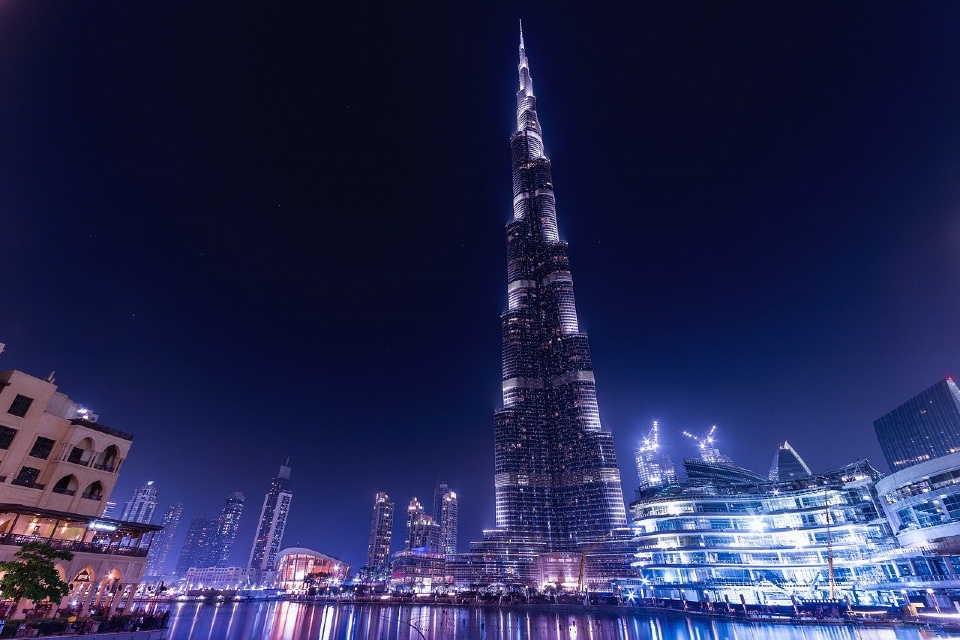
The current tallest building in the world, the Burj Khalifa (pictured, above) dwarfs the structures around it. The 162-floor skyscraper sits in the heart of Dubai, a city known for its impressive architecture. When it was completed, the Burj Khalifa broke a lot of records, including the world’s highest outdoor observation deck, the longest elevator travel distance, and the world’s highest occupied floor.

As well as smashing world records, the Burj Khalifa has been nominated for and won prestigious awards. It wasn’t initially intended to reach its now-famous soaring heights – the building was only planned to be 550 metres tall. The Burj Khalifa is well-known for its pioneering concrete technology and innovative spire, which comes out of the top of the building. The Y-shaped design is based on Hymenocallis, a desert flower.

The Shanghai Tower (632 metres tall)

The second tallest building in the world, the Shanghai Tower stands head and shoulders above the Shanghai skyline. It also holds the title of the world’s second-highest hotel, with the 84th-110th floors designated as guesthouses.

Utilising modern innovations in engineering, the Shanghai Tower has a concrete core instead of a steel framework. The building uses 980 concrete piles to make it earthquake-proof because it’s located in an area prone to earthquakes. The cylindrical spiralling design of the building makes it aerodynamic too. All of these factors combine to make the Shanghai Tower a truly spectacular engineering feat.

Jeddah Tower (expected to be 1,000 metres tall)

The Burj Khalifa may soon lose its status as the tallest building in the world if the Jeddah Tower is completed according to plan. Construction on this monolith began in 2013, but progress has stalled in recent years due to the pandemic.

The Jeddah Tower is expected to be so tall that it’ll reach into the clouds – imagine getting a bird’s-eye view of the clouds from a room in the tallest building on Earth! As with many of the existing tallest buildings in the world, the Jeddah Tower will be multi-use and include facilities such as hotels, living quarters, and restaurants. The tower represents Saudi Arabia’s goal to diversify its economy and become a tourist hotspot, thus reducing its reliance on oil revenue.

Like the Burj Khalifa, the tower’s one-of-a-kind shape is inspired by a desert plant. Its concrete pile base, which often requires structural design software to be truly effective, reinforces the building and protects it from dangerous weather.

Merdeka PNB 118 (678.9 metres tall)

A futuristic name to match a futuristic design. The Merdeka PNB 118 is still under construction, but the spire of the building was completed in November 2021. The uniquely designed structure is visible in the Malaysian skyline, with full construction expected to be completed by the end of 2022.

As well as its innovative geometric design, the Merdeka PNB 118 has multiple sustainability accreditations to its name – something that’s becoming more important in architectural design as global efforts to halt climate change continue. This stunning feat of structural engineering is proof that sustainable design and construction is not only important, but can also be done without compromising the structure.

Skyscraper designs require genuine innovation to be effective and durable, and it’s safe to say these current and upcoming structures have innovation at their heart. Not to mention they’re some of the most stunning modern buildings in existence. Will we see the Jeddah Tower overtake the Burj Khalifa as the tallest structure in the world in the near future? Only time will tell.

Need an Environmental Services partner? The FM Forum Recommended Supplier Directory can help!

Looking for a new Environmental services providers for your building, venue, school or company? The FM Forum Recommended Supplier Directory is home to dozens of trusted partners ready to help make your project a reality!

Put simply, there’s something to suit every requirement.

Start Your Search Now

Are you an FM supplier? Get listed!

The FM Forum Recommended Supplier Directory is the perfect platform to raise your organisation’s profile and extend your reach.

Promoted via the FM Briefing newsletter, website and our renowned meet-the-buyer facilities events – this digital FM directory offers a comprehensive list of industry solution leaders.

Click Here To Get Listed!

Or, for more information, please contact Paige Aitken on 01992 374079 or p.aitken@forumevents.co.uk


Last chance to register for the Building & Construction Summit

This is the final call to attend next week’s Building & Construction Summit, open to senior level decision makers with build or refurbishment projects – don’t miss our amazing line up of industry suppliers and expert speakers!

Date: Monday 21st March
Time: 08:00 – 16:50
Venue: Hilton London Canary Wharf / Virtual attendance

Your complimentary place includes; a personalised itinerary of pre-arranged, 1-2-1 meetings with innovative suppliers, insightful seminar sessions, senior level networking, lunch and refreshments throughout.

Confirmed Seminars:

“Considerate construction – Building positive legacies towards a sustainable industry”

Amanda Long, Chief Executive Officer, Considerate Constructors

“Clarifying Government policy and regulation on zero carbon and energy in buildings – what action can the construction sector take?”

Jade Lewis, Chief Executive at the Sustainable Energy Association (SEA)

“Net Zero change programme in the Built Environment”

Gary O’Brien MCIOB, MAPM, Director at Construction Clients Leadership Group (CCLG)

Attendance MUST be pre-booked, you can confirm your attendance here – www.bandcsummit.co.uk/delegates-booking-form

Alternatively, if you’re a supplier to the building & construction sector, contact Jenny Gray on 01992 374104 / j.gray@forumevents.co.uk.

Two-thirds of employers feel a greater responsibility for the mental wellbeing of staff

According to research from GRiD, the industry body for the group risk protection sector, employers feel a greater responsibility for supporting staff across the four key areas of mental, physical, social, and financial wellbeing as a result of Covid-19.

In research conducted from 14 – 26 January 2022 amongst 501 HR decision-makers, due to the pandemic:

  • 59% of employers felt an increased responsibility for supporting the mental wellbeing of staff
  • 57% felt the same increased responsibility for physical wellbeing
  • 56% of employers felt an increased responsibility for supporting the social wellbeing of staff
  • and 50% also felt the same increased responsibility for their employees’ financial wellbeing

In light of the pandemic, and this sentiment to take greater responsibility for employee wellbeing, two fifths (40%) of employers increased their communication about the support available to staff. Thirty-four per cent encouraged engagement and utilisation of support, and just over a quarter (27%) said that they had made it easier for employees to access support and benefits remotely, such as via apps and online. A quarter extended support beyond the individual employee to include family members, and 22% invested in new employee benefits to provide extra support.

Employees report deterioration in wellness

Further GRiD research, conducted amongst 1,212 UK workers between 14-18 January 2022, highlights the fact that employers were correct to take steps to provide and communicate support and benefits to staff. Thirty-eight percent of employees stated that their mental health had deteriorated as a result of the Covid-19 pandemic, 27% saw their physical health deteriorate and a further 27% had concerns about their financial health.

Forty-two percent of employees expect more support from their employers to help them cope. This employee presumption means employers need to assess whether their current employee benefits are up to the task of getting the wellbeing of staff back on track. Many staff are anticipating that their employers will provide on this front, and employers would do well to deliver, particularly in light of how employees feel their health has deteriorated .

Katharine Moxham, spokesperson for GRiD, said: “As is evident in the research, employees feel most vulnerable in terms of their mental wellbeing, and employers have rightly assessed this as being an area in which they can step up and take more responsibility. However, employers should be wary of solely prioritising one area of wellbeing over another.

Mental, physical, social and financial wellbeing are inextricably linked and so employers must address all four areas when providing post-pandemic support for staff. Employer-sponsored life assurance, income protection and critical illness have proven really popular because they provide financial support when people have been directly affected by the pandemic, as well as extra embedded services designed to support health and wellbeing.

“As the UK adjusts to the new norms of working life, adopting this holistic approach to staff wellbeing will ensure that all employees are as well-looked after as possible, and this will have long-term benefits for the business too.”