
Stuart O'Brien, Author at Facilities Management Forum | Forum Events Ltd - Page 18 of 87
Posts By :

Stuart O'Brien

FM firms reporting rise in vacancies of over 250% – how new tech can help 

Facilities Management and their staff have been hit hard by vacancies and absences, and although there is no magic cure to such endemic problems – digital tools can make operations more efficient, writes mpro5 Sector Director Dan Teare…

The cleaning and hygiene industry is suffering “severe” staff shortages with the rate of vacancies having increased dramatically, according to a survey carried out by the British Cleaning Council (BCC) in late January.

11 of the biggest facilities management (FM) firms reported some 1,917 vacancies in total. One firm said their number of vacancies increased by 252% in the last six months, and another by 267%. This was due to many factors – with companies reporting the main causes being foreign nationals going home, and staff finding new jobs in different industries.

As the pandemic started to recede, modernised economies have had to face “The Great Resignation”. Although vacancies in FM have been caused by some industry-specific factors, every industry has felt the impact of staff re-evaluating their career paths en-masse. Within the UK alone, the ONS reported that vacancies increased to 1.2 million as workers changed jobs in October 2021.

Furthermore, although the isolation law is about to change in the UK as we learn to live with Covid-19, it was not long ago that isolating from the ‘pingdemic’ caused absences to reach an all-time high – with 1 in 10 absent from work due to covid.

Ultimately, whether due to a pandemic or shifts in the global economic and employment landscape, businesses have had to try and continue operating as best they can while severely understaffed – and this has impacted morale, stress levels, and results. It is therefore vital that companies, particularly in industries as labour-intensive as facilities management, employ new systems and digital tools to work more efficiently.

‘Smart buildings’, powered by the Internet of Things and sensor technologies, and all underpinned by adaptive, real-time software, enables FM businesses to work smarter, not harder; and ultimately be just as efficient with fewer people.

In many countries, the pandemic may feel like it’s gone, but the other issues effecting staffing have not – and we never know what may be around the corner. Enabling digital transformation now is the best thing you can do to operate efficiently and reduce the stress felt by current staff.

By utilising an IoT-driven workflow management platform, FM companies can easily harvest and unify the data around them; viewing patterns and creating tasks from a centralised platform – with all the knowledge at their fingertips. Teams can instantly view and act upon this data, rather than fixed, out of date schedules, so they can do what it is needed to be done, as it happens.

For example, if a sensor on a toilet door has been opened 100 times, then cleaning staff may well need to check the bathroom facilities are  still functional and clean. Inversely, if they go to clean as their schedule insists, and no one has been in that toilet or even on that floor, it is simply a waste of their time. Viewing these patterns form over time gives you the power to predict more accurately – so your future-facing schedules can be more accurate, and peoples’ time used more efficiently.

This gives teams and businesses the power to prioritise jobs and the right people to do them. Teams can spend less time worrying about covering for missing staff, and instead can trust that all tasks are being accounted for and covered; improving overall operational effectiveness while leaving no gaps.

Ultimately, it is about doing the same with less. Smart buildings, real-time data, and the ability to act upon it, gives FM organisations and their staff a better chance at effectively continuing operations – despite any vacancies or absences.

Learn from the best at the Building & Construction Summit

We have just a handful of delegate places left to attend next month’s Building & Construction Summit, open to senior level decision makers with build or refurbishment projects – don’t miss our amazing line up of industry suppliers and expert speakers!

Date: Monday 21st March
Time: 08:00 – 16:50
Venue: Hilton London Canary Wharf / Virtual attendance

Your complimentary place includes; a personalised itinerary of pre-arranged, 1-2-1 meetings with innovative suppliers, insightful seminar sessions, senior level networking, lunch and refreshments throughout.

Confirmed Seminars:

“Considerate construction – Building positive legacies towards a sustainable industry”

Amanda Long, Chief Executive Officer, Considerate Constructors

“Clarifying Government policy and regulation on zero carbon and energy in buildings – what action can the construction sector take?”

Jade Lewis, Chief Executive at the Sustainable Energy Association (SEA)

“Net Zero change programme in the Built Environment”

Gary O’Brien MCIOB, MAPM, Director at Construction Clients Leadership Group (CCLG)

Attendance MUST be pre-booked, you can confirm your attendance here – www.bandcsummit.co.uk/delegates-booking-form

Alternatively, if you’re a supplier to the building & construction sector, contact Jenny Gray on 01992 374104 / j.gray@forumevents.co.uk.

How can we achieve digitised services through construction?

The use of smart technology has surged in the past decade, with the global market doubling in value from $43.4bn in 2017 to an expected $91bn in 2022. From its use in the home to integration in most sectors of the economy from banking to shopping, it’s been adopted to enhance the experience of consumers.

The time is right for local governments, architects and builders to understand the best ways to deploy technology to support health and care needs in a range of environments, and the benefits of considering its inclusion as part of construction design.

Gavin Bashar, UK managing director at Tunstall Healthcare, discusses why technology should be integrated into buildings from the design and specification stage…

A digitally enabled future

Technology has a key role to play in services being delivered in innovative ways, placing citizens at the heart of decision making, and enabling health, housing and care providers to target support where it’s needed most

Using technology to support people is low cost, and helps citizens to live independently for longer with an increased quality of life. Relatively low-cost telecare systems can help to avoid hospital admission, delay and prevent the need for residential care, and reduce carer burnout. Architects and developers therefore have a crucial role to play in driving cost savings, and enhancing the lives of vulnerable service users.

We must lead from the top to ensure buildings have technology integrated at construction to enable stakeholders to support citizens effectively, and provide a platform to make the most of future advances in technology. Too often, technology is considered as an afterthought, rather than a system that can be central to the way the building is lived, used and worked in, and therefore this is pivotal to the way it is designed.

Case study

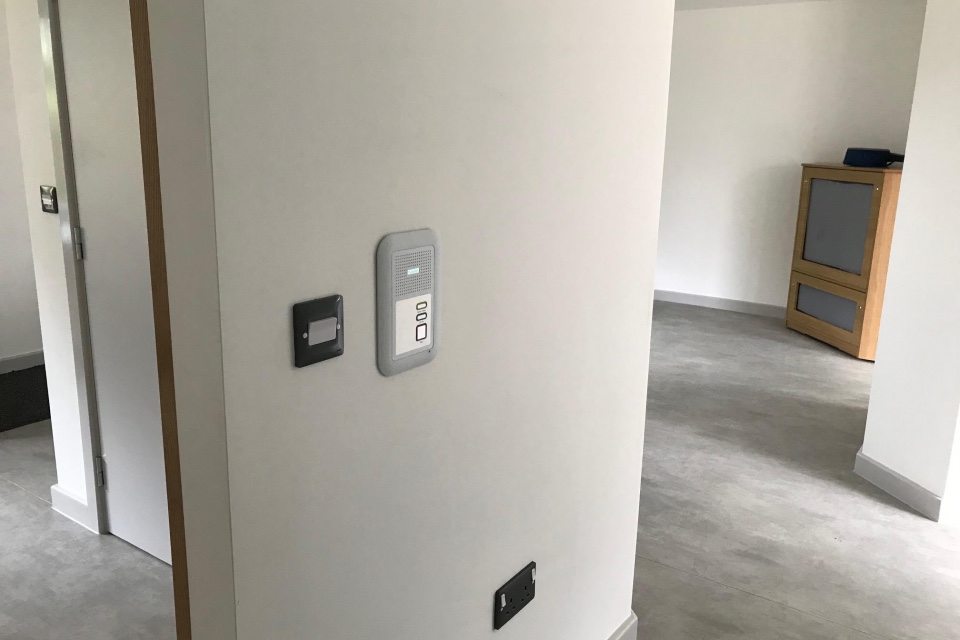
Northampton Partnership Homes (NPH) and construction firm, Jeakins Weir recently worked together to integrate smart technology into a new innovative housing development comprising eight semi-detached bungalows that will support the independence of young adults with learning disabilities and complex needs.

Smart technology was integrated at the planning stage of the development to provide more person centred support, as well as offering greater insight into how best to allocate resources to meet the needs of the people living there.

The system supports the use of telecare sensors and wearable technology, such as fall detectors, which will automatically raise an alert if help is required, enabling care to be given where and when it is needed, but supporting independence when it isn’t.

The next steps

A healthcare system fit for the 21st century must have digital innovation at its core which is embraced by architects and commissioners. As innovative technology continues to transform every aspect of modern life, there is a growing body of evidence demonstrating the impact this is having on population health and wellbeing.  Where it has not already done so, digitisation is set to touch every corner of health and social care, and in turn this needs to impact upon the way we design and build.

As the UK’s communications network is set to complete its transition from analogue to digital by 2025, technology has an even greater role to play in enhancing the lives of service users. Although this will require significant engagement from architects and builders, it brings a once in a generation opportunity to modernise, improve and shift thinking from a reactive, to a proactive delivery model which can empower users and enable care to become more intelligent and personalised.

Almost 12,000 UK schools could be vulnerable to cyber attacks this year

Over three quarters (78 percent) of UK head teachers believe their school faces an increased risk of being exposed to a cyber incident in light of remote learning, according to a survey by Cantium Business Solutions and conducted by Censuswide

Despite this, the survey conducted in partnership with Censuswide, revealed that nearly four in ten (37 percent) of respondents, including school staff and IT professionals do not rank cyber security as a high priority. On a national level, this could mean that almost 12,000 schools are at greater risk from a cyber-attack in 2022. 

The online survey covered the views of just over 500 UK headteachers, school IT professionals and teaching staff. It found that two-thirds (66 percent) of UK schools surveyed claimed to have suffered a cyber-attack in the last 18-months and only 35 percent felt strongly that they were well prepared to protect their school against malicious activity in the future. 

The survey suggests that secondary schools in the East of England are more vulnerable to cyber-attacks. 84 percent of schools in the East of England claimed to have suffered a cyber incident in the past 18-months, compared to a nationwide average of 66 percent. Additionally, schools in the region felt their risk of a cyber incident had increased, with 55 percent for those in the East of England agreeing. 

Despite head teachers acknowledging the heighted exposure that remote and home learning brings with it, the survey showed that 46 percent of schools believe the cyber threat will not increase further in 2022. 

Detective Inspector Fiona Bail, Head of Cyber and Innovation at the Eastern Cyber Resilience Centre, said: “Cybercrime continues to increase and unfortunately there is no evidence that the number or scale of attacks will be decreasing soon. Education are key targets due to the sensitive nature of the data that they hold, as well as the complexities of the systems involved, which make secure configuration and implementation of controls tricky. Educational institutions are also easy targets for students who are experimenting with their cyber skills, so being able to identify and nurture technical talent is a problem which other businesses may not have to face. Covid has already placed huge demands on the education sector and having a cyber-attack occur, losing access to key files and data, or being unable to teach, is a situation that no one wants.”

Mark Scott, CEO at Cantium Business Solution, added: “The last year has been particularly challenging for the education sector and it’s clear that the shift to remote learning has left many schools feeling vulnerable and unprepared to protect themselves against cyber criminals. As the threat landscape evolves and schools continue to adopt digital technologies, it’s important to invest in cyber security measures, education and expertise that can help protect against malicious activity. Cyber security doesn’t just fall down to the IT department, it’s a mindset and level of awareness that helps to prevent cyber-attacks and safeguard staff and pupils.” 

INDUSTRY SPOTLIGHT: Construction Clients’ Leadership Group (CCLG)

The CCLG is a not-for-profit organisation supported and sponsored by leading clients in the industry. Our vision is a fit-for-purpose built environment, delivered by an excellent industry, which delights its clients and end users and adds whole life tangible value.

We hold two dinners each year for all sponsoring members to gain input and direction from the wider group.  We invite leading industry figures to these dinners to explore how best we can support the Construction Leadership Council and the HSE’s Help GB Working Well (HGBWW) strategy. We also have a thriving Best Practice Working Group which is open to any clients wishing to share best practice and benchmark performance in areas where we can establish common data.

Our key strategic priorities are:

  • Working with members to find best practice and make it accessible for them to use, modify or further develop to meet their business needs.
  • Support members in demonstrating best value, excellent H&S management, and predictability of outcome.
  • Maintaining a clear Communication Plan and a website presence that will serve members in meeting their requirements as leading clients and enable them to demonstrate their presence amongst leading peers
  • Proactively engage and support the Construction Leadership Council to transform the industry to meet the 2025 industrial strategy targets, support the post COVID Roadmap to Recovery and COnstruct Zero – the Construction Industry’s Zero Carbon change programme
  • Play an active role to bring other client groups together within the Collaborative Client Forum, to nurture ongoing commitment to maintaining a single client voice in those areas that benefit the efficiency and standing of the whole industry
  • Support occasional clients in engaging the construction industry in a sustainable value adding manner
  • Eradicate modern slavery
  • Champion diversity and inclusion whilst supporting the drive to maintain a skilled workforce

By becoming a sponsoring member of the CCLG you are contributing to the ultimate achievement of that vision, building a network of like-minded clients. Please contact us for more information on how to become a sponsoring member of the CCLG.

New Energy Management partner for 2022? FM Forum Recommended Supplier Directory can help!

Looking for a new Energy Management supplier for your building, venue, school or company? The FM Forum Recommended Supplier Directory is home to dozens of trusted partners ready to help make your project a reality!

Put simply, there’s something to suit every requirement.

Start Your Search Now

Are you an FM supplier? Get listed!

The FM Forum Recommended Supplier Directory is the perfect platform to raise your organisation’s profile and extend your reach.

Promoted via the FM Briefing newsletter, website and our renowned meet-the-buyer facilities events – this digital FM directory offers a comprehensive list of industry solution leaders.

Click Here To Get Listed!

Or, for more information, please contact Paige Aitken on 01992 374079 or p.aitken@forumevents.co.uk


Do you specialise in Cleaning services? We want to hear from you!

Each month on FM Briefing we’re shining the spotlight on a different part of the facilities management market – and in February we’ll be focussing on Cleaning.

It’s all part of our ‘Recommended’ editorial feature, designed to help FM industry buyers find the best products and services available today.

So, if you specialise in Cleaning and would like to be included as part of this exciting new shop window, we’d love to hear from you – for more info, contact Paige Aitken on p.aitken@forumevents.co.uk.

Here’s our full features list:

March – Cleaning
Apr – Total FM
May – Energy Management
Jun – Security
July – Air Conditioning
Aug – Waste Management
Sep – Asset Management
Oct – FM Software
Nov – Intruder & Alarm Systems
Dec – Fire & Safety Equipment

Most employers still ‘reactive’ on health & safety

New research has indicated a greater commitment to workplace health and safety as a result of lessons learned during the pandemic.

According to the Mind the Gap report by Health & Safety, Employment Law and HR specialist WorkNest, more than half of business decision makers (59%) say the pandemic has fundamentally changed how the organisation views workplace health and safety, and that it will continue to be a priority going forward.

Over half of employees (51%) agreed that health and safety standards will be maintained over the next 12 months. A further 37% of employees and 36% of employers are ‘somewhat confident’ that this will be the case, saying health and safety may not be the number one focus but that standards will continue to be better than pre-pandemic.

Nick Wilson, Director of Health & Safety Services at WorkNest, said: “The pandemic has shone a spotlight on the importance of workplace health and safety like never before; it forced employers to implement control measures in order to remain open and comply with government guidelines, and forced employees to adjust to new ways of working in order to mitigate the risk of infection. It’s encouraging to see that this health and safety consciousness is expected to continue, and that there’s a shared optimism and renewed interest from both employers and their workforce. After all, safety is a collective effort.”

The report’s finding that the pandemic may have improved health and safety standards is at odds with the HSE’s annual fatal injury statistics, which revealed that there were more work-related deaths in 2020/21 despite fewer people working. Nick Wilson speculates that this could be due to organisations and their employees becoming “hyper-focused” on COVID-19 at the expense of other “basic” workplace health and safety risks. “Given our findings, it’ll be interesting to see if people’s confidence that standards will improve will be reflected in the next round of statistics”, he says.

While employees and employers appear to be on similar pages, the research found that 12% of employees expect that health and safety will revert back to being a sideline activity, compared to just 5% of employers. This could suggest that employees are sceptical that the organisation will maintain its commitment to health and safety long term or, equally, that employees themselves may lose interest in following workplace health and safety measures as the immediate threat of COVID-19 subsides. Developing a strong health and safety culture, led from the top, will therefore be imperative.

On the topic of health and safety culture, the report also revealed that most employees and business decision makers (36% and 35% respectively) would describe their organisation’s health and safety culture as ‘reactive’. In other words, safety is seen as important, but action is normally taken in response to incidents. ‘Reactive’ is the descriptor used for the second lowest level on the five-level ‘safety maturity scale’ – a tool used by many health and safety practitioners to benchmark a company’s health and safety culture – suggesting that most organisations have a way to go when it comes to raising awareness, consistency, accountability and trust.

More worryingly, 12% of employees and 10% of employers described their health and safety culture as ‘pathological’ – the most primitive step on the scale – saying health and safety is seen as a waste of time.

Wilson added: “Every organisation should aim to develop a generative health and safety culture, whereby health and safety is second nature and embedded into how things are done. Unfortunately, our research revealed that just 15% of employees and 17% of employers felt their organisation had achieved this feat.

“Only taking action when an incident occurs means missing out on valuable opportunities to remedy workplace hazards or unsafe practices before they result in harm. Reactive organisations will also find it much harder to adapt to unforeseen hazards, such as COVID-19, should they be introduced in future.”

One spill removal solution for all floors

By Brady Corporation

Read the case study from a cinema group, and find out how to quickly remove spills from various floor types with an eco-friendly, and highly efficient solution from Brady Corporation…

The cinema group needed a clean and efficient solution to remove various small spills in cinemas, both behind the scenes and in publicly accessible areas. Between shows, every spill from soda, sauce or other food & beverage products needs to disappear to welcome the next group of customers coming in for a great movie experience.

The clay-based granulate the cinema group was using created too much dust and proved too messy, even for behind the scenes areas, if not applied and removed immediately. In most of the publicly accessible areas, it was not even an option, as the risk of staining carpet floors with the clay granulate was just too high.

Solution: Fast and clean spill removal

Brady Corporation proposed its eco-friendly SpillFix granular that can safely be used to remove spills from the most porous or uneven surfaces, including carpet.

SpillFix is a 100% natural product made out of coconut coir. Thanks to its lightweight honeycomb structure, SpillFix immediately starts absorbing any liquid.

On top of this, 2.8 kg of SpillFix can absorb the same spill volume as 22.5 kg of clay based granular, so a lot less product is needed to achieve better results.

Unlike many clay-based granulars, SpillFix does not leave any slick residue behind and can be mopped up with a few swift swipes.

Results: Efficient spill removal between shows

The cinema group can now remove spills from sodas, sauces or other food & beverage products in a much more efficient way. SpillFix can simply be poured on any spill and vacuumed when dry shortly after, no matter whether the spill occurred on a linoleum or carpet floor.

How to combat spills effectively

Brady’s Spill control guide book offers ideas on how to prepare for potential spills and what to do in case of a spill. The guide also includes a number of solutions that can be deployed to prevent spills from spreading and to remove spills.

Download the Spill control guide book now >>

Free Analyst Report – Technologies for Sustainable Facility Management

The way we manage our buildings will play an enormous part in achieving a net zero future.

For several years, the global building technology and facility management (FM) market has been going through an unprecedented period of change. The transformation has been driven by a host of mega trends including new business models, technology innovation, sustainability, health and wellbeing, and a new vision for the future workplace.

The time is right to embrace smart, sustainable buildings, new service delivery models and transformational technologies such as IoT and integrated workplace management systems (IWMS) to generate, collect, and manage data.

This report from Frost & Sullivan identifies the top 8 transformational technologies and trends helping shape how organisations approach their building management and operations in a sustainable way.

It also provides insight into how an IWMS can help organisations address their sustainability challenges around the convergence of:

  • Corporate social responsibility (CSR)
  • Regulatory compliance, Environmental, Social, and Corporate Governance (ESG)
  • Customer and staff expectations
  • Risk Management
  • Business Objectives
  • Cost Reduction

DOWNLOAD FREE REPORT