Stuart O'Brien, Author at Facilities Management Forum | Forum Events Ltd - Page 3 of 87
Posts By :

Stuart O'Brien

Last chance to register for this month’s FM Technology Forum

There are only a handful of delegate spaces remaining at the FM Technology Forum on the 10th and 11th October at the Radisson Hotel & Conference Centre, London Heathrow – Book Your Free Place.

This highly focused event brings together key FM Technology professionals, with top industry suppliers offering the very best products & services, ready to help you with your upcoming projects.

Your complimentary pass includes:

  • A personalised itinerary of one-to-one meetings with solution providers
  • Lunch and refreshments included throughout the event
  • Networking breaks to build valuable connections within your field
  • A seat at our insightful seminar sessions (included in your itinerary)
  • Free overnight accommodation
  • An invitation to our gala networking dinner with entertainment

Register Here

Or for more information contact Lucia Alio on 01992 374068 | l.alio@forumevents.co.uk.

RICS unveils manifesto for the built environment

The Royal Institution of Chartered Surveyors (RICS) has launched its manifesto for the built environment, titled Empowering a Sustainable Future, in advance of the next UK General Election.

RICS says the UK’s built and natural environments face large-scale challenges ranging from climate change to a cost-of-living crisis, creating additional difficulties for a housing sector experiencing crucial supply shortages. Endemic skills shortages undermine development in the industry while the workplace has become more fluid post-pandemic, with the built environment needing to reflect the change in workforce behaviour.

It also cites United Nations data that says the built environment generates around 40% of global carbon output, and hopes to lead the industry on the response to climate change by introducing new standards, guidance and toolkits that will speed up the decarbonisation of the industry.

The RICS manifesto sets out a ten-point roadmap, which includes points focussed on creating safe, sustainable, and affordable homes for all, building safety, and future skills for a sustainable built environment, among many other important factors.

Key asks within the manifesto include:

  • Increase supply of rented homes to meet demand and slow rent rises
  • Deliver a joined-up quality and sustainability strategy
  • Review skills shortages to tackle targets
  • Hit housing targets with a housing delivery strategy
  • Action the recommendations from the recent RICS Decarbonising UK Real Estate that call for reform to how building performance and EPCs are presented.
  • Develop the much-needed National Fire Strategy as called on by industry to raise competency, standards and mitigation. This must include the UN-endorsed International Fire Safety Standards (IFSS) Common Principles.

A senior RICS delegation will present the manifesto and its key messages at the Conservative Party and Labour Party conferences.

RICS CEO, Justin Young, said: “As a leading representative of the built and natural environment sectors in the UK and globally, RICS advocates policies with solutions to some of the most critical challenges of our time. The public needs safe, sustainable, energy-efficient, and affordable homes; businesses need high-quality commercial spaces that align with the decentralised digital economy, while the industry needs a more robust pipeline of diverse talent that fulfils the skills demands of the sector so that it can deliver its goals.

“The RICS manifesto provides food for thought for the parties as they develop their policy platforms for the next General Election, and we look forward to engaging with their policy teams at the upcoming party conferences.”

A guide to adopting and integrating FM software solutions

Facilities Management (FM) professionals have a challenging task of ensuring the seamless operation and maintenance of an organisation’s physical assets. As technology evolves, FM software solutions have emerged as indispensable tools, offering automation, real-time insights, and improved efficiency. However, when adopting such a system, there are certain pivotal considerations, as outlined by delegates and suppliers at the Facilities Management Forum…

  1. Define Clear Objectives:
    • Needs Analysis: Before venturing into the market, clearly delineate what challenges the software needs to address. Is it space management, asset tracking, or energy consumption?
    • Expected Outcomes: Identify the results you want to achieve, be it cost savings, enhanced productivity, or improved asset lifespan.
  2. Integration Capabilities:
    • Existing Systems: An ideal FM software should seamlessly integrate with existing enterprise systems, whether it’s HR, finance, or procurement tools.
    • Scalability: Ensure the software can adapt to future technological upgrades or organisational expansion.
  3. User-Friendliness:
    • Intuitive Interface: The software should have a user-friendly interface, reducing the learning curve for various stakeholders.
    • Training Requirements: Determine if the provider offers comprehensive training sessions for your team, ensuring a smooth transition.
  4. Customisation & Flexibility:
    • Tailored Solutions: Different organisations have unique needs. The software should be flexible enough for customisation according to specific requirements.
    • Module-based Systems: Opt for solutions that allow modular implementation, enabling the organisation to adapt and expand functionalities as needed.
  5. Real-time Reporting & Analytics:
    • Data Insights: Modern FM solutions should provide actionable insights, helping professionals make data-driven decisions.
    • Visual Dashboards: For easy comprehension, the software should offer visual dashboards, detailing metrics like energy consumption, space utilisation, or maintenance schedules.
  6. Security & Compliance:
    • Data Security: With facilities data being crucial, ensure the software complies with industry-standard security protocols.
    • Regulatory Compliance: The software should facilitate adherence to local and industry-specific regulations, ensuring the organisation remains compliant.
  7. Mobile & Remote Accessibility:
    • Remote Monitoring: In today’s flexible work environments, the solution should allow professionals to monitor and manage facilities remotely.
    • Mobile Compatibility: Check if the software offers a mobile app or a mobile-responsive interface for on-the-go access.
  8. Vendor Reputation & Support:
    • Track Record: Investigate the vendor’s reputation, seeking feedback from existing clients regarding reliability and performance.
    • Customer Support: Robust after-sales support, including troubleshooting and periodic updates, is essential for smooth operations.
  9. Budgetary Constraints:
    • Cost vs. Value: While budgetary considerations are critical, focus on the value the software brings in terms of ROI rather than just the initial cost.
    • Hidden Costs: Be wary of additional costs for upgrades, integrations, or extended support.
  10. Future-proofing:
  • Upgrades & Updates: Ensure the software is future-proofed, allowing for regular updates to accommodate emerging technologies or industry trends.
  • Feedback Loop: Opt for solutions that incorporate user feedback, ensuring the software evolves in line with user needs.

For Facilities Management professionals, adopting the right FM software solution can be transformative, streamlining operations, and elevating efficiency. By keeping these considerations at the forefront, one can make an informed choice that aligns with organisational objectives and future aspirations.

Do you need FM software solutions for your organisation? The Facilities Management Forum can help!

Image by Elchinator from Pixabay

If you work in Facilities Management, you are eligible for a FREE monthly subscription to FMJ

Keep up to date with the latest news and developments in the Facilities Management Industry.

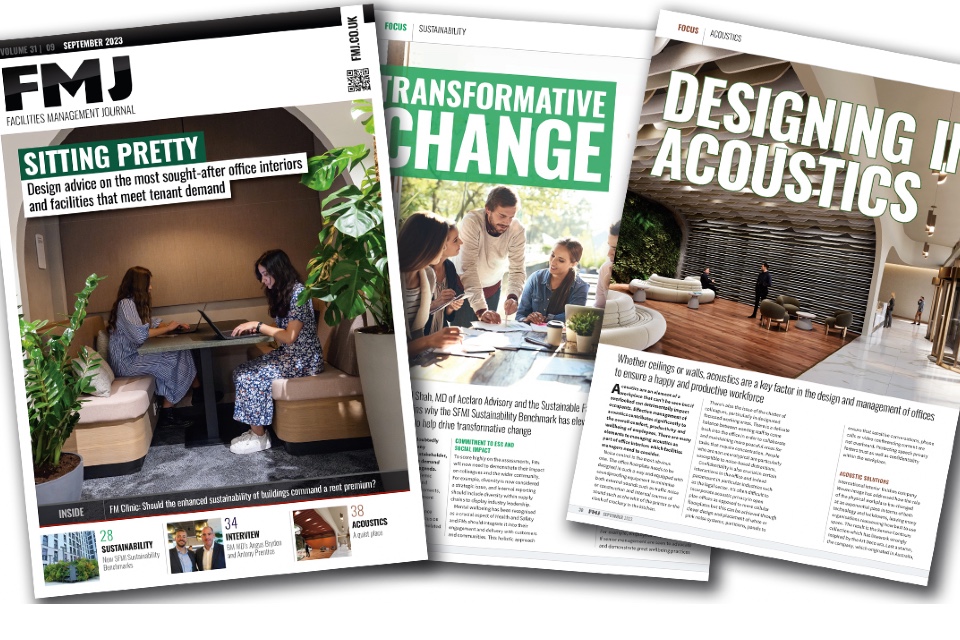
Now more than ever its essential to keep tabs on the latest news and developments in the industry. Facilities Management Journal (FMJ) is the pre-eminent educational resource for the facilities management space, and continues to demonstrate an expert understanding of FM after 31 years of editorial service.

Published monthly, the magazine provides industry specific intelligence to FM professionals across all sectors. Our editorial team produces content that informs, engages and challenges our readers.

FMJ provides coverage and in-depth analysis of the latest trends, news and legislative updates for Facilities Managers and associated job titles.

If you work in FM, you need to be reading FMJ!

Please click HERE for your free subscription.

RICS launches Whole Life Carbon Assessment second edition following public consultation

The Royal Institution of Chartered Surveyors (RICS) launched the second edition of its Whole Life Carbon Assessment for the Built Environment (WLCA) standard.

First published in 2017 for the UK’s built environment sector, this 2023 edition is a global version of the standard that provides a considerably more developed understanding of the carbon costs and benefits of design choices in construction and infrastructure projects and assets.

The new standard was produced in partnership with the UK’s Department for Transport and Net Zero Waste Scotland.

Following a public consultation in March 2023, which received over 1,300 responses, RICS has now updated the standard to be used globally and to cover all built assets and infrastructure projects throughout the built environment lifecycle.

According to the United Nations, the Built Environment contributes around 40% of all global carbon output and 50% of extracted material, making the second edition crucial for meeting global emissions targets and achieving net zero. Carbon reporting and accounting is a priority across all sectors, and this Professional Standard is relevant not only to those undertaking carbon assessments, but also to clients, investors and property managers.

In the UK, a Net Zero Carbon Building Standard is being developed incorporating the RICS Whole Life Carbon Assessment Professional Standard’s methodology to assess upfront, embodied, operational, user and whole-life carbon. It is hoped that the global focus of this new edition will lead to more nations incorporating its methodologies into their regulatory structures.

RICS will be promoting the new standard at the upcoming United Nations Climate Change Conference (COP28) in Dubai, where the organisation is an accredited partner.

RICS Chief Executive, Justin Young, said: “The second edition of Whole Life Carbon Assessment for the Built Environment encapsulates RICS’s role as a global leader in the built environment and its duty to steer the industry towards decarbonisation.

“This second edition is a truly global standard for a global problem. I want to thank our members from every world region, our staff, partner specialists and the Department for Transport and Net Zero Waste Scotland for their hard work and crucial support, which made this a reality.

“At this year’s COP28, where RICS is a UN-accredited observer organisation, we will promote this standard and ensure it is at the heart of the built environment’s crucial response to climate change.”

RICS Director of Surveying Standards, Charlotte Neal, said: “The built environment has been crying out for tools to measure its impact on climate change, which is crucial for developing mitigating practices to significantly reduce the industry’s carbon output.

“By providing a consistent methodology to assess the carbon output of buildings throughout their entire lifecycle, the second edition of WLCA will significantly improve the industry’s ability to measure and manage its impact on climate. Thank you to RICS’ members, staff and partners for your unceasing support of our work in leading the built environment towards a sustainable, net-zero future.”

Minister of State for Decarbonisation, Jesse Norman, said: “The UK is a world leader in decarbonising transport. This new standard will help reduce the carbon footprint of not only transport projects, but also from projects across all buildings, as the UK works to grow its economy and reach its net zero goals.”

Stephen Boyle, Built Environment Manager at Zero Waste Scotland, said: “This landmark publication will be a key driver for circularity as it provides a vital standard for assessing carbon over the whole life of a building.  This whole life consideration prompts built environment professionals to confront the carbon impacts a building has before, during and after its use.  Circular economy principles can provide a solution to this problem by encouraging use of secondary materials to displace virgin ones, to use renewable low-carbon materials and to use digital tools, such as materials passports to create end-of-life value.”

Image by Gerd Altmann from Pixabay

BUYING TRENDS: Technology solutions FM professionals are sourcing for their 2023/24 projects

Energy Monitoring, Computer-Aided FM (CAFM) and Remote Monitoring are topping the list of technologies the UK’s FM professionals are sourcing for 2023/24, according to our exclusive research.

The findings have been revealed in the run up to the FM Technology Forum, which takes place on October 10th & 11th in London and are based on delegate requirements.

Delegates registering to attend are asked which technologies they needed to invest in during 2023/24 and beyond.

Hybrid Working and Smart Building technologies rounded out the Top 5.

Top 10 technologies being sourced by FM Technology Forum delegates 2023/24:

Energy Monitoring

Computer-Aided FM (CAFM)

Remote Monitoring

Hybrid Working

Smart Buildings

EV Charging

Sensors

Advanced HVAC

Internet of Things (IoT)

Workspace Management

Sarah Beall, Managing Director at Forum Events & Media, said: “The way we match buyers and suppliers at the FM Technology Forum gives us a unique insight into the types of products and services the industry is looking for right now. Not only does it mean we can deliver a highly-targeted B2B event with proven outcomes for all attendees, but we can deliver valuable insights into how the market is developing at what is a hugely exciting time for all stakeholders.”

To find out more about the FM Technology Forum, visit https://facilitiesmanagementforum.co.uk/fm-technology-forum.

For more information about the buying trends data and the FM Technology Forum, contact Paige Aitken on 01992 374079 | p.aitken@forumevents.co.uk.

FINAL CALL: FM Technology Forum – Register today!

There are only three delegate spaces remaining at the FM Technology Forum on the 10th and 11th October at the Radisson Hotel & Conference Centre, London Heathrow – Book Your Free Place.

This highly focused event brings together key FM Technology professionals, with top industry suppliers offering the very best products & services, ready to help you with your upcoming projects.

Your complimentary pass includes:

  • A personalised itinerary of one-to-one meetings with solution providers
  • Lunch and refreshments included throughout the event
  • Networking breaks to build valuable connections within your field
  • A seat at our insightful seminar sessions (included in your itinerary)
  • Free overnight accommodation
  • An invitation to our gala networking dinner with entertainment

Register Here

Or for more information contact Lucia Alio on 01992 374068 | l.alio@forumevents.co.uk.



If Smart FM solutions are on your shopping list, the FM Forum Recommended Supplier Directory can help!

If you need Smart FM solutions for your building, venue, school or company, the FM Forum Recommended Supplier Directory is home to dozens of trusted partners ready to help make your project a reality!

Put simply, there’s something to suit every requirement.

Start Your Search Now

Are you an FM supplier? Get listed!

The FM Forum Recommended Supplier Directory is the perfect platform to raise your organisation’s profile and extend your reach.

Promoted via the FM Briefing newsletter, website and our renowned meet-the-buyer facilities events – this digital FM directory offers a comprehensive list of industry solution leaders.

Click Here To Get Listed!

Or, for more information, please contact Paige Aitken on 01992 374079 or p.aitken@forumevents.co.uk


Do you specialise in FM Software? We want to hear from you!

Each month on FM Briefing we’re shining the spotlight on a different part of the facilities management market – and in October we’ll be focussing on FM Software.

It’s all part of our ‘Recommended’ editorial feature, designed to help FM industry buyers find the best products and services available today.

So, if you specialise in FM Software and would like to be included as part of this exciting new shop window, we’d love to hear from you – for more info, contact Paige Aitken on p.aitken@forumevents.co.uk.

Here’s our full features list:

Oct – FM Software
Nov – Intruder & Alarm Systems
Dec – Fire & Safety Equipment
Jan 24 – Health & Safety
Feb 24 – Building Maintenance & Refurbishment
March 24 – Cleaning
Apr 24 – Total FM
May 24 – Energy Management
Jun 24 – Physical Security
July 24 – Air Conditioning
Aug 24 – Waste Management
Sep 24 – Asset Management

Asset Management Solutions: Making informed choices

Facilities asset management is an essential component of successful business operations, ensuring that tangible assets are maintained, tracked, and utilised effectively. Choosing the right solution(s) is paramount to ensuring efficiency, cost-effectiveness, and longevity of your assets. Here’s a guide to help you make an informed choice, based on input from delegates and suppliers at the Facilities Management Forum

  1. Determine Your Needs:
    • Asset Types: Understand the kinds of assets you have. Whether they are IT equipment, vehicles, machinery, or real estate, the solution you choose should cater specifically to your assets.
    • Scale: Consider the size of your operations. Solutions vary for small businesses versus large enterprises.
  2. Integration Capabilities:
    • The solution should easily integrate with other systems in place, such as your Enterprise Resource Planning (ERP) or Customer Relationship Management (CRM) systems. This ensures smooth data flow and reduces manual entry.
  3. User Interface and Experience:
    • Opt for a solution that’s user-friendly and requires minimal training. An intuitive dashboard, easy navigation, and accessible features can save significant time and reduce errors.
  4. Customisation:
    • Your business is unique. The solution should offer customisable features to suit your specific needs, whether it’s custom fields, reports, or notifications.
  5. Cloud-Based vs. On-Premise:
    • Cloud-Based: Offers flexibility, remote access, and is typically subscription-based. It’s updated automatically, ensuring you always have the latest features.
    • On-Premise: Installed on company servers, it may offer more control over data, but might require manual updates and might incur more upfront costs.
  6. Scalability:
    • As your business grows, so will your assets. The solution should be scalable, accommodating growth without requiring a system overhaul.
  7. Reporting and Analytics:
    • Data-driven insights can significantly optimise your asset management. Ensure the solution offers comprehensive reporting tools, visual analytics, and can generate custom reports.
  8. Support and Training:
    • Vendor support is crucial, especially during the initial stages. Opt for vendors that offer robust support, training resources, and have a reputation for excellent customer service.
  9. Cost:
    • While cost is a significant factor, it shouldn’t be the only one. Look for solutions that offer value for money. Consider both initial costs and long-term expenses, such as updates, support, and additional features.
  10. Security and Compliance:
    • Protecting your asset data is paramount. Ensure the solution adheres to industry-standard security protocols. Additionally, it should help your business remain compliant with relevant regulations, particularly if you operate in sectors like healthcare or finance.
  11. Vendor Reputation:
    • Do your due diligence. Research vendor reputation, read reviews, and perhaps even reach out to current clients to gauge their satisfaction levels.

A facilities asset management solution is not just a tool but an investment in the efficiency and longevity of your business assets. By considering the above points and aligning them with your business objectives, you’re well on your way to making a choice that will serve your business well into the future.

Are you looking for Asset Management solutions for your business? The Facilities Management Forum can help!

Image by Joe from Pixabay