Stuart O'Brien, Author at Facilities Management Forum | Forum Events Ltd - Page 37 of 87
Posts By :

Stuart O'Brien

Take the FM Briefing Industry Lockdown Survey today!

Here at FM Briefing we’re looking for the best ways to keep you connected with the industry during these difficult times, so we’ve created a short survey to gauge your views on lockdown working practices and the kind of virtual events you might be interested in attending – it’s all completely anonymous and will take less than two minutes to complete.

To take part, simply start answering the questions below – if you can’t see the questions, just click here to display them in a new browser window.

Thank you in advance for taking part – your answers will help make our content and events even more relevant to your needs.


Create your own user feedback survey

Do you specialise in Security solutions? We want to hear from you!

Each month on FM Briefing we’re shining the spotlight on a different part of the facilities management market – and in June we’ll be focussing on Security.

It’s all part of our ‘Recommended’ editorial feature, designed to help FM industry buyers find the best products and services available today.

So, if you specialise in Security solutions and would like to be included as part of this exciting new shop window, we’d love to hear from you – for more info, contact Paige Aitken on p.aitken@forumevents.co.uk. Here’s our full features list:

  • June – Security
  • Jul – Air Conditioning
  • Aug – Waste Management
  • Sep – Asset Management
  • Oct – FM Software
  • Nov – Business Continuity
  • Dec – Fire & Safety Equipment

Meet with the industry again at the Facilities Management Forum

The Facilities Management Forum will be taking place on 5th & 6th October 2020 in Manchester – it will be a great opportunity to reacquaint yourself with the FM community!

We have adapted the event layout to ensure we are abiding by the social distancing rules, and therefore ensuring the health, safety and wellbeing of our event attendees and staff.

The event will have controlled numbers, prescheduled meetings and be hosted within a safe environment.

We have increased the size of our meeting booths to allow for a 2-meter gap, and added a clear partition screen between all meeting participants. Plus, there will be clear floor markings throughout.

This Forum will go ahead either as a live or virtual event. Alongside meetings and networking, you can also enjoy a series of seminar sessions, to ensure you don’t miss out on the latest tips and challenges from leading industry experts.

You can also enjoy complimentary overnight accommodation, including all meals and refreshments throughout.

To secure your place and enjoy all the benefits of the Forum, click here to book your complimentary place.

Landlords urged to be aware of ‘faster broadband’ legislation

Landlords are being advised to be aware of forthcoming legislation designed to assist in the Government’s commitment to the roll out of faster more resilient broadband across the UK by 2025.
 
The call comes from specialist advisory firm Conexus Law as a reminder about the Telecommunications Infrastructure (Leasehold Property) Bill 2019-21, which is set to amend the 2017 Electronic Communications Code to streamline the process by which network operators may gain access to multi-let residential properties.
It is hoped this will help to deal with the particular problem of the landlord who is unresponsive to requests to allow access, something that is recognised as a major obstacle to meeting the Government’s target.
 
Emma Cordiner at Conexus Law said: “Though it is difficult to argue against the motivation for the bill, some private landlords may see it as bordering on the draconian.  However, timely responsiveness and collaboration by landlords should avoid forceful operator action, so now (as ever) would be the time for all landlords to adopt good habits and pay closer attention to any operator requests for access to install infrastructure. 
 
“At this stage, landlords need to have the bill on their radars, and in spite of the bill, might do well to plan the implementation of broadband infrastructure policies for their buildings, with one eye on a forthcoming need to be more responsive to operator requests. Ultimately a well-managed property with the best of broadband capability will only ever be an attractive prospect to tenants.”

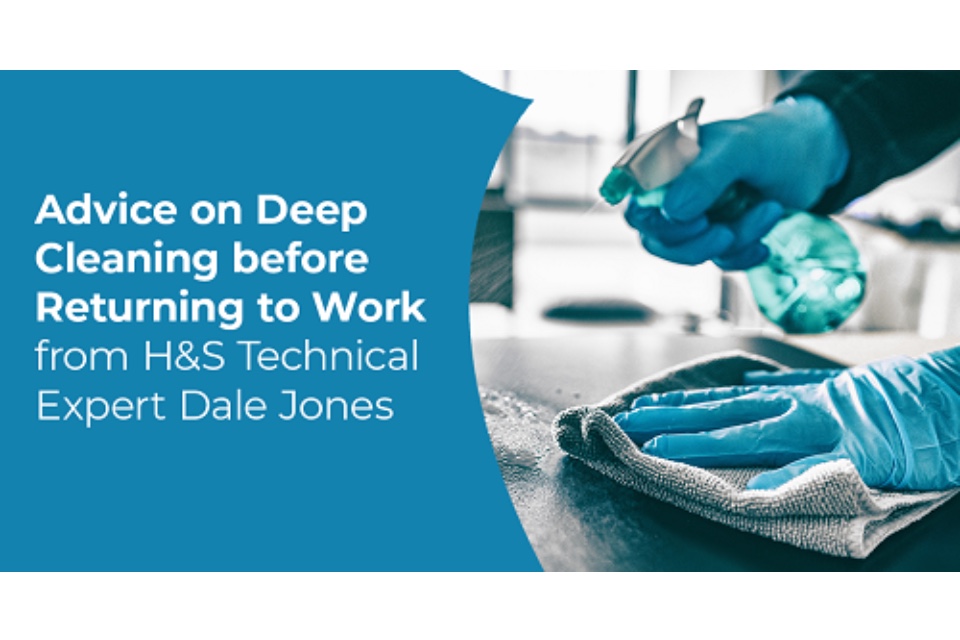
Expert advice on deep cleaning before returning to work

By Dale Jones, Head of Technical Development at Alcumus SafeContractor

With a phased return to work underway, organisations will need to consider their health and safety cleaning obligations to make their workplace safe for staff to return to.

As expectation grows that the impending government announcement over the weekend is likely to see more businesses come back online, we are regularly being asked questions about the need to undertake deep cleaning before reopening.

Under the Workplace (Health, Safety and Welfare) Regulations there is legal duty to ensure that all premises and workplaces are kept sufficiently clean. Although there is no real legal definition of what constitutes a deep clean, there is reference within HSE guidance for the need for high standards of cleanliness for controlling exposure to substances hazardous to health.

The type and level of cleaning required prior to re-occupying your premises will depend on your risk assessment for your particular site and/or the activities undertaken.

There are number of things to consider, for some businesses the workplace may have been closed down for a number of weeks, so you will need to consider whether anyone has periodically gained access to the facility i.e. to undertake maintenance or security related tasks, are you aware of any of your workforce coming down with COVID-19 and had access to the facility during the lockdown period or simply when was the last time it was thoroughly cleaned.

Some businesses are seeing it as best practice to deep clean their premises, to ensure everything is as clean and safe as possible prior to bringing back the team. It is also a very visual reminder to the workforce that as a business you are taking safety seriously.

If you are looking to use your own workforce to undertake the cleaning process, ensure you follow the government guidance COVID-19: cleaning in non-healthcare settings. The guidance covers topics such as personal protective equipment, surfaces to focus on, what chemicals / substances to use and what to consider before placing used cleaning equipment in the waste.

Alcumus SafeContractor have over a thousand accredited cleaning contractors who have already demonstrated that they have the relevant H&S management systems to undertake cleaning in commercial and industrial environments safely. To find out more about accessing our approved contractor portal with over 33,000 contractors, email our Client Services team.

For organisations currently working in accordance with government guidelines, Alcumus Sypol have created free, downloadable COSHH risk assessments which provide important information about how to effectively control exposure to coronavirus in high risk working environments.

You can also register for the free webinar delivered by COSHH expert Mike Harris, on COVID-19, COSHH and how to clean your workplace safely, taking place at 10am on Tuesday 19th May.

For organisations hoping to return to work soon and eager to learn more about safely reintroducing their people to work, Alcumus PSM have created a free COVID-19 Return to Work Guidance pack and two-part webinar series covering the practical application of how to get your people back to work safely and how to make your business as productive as it can be.

Find out more about how we can help your business survive, then thrive with our full range of Alcumus Group COVID-19 solutions.

Saving money on energy using Artificial Intelligence

Many use BMS (building management systems) to control your buildings. BMS is seen a “smart” in that it automates tasks that would need a human to do (such as changing set points, dead bands etc). Artificial Intelligence is best known for self-driving cars and playing chess against grand masters!! So does it have any role to play in managing our building better and saving money?

At OEP, we are already using artificial intelligence in two very real building and energy management applications and seeing £££ financial benefits:

(A) Energy Management. We can take in half-hourly meter data daily (no hardware needs to be installed), and identify patterns that could indicate a developing fault or anomaly, so it can be investigated before it becomes a cost, adjusting for weather and other inputs. The system self-learns and gets better over time at spotting new real issues. We oversee the results with our experienced energy management team, and interact with the customer.

An example benefit we picked up within 24 hours, was a (human) BMS programming error that would have cost £60,000 had it gone undetected, and probably would never have been picked up in the consumption on invoices.

In practice this also helps identify and monitor “behaviour” issues across an estate.  For example, we could highlight the differences in working practices between one supermarket and another in how they work with their refrigeration systems.

This is an ideal tool for multi-site operations (retail, restaurants, banks etc) with a rapid payback.  It allows over-loaded energy managers to have a proactive management tool, particularly across an estate of meters.  We can provide a THREE MONTH FREE TRIAL for businesses to find out if it works for them.

(B) We are also deploying AI to directly to manage the BMS, and even manufacturing processes. The software “learns” how the building or process reacts over time to different load events and climate conditions (creating a “digital twin”) and can develop its own strategies for how to optimise the building to (1) deliver the climate goals consistently and (2) at least energy cost.   It can even re-commission the building regularly.  Energy saving are typically 25%-40%.

The benefit of using AI is the ability for it to react quickly to changing circumstances, which other systems aren’t able to do. Other applications we are engaged on include compressed air management and refrigeration systems.

If you would like to know more email us at info@on-site.energy or call on 0161 444 9989.

Onsite Energy Projects provides energy savings and energy generation solutions to energy intensive businesses, without capex if required.

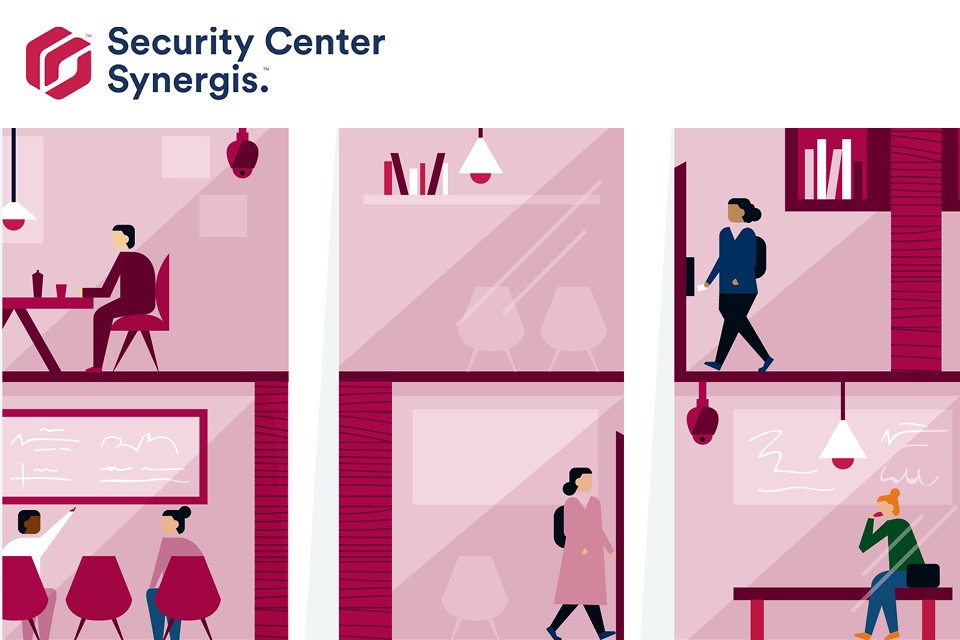
Unify your security strategy with Genetec Synergis

Following the COVID-19 pandemic, knowing who is and isn’t in your building at any time will be vital. Be it meeting social distancing guidelines, monitoring occupancy levels or tracing those who came into contact with an infected person, access control will be crucial in helping facilities managers track movements throughout the building.

Adopting a unified security strategy is how to achieve this; where access control is merged with video, communications, intrusion, and other systems; enhancing collaboration and sharing, improving operational efficiency, and protecting your organisation against emerging threats.

Genetec Synergis can help with just that, powered by the iconic Security Center, helping to create a safe environment.

Click here to find out more.

Half of UK workers uncomfortable about returning to the workplace

Over half of UK workers are not comfortable returning to work in the wake of the Government announcing its COVID-19 recovery strategy and the publication of guidelines for working safely.

A study by ENGAGE and YouGov shows that 55 per cent of respondents (those employed who usually work from home or are currently working from home or who have been furloughed) state that they are not very or not at all comfortable returning to work, when asked to imagine returning to work once the UK government begins to lift the restrictions put in place to prevent the spread of Coronavirus.

Those more uncomfortable include respondents who are vulnerable (i.e. because of age, health conditions or another reason; 67 per cent) or who live with others who are vulnerable (66 per cent).

Levels of discomfort are also higher in certain sectors such as education (66 per cent), presumably where there will be a greater interaction with large numbers of students, and in professional services such as financial services and accounting (75 per cent), where many may be returning to offices with high volumes of colleagues.

The biggest physical concern, cited by 51 per cent of respondents as one of their top three issues, is how social distancing is likely to be implemented upon their return to the workplace. There are also concerns regarding the practical logistics and safety of returning to the workplace such as moving around (30%), the use of public toilet/washing areas (37%), and the use of shared equipment (27%).

Critically, almost a quarter of respondents (24 per cent) cite their commute or journey to work as a concern, a figure that is twice as high for Londoners (50 per cent).

But concerns among respondents also extend to their wellbeing. Nearly half (42 per cent) of people believe returning to the workplace will see a decline in work-life balance, while only 23 per cent believe it will improve it. One third (33 per cent) anticipate a decline in their mental health, and over a quarter (28 per cent) in their physical health.

Of concern, too, is the anticipated anxiety around job security. 25 per cent said their confidence in their job security would decline by a return to the workplace.

However, when questioned on the impact that returning to the workplace would have on their working lives, the majority of those employed believe it will make no real difference.

61 per cent feel there will be no change in accessing the information they need; 59 per cent believe there will be no change to the communications they get from leaders within their organisation; and 58 per cent feel there will be no change in the communication they have with their manager.

This suggests, says ENGAGE, that in many areas UK companies have been able to help people switch to productive working from home relatively quickly.

And while 42 per cent of respondents believe that collaboration and teamwork will improve by returning to the workplace, and a third of respondents (37 per cent) expect innovation to improve, the new guidelines for safe working practices and social distancing are likely to create barriers here.

Dr Andy Brown, CEO at ENGAGE, said: “The research suggests that some organisations will see a limited number of both internal and external outputs improving as workplace restrictions are lifted. But it’s clear that employees believe there will be a net worsening of other critical aspects by returning to the workplace, which organisations must take into account.

“More than this, though, the results clearly show that any physical return to work needs purpose. COVID-19 secure guidelines mean firms may not be able to provide the collaborative, innovative environments that we had before.  And we now know that remote working isn’t the barrier to communication or collaboration that we once thought. Organisations will need to align their return strategies with the real benefits they will deliver, rather than just returning to the way things have always been done.”

Easily manage regular fire door inspections

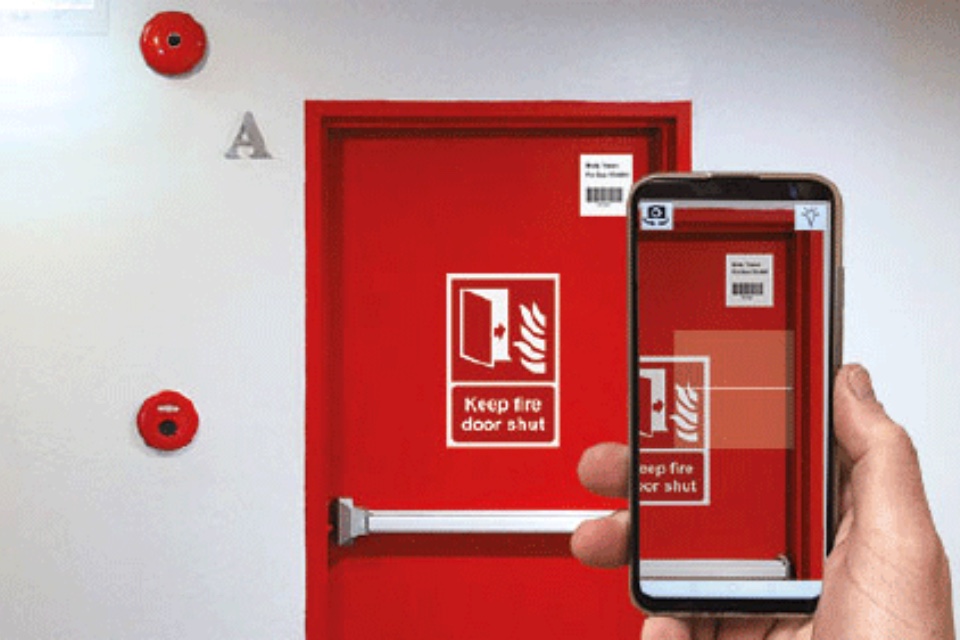
Efficiently plan and manage fire door inspections with our SafeTrak Fire Door Inspection Management module and stay compliant with regulations.

  • stay compliant: plan fire door inspections with 3-month or custom intervals, use a step-by-step fire door inspection template in the field that supports compliance with the Regulatory Reform (Fire Safety) Order
  • inspect efficiently: scan your asset label on the correct fire door to activate the planned fire door inspection on a smartphone or tablet in the field
  • report automatically: automatically share a customisable report on inspection completion

See the infosheet & Try 30 days for free!

BRADY UK

Banbury, Oxon OX16 3JU

Tel: +44 (0) 1295 228 288

csuk@bradycorp.com

How to get your employees back to work safely and smoothly

iHASCO, a market-leading provider of Health & Safety, HR and Compliance eLearning, are currently adding a number of online programmes to their course library to help organisations get their employees back into the workplace as safely and smoothly as possible.

“Covid-19 has resulted in a hugely challenging time for businesses for a number of reasons, and as steps are taken to exit lockdown the return to work process will provide employers with even further challenges” says Alex Morris, Director at iHASCO. “iHASCO have created a returning to work essentials training bundle which will assist employers with helping their staff return to work with confidence and reassurance that their health and safety is taken seriously, which will play a major role in resuming safe operations.”

Among the titles to be released is ​Returning to Work after COVID-19 Training​, a course that focuses on easing an employee’s transition back to work in light of Coronavirus. It will cover important aspects of the return to work process, such as risk assessments, team communication and handling anxiety in connection to Covid-19. It also provides an insight as to what an employee can expect on their first few days and weeks back at work to help them adjust.

A ​Resilience Training​ course will also be available, which will provide employees with practical techniques to build resilience and deal with challenging situations. This is a crucial skill in times of adversity and empowering the employee to regain focus, control, and perspective will help with a smooth transition back to the workplace.

These two courses will come as part of iHASCO’s ​Returning to Work Essentials Bundle​, along with other important titles such as DSE Training, Fire Awareness Training, Infection Prevention & Control and Mental Health Awareness Training.

Employers are also being encouraged to take advantage of iHASCO’s ​free Risk Assessment Tool​ to conduct a Coronavirus Risk Assessment – which will be crucial upon planning a return to the workplace.

Due to the uncertainty of the weeks and months ahead, a clear and careful plan to reopen a workplace is required to ensure the safety of employees and any visitors to its site. This, together with online training for employees, can provide a solid foundation to get a business focussed and navigate the challenges it faces.

Organisations that feel these new courses could benefit them should ​register their interest​ through the iHASCO website.