Stuart O'Brien, Author at Facilities Management Forum | Forum Events Ltd - Page 40 of 87
Posts By :

Stuart O'Brien

You’re invited to the Facilities Management Forum

There’s a complimentary guest place reserved for you at the Facilities Management Forum, which is taking place on July 6th & 7th.

Can you confirm you will be joining us?

This small and niche event is far removed from the traditional busy and crowded exhibitions and conferences, and takes place at the Hilton Deansgate, Manchester.

The Forum will give you access to innovative suppliers who can help you reduce your expenditure for a series of pre-arranged, face-to-face meetings based on your requirements. You can also attend a series of seminars, and network with like-minded peers.

Overnight accommodation, all meals and refreshments, plus an invitation to our networking dinner, are included with your free guest place.

If this would be useful for your business, please confirm your attendance here.

Places are limited, so register today to avoid disappointment.

Can a data centre achieve Net Zero?

By OnSite Energy Projects

Achieving net zero is a challenge for any business but data centres are amongst the most power hungry users. Globally data centres consume >3% of total power generation (that’s 140% of the entire UK power generation). So can data centres ever attain net zero?

Some data centres simply buy “green tariffs” which in my view is a cheat, and it won’t be acceptable in the long run.  It also misses the real opportunity of embracing the move towards net zero, which is  to reduce operating costs and be green at local level. Achieving net zero lies in a combination of energy efficiency and local zero carbon generation.

Data centres are often measured by their PUE (Power Usage Effectiveness) which is Total Facility Power consumption divided by IT Equipment Power.  Typically PUE is in the range 1.5-2.0  depending on location.  The traditional approach in building a data centre is to size the power supply and cooling to the maximum compute capacity, with redundancy.  In practice this means a lot of equipment on standby or in reserve just in case.

We typically see several energy savings options in data centres.  For instance, alternative cooling technologies can be used which save significant energy (up to 90% of cooling load), and are also cheaper than traditional cooling and more scalable to deploy as IT power grows.  Resulting PUE can fall below 1.1.

Reducing consumption also narrows the gap that zero carbon onsite generation then needs to address.  The main factors in specifying generation solutions are usually available space on site, scale of generation needed and access to nearby low carbon or renewable generation.

The benefits such an approach brings are (1) cheaper operating costs;  (2) reduced CO2 emissions; (3) long-term cheaper power than grid, and (4) enhanced resilience. These are all key factors in attracting and retaining tenants.   Adoption of the alternative cooling technologies can even enable more dense rack compute power, so enabling more use of space, higher rents and higher occupancy.

The technology may not be there today to go fully net zero, but I am convinced its coming.  Adopting a strategy towards net zero will be vital for attracting and retaining customers.

Onsite Energy Projects enables the achievement of net zero via our innovative data-led approach and zero capex solution. For more details please contact us at info@on-site.energy or on 0161 444 9989.

http://on-site.energy

Increase your maintenance safety and efficiency

Work faster with clear maintenance visuals

Get full production capacity back faster with clear visuals that increase maintenance efficiency. Plant maintenance operations are a necessity to maintain and secure production capacity but they may require a temporary reduction in production output. With Brady’s reliable and on-site printable signs and labels you can increase maintenance efficiency and get back to full production capacity faster.

Download the free Maintenance guidebook from BRADY

BRADY U.K.

Wildmere Industrial Estate

Banbury, Oxon OX16 3JU

Tel: +44 (0) 1295 228 288

csuk@bradycorp.com

www.brady.co.uk

Sustainable office buildings ‘offer tangible investment benefits’

Sustainable office buildings can deliver tangible investment benefits to investors through a combination of higher rents and stronger leasing velocity.

The Impact of Sustainability on Value report from JLL also reveals growing occupier demand for sustainable offices in central London that will need to be met in the next decade.

JLL has calculated that the next wave of office development and major refurbishment will need to accommodate at least 8.0 m sq ft of highly sustainable demand from occupiers across central London by 2030.

This demand assessment for central London office stock is based on the space currently occupied by companies which have signed up to science-based- targets (12m sq ft) who have lease events before 2030, demonstrating the increasing demand and need for highly sustainable buildings within central London.

The research also identified demand from companies signing up to net zero carbon commitments, who currently occupy over 1.5m sq ft of space across central London.

JLL’s research found that, based on historical leasing activity, the future development and redevelopment pipeline of offices incorporating sustainability would deliver tangible financial benefits for developers in addition to strong levels of demand.

JLL analysed leasing activity for New Grade A office buildings in central London and found that those with a BREEAM rating of very good or higher achieved higher rents than those without a rating and that the average rental premium over non-rated buildings over the last three years was around 8%. The analysis also showed that New Grade A buildings with an A or B EPC rating achieved a rental premium of 10% over comparable offices with lower ratings over the same period.

The research further demonstrated that payback for investors who target higher BREEAM ratings is rewarded with higher occupancy rates throughout the cycle. JLL analysed the leasing velocity of 120 central London development schemes completed between 2013 and 2017 and found that those that have an outstanding/ excellent rating tended to show a higher pace of leasing and have lower vacancy rates – of 7% compared to 20% for those rated very good – 24 months after completion.

Neil Prime, head of central London offices markets and UK office agency at JLL, said: “Our analysis of existing environmental ratings shows that overall sustainable buildings deliver better returns for investors against the benchmarks of void rate, leasing velocity and the rents achieved. This provides the industry with a clear and defined base case to begin to formulate an understanding of how the next generation of sustainable offices – for which there is demonstrable demand – will perform.”

Sophie Walker, UK head of sustainability at JLL, added: “Clearly the urgency to build and redevelop these offices in central London to support corporate environmental and people goals is only speeding up.  The first developers to undertake the task will reap the rewards of high levels of demand and the intrinsic higher performance of their product. This opportunity to provide sustainability as a point of differentiation and to appeal to forward-thinking occupiers will really play out over the next decade.

“Beyond 2030, tougher building regulations will drive a reduction in energy consumption and carbon emissions and mandated sustainability performance will become more defined – this may mean that the premium associated with it will disappear and buildings that don’t comply will underperform, leading to the displacement of tenants and lost rents due to costly retrofits.”

Is NET ZERO possible for heavy gas users?

Achieving NET ZERO emissions is a significant task, made all the more difficult if you use lots of gas for your process (for steam, drying, frying, furnaces etc). Gas is around 5-6x cheaper than grid electricity, so the cost of switching from gas is prohibitive.

This is a challenge I see a lot in all sorts of heat intensive sectors (food manufacturing, glass manufacturing, healthcare, care home etc).  Gas is typically used either for direct combustion or indirectly to produce steam.

In 2008, the electricity grid emitted over 570 g/kWh, and gas is around 180 g/kWh, so gas was “clean”.  In 2019 the grid has reduced to 255 g/kWh, and is tracking down to 130 g/kWh by 2030, with a target of zero by 2050, so gas is becoming seen as “dirty”, as it really hasn’t changed much.

Firstly there are developments happening that may start to decarbonise the grid such as biogas injection and hydrogen injection. You may wish to check how your equipment will run on a mix of gases.  For some it may mean planning to replace or refit equipment.

There are technology alternatives that can be looked at but a lot will depend on the temperature of the heat that you generate using gas just now e.g. furnaces, ovens, steam or hot water.  Also consideration should be given to recovering waste heat and using it to reduce gas consumption.

A relevant consideration is that over 50% of most electricity bills relates to “non-energy” costs.  This is the cost of the grid transformation that is happening including renewables obligations, cost of FITs, use of system charges etc.   If you generate power at your location but can often save a lot of these, which helps bring down the price gap to gas, and reduces the cost of switching.  Also this can enable a different mix of power generation to be considered at the site to re-balance electricity and gas use.

Many of the measures may have a longer payback time though.  How can you do them when the criteria for payback is only, say 2 years ?  This is the reason Onsite Energy Projects exists.  We recognised the challenge of capex availability and can provide a no-capex, off-balance sheet solution to implement both energy efficiency and on-site generation measures.

We may also be able to identify additional improvement measures, and deliver them all without any capex. If you would like to know more email us at info@on-site.energy or call on 0161 444 9989.

Onsite Energy Projects provides energy savings and energy generation solutions to energy intensive businesses, without capex if required.

Total Security Summit

Do you specialise in Total FM? We want to hear from you!

Each month on FM Briefing we’re shining the spotlight on a different part of the facilities management market – and in April we’ll be focussing on Total FM. It’s all part of our ‘Recommended’ editorial feature, designed to help FM industry buyers find the best products and services available today. So, if you specialise in Total FM solutions and would like to be included as part of this exciting new shop window, we’d love to hear from you – for more info, contact Paige Aitken on p.aitken@forumevents.co.uk. Here’s our full features list: April – Total FM May – Energy Management June – Security Jul – Air Conditioning Aug – Waste Management Sep – Asset Management Oct – FM Software Nov – Business Continuity Dec – Fire & Safety Equipment

Facilities Management Forum – The need to know

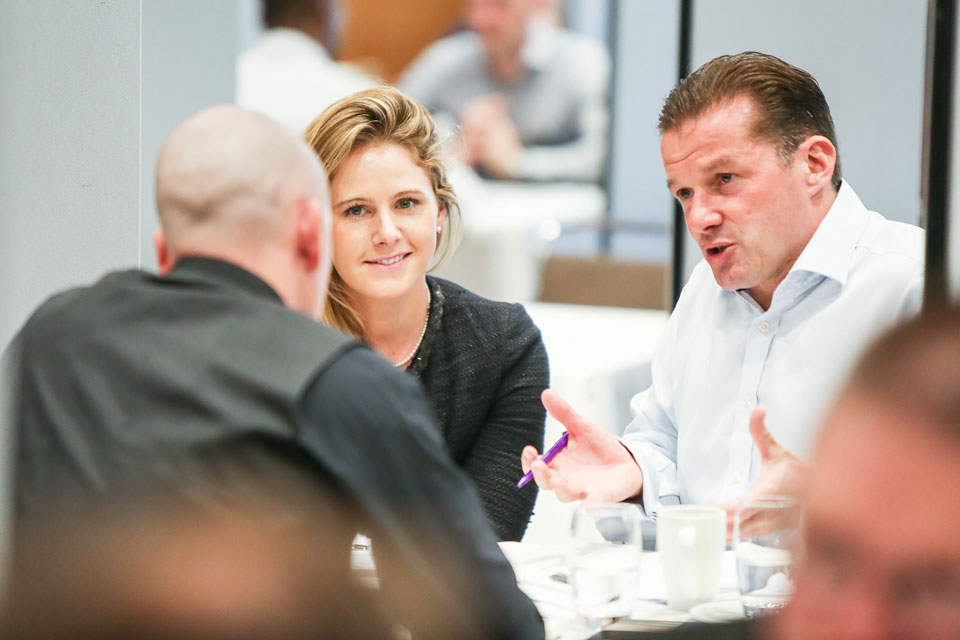
The Facilities Management Forum is a unique two-day event which allows FM professionals to meet with innovative and competitive suppliers to the industry.

6 & 7 July – Hilton Deansgate, Manchester

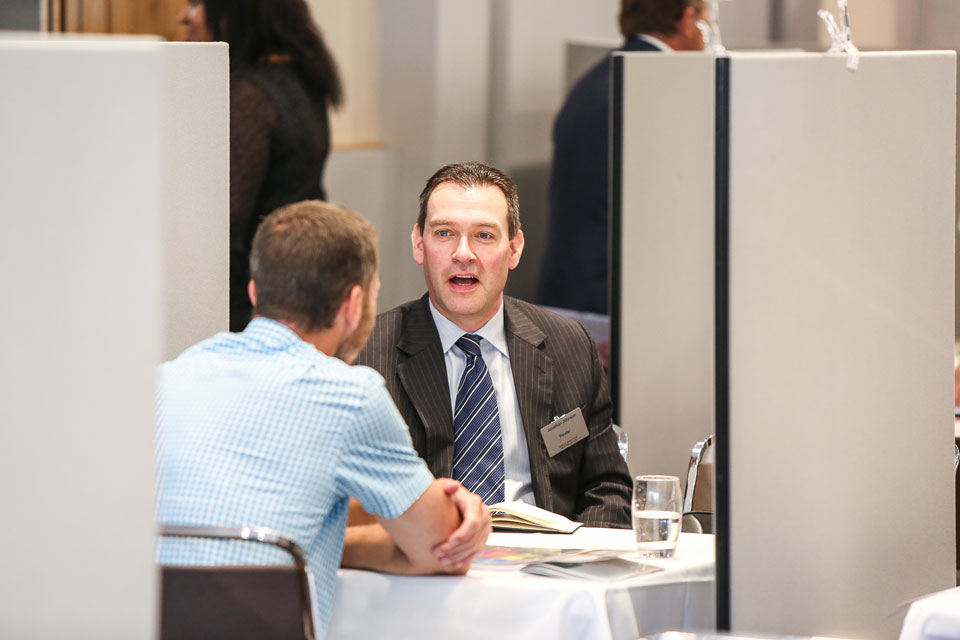
It is entirely free for FM professionals to attend and, as our VIP guest, you will be provided with a bespoke itinerary of pre-arranged, face-to-face meetings with suppliers who match your requirements and upcoming projects.

During the course of the event, you can also attend insightful and inspirational seminars from industry thought-leaders. And there are plenty of opportunities to network with like-minded peers who share your challenges.

Overnight accommodation, all meals and refreshments plus an invitation to our networking dinner is also included with your free ticket.

Simply register your place here.

To find out more about attending the Facilities Management Forum, contact Mark Davis on 01992 374101 or email m.davis@forumevents.co.uk.

If you’re a supplier to the sector, contact Paige Aitken on 01992 374079 or email p.aitken@forumevents.co.uk to find out about the range of event partner packages.

Principled Storage offers a completely secure document storage product

By Principled Storage

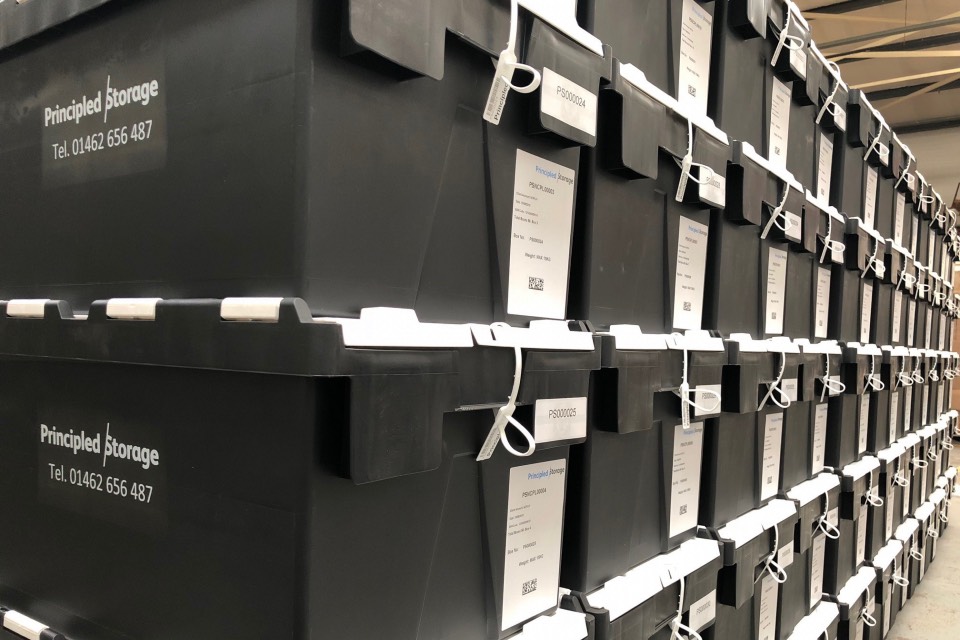
During the production of our document storage boxes, any parts that do not meet our manufacturers high quality standards are granulated back into pellet form to be used in the next cycle.

As they are made of high-tensile plastic, they last substantially longer than cardboard boxes. Our boxes have a lifespan of approximately 20 years, after which they will be sent to be recycled. This means that significantly less amounts of energy is being used in the production and recycling of these boxes.

Studies have been conducted into the use of plastic versus cardboard in the returnable transit case sector. It’s been shown that plastic is by far the greener material when energy usage to manufacture the product is considered, along with the number of times each type of container can be used before needing to be recycled. When considered over the entire life of the packaging, paper and cardboard embody far more greenhouse gases than their plastic equivalents. In contrast, plastic is light, durable and its manufacture is generally not particularly energy intensive – at least by comparison to paper. In less than a year the plastic box is normally not only more eco-friendly, but more cost effective.

Our totes are also weather-proof. Most storage companies in the UK use large warehouses to store their customers documents (in cardboard boxes), and as you would expect, warehouses can be cold and damp. Our boxes are not affected by moisture or damp, and therefore safeguard your documents from the elements.

When we deliver our boxes to the client, they are labelled with a barcode and an RFID (Radio Frequency IDentification) tag. There is also a unique reference number for the client so there is no information as to who the client is, or to what the box contains. Boxes are filled and secured by the client. We provide tamper proof security tags which are not opened by us and we will return to the client as per their request – still sealed.

The barcode on the label allow us to track the box point-to-point. Our logistics team scan the boxes into the van, clients location and our warehouse so we are able to provide our clients with real-time audits and reports.

The RFID tags enable us to use state-of-the-art technology to scan and locate boxes within a 20 ft radius, so we are able to recall boxes easily and efficiently.

Principled Storage is the only company in the UK to provide this solution, so this sets us apart from all other document storage providers.

www.principledstorage.com

FM Solutions: 2020 buying trends revealed

Building Maintenance, Building Refurbishment and Asset Management top the list of solutions the UK’s leading FM professionals are sourcing in 2020.

The findings have been revealed after the recent Facilities Management Forum and are based on delegate requirements at the event earlier this year.

Delegates registering to attend the event were asked which areas they needed to invest in during 2020 and beyond.

A significant 43.5% are looking to invest in Building Maintenance and Building Refurbishment each and Asset Management (37.7%).

Just behind were Building Maintenance (Reactive) at 37.7%, Energy Management (36.2%) and Air Conditioning (34.8%).

% of delegates at the Facilities Management Forum sourcing certain products & solutions (Top 10):

Building Maintenance – Planned 43.5%
Building Refurbishment – Internal 43.5%
Asset Management 37.7%
Building Maintenance – Reactive 37.7%
Energy Management 36.2%
Air Conditioning 34.8%
Cleaning 33.3%
Security – Access Control 33.3%
Building Control Systems 31.9%
Total Facilities Management 31.9%

To find out more about the Facilities Management Summit, visit https://facilitiesmanagementforum.co.uk.