Stuart O'Brien, Author at Facilities Management Forum | Forum Events Ltd - Page 42 of 87
Posts By :

Stuart O'Brien

Efficiently track and manage assets

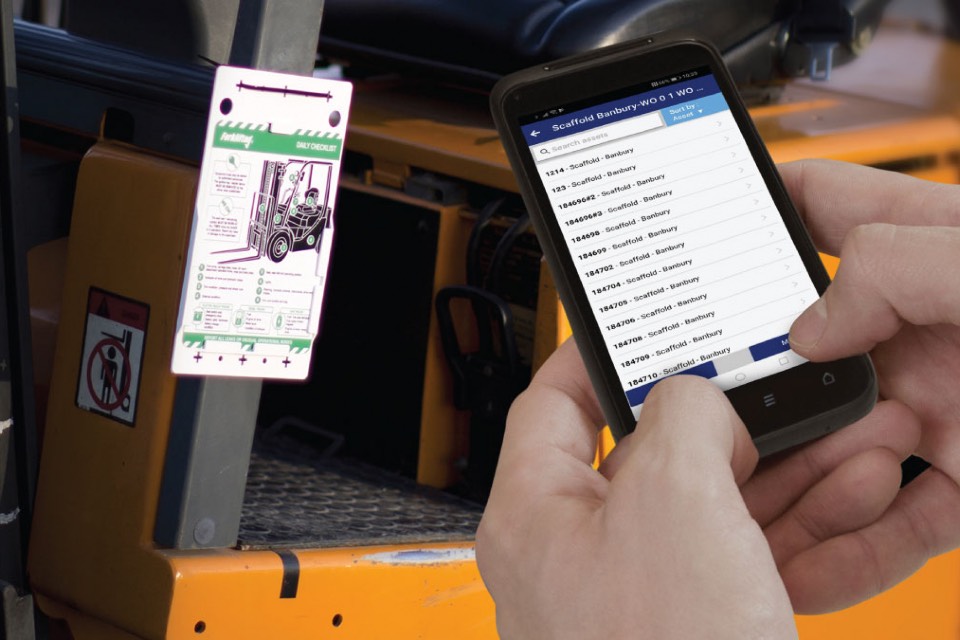
With FlexTrak from Brady/Scafftag, you can efficiently track, check and manage assets or inventory from any wifi-enabled place.

FlexTrak is a cloud based software that can be accessed anywhere with the correct password as long as there is wifi-coverage. Once set up, users can easily add or remove assets from stock or inventory by scanning an asset barcode or entering its serial number. FlexTrak will access the specific asset’s information. Asset data can be changed in the same way by specific users that are allowed to update asset features or characteristics in the software to manage assets. Reports on stored or updated assets can be auto-generated.

Try FlexTrak 30 days for free!

Scafftag – A Brady Company
ESOS 2 is complete, so what now?

5 December 2019 has gone!  ESOS 2 is complete! ESOS 3 is 4 years away… but customers are asking for sustainability improvements and cost savings, and on top of that, SECR is now with us.

That’s Streamlined Energy and Carbon Reporting, and means that qualifying businesses will need to track and report their kWh consumption and carbon emissions (in various groupings) and report them ANNUALLY within their published financial statements. The chances are that if you had to do ESOS you will have to do SECR.   The Government expects more than 11,000 businesses to report compared to only around 3,000 who had to do ESOS.

SECR requires by law, a statement in your company’s published accounts about your energy and carbon consumption. Also relevant performance indicators and a narrative about material actions being taken to reduce energy consumption and emissions.  Note the word “material”. That means they won’t allow changes that impact say less than 2% of your energy spend to be included.

In practice, business performance in respect of emissions and consumption against their competitors is going to be visible for the first time.  In competitive and environmentally sensitive sectors, such as food sector, it means that customers may look at these reports and could prioritise their supply chain based on it, so its going to be important to demonstrate progress and a high performance.  The whole essence of SECR is to use peer pressure to drive action.

So the ESOS 2 report has highlighted a series of measures, but how can you do them when the criteria for payback is only, say 2 years ?      This is the reason Onsite Energy Projects exists.  We recognised the challenge of capex availability and can provide a no-capex, off-balance sheet solution to implement both energy efficiency and on-site generation measures.

We may also be able to identify additional improvement measures, and deliver them all without any capex. If you would like to know more email us at info@on-site.energy or call on 0161 444 9989.

Onsite Energy Projects provides energy savings and energy generation solutions to energy intensive businesses, without capex if required.

New research puts safety eyeware in to focus

Comfort is the overriding requirement for safety eyewear, according to research among over 500 UK companies.

The Specsavers study looked at which features and benefits are the priorities when choosing prescription safety eyewear for employees, with the majority (57%) selecting comfort. This was followed by the opportunity for employees to actually try on the glasses for comfort and fit, selected by 40%.

In a perhaps more surprising aspect of procurement requirements, aesthetics also featured heavily, with 30% of employers looking for availability of designs for both men and women, while 27% were concerned with style. A quarter (25%) of employers were interested in the brand of safety eyewear, which may be about fashion but may also be about reputation for safety and robustness.

Cost was a consideration for nearly a third of employers, with 29% stating this as a feature they consider when selecting safety eyewear.

Jim Lythgow, director of strategic alliances at Specsavers Corporate Eyecare, said: “Of course protection is the major concern for safety eyewear, but it is also very important that safety glasses look and feel good. If they are comfortable, fit well and look stylish, then employees are far more likely to actually wear their eye protection.”

The ability to try on safety eyewear was the second most popular requirement, linked to the main criteria of comfort. It is possible to procure safety eyewear from a variety of sources, including online and paper catalogues. There is, however, no substitute for evaluating different frames in person. While the choice of safety glasses will be dictated to some extent by the setting and task, there is still often a wide range of options available to the employee, which can only be truly assessed in person. Professional one-to-one fitting advice is a vital part of the process.

Lythgow concluded: “It is very positive that employers are aware of the many additional features and benefits of eye protection and that they understand the importance of comfort, fit, and even aesthetics. It is crucial that employees are happy with their safety eyewear, as this is half the battle in it being worn consistently.”

Key findings from the Specsavers study:-

In addition to protection, which other features and benefits do you look for when choosing prescription safety eyewear for your company’s employees?

  • Comfort 57%
  • Ability to try on for comfort and fit 40%
  • Designs for men and women 30%
  • Low price 29%
  • Style 27%
  • Brand 25%

Image by roegger from Pixabay

ABM UK signs Armed Forces Covenant

ABM UK  has pledged its support of the armed services community by becoming a signatory of the Armed Forces Covenant.

The company’s signature of the Covenant was witnessed at an event hosted by the Commandant General Royal Auxiliary Air Force, Air Vice-Marshall Ranald Munro, on 28th January 2020 at the Tower of London. The Covenant was signed by ABM UK’s directors on behalf of their respective divisions.

There are more than two million former members of the armed services in the UK, which equates to approximately five percent of adult households. The Covenant recognises that the nation has a moral obligation to members of the armed forces, and their families, and establishes how they should expect to be treated.

By signing the document ABM UK has pledged to:

  • Uphold the principles that no member of the Armed Forces community and Reserves should face disadvantage in the provision of public and commercial services compared to any other citizen
  • And in some circumstances where required apply special treatment especially for the injured of bereaved

As part of their commitment, ABM UK will be advertising all job vacancies on the Career Transition Partnership (CTP) website, the official provider of Armed Forces resettlement.

Speaking on the commitment Chris Townsend, Senior HR director for ABM UK, Europe and the Middle East, said: “The armed forces community and their families are not only an important part of our national and local communities, whom we should be treating with fairness and respect, but also a great asset to our national workforce.

“By signing the Armed Forces Covenant we are not only looking to acknowledge what they and their families have done in service to this country but also to proactively support these individuals who have key transferable skills, experience, and knowledge into roles at ABM UK where they can be of huge value to our business and customers.”

The Covenant was co-signed on behalf of Defence by Commandant General Royal Auxiliary Air Force, Air Vice-Marshall Ranald Munro, who added: “We are delighted that ABM UK has pledged their commitment to supporting the Armed Forces and their families. The support of companies like ABM makes a significant positive difference to the daily lives of those who have served and those that continue to serve as Reserves.”

To date, nearly 4,000 companies have signed up to the Covenant.

Buildings and human induced vibration – The risks & the solutions

Whether it’s a building or bridge, human footfall needs to be considered by engineers working on the project to ensure that the end result for users is safe and comfortable (remember the Millennium Bridge ‘wobble’!). Oasys Software explains why human induced vibration is an important consideration…

Fluttering and resonance

Vibrations can affect structures in a wide range of ways. Two of the main ways are resonance and aeroelastic fluttering.

When Object A vibrates at the same natural frequency as Object B, this is known as resonance. As a result, object B resonates with this and will begin to vibrate too. Think singing to break a wine glass! Although the person singing isn’t touching the glass, the vibrations of their voice are resonating with the glass’s natural frequency, causing this vibration to get stronger and stronger and eventually, break the glass.

Aeroelastic flutter differs slightly; for example, a force is applied to Object B, causing it to shake. It’s not necessarily at the same frequency as Object B’s natural vibration, but it makes Object B move all the same.

When an object resonates, it is technically fluttering too. But not everything that flutters is necessarily resonating. This is how confusion over disasters such as the Tacoma Bridge collapse occur — for a long time, and to this day, the event is used as a textbook example of resonance. However, it’s been argued that the bridge’s collapse wasn’t caused by resonance, but by fluttering.

Fluttering also occurs with human induced vibrations, and an example of this is when human movement is applying force, causing the structure to vibrate. Some instances would also see resonation happening too, but it wouldn’t be a certainty.

Engineers have to ensure that their designs reduce the damage or discomfort caused by either fluttering or resonating.

The downsides

The structure and users within a building can be compromised when fluttering or resonation occurs, and it can have a range of impacts:

  • Human health suffering. Research has found that vibrations in buildings and structures can cause depression and even motion sickness in inhabitants. Buildings naturally respond to external factors such as the wind or human footfall within. This low-frequency vibration can be felt, even subconsciously, by people. It has been argued that modern designs featuring thinner floor slabs and wider spacing in column design mean that these new builds are not as effective at dampening vibrations as older buildings are.
  • Jeopardising structural integrity. Eventually, the build-up of constant vibrations on a structure can lead to structural integrity being compromised. A worse-case scenario would be the complete collapse of said structure.
  • Swaying bridges. The Millennium Bridge is one of the best examples of resonance caused by human induced vibrations and fluttering. As people walked across the bridge, the vibrations and swaying caused oscillations in the bridge. Everyone crossing the bridge would then sway at the same time to avoid falling over, resulting in a cycle of increasing and amplifying the swaying effect.
  • Jeopardise integrity of sensitive equipment. Depending on what the building is used for, what is within and what can be affected by the vibrations of those inside the building. Universities, for example, may have sensitive equipment whose accuracy and performance could be damaged by vibrations.

How software can help

Modern designs that favour thinner slabs and wider column design and spacing tend to be susceptible to all forms of vibration, whether it is human-induced or otherwise.

At the design stage, it is important for engineers to use appropriate structural analysis software to test footfall on a design and see the resulting vibrations.

Vibrations are inevitable, but engineers must account for a wide range of catalysts that trigger vibrations in a structure, such as human footfall, adapting their overall design accordingly.

Sources:

https://www.oasys-software.com/news/analysing-vibration-with-gsa/

https://www.oasys-software.com/case-studies/footfall-analysis-singapores-helix-bridge/

https://www.oasys-software.com/case-studies/princeton-university-frick-laboratory/

http://homepage.tudelft.nl/p3r3s/MSc_projects/reportRoos.pdf

https://www.forbes.com/sites/startswithabang/2017/05/24/science-busts-the-biggest-myth-ever-about-why-bridges-collapse/#1b9e3b001f4c

https://phys.org/news/2017-03-impact-bridges-skyscrapers-human-health.html

https://www.quora.com/Whats-the-difference-between-resonance-and-aeroelastic-flutter

https://www.telegraph.co.uk/science/2017/03/19/wobbly-skyscrapers-may-trigger-motion-sickness-depression-warn/

Add your name to our list of senior security professionals

Don’t miss the chance to join fellow senior security professionals this spring at the Total Security Summit, which takes place on March 30th & 31st at the Radisson Blu, London Stansted.

In addition to two days of business networking, you will get the latest insights and advice on trends in the sector via a series of seminar sessions.

Overnight accommodation, all meals and refreshments, plus an invitation to our networking dinner, are included with your complimentary guest pass.

Register today and join other senior security professionals from the likes of:

AB Foods

AEG Europe

Allsaints

BRE

Brighton BCRP

Birmingham 2022

Chelsea Football Club

Como Metropolitan London

Demipower

Domestic and General

Dorset and Wiltshire Fire and Rescue

Ebenezer Cobbold

Essex County Council

Ei Group

Freedom Group of Companies

Firmenich

Heathrow

HSBC PLC

Hull University Teaching Hospitals NHS Trust

Hogarh Worldwide

Kering International

Iron Mountain

London Borough of Redbridge

London Stansted Airport

Mandarin Oriental Group

Marks & Spencer

Marley

Matalan

Mercedes-Benz

Michael Kros

NatWest Markets

Newell Brands

Pearson Plc

Peel Media

Procter & Gamble

Portsmouth Guildhall

Sodexo

telent Technology

Theo Phaphitis Retail Group

Topshop

Transport for London

Wych Cross Place Estate

WeWork

Don’t miss out on this unique opportunity! Register your free place today.

Burning desire – Why fire training is the hot topic in health and safety

By Alex Wilkins at iHASCO

Look anywhere you want in the media and I guarantee you will find news and warnings about fire risks. Yet despite its catastrophic potential, the relatively day-to-day nature of fire damage is rarely appreciated. In truth, fire is a constant and very real hazard to UK organisations.

Home Office figures show that in the reporting period 2018/19, the UK’s fire and rescue services attended 15,005 ‘primary fires’ in non-dwelling buildings. That’s more than 280 per week; and those incidents caused 17 deaths, plus a further 1,061 non-fatal casualties.

Fire can also be disastrous in terms of operations, productivity and financial loss. Worldwide, fire and explosions cause the largest losses for businesses. Around 70% of businesses fail within three years of a major fire.

Thus, when it comes to fire, prevention is clearly much better than cure. But it’s impossible to predict when, where and why a fire may break out. Therefore, a culture of fire prevention must prevail throughout the organisation, from top to bottom.

Organisations in the UK simply have to take fire seriously. In some respects, their attention is mandated by law. Employers are legally required to train each of their employees in fire prevention under the Fire Safety Order 2005 and Health and Safety at Work Act 1974.

But how can managers be sure their entire workforce is taking fire safety seriously?

What are the dangers?

Workplace fires can arise from a range of causes. These include faulty equipment (such as electrical equipment like kettles and ovens), clutter (particularly combustible materials like paper, wood, furniture etc.), poor standards of cleaning (for example when grease or oil is allowed to build up on equipment, or dirt and dust cause machines to overheat), human error (misuse of equipment, failure to implement safety practices or report malfunctioning machinery etc.) and arson.

The good news is that fire is frequently preventable. It is notable that according to the Home Office figures mentioned earlier, 75% of the non-dwelling fires in 2018/19 were accidental and could probably have been avoided.

How can managers ensure their organisation is fire safety aware?

In the UK, employers have a legal duty to prevent fire. This includes a duty to train all staff in fire prevention.

However, the means by which they achieve this is largely up to their judgement. And it can be hard to determine the best approach, not least because there are key differences between staff members and even sectors when it comes to fire prevention.

For example, sectors that involve care for others – such as care work, health services and teaching – may find fire safety and protection a natural ‘cultural fit’. In commercial sectors, or those working under constant pressure of time or productivity, fire safety may be seen as a waste of time or a matter of common sense. Such workers may resent training as an intrusion into their time.

There are differences between people, too, which exist regardless of sector. Some individuals will lack confidence in their ability to protect themselves and others. Some will be disinterested or may not learn well in classroom- or lecture-style settings. Staff may also have issues around language, rostering and/or ability to attend training locations.

It can also be hard for employers to quantify learning outcomes when traditional approaches are used. They can easily verify who has attended – but knowing what proportion of that training was understood and retained is an entirely different matter. Fire safety training is an investment of time and money, and it is reasonable to want clear results.

Online training solves many of these problems

Online training, also known as eLearning, can help organisations to overcome many of the barriers to fire safety. The very nature of eLearning means it can be accessed from any location, at a time appropriate for the trainee. Many courses are broken down into bite-sized modules which need not be completed in one sitting; this makes concentration easier and the genuine assimilation of learning more likely.

It is often possible to provide eLearning in more than one language, something that is very hard to achieve with traditional training methods and may prove particularly helpful in organisations with a diverse workforce.

Online training also incorporates online documentation and learning assessments, making it easier for an organisation to prove compliance with the relevant laws.

Don’t settle for box-ticking when only genuine fire awareness will do

Due to the commonplace nature of workplace fires and the devastation they cause, organisations must provide fire safety training that will be genuinely absorbed, retained and acted upon by staff at all levels. This is quite clearly in the best interests of the business, its workforce and the public.

‘Box ticking’, in the form of providing low-grade fire training because ‘we’ve always done it this way’ or ‘we don’t have time to research alternative providers’, is frankly dangerous in financial, commercial, personal and reputational terms.

Fortunately, online fire safety training removes many of the challenges and inconveniences traditionally associated with workplace training and can even enhance the learning process and outcomes in some settings, while making it easy for organisations to demonstrate compliance.

And given the sheer devastation and loss that workplace fires can cause, that has to be good news for us all.

Achieve the highest Lockout/Tagout safety with innovative SafeKey Padlocks

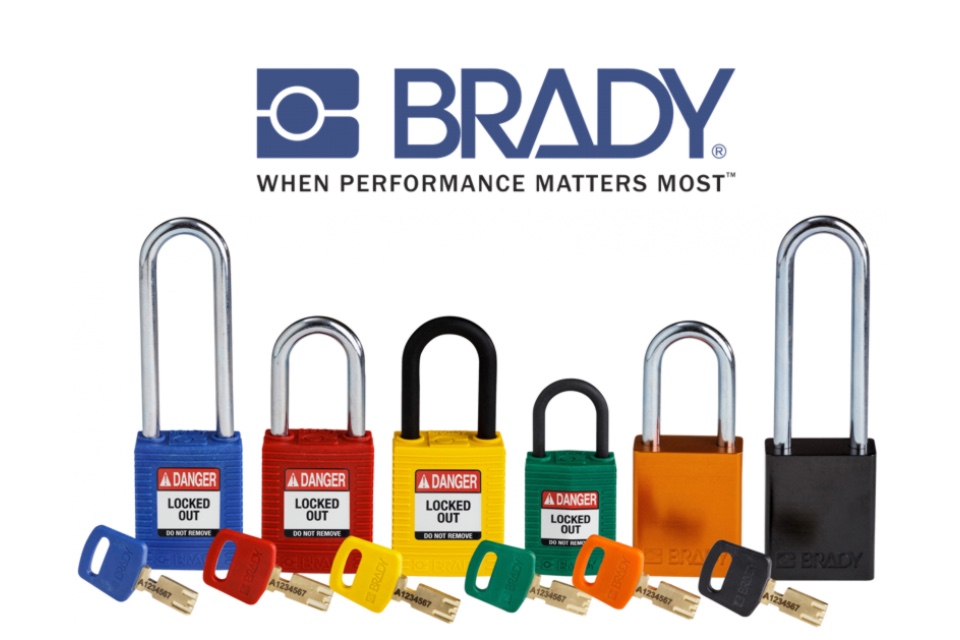
The new SafeKey Lockout Padlocks offer 700% more key possibilities than a standard safety padlock thanks to their innovative lock mechanism. With 100 000+ different keys, SafeKey can optimally support custom hierarchies of large sets of keyed different padlocks that can be opened by a manager’s master key or grand master key when needed. Charted key numbers ensure no two keys in the same company will open the same lock if so required.

With colour coded keys that match the colour of their padlock, SafeKey Padlocks help increase the efficiency of Lockout/Tagout during maintenance operations. Additionally, the locking mechanism allows smooth key insertion and removal for fast and easy padlock handling. Every padlock can be engraved.

Watch the SafeKey in action!

BRADY U.K.

Wildmere Industrial Estate

Banbury, Oxon OX16 3JU

Tel:  +44 (0) 1295 228 288

csuk@bradycorp.com

www.brady.co.uk

New specialist law firm focuses on physical & digital infrastructure

A law firm that focuses solely on supporting companies at the intersection where the built environment, technology and people converge, has launched today. Conexus Law will work closely with clients in the connected world in both IT, telecommunications, infrastructure and datacentre construction and with engineering businesses delivering major infrastructure projects.

The company has been founded by Ed Cooke (pictured), a recognised expert in critical IT infrastructure, engineering, procurement and construction. He has previously been a partner in international law firms DLA Piper and Bird & Bird. Conexus Law is founded on the belief that its people can only deliver the best counsel if they have a strong understanding of the industry challenges and the underlying technology and processes, so every member of the team has specific industry expertise.

It will take a fresh and different approach to legal practice, in many ways mirroring the way its clients operate, using similar language and processes to enable seamless interaction, identifying key risks and creating flexible legal frameworks.

Ed Cooke, Founder at Conexus Law, said: “With growth continually outstripping predictions, the digital sector is facing major challenges around the unprecedented pace of change, lack of resources and an inability to predict what the future technology landscape will look like or demand. In addition, innovative technologists are pioneering emerging technology where there is often no legal precedent and the regulatory environment frustrates innovation. Conexus Law will deliver robust, creative and commercially pragmatic global solutions in this fast moving and unpredictable sector.”

Electricity Savings in Plain Sight

Take a look at your electricity bill. What do you see? Many will probably look at the rate and the bottom line £ amount, and often that’s about it before it gets passed for payment.

Energy savings in the past has been associated with re-broking to secure a better rate.  Even then, fewer than 60% of UK businesses use a broker.  Negotiating a better rate is right and proper. But what you or your broker is actually doing is only affecting around 40%-50% of the bill – the wholesale element – and the scope for savings in that is limited.

BUT TAKE A CLOSER LOOK at your bill – particularly the itemised elements – you will find that over 50% of most electricity bills relates to “NON-ENERGY” costs (we regularly see 58%-60%).

“NON-ENERGY” costs are the recharges being made through your bills for Government subsidies for renewables obligations, contracts for difference and feed-in-tariffs, and also grid use of system charges (DNUos, TNUoS etc). These charges are generally shown as a £/kWh, and are set to rise by 30% over the period to 2030, due to known contractual commitments.   So that’s 30% more on 60% of your bill will impact by 2030 – that’s an increase of at least 18%.

What many businesses don’t realise is that if you generate power at your premises, and don’t use the grid, then these “non-energy” costs aren’t payable as they are only charged based on kWh consumed through the grid.

However, taking measures to generate energy on site may face a longer payback than you are willing to invest in.  This is one of the reason Onsite Energy Projects exists, to help businesses implement both energy efficiency and on-site generation measures for these longer payback measures.  We recognised the challenge of capex availability and can provide a no-capex, off-balance sheet solution

If you would like to know more email us at info@on-site.energy or call on 0161 444 9989.

Onsite Energy Projects provides energy savings and energy generation solutions to energy intensive businesses, without capex if required.