Stuart O'Brien, Author at Facilities Management Forum | Forum Events Ltd - Page 48 of 87
Posts By :

Stuart O'Brien

The advantages of using smart technologies in commercial buildings

As the UK Government pledges to reach net zero greenhouse gas emissions by 2050, the urge for sustainable buildings is stronger than ever.

According to the UK Green Building Council, an estimated 40% of the UK’s carbon footprint is attributed to the built environment, half of which comes from energy used in building. Heating alone created 10% of the country’s carbon footprint. 

Yet sustainability is still out of reach for many property owners and managers. Old buildings, small budgets, tenants’ varying needs – there are many factors that make it hard for a property manager to truly measure the sustainability of a building and to act upon any findings.

Considering this, Frankie Bryon, Sustainability Surveyor at LSH discusses why smart technology can help buildings improve on sustainability as well introduce other benefits that include promoting health and wellbeing and enable agile working…

Smart is sustainable
Firms’ sustainability strategies have been a major driver of the rollout of smart technology. By providing more efficient controls over energy usage, it can deliver significant reductions in energy consumption.

It is no coincidence that some of the smartest office buildings in the world are also rated by BREEAM as among the greenest. Smart systems allow lighting, heating, air conditioning and ventilation to be monitored and adjusted according to a building’s usage and occupation. Energy wastage can be minimised by turning off heating and lighting when an office is unoccupied. Intelligent building facades may also be used to control the heat and light entering the building in response to changing weather conditions.

The next generation of energy efficient smart buildings have their own sources of power generation and some are even able to generate more energy than they consume, with surplus energy going back to the grid.

Workplace wellbeing
Smart technology is increasingly recognised as having an important role to play in promoting health and wellbeing. It can help to create environments that support alert, energised workforce. 

Sensors can monitor air and water quality, light, temperature and noise levels. Issues known to affect workers’ concentration levels such as poor air quality or a lack of natural light can thus be detected and fixed.

More advanced smart office technology can also make use of data from wearable biometric devices monitoring the health and comfort of workers. In fact, research by Instant Offices shows 45% of the UK workforce would feel comfortable with sharing information via wearable devices for the purpose of protecting their health and wellbeing. 

Ambient conditions can be adjusted when workers show signs of discomfort, or an individual’s immediate working environment can be changed according to their personal preferences.

Work smarter

Sensors, smartphones or wearable devices may collect data monitoring environmental factors such as temperature, light, air quality and noise, as well as data on employees’ usage of the building.

The data collected can deliver building managers with actionable insights on how to improve a building’s performance, or it may feed through to automated systems controlling the office environment. With smart technology continually evolving, it is being used to support an increasingly wide range of applications, providing multiple benefits to building owners, investors, occupiers and employees.

Enabling agile working
Smart technology is providing occupiers with a better understanding of who uses the office at any given time, how they work and with whom they collaborate. These insights can enable increasingly agile, flexible working.

Some of the newest generation of smart buildings have fewer desks than workers. Instead, employees may reserve a workspace using an app, with a choice of spaces depending on whether they would prefer a collaborative workspace, private meeting area or a quiet space.

Smart systems may thus facilitate a move away from the convention of employees ‘owning’ a desk, which then goes unused for periods when they are out of the office. Flexible workspaces can be used more efficiently and may be continually adapted to changing employee demand and new work styles.

Improving workplace experiences
As well as enabling desk and room bookings, workplace apps can also be used to order food and drink, book gym sessions or reserve parking spaces. They may allow employees to control ambient settings, as well as providing new ways of connecting and collaborating with colleagues.

Workplace apps are thus developing as important interfaces between employees and office buildings, giving individuals greater control over their office experience. This will help to align the modern office with the expectations of a younger workforce for whom smart technology already plays an integral part of their lifestyles outside of work.

The benefits of being smart
Overall the advantages that smart offices offer are in terms of the following:

  • Sustainability
  • Employee wellbeing
  • Agile working 
  • Workplace experience

Smart offices also aid talent attraction and retention, by creating spaces in which people want to work, while appealing to workers’ environmental values. Modern, sustainable offices can help to reinforce a company’s brand values and define a progressive, forward-thinking corporate culture.

Image by Free-Photos from Pixabay

Bring a friend to the FM Christmas Party!

Join us at the FM Christmas Party, hosted by the FM Forum and FMJ.

It’s set to be the FM industry’s networking event of the year, taking place on the evening of Wednesday November 27th at the plush private members club Beat London.

Early Bird tickets are priced at just £35 which includes entrance, drinks and canapes.

Book yours today to avoid disappointment. And bring a friend or colleague!

We look forward to seeing you there!

Your invitation to the Facilities Management Forum

We would like to invite you to attend the Facilities Management Forum as a VIP guest – sign up today!

RSVP here today!

This unique event takes place on January 27th & 28th 2020 at the Radisson Blu Hotel, London Stansted.

The Forum will give you access to innovative and budget-saving suppliers for a series of pre-arranged, face-to-face meetings based on your requirements. You can also attend a series of seminars, and network with like-minded peers.

Overnight accommodation, all meals and refreshments, plus an invitation to our networking dinner, are included with your free VIP ticket.

Please confirm your attendance here.

Places are limited, so register today or contact us to avoid disappointment.

RICS releases global best practice for measurement of land

In a significant move, the Royal Institute of Chartered Surveyors (RICS) has published what it calls a ‘pioneering’ draft guidance for the measurement of land.

Once adopted, RICS says the guidance will have far-reaching implications for development surveyors, planners, architects and government administrators around the world as the new standards become global best practice for the consistent calculation of land measurement and associated metrics.

Instigated by the RICS, the new guidance has been lead-authored by pre-eminent British chartered surveyor and town planner Jonathan Manns. Consultation on the draft Guidance Note on the “Measurement of Land for Planning and Development Purposes” runs until 17 September 2019, prior to formal adoption at the end of the year.

The draft Guidance provides clear definitions for those measurements which are widely used in the property and planning sectors, advocating consistency worldwide. The following five core definitions have been proposed to assist with the global measurement of land:

  • Land Area: This should be used to refer to the legal title area of land, and is of particular relevance to agents and lawyers as it is the legally demised area of land
  • Site Area: This should be used to refer to the area of land used for planning application purposes and is of importance to those involved in the development process as it is the area to which any permission for development relates
  • Net Development Area: This should be used to refer to the area from which financial value is directly derived, by virtue of either being income-producing or for sale, and is of relevance to development surveyors and valuers
  • Plot Ratio: This is the ratio of Gross External Area (GEA) of a building or buildings at each floor area, under the International Property Measurement Standards, to the site area, and is already used as a standard metric for planning and design in certain sectors and jurisdictions
  • Site Coverage: This is the ratio of the building footprint’s GEA to the site area at ground-floor level, and again is already a standard metric for planning and design in certain sectors and jurisdictions

Consultations to this guidance note are open until 23:59 on 17 September 2019.

Commercial property yields climb in 1H19 – Savills

Property specialist Savills’ latest Market in Minutes report has indicated that the UK’s average all-property yield has reached its highest level since November 2016 at 4.90 per cent.

Yields rose a quarter point across retail warehousing and leisure assets through July 2019.

The report also revealed that while investors are becoming increasingly active studiers of the UK market, particularly of the retail sector, transactional volumes remain low as they are largely waiting to strike at the ‘right’ price, although investment volumes in high street shops did tick up by 9 per cent in H1 2019 compared to H1 2018.

The main exception to the upwards trend of the last 12 months is the City of London office market, where prime yields hardened from 4.25 per cent in June to 4.00 per cent in July, supported by the sale of 8 Finsbury Circus, EC2M, to Singapore-based Stamford Land for £260 million.

Mat Oakley, head of UK and European commercial research at Savills, said: “The depth of interest and the prices we’re seeing being achieved on prime London assets indicates that there is a still a significant depth of demand for high quality commercial property. With these assets also continuing to deliver positive capital value growth, any further weakening of sterling in the second half of 2019 is likely to see additional demand unleashed and rising volumes. 

“There are also investors circling ready to buy distressed retail assets although the prices they’re willing to pay will have to be commensurate to the risks involved.”

Health & Safety

The 5 biggest health and safety compliance challenges facing FM businesses

By Lucy Atkinson, Business Support Manager, Genilogic

The main framework of Health and Safety legislation has remained the same for 45 years in the form of The Health and Safety at Work etc Act, however, business has been far less static. 

As the work we undertake in the name of FM becomes more complex, so does the risk; and in turn, the controls to keep our industry safe at work are bigger and better than before, but are we keeping up? 

We aim to point out the most common challenges to compliance within the FM industry and explore some of the ways to overcome them.

1.   Ensuring everyone is in the know

Policy and Procedure Management Problems

FM management teams are tasked with the daunting job of ensuring that all staff have visibility of all the relevant health and safety documents and policies relevant to their role. The nature of FM often means that staff can be widespread location-wise which creates a challenge.  These staff members may be tricky to reach, however, they need to not only work compliantly, they also need to work safely, or your business stands to pay the price.  It is important that these staff have the same access to information, policies and resources as the staff on the next desk from you, enabling them to operate in an informed and safe manner, whilst protecting your brand standards. The need to communicate safety procedures becomes even more important when considering the scope of FM responsibilities.  Staff must have sight of everything relevant, such as; the building regulations and documentation regarding how a facility is to be managed, any products that should or shouldn’t be used, what works require planning permission, what time of day certain tasks may be undertaken and any processes regarding notifying relevant on site contacts, to name a few.  Failure to communicate any of the above information to your staff could cost your company a contract ultimately.

Tracking Acknowledgements Simplified

Rather than sending paper copies via post and waiting for staff to read and return paperwork, upload documents to a cloud storage solution such as Google Drive, Dropbox or SharePoint.  You then can give all workers a login and have them log in and read.  You will still need to track this, whether that’s by having them upload a document to the cloud server with a list of all documents they have read and understood, along with any queries or issues they have, but at least you are being more eco-friendly whilst saving costs on printing and posting.  Bear in mind that as well as risk assessments, method statements, policies and procedures, your staff also need to see all COSHH SDS and risk assessments, as well as being provided with any control measures or PPE suggested on the assessments.  Having these documents hosted in a central library means that staff can access them from anywhere, including from site to check back if they need to clarify something before commencing works.  You may also consider giving the client access to their folder of documentation, this may offer them reassurance regarding your management and procedures. They are also more likely to be proactive about notifying you of changes if they have sight of the documents your staff are relying on to work.

2.   Identifying Site Specific or Dynamic Risks

Dynamic Failures

FM has always been a remote job, with few FM professionals managing to spend their full week at their desks.  What is more is that FM workers are in ever changing work environments, which provide ever changing levels of risk, it can be a health and safety minefield.  Many companies tackle this by simply completing task specific risk assessments which are then complimented by a site risk assessment, the two together should then provide a site and task specific risk assessment which hopefully has covered everything off.  However, not identifying and controlling site and task specific risks not only has the potential to negatively change lives, but it could also increase costs to businesses through sick pay, court cases and fines, compensation claims and higher insurance premiums.  

Change of Environment Checklist

Although the trend will be sufficient in most situations, staff attending sites need to be fully aware of the ‘normal’ risks for each site, to enable them to spot new or dynamic risks.  All staff who attend sites need to be adequately trained to identify hazards and how to implement appropriate controls.  A course which introduces health and safety, or risk assessment would give staff enough knowledge to make informed and safe decisions.  Staff need to be aware that they should not commence works if they think a change to the task or environment will pose risk to any life or property and they should have a contact at the office who can give Health and Safety guidance or attend sites to assess and advise.  It helps to provide staff with a check list to fill in upon arrival to any site regarding changes to the work environment, process or equipment with advice on who to contact to talk about any changes with.

3.   Reporting Accidents, Incidents and Hazards

The Onsite Accident Book

Having your staff working on a client site can sometimes cause confusion surrounding policies with regards to reporting.  Often FM staff will fill in the accident book on site but then not mention it to their own employers, or not report it to anyone at all.  Whilst unreported accidents make the figures look good for annual review, they put your company at risk.  Reporting gives a company a reason and an opportunity to review current processes, identify any missing controls and implement accident prevention measures or retrain staff.  If an accident goes on to become a RIDDOR and evidence is found that previous accident reports have not been managed effectively, your company could face large fines or even prosecution.  The HSE can drop in without notice to undertake spontaneous investigations too, which means that nothing necessarily has to go wrong for a company to be prosecuted.   

The Solution

For accident, incident and hazard reporting, it may help to have staff to return a mandatory weekly report or questionnaire, regarding anything they should have reported.  Once staff start reporting these events in real time rather than on a weekly report, the reports can be lessened in frequency. It may also help to resend the company reporting policy more frequently and mention it in news bulletins, conferences, performance appraisals and any other staff focussed events or publications. It is also wise to let staff know what you’re doing about the reports they make, so if an accident happens due to an uneven surface, letting staff know you have put in signage, or resurfaced, will help staff feel like their reports matter and will be heard.

4.   Managing COSHH Products Safely

Oh My COSHH!

FM is one of the most diverse industries in the modern world, employing staff and contractors spanning across many categories.  With many of the services provided to FM clients requiring the use of COSHH products (products which are managed under Control of Substances Hazardous to Health, 2002), the pressure is on FM companies to ensure they are aware of all the products their workers are exposed to, and the associated risks.  It is not uncommon for clients to provide their own materials, equipment and products which are better suited to their building for use by their FM company, making keeping track of these products very difficult indeed.  Staff who are exposed to COSHH products without proper knowledge, training, PPE, tools or in unsafe conditions are at risk of significant harm.  COSHH products also pose significant risk to property, using a chemical on an incompatible surface type can cause irreparable damage which could cost an FM company not only the cost to replace the surface or item, but the entire contract.

COSHHing it right!

Ensure all staff have received COSHH training to enable them to easily identify if they are working with a COSHH product.  They should be aware of common COSHH products and the risks they pose as well as how to identify key symbols and what they mean.  As well as this, staff should have both seen and acknowledged the Safety Data Sheets (SDS) and COSHH risk assessments for all products they work with or near, it is an employer’s responsibility to ensure that SDS are up to date and available to view and reference.  Staff also need to be provided the correct tools, PPE as well as any other controls identified in the risk assessment for handling the product as detailed on the SDS or as required for the task.  Using a spreadsheet showing each employee along one side with the product across the other, checking off when they have seen each one. Ensure you start again for updated/new SDS.  Also ensure staff know where to find information in an emergency and how to report issues with substances, PPE or tools.

5.   Identifying Skills Gaps

Skills, here, there and everywhere!

Managing training can create a full-time job role in larger organisations.  Not only must an employer track what courses their staff have completed, they must also identify training requirements as they start working with them, and again every time something changes which could require further training. On top of this, most qualifications require refreshers, of varying intervals, generally from annually to 60 months.  Staff can be difficult to pin down when it comes to planning training days and unfortunately, they rarely seem to want to keep track of their own training requirements. Aside from keeping your staff trained so that you can operate compliantly; it may also be that having a database of qualifications and competencies helps you identify who to send for a particular job, for example, you may need to select a staff member with working at heights competencies if you are arranging an external window clean for a tall building.

Spreadsheets

Most companies without a health and safety software solution in place must rely on spreadsheets.  The axis are made up of names and courses, but a separate sheet needs to be made up with course completion and expiry dates to ensure compliance.  This requires someone checking at least every month what courses are due to expire in the coming month, arranging the courses and updating the spreadsheet.  It makes finding skills gaps possible, but potentially difficult.  Sometimes having each site or department manage their own training requirements so they are seeing just what is going on in their team, making seeing gaps more manageable.  

Static Safety

Although these manual answers are the most common ways to manage our biggest pains to compliance, health and safety software offers a much simpler resolution.  Many companies are still using the same system they have been using for over 20 years to manage health and safety, whilst upgrading systems everywhere else.  Although this is perhaps a case of not fixing something that is not broken, it is possible to spend money to save and to allocate resources differently to manage compliance in a better way.

How Software Can Transform Management

Software hosts and sends out documents and policies whilst tracking staff acknowledgement, ensuring these acknowledgements can be audited.  These documents and policies can be amended at anytime and resent, so if a dynamic risk is spotted, a competent person can reassess and resend, safe in the knowledge that everyone has had sight of any changes before work commences.  Most solutions have a reporting module, giving staff access to report accidents, incidents and hazards in real time, giving managers and competent people the information that they need to implement changes for future prevention, again in real time.  Systems often come with different ways to filter information so that managers can spot trends or issues with current procedures.  COSHH, again, is normally an available module, some solutions offer hosting and automatic updates of all COSHH SDS whilst also allowing you to pull through pertinent information straight from the SDS into a COSHH assessment. Training can also be tracked and managed completely by a software solution, many solutions come with integrated e-learning, offering more value for money.  The software then tracks all completions, internally and externally and auto-enrols staff for internal refreshers and notifies the relevant people regarding external courses/refreshers.

Out of a Job?

Many health and safety professionals shy away from software as they worry it takes value from their role and knowledge, however, that is simply not true.  Companies need a health and safety professional, whether as a consultant or an inhouse team or person.  Giving this professional access to a software solution is to compliment their work, it helps them distribute information, track and monitor compliance and review more efficiently.  Health and safety software relies on having someone competent putting information into it. The idea is to make things easier and more efficient to manage, and what will they do with the time they’ll save? They will do all the things they will tell you they feel they never have enough time to do; visit sites to assess compliance, give training, arrange audits, implement more controls and prevention methods whilst improving your company’s health and safety culture.

Features and Benefits

As well as our top five, many solutions come with translation tools, enabling a one-click translation to many languages, saving thousands in costs whilst being completely inclusive.  Some other tools on offer amongst the market include DSE and MAC Assessment tools, stress indicator tools and toolbox talks. Most solutions are cloud-based and can be accessed from anywhere on any device, which is a big plus for the FM industry. As well as this, most solutions are scalable to your business size, so even if your business is small now, it is worth investing in a compliant and simple to manage system, then as you grow, your software grows with you.  Using software to create sector specific safe systems of work allows for companies to consider the quality centrally before national/global dissemination of information, protecting company and brand names by setting standards.  Inducting staff with a health and safety software system in place reduces your carbon footprint whilst also saving costs, most solutions allocate a staff member to everything they need when you add them in and track acknowledgements on everything from the staff handbook to your internet use policy!  As well as all of this, FM businesses often give their clients a log in to their system, showing them how seriously they take compliance and giving them a USP over their competitors.  Are you ready to move into 21stcentury FM compliance management?


Do you specialise in Asset Management? We want to hear from you!

Each month on FM Briefing we’re shining the spotlight on a different part of the facilities management market- and in September we’ll be focussing on Asset Management services.

It’s all part of our ‘Recommended’ editorial feature, designed to help FM industry buyers find the best products and services available today.

So, if you’re a supplier of Asset Management services and would like to be included as part of this exciting new shop window, we’d love to hear from you – for more info, contact Paige Aitken on p.aitken@forumevents.co.uk.

Here are the areas we’ll be covering, month by month:

September – Asset Management

October – FM Software

November – Business Continuity

December – Fire Safety & Equipment

For more information on any of the above, contact Paige Aitken on p.aitken@forumevents.co.uk.

Image by Quinn Kampschroer from Pixabay

Ho ho ho – RSVP for the FM Christmas Party!

The FM Christmas Party is back! Hosted by the Facilities Management Forum and the Facilities Management Journal, this year it’s taking place on Wednesday, November 27th at BEAT London.

Even though it’s still August we’d like to invite you to an evening of industry networking and festive cheer!

Taking place at London’s ultra-hip BEAT venue, 200 of the FM industry’s leading buyers and suppliers will gather under one roof for a fun-filled extravaganza.

RSVP today to avoid disappointment: Individual tickets are usually priced at £40+vat per head; including drinks and canapés! Buy them now to get an early bird rate of just £35+vat per ticket!

Click here to book your tickets!

We also have a limited amount of bespoke partner opportunities available for the FM Christmas Party – for more information, contact Paige Aitken on 01992 374 079 or email p.aitken@forumevents.co.uk.

Claim your FREE VIP ticket to the Occupational Safety & Health Forum!


This is a last call to senior health and safety professionals like you to claim your free place at the Occupational Safety & Health Forum.

This unique one-day event takes place on February 5th at the Radisson Blu Hotel, London Stansed.

Register here for the opportunity to:-

  • Meet with innovative suppliers for a series of face-to-face, pre-arranged meetings based on your own requirements.
  • Network with like-minded peers.
  • Attend a series of insightful seminar sessions.
  • Enjoy complimentary overnight accommodation, all meals and refreshments, plus an invitation to our networking dinner with entertainment.

Register now to avoid disappointment!

Alternatively, contact Katie Bullot on 01992 374049 / k.bullot@forumevents.co.uk.

If you are a supplier to the sector and would like to meet with 60 senior health and safety professionals, contact Charlotte Humphreys on 01992 374102 / c.humphreys@forumevents.co.uk.

IOSH study: Apps can ensure safer buildings

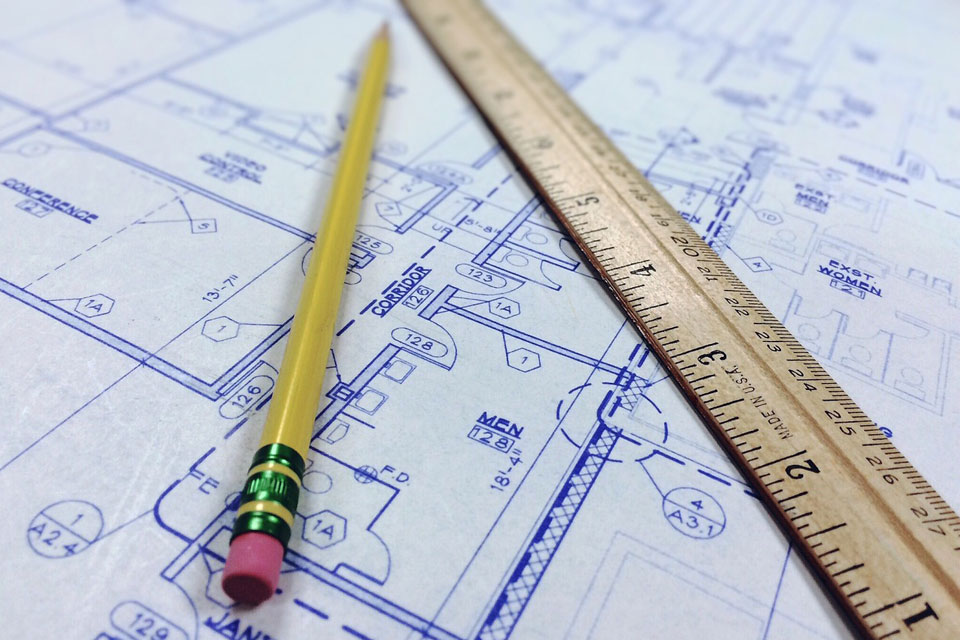
Digital apps can help construction project designers create safer buildings by improving their knowledge of hazards during the design phase.

That’s according to new research funded by IOSH and conducted by researchers from Glasgow Caledonian University.

It found that the use of a multimedia digital tool can help to educate designers on typical design-related hazards and assist them in designing safety into construction projects more effectively. 

The study asserts that many professional design institutions have been gradually withdrawing the requirement for architects and civil engineers to spend prolonged periods of time on construction sites.

In turn, this has meant many designers do not have the construction knowledge needed to understand how their designs could impact occupational safety and health and often results in contractors taking on the responsibility for building designs.

However, the IOSH research shows up to half of construction accidents in the UK have a connection to the design of the building, highlighting the importance of improving designers’ knowledge of hazards and designing safety into developments from the outset of projects.

Professor Billy Hare, Deputy Director of the BEAM Research Centre at Glasgow Caledonian University, said: “A key factor for this research was the visual nature of the digital tool’s content, which seemed to work best with new graduates.

“But its real potential lies in being able to capture tacit knowledge from more experienced designers for the next generation to counter the age-old problem of organisational memory loss and prevent the same old mistakes that cause accidents and ill health from being repeated.

“We are now looking for partners to develop the prototype digital tool for full-scale industry use.”

As part of the study, a sample of 40 (20 novices and 20 experienced) designers from two typical industry groups of architects and civil engineers were recruited.

The designers were randomly assigned to multimedia user (experimental) and non-user (control) groups, who were permitted to use the internet for help. Participants were asked to review a set of computer-aided design (CAD) drawings in these sessions, identify hazards and make decisions about designing for OSH.

The experiment tested the multimedia digital tool against general internet searches and examined the designers’ ability to foresee OSH hazards in designs by measuring both the quantity of specific hazards identified and the quality of design outcomes.

Using the tool, the designers identified hazards a total of 599 times, with architects identifying over three times the number of hazards as those not using the tool. For civil engineers the figure was five times as large.

In both cases the scope of hazards identified was double that of the group not using the multimedia tool, suggesting it was an effective way of improving designers’ knowledge of hazards. This knowledge could help to create safer buildings by factoring a greater number of hazards into the planning and design of construction sites.

Mary Ogungbeje, Research Manager at IOSH, said: “Everyone would agree that it’s always best to prevent an accident from taking place in the first place, rather than reduce the injury.

“In today’s age of technology, being able to utilise digital training resources to help designers do just that is great. Such tools can make a real difference in upskilling professionals, irrespective of their level of experience. Architects and civil engineers can identify hazards and come up with better controls when developing and reviewing designs. Ultimately, this will reduce injuries and save lives.

“I hope that this research and the findings are welcomed by the design community in particular, including establishments with an educational or training interest, so that the learnings can contribute to improved industry practice.”

Image by Wokandapix from Pixabay