Stuart O'Brien, Author at Facilities Management Forum | Forum Events Ltd - Page 56 of 87
Posts By :

Stuart O'Brien

Get a head start at the Sports & Leisure Forum

The Sports & Leisure Forum is a unique opportunity to meet with new suppliers, attend a series of insightful seminars and network with fellow facilities professionals.

17 & 18 June 2019 – Radisson Blu Hotel, London Stansted

This unique two-day event is entirely FREE for you to attend – but register your place today to avoid disappointment.

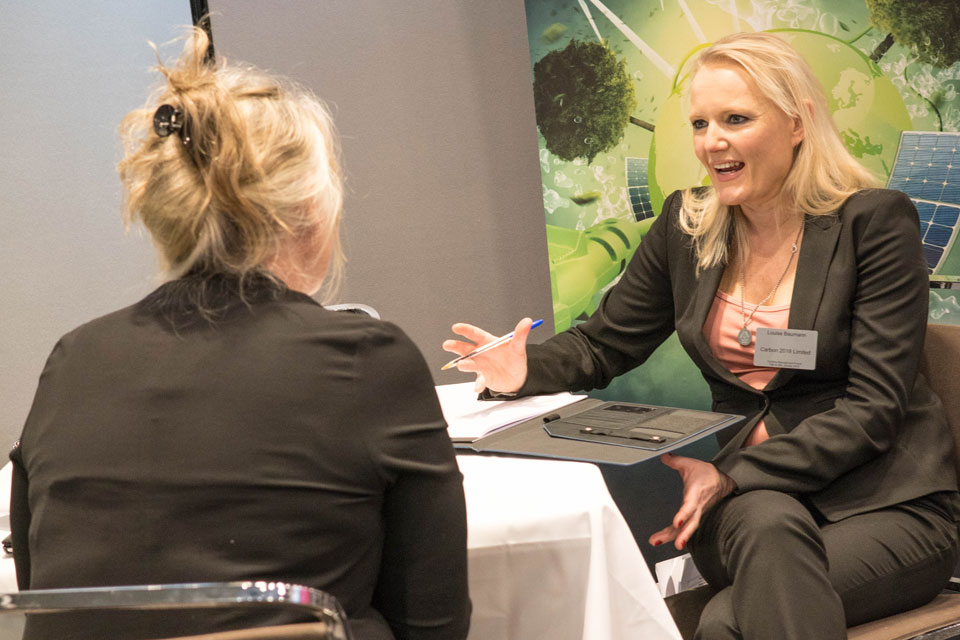
As our VIP guest, you will be presented with a bespoke itinerary of meetings with suppliers relevant to your business and upcoming projects.

All hospitality – including overnight accommodation, meals and refreshments, plus an invitation to our gala dinner with entertainment – is included with your free ticket.

Register your free place today!

Or for more information, contact Jordan Kimsey on 01992 374101 / j.kimsey@forumevents.co.uk.

Alternatively, to attend as an industry supplier, contact Josh Oxberry on 01992 374104 / j.oxberry@forumevents.co.uk.

European commercial outsourcing grew 5% to €3bn in 4Q18

The sourcing market in Europe, Middle East and Africa (EMEA) grew in the final quarter of 2018 despite unsettling macro-economic and political events across the region.

The EMEA ISG Index from the Information Services Group, which measures commercial outsourcing contracts with annual contract value (ACV) of €4 million or more, shows the EMEA market posted combined fourth-quarter ACV of €3 billion, an increase of 5 percent from the prior year.

This rise was bolstered by a 44 percent year-on-year increase in as-a-service ACV, to €1.3 billion, as strong demand for digital transformation remained an enterprise imperative.

Infrastructure-as-a-Service (IaaS) and Software-as-a-Service (SaaS) in EMEA both performed strongly, posting ACV of €960 million and €331 million, respectively. Traditional sourcing, meanwhile, contracted by 12 percent year-on-year to €1.7 billion.

For the full year, EMEA reached €12.9 billion in ACV, up 9 percent against 2017. Traditional sourcing ACV of €8 billion was down 6 percent year-on-year, but as-a-service grew 48 percent to reach €4.9 billion.

The rise in as-a-service sourcing – which now accounts for 38 percent of total ACV for EMEA – continued to be driven by demand for SaaS and IaaS, both of which increased by more than 40 percent in 2018.

Steve Hall, partner and president of ISG, said: “Despite ongoing political and economic uncertainty in Europe and resulting business caution, companies are making significant investment in digital technologies to improve their ability to compete and to engage with their customers. This is a clear testament that the tailwinds of digital transformation are stronger than the headwinds of political and economic issues.”

Globally, fourth-quarter ACV for the combined global market grew 18 percent, to €9.8 billion. As-a-service ACV pushed to new highs in the fourth quarter, up 43 percent year-on-year, while traditional sourcing inched up 2 percent.

Declines in the UK, DACH and France pulled down the traditional sourcing market in 2018.

Full-year ACV in the UK fell by 27 percent, to €2.5 billion, despite a 5 percent increase in the number of contracts. The traditional sourcing market in the UK has slumped since the Brexit vote in June 2016. Prior to the vote, the UK averaged three €800-million quarters for traditional sourcing per year. Since the vote, only one quarter – the first quarter of 2017, which included the signing of some exceptionally large mega-deals – reached that mark.

Traditional sourcing ACV in DACH was down 4 percent in 2018, with a 19 percent drop in contract signings. The economy in DACH slowed in 2018 and fears of a recession have slowed decision-making. The UK Government defeat over the Brexit vote presents a further substantial economic risk to Germany, as well as the UK.

While UK and DACH companies are exercising caution in traditional sourcing decisions, both are increasing their investments in new technologies and as-a-service contracting to improve efficiency and meet consumer demand for new services and channels.

The results of unsettling economic and political factors also are evident in France, where traditional sourcing ACV edged down 3 percent, to €640 million, despite a steeper drop of 13 percent in contract volume. French consumers have turned to online shopping in recent weeks as the Gilet Jaune demonstrations spread, benefiting Amazon and other online retailers and potentially affecting the Retail sector in 2019.

In the Nordics, traditional sourcing was up 20 percent, to €1.1 billion, with the number of contracts growing by 14 percent. The smaller EMEA markets also showed strength with gains in Southern Europe, Africa/Middle East and Russia/Eastern Europe.

IFMA releases benchmark report for facility management

The International Facility Management Association (IFMA) its latest Operations and Maintenance: Qualitative Analysis Benchmarking Report.

The report, produced by IFMA’s FM Research and Benchmarking Institute (RBI), is a comprehensive analysis of the most recent operations and maintenance benchmarking survey of more than 2,000 individual responses representing 98,000 buildings in 35 industries

The industry body is particularly keen to focus on a section exploring FM strategies for organisational agility and change management.

The 2017 report focused primarily on financial metrics, while the Operations and Maintenance: Qualitative Analysis Benchmarking Report provides data from the United States and Canada on practices and tools being used by industry professionals in managing facility services quality.

For example, the report describes outsourcing of in-house maintenance needs and preventive maintenance plans.

The report includes data-based insights that can translate into operational guidelines for:

  • Solid waste diversion
  • Legislative mandates
  • Energy management
  • Green janitorial training and programs
  • Maintenance management
  • Planning
  • Work requests and device usage
  • Satisfaction with and perception of information technology services
  • Benchmarking plans
  • Customer satisfaction survey use and frequency
  • Organizational agility

“Like the businesses they serve, FM professionals are themselves operating in a perpetual state of change,” said Nickalos A. Rocha, RBI’s director of ​research and operations. “Benchmarks have always captured a cross section of time to help inform strategic decisions, provide external validation or reveal operational shortcomings. For that reason alone, this report comes through in a big way, covering tools and tactics that define modern FM. On top of that, we’ve taken an extra step to ask FM professionals about their strategies for organizational agility. This analysis offers insights for how FM is thriving in a dynamic environment of change.”

The report is available for purchase and immediate download at: bit.ly/ombenchmarks18

Newcastle college opens VR offshore wind training facility

A virtual reality system has been created at Newcastle College’s Energy Academy in Wallsend to help train future engineers in the North East region.

The Immersive Hybrid Reality (iHR) offshore wind training facility has been commissioned for the Great Exhibition of the North and has been delivered by Offshore Renewable Energy (ORE) Catapults, in partnership with Scotland’s Energy Skills Partnership, Heriot Watt University and Animmersion VR, to replicate working conditions experienced by wind turbine engineers operating on offshore wind farms.

The  VR technology allows users to locate and diagnose faults in a realistic and safe environment, helping develop the skillset needed for working within the wind industry.

The new technology part of a national initiative to create 27,000 skilled jobs within the the energy sector by 2030.

The Energy Academy opened in 2012 and has already trained over 1,200 students.

“The immersive Hybrid Reality installation at Newcastle College is a huge, innovative step in training and skills development for the next generation of offshore wind technicians,” explained Tony Quinn, ORE Catapult operations director. “We are delighted to see this project come to fruition as a dedicated training facility, provided by a high-quality education and skills provider here in the North East.”

Speaking at the Great Exhibition of the North, director of Business Partnerships Marc McPake said: “Newcastle College has always been aligned to North East LEP priorities and our training and development here at the Energy Academy is centred around the skills required by industry.

“Collaboration with employers is at the centre of everything we do and our partnership with ORE Catapult is a fantastic example of a relationship which will benefit our students and an entire industry.

“Technology and innovation are changing the future of education and training and we hope that this facility will create a lasting legacy by supporting the creation of highly skilled jobs and employment for our region.”

Registration now open for July’s Facilities Management Forum

Registration is now open for VIP delegate spaces and supplier stands at the next Facilities Management Forum, which takes place on July 1st & 2nd 2019 at the Hilton Deansgate in Manchester.

The Forum is a highly-focused event that brings senior FM professionals together for one-to-one business meetings, interactive seminars and valuable networking opportunities.

Throughout two working days delegates will meet with credible so-lution providers who will be able to talk through requirements, including areas such as Building Maintenance, Waste Management, Cleaning, Asset Management, Air Conditioning and more.

Don’t delay – Register your place today!

For more information on attending as a delegate, contact Paige Aitken on 01992 374079 or email p.aitken@forumevents.co.uk.

Or to attend as an industry supplier, contact Luke Webster on 01992 374074 or email l.webster@forumevents.co.uk.

Do you specialise in Building Maintenance & Refurbishment solutions? We want to hear from you!

Each month on FM Briefing we’re shining the spotlight on a different part of the facilities management market- and in February we’ll be focussing on Building Maintenance & Refurbishment.

It’s all part of our ‘Recommended’ editorial feature, designed to help FM industry buyers find the best products and services available today.

So, if you’re a supplier of Building Maintenance & Refurbishment services and would like to be included as part of this exciting new shop window, we’d love to hear from you – for more info, contact Luke Webster on l.webster@forumevents.co.uk.

Here are the areas we’ll be covering, month by month:

January – Health & Safety

February – Building Maintenance & Refurbishment

March – Cleaning

April – Total Facilities Management

May – Energy Management

June – Security

July – Air Conditioning

August – Waste Management

September – Asset Management

October – FM Software

November – Business Continuity

December – Fire Safety & Equipment

For more information on any of the above, contact Luke Webster on l.webster@forumevents.co.uk.

Occupational Safety & Health Forum – Last 3 FREE VIP places!

Don’t miss out on registering for the Occupational Safety & Health Forum – We have just 3 FREE VIP places remaining!

It takes place on February 6th at the Radisson Blu Hotel, London Stansted. Don’t miss out – Register your place today!

Meet with innovative and budget-saving suppliers based on your requirements and upcoming projects.

Network with other senior health and safety professionals.

Learn from our guest speakers, with topics including:

– Workplace Accident: Our Family’s Personal Story
– Setting The Health & Wellbeing Strategy For A Large Construction Group
– Managing Stress & Psychosocial Risk: Beyond Compliance

PLUS! Enjoy complimentary lunch and refreshments.

Register here and activate your ticket today.

Or for more information, contact Donald Matanga on 01992 374075 or email d.matanga@forumevents.co.uk.

Alternatively, to attend as an industry supplier, contact Katie Bolden on 01992 374093 or email k.bolden@forumevents.co.uk.

GUEST BLOG: Working towards sustainability in FM

By Biffa

The clearest definition of sustainability within the FM industry is the focus on long-term environmental goals during decision-making and a notion of total waste segregation, closed loop recycling, and working towards the circular economy.

Currently for England, Wales, and Northern Ireland, there is little legislation requiring businesses to fully segregate and recycle waste, however much of UK businesses must comply with a simple ‘Duty of Care’ when it comes to disposing of business and commercial waste* and as such, waste is moving higher up the agenda in FM tenders.

The CSR and green credentials associated with effective waste management are strong, and many clients are increasingly driven by sustainability targets and are asking more of their FM professionals when it comes to providing the most carbon-efficient and environmentally positive solutions.

The best strategy that FM professionals can adopt is education, ensuring clients and all employees working on site, are fully aware of the recycling solutions available – this is applicable not only to internal recycling options, but also the transfer of waste and maximisation of external bin capacity in order to ensure operations are running as efficiently as possible.

This is where the opportunity to look at using new and innovative waste management solutions, tailored to a client’s individual needs, comes into play.

An informative approach must be taken when assessing the unique needs of a business, and Biffa is able to provide a bespoke on-site service, with dedicated contract managers available to be on hand to influence, enable and guide decisions on waste management for facilities.

These contract managers provide regular facility assessments face-to-face, offering cost cutting solutions and ways to streamline processes.

Top trends impacting the global workforce in 2019

Artificial intelligence, people management and hiring practices are among the top six trends impacting the global workforce in 2019, according to a leading think tank.

The Workforce Institute at Kronos Incorporated asked its board members around the world what they think will be the most important workplace trends in the coming year, with employment law, flexible working and disaster management rounding out the list.

The full list of 2019 predicted trends is as follows:

  1. AI and machine learning unmask previously-hidden workforce data to make people-centric decisions. Artificial intelligence (AI) and machine learning will finally be woven into workforce management practices, revealing a treasure trove of data organizations have been collecting – but not using – for decades. With insight into their workforce data trends – like scheduling accuracy, absenteeism, overtime usage, and burnout – managers will be able to head-off potential issues before they arise. Intelligent automation will also free them from admin-heavy tasks – like managing schedules, approving time-off requests, and shift changes – while enabling data-driven decision-making that. Our board encourages caution here, though, warning that organizations must avoid a “one-size-fits-all” model.
  2. Historically tight labor markets and emerging technologies put people managers in the spotlight. With unemployment low and the exodus of baby boomers reaching critical mass, employers globally will face a historically tight labor market. Sourcing great candidates has never been more difficult, and retention will become an all-out dogfight. While an employer’s brand, innovative hiring technologies, and proactive recruiting practices are more important than ever, it’s organizations with the best people managers that will ultimately prevail. Organizations will place an increased focus on leadership development as a retention strategy – especially as Millennials assume middle management positions – and measuring manager effectiveness will be HR’s top challenge in 2019. If we’re right about prediction 1 above, then as AI and machine learning take over mundane managerial tasks, deficits in leadership competencies will be more readily exposed if managers aren’t using that extra time to support and develop workers.
  3. The changing face of education redefines trades and challenges traditional hiring practices. As the student loan debt crisis furthers the debate about the value of a college education and credentialing programs for job-specific skills emerge, tomorrow’s best employees may take an unconventional path to employment. Competencies that once required a degree – such as coding, robotics, and data analytics – are being redefined as skilled trades with the rise of certificate and micro-credential programs. As yesterday’s jobs become augmented by automation, new skills will be required for traditionally “blue-collar” roles. Employers need to revamp their hiring profiles and recruiting practices to tap into this new pool of qualified candidates who will staff the shop floor, store floor, hospital floor, and top floor of the future. Millennial parents, may urge their school-aged children to take an alternative educational path for a brighter financial future.
  4. Further fracturing of employment laws globally, nationally, and at the local level strain organizations. From minimum wage to sick pay, to fair scheduling proposals to the right to disconnect, governments around the world will continue to evolve employment laws. Ever-changing regulations around the world will put increased strain on organizations to avoid sanctions, fines, class action lawsuits, and reputation-damaging headlines. Technology will be vital for organizations to manage scheduling-related mandates, ensure unbiased practices, monitor fatigue and overtime management, and ensure employees are paid accurately and fairly – all while providing analytical insights that surface risky managerial practices otherwise buried in a sea of employment data.
  5. Employee-agnostic flexibility, consumer-grade tech, and the rise of the occasional time worker redefine “work your way.” All employees – salaried, hourly, and gig – crave control over when, where, and how they work. While employers have put more focus on flexibility and alternative work schedules, most have been slow to reengineer processes that underpin how the organization runs. Tools must meet employees where they naturally work – such as on their mobile phone, tablet, or favorite social networking platforms. The gig economy and emergence of the “occasional-time worker” will force organizations to replace traditional hiring and scheduling processes with systems that enable workers to choose when, where, and how long they work. Mobile-friendly processes, self-service features, and immediate access to real-time data in a consumer-grade technology wrapper will help drive the next iteration of the flexibility phenomenon, as predictability of anytime work will empower employees to be more productive, make more intelligent decisions, and be more engaged.
  6. Greater emphasis on disaster preparedness as part of a holistic human capital management strategy. Disasters large and small, natural and man-made, have unfortunately become the norm. Organizations worldwide have been challenged to respond effectively to increasingly frequent crises, with HR, operations, and payroll forced to take center stage in the lives of affected employees. With more emphasis on company culture, caring, and “doing what’s right” in a world where disasters – and a company’s response to them – are frequently in the news, there is a new level of expectation for an organization’s response, responsibility, and employee benefits. Organizations of all sizes must take a hard look at disaster policies, processes, and capabilities – including both taking care of employees in the moment and rebuilding in the wake of disaster, which will be near impossible for those operating on a DIY workforce management, HR, and payroll system. Sustainability plans that today primarily account for company assets and data will need to incorporate employees and their families.

GUEST BLOG: Facilities Management firms need to streamline efficiencies ahead of Brexit

By Drey Francis, Director at Engage Technology Partners

While the Brexit ‘deal’ remains up in the air and the uncertainty continues for UK businesses, employers in the Facilities Management field are understandably nervous.

As an arena that has undoubtedly been heavily reliant on European talent to fill demand in a skills short environment, the potential to have an increasingly limited pool of staff to tap into is certainly a concern.

In fact, our recent pay data revealed that the Brexit vote has had a direct impact on hourly rates as businesses look to retain staff. According to the statistics, since the vote to leave the Bloc in 2016, hourly pay for skills-short roles has increased, with maintenance positions in particular noting an uptick in money. Handymen and mechanical maintenance professionals reported the greatest increase in the three years since the vote at 13% and 10% respectively, while electricians saw a 5% rise in hourly rates.

Given how sparse some of the talent for these roles is in general, it’s perhaps no wonder that employers are turning to financial incentives to attract staff. However, this isn’t a sustainable approach.

Of course, we still need to wait and see what happens in terms of the agreement on the Freedom of Movement for the UK, but action can be taken now to improve staffing efficiencies in order to better cope with the expected upheaval in Spring 2019.

So where can FM businesses streamline activity to better weather the storm that lies ahead?

Identify the right areas to improve

There’s long been a trend across the industry to limit supplier margins in order to reduce expenditure – a tactic that many will likely turn to as times get tough. However, the true results of this approach aren’t as impactful as you might perhaps be led to believe, and I would argue that this isn’t a sustainable strategy in a talent short market.

Margins have long been on a downward trajectory in recruitment, but when you consider that you ‘get what you pay for’, is this really the right tactic? Yes, identifying where there are inconsistencies in mark-ups will be a beneficial cost-cutting exercise, but only if done while also looking at the wider picture.

In my view, the greatest area of improvement across Facilities Management lies in the often lengthy and quite frankly, inefficient, administrative, recording and resourcing processes. Too often there is a lack of automation and data sharing that is causing significant ‘wastage’ in FM operations.

For example, compliance checks can often be duplicated as information is not stored in one centralised location. Resourcing mangers can also face budget overruns due to inefficient record keeping, with off-PSL agencies used to fill last minute demands when in fact the required staff could be found in other areas of the business. And with many recording tools often being used separate to payroll systems, the entire resourcing management process can become overly complex and the chance of errors occurring is increased.

Don’t forget the candidate experience

Perhaps more importantly, without a truly joined up approach, many candidates and employees are facing an experience that perhaps doesn’t resonate well with their expectations. With budgets pushed lower, the risk for people to be treated as commodities rather than the valued individuals that they are is increased.

And, of course, the limitations of some administrative processes can see staff paid late or not enough due to timesheet or filing errors. The result is a disgruntled workforce that is less engaged with your business and subsequently, more likely to steer clear of your business in the future. A less than ideal situation given that automating admin processes can often be relatively simple to implement.

And herein lies the biggest consideration for FM businesses: how much is it costing you to find out how much it costs? With a disjointed administrative process, it is arguably costing decision makers to find out where there are budget overruns and where savings can be made. All in all, money is being spent to look at how money can be saved, before any concrete action is taken.

But that doesn’t have to be the case – often it is the small efficiencies that can have the greatest impact.

For FM businesses, now really is the time to look at developing a joined-up approach to resource management before the chaos of Brexit truly hits home.