Stuart O'Brien, Author at Facilities Management Forum | Forum Events Ltd - Page 62 of 87
Posts By :

Stuart O'Brien

Network with security professionals – here’s your exclusive VIP ticket

Join us this autumn at the Total Security Summit and you’ll be in good company.

We have just 65 of the UK’s most senior security professionals attending this unique two-day event – which takes place on October 8th& 9th at the Renaissance Hotel, Manchester.

  • Meet with innovative and budget-saving suppliers
  • Attend insightful and free seminars
  • Enjoy full hospitality, including overnight accommodation, all meals and refreshments, plus an invitation to our gala dinner with entertainment

Register your free place here and you’ll be joining representatives from the likes of:

All Saints Arnold Clark Arrow XL
BBC Beaverbrooks Blackpool Airport
Bristol UWE Capita/Barnet Council CEX
Cisco Countess of Chester Hospitals Coventry Building Society
Crane Currency Discovery Communications DXC Technology
East Midlands Ambulance Service Elysium Healthcare EMIS Group
EMCOR Eurofins Fulham Football Club
Govia Thameslink Railway Greggs Hampshire Constabulary
HSN IPH-Brammer Jaguar Land Rover
JD Sports Kohler Mira Lancashire Teaching Hospitals
Lloyds Bank Manchester Airport Group Network Rail
Nuvia PFG Rank Group
Rental Cars Save the Children International Seqirus Vaccines
South West Yorkshire NHS Trust Skybet & Gaming St George Healthcare Group
St Helens & Knowsley Teaching Hospital NHS Trust Talk Talk Tesco Stores
The Hut Group Thirteen Group Virgin Media
Warrington & Halton Hospitals Whitbread Group USS
University College London Well Pharmacy Yankee Candle
Zurich … and many more

Register your VIP place here.

To secure a complimentary delegate place, call Leanne Webster on 01992 374066 or email leanne.webster@forumevents.co.uk.

To attend as a supplier, call Haydn Boxall on 01992 374084 or email h.boxall@forumevents.co.uk.

For more information, visit www.totalsecuritysummit.co.uk.
Energy savings, procurement tips and fat-fuelled travels…

Join us this autumn at the Energy Management Summit and you’ll be treated to some fascinating and insightful seminar sessions, including a presentation entitled ‘Fat-Fuelled Travels’.

Journalist and speaker Andy Peg salvaged an old school bus from a scrapyard, used rubbish to turn it into a home and then drove it around the world powered only by cooking oil scavenged from restaurant bins. His presentation will look at sustainable living, waste to energy, extreme recycling and more.

Other seminar sessions during the Energy Management Summit – which takes place on October 1st& 2ndat the Radisson Blu Hotel, London Stansted – include:

  • How To Achieve Significant Energy Savings In Legacy HVAC Equipment – by Tony Wright, ebm-papst UK
  • Procurement: Frustration Or Facilitation? – by Tony Morris, SPC
  • Understanding Your Energy Culture: The Hearts & Minds Tool – by Matthew Lawrie, Energy Institute

The Energy Management Summit will also allow you to meet, face-to-face, with innovative and budget-saving suppliers and network with peers. All hospitality – including overnight accommodation, meals and refreshments, plus an invitation to our gala dinner with entertainment – is complimentary.

Places are now extremely limited though, so register today.

To secure a complimentary delegate place, call Clare Element on 01992 374068 or email c.element@forumevents.co.uk.

To attend as a supplier, call Lisa Rose on 01992 374077 or email l.rose@forumevents.co.uk.

For more information, visit www.energymanagementsummit.co.uk.

GUEST BLOG: Design for life – Linking design, productivity and wellbeing in meeting rooms of the future

By Luis De Souza, CEO of NFS Technology Group

When the LinkedIn network features around a thousand managers who describe themselves as ‘Chief Happiness Officer’, you can tell wellbeing has moved right up the workplace agenda.

That’s only right and proper, of course, from a moral point of view. But it also makes sense from a business perspective – happy and comfortable workers tend to be more productive.

With the cost of workspace continuing to escalate, many organisations are looking hard at their offices and meeting rooms, and examining how their workers actually use them.

They are taking the opportunity to re-design their existing workspace, or even moving into new purpose-built space designed by architects with wellbeing and productivity in mind.

To keep staff happy and efficient, it’s vital to respond trends such as agile working successfully, consistently and on a continuous basis.

The most savvy companies are using workspace software that enables flexible workers to find and book the space they need online, often even before they come into the office.

Workspace management systems are now so sophisticated they can help staff select not only a desk or room, but also a quiet spot, a cool or warm area to work or specific technology they will need.

As the World Green Building Councilnotes:

“The way the interior of an office is configured has a profound impact on concentration, collaboration, confidentiality and creativity – and can therefore either enable, or limit, productivity. It can also have a very direct impact on health and wellbeing.”

In other words, when we design our office spaces, we design for life – and the organisations that care about efficiency and mental health are learning to link design, productivity and wellbeing in their meeting rooms. 

* For more information on meeting space management software, visit www.nfs-hospitality.com.

OPINION: Making the FM the most important role in an organisation

By Paul Djuric, CEO, Urgent Technology

Generally, the c-suite doesn’t turn to the FM department to ask how the business could improve, but there is significant cause for that to change. Developments in FM and building technologies are equipping facilities managers with insight that has the potential to transform an organisation’s strategy and deliver to the bottom line.

It’s easy to underestimate the role FM teams play. Too often, the FM function is viewed as just another cost that eats away at the business’s profit margin. But at its most effective, the FM team is the beating heart of the business, bringing in and circulating fundamental elements without which the organisation couldn’t function.

At a basic level, of course, facilities managers use CAFM systems to plan and monitor asset movement alongside the use of an organisation’s real estate, which allows for the efficient scheduling of repairs and preventative maintenance while monitoring work orders and ensuring compliance.

Yet, with increasing volumes of data now at their fingertips, the onus is on facilities managers to turn it into the kind of valuable information that could drive business performance. By taking a strategic approach to the acquisition and measurement of data, facilities managers can identify asset trends, improve asset performance and achieve efficiencies that result in substantial cost savings. If an organisation is going through an estate rationalisation programme, for example, CAFM systems will show the facilities manager which assets are underperforming and may therefore be disposed of. Similarly, when consolidating a supply chain or retendering for services, the software can be used to analyse the performance of different vendors. In a national or even global portfolio this can make a world of difference.

We live in a time of business intelligence (BI), yet CAFM systems are underutilised. More devices are connected to networks than ever before, giving facilities managers the opportunity to build a far more detailed picture of the organisation’s trajectory, unlocking hidden potential and forming new correlations between business decisions and assets.

With the volumes of data that can be acquired from FM software, the potential to enhance an organisation’s business intelligence strategy is undeniable. Typically, the benefits of BI tools include accelerating and improving decision making and increasing operational efficiency. CAFM technology in the hands of the FM holds the key to measuring how both assets and people behave throughout an organisation’s sites in order to make smarter evidence-based decisions. This trend analysis is how the FM can create an enhanced visualisation for the comparison of historical trend analysis to forecast future outcomes and monitor performance trends leading to overall operational efficiency improvements.

Essentially, FMs can use software to provide far greater clarity and insight to costly areas of the business and allow them to build a business case that turns the FM function from a cost centre to one that delivers genuinely better outcomes.

The primary objective of the c-suite is to see over the hill, identifying trends and predicting potential pitfalls. CAFM systems can provide valuable foresight through the analysis of patterns; and as this foresight develops, so too does the criticality of the FM role. By understanding how assets perform, and in turn how the organisation behaves, it is possible for the FM to make far more intelligent, evidence-based decisions about that will drive the wider business strategy.

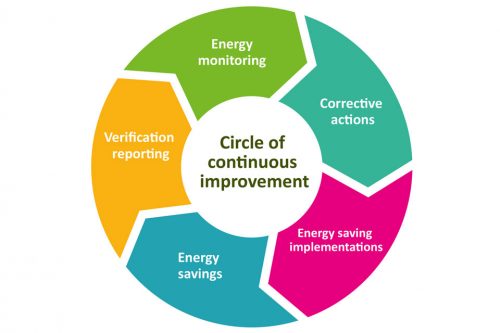
INDUSTRY SPOTLIGHT: ECA Group – Creating a cycle of continuous improvement for energy management

The team at ECA has developed a comprehensive, integrated range of services, to help their clients achieve efficient energy savings and cost reductions.

As energy management becomes even more important and challenging, ECA has brought their services together under one single banner ECA Virtuous, this product links all their services into one single goal:  To improve their clients bottom line profitability.

ECA virtuous is an all encompassing energy service through which your organisation embraces the mantra of ‘the cheapest energy is the energy you don’t consume’ and becomes a virtuous energy company.

ECA virtuous reduces your expenditure on energy through a strategic approach to business energy management that ensures a symbiotic relationship between the three key elements:

  • Your cost of energy
  • Your usage of energy
  • Your carbon obligations

ECA achieve this by:

  • Contract negotiations
  • Invoice validation
  • Organisational benchmarking based on actual business KPIs
  • Continuous monitoring of consumption data to detect wastage
  • Calls to sites to establish cause of exceptions
  • Site visits to identify wastage
  • Energy awareness staff training
  • Identification and delivery of reduction solutions
  • League table & performance reporting
  • Compliance reporting (EPC, DEC, ESOS, GHG)

Typical savings of between 5% &10% can be achieved by adopting ECA’s Virtuous service.

ECA are proud of the results they deliver to their clients, by understanding their needs and applying the correct strategies they deliver long term results.

The team at ECA would be delighted to identify savings for your portfolio.

Visit ECA’s web site call on: 01246 298 591 or email alan.little@eca-group.co.uk

Full range of services:

 (Market Intelligence & Contract Negotiation)

          (Bureau Services, Bill Validation & Query Resolution)

         (Energy Management, Profile Consumption Alarms)

         (Online access to energy data and reports)

        (EPC’s, & DEC’s, ESOS, Mandatory Carbon Reporting)

        (Historic Billing Audits)

         (Leak Detection & Tariff Validation)

INDUSTRY SPOTLIGHT: Stand up for your health! AJ Products brings you the workplace of the future

AJ Products thinks staying fit and healthy should be something that anyone can do.

We encourage office workers to get fit at their desks through our range of affordable sit-stand desks and active office furniture.

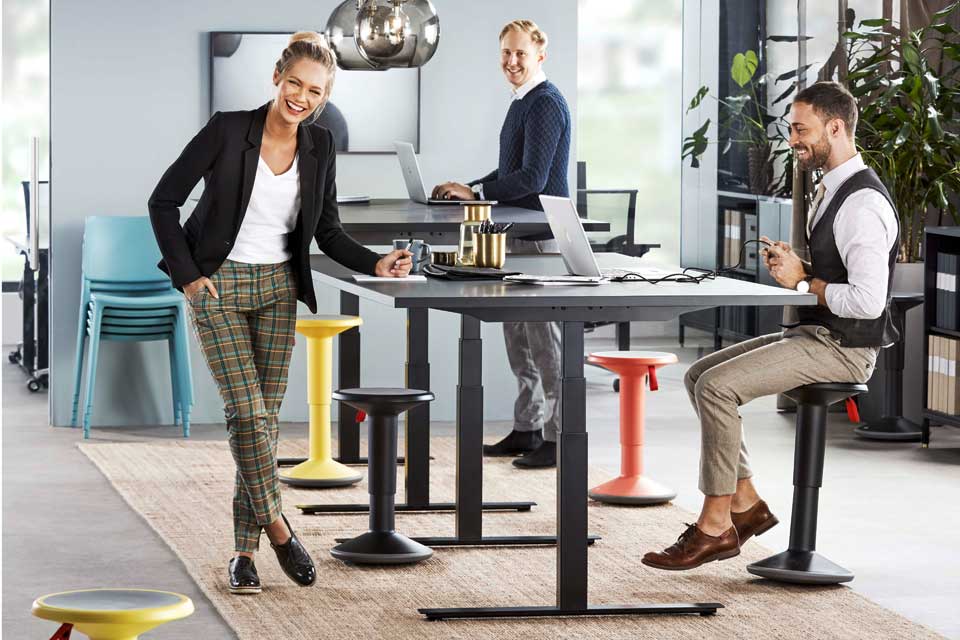
Plus, we have just launched an exciting new product range that will revolutionise meetings and conferences. Designed by AJ Products in-house designers, the latest addition is a height-adjustable meeting table that makes it easy to switch between sitting and standing meetings, boosting both productivity and fitness.

AJ Products is committed to making workplaces healthier and more active because asedentary lifestyle can lead to health conditions including obesity, type 2 diabetes, cancer, heart disease and musculoskeletal problems. Given the long hours spent by many adults sitting down while at work, it is essential to combat this issue in the workplace. Standing up for just three hours a day every day burns 750 calories a week and is the equivalent of running about 10 marathons a year.

Our innovative, ergonomic office furniture is just one area of expertise in our extensive product range. We also provide premises management equipment, lockers and changing room facilities, conference furniture, warehouse shelving and racking, workbenches, industrial matting and much more.

Established in Sweden in 1975, the AJ group now covers 19 countries across Europe with the UK business opening in 1999. Our aim is the same now as it was over 40 years ago: to provide the right products at the right prices in order to be a one-stop shop for all your workplace needs. Whether a one-off order or a large refit project, AJ Products is here for whatever you need. We can provide everything from project planning and design suggestions to quick delivery and installation.

We can make any workplace happier, healthier and more active!

Revealed: Britain’s most bizarre health and safety rules

Not being allowed to give a colleague a paracetamol, filling out a form to use plasters and a ban on birthday cake candles are among Britain’s most bizarre health and safety rules.

Researchers who polled 2,000 workers also found one in five aren’t allowed to change light bulbs in their workplace.

And another fifth are banned from wearing flip-flops in the office amid safety concerns.

The study, conducted by international animal charity SPANA, also found some workers are only provided with plastic knives and forks, while others must tuck in their shirts when shredding paper.

The study also found more than a third of respondents believe the health and safety laws in their workplace are too strict.

One noted that a wound as minor as a paper cut was required to be logged in their company’s ‘injuries book’.

Another wasn’t allowed to change the clocks on the wall to fit in with daylight savings – being forced to call an engineer to complete the task.

And a bamboozled employee was shocked to find that tinsel was banned from their Christmas decorations, ‘in case someone got tangled up in it’.

It also emerged nearly four in 10 respondents are happy to break rules in their place of work they deem unnecessary, or generally don’t agree with.

One fifth have fallen foul of management and been disciplined for ignoring what they believed to be an overly-strict ruling at work.

In fact, for 14 per cent of respondents, things got so bad that they considered looking for a new place of employment.

Half of British workers think health and safety regulations have got stricter since they started working at the company – with the average employee having been in place for more than eight years.

More than four in 10 have even had to utter the immortal words “It’s health and safety gone mad” after some new rule was introduced.

And one in four said they’d have preferred to work 50 years ago, when health and safety regulations were much less strict.

Although of those who have been injured in the workplace, a quarter admit they were contravening health and safety rules at the time.

THE TOP 40 BIZARRE HEALTH AND SAFETY RULINGS

1. No leaving doors open, as it’s a fire hazard
2. No wearing of shorts
3. No heavy lifting
4. No open toed sandals in case you drop something on your foot
5. Do not wear flip-flops in the office due to safety concerns
6. Do not change light bulbs
7. No running
8. Do not climb a ladder
9. No drinks near a PC or laptop
10. No toasters
11. Only allowed hot drinks in certain areas
12. Do not give each other painkillers, such as paracetamol
13. Do not take get any medication from the first aid box
14. No candles on someone’s birthday cake
15. Do not take a plaster without filling out a form
16. No heaters
17. No open windows
18. Must hold handrail when walking up or down stairs
19. No tinsel to be put up anywhere near work stations
20. No hats
21. Do not carry drinks up or down stairs
22. No carrying boxes
23. Water bottles only – no cups or glasses
24. Nobody is allowed to bring nuts into the building
25. No Christmas tree to be put up
26. No fans
27. No eating while walking
28. No turning things off
29. Do not shred documents
30. No hot drinks
31. Do not attempt to remove paper jams from the printer
32. Do not move office chairs
33. Must wear a headset to be on the phone
34. Do not share food food from home, such as cakes, with colleagues due to the potential food poisoning risk
35. No balloons in the building
36. Employees must clock out before engaging in chit-chat
37. No facial hair
38. Anything left on your desk gets thrown in the bin
39. Only plastic knives and forks to be used
40. No more than one personal item on your desk

This is what your FREE ticket to the Total Security Summit includes…

Book now for this autumn’s Total Security Summit and you’ll have the opportunity to organise your security strategy for 2019 and beyond.

This unique two-day event takes place on October 8th& 9that the Renaissance Hotel, Manchester and is entirely FREE for you to attend.

Simply register your place here.

Meet with suppliers based on your own requirements and upcoming projects. You will receive a personalised itinerary of face-to-face meetings for the two days. No hard sell and no time wasted guaranteed.

Learn from industry experts during our seminar sessions.

And network with other senior security professionals who share your challenges.

All hospitality – including overnight accommodation, meals and refreshments plus an invitation to our gala dinner with entertainment – is on us.

To secure a complimentary delegate place, call Leanne Webster on 01992 374066 or email leanne.webster@forumevents.co.uk.

To attend as a supplier, call Haydn Boxall on 01992 374084 or email h.boxall@forumevents.co.uk.

For more information, visit www.totalsecuritysummit.co.uk.

Last call for the Energy Management Summit

Time is running out to secure the remaining complimentary VIP delegate spaces and supplier stands at the Energy Management Summit, which takes place on October 1st & 2nd at the Radisson Blu Hotel, London Stansted.

The Summit is a highly-focused event that brings energy management professionals together for one-to-one business meetings, interactive seminars and valuable networking opportunities.

Over two days delegates will meet with credible solution providers who will be able to talk through projects, concerns and obstacles, offering the best advice as well cost saving solutions.

Confirmed solution providers include ebmpapst, Waterscan, Centrica, Resource Data Management, Root3 Lighting, Energy & Technical Services, ecagroup, Nicotra Gebhardt, IWTM, Veolia, Noveus Energy, VINCI Facilities, Haven Power, Inspired Energy, Powerstar, Verco and more.

Confirmed delegates include representatives from Affinity Water, Arriva Trains, BT, City of London Corporation, City of Westminster, DHL Global Forwarding, InterContinental Hotels Group, Kettering General Hospital, Leeds Building Society, Liverpool City Region Local Enterprise Partnership, London Borough of Waltham Forest, London Luton Airport, Lucozade Ribena Suntory, Oxford University Hospital NHS, FT, Pinewood Studios Group, The Co-Op, The Guinness Partnership, UPSand more.

Delegates will also learn about the latest energy management trends in educational seminar sessions led by some of the industry’s leading lights, including a keynote from journalist Andy Pag on his experiences with energy efficient travel and sustainable living. Other sessions include:-

How To Achieve Significant Energy Savings In Legacy HVAC Equipment

Tony Wright, Divisional Director (Upgrade) Market, ebm-papst UK Ltd

Procurement: Frustration Or Facilitation?

Tony Morris, Procurement Consultant, SPC

Understanding Your Energy Culture: The Hearts And Minds Tool

Matthew Lawrie, Chartered Psychologist, Energy Institute (Culture Regeneration Associates Ltd)

ESOS Phase II – Routes to Compliance

David Eynon, Associate Director, Energy and Technical Services Ltd

Lisa Rose, Event Manager at Forum Events, said: “We’ve been overwhelmed by demand for the Summit, with technology driving interest and innovation in the sector – we look forward to welcoming everyone for two days of business and networking.”

To secure a complimentary delegate place, call Clare Element on 01992 374068 or email c.element@forumevents.co.uk.

To attend as a supplier, call Lisa Rose on 01992 374077 or email l.rose@forumevents.co.uk.

For more information, visit www.energymanagementsummit.co.uk.

Businesses tasked with driving gender pay gap change

The UK has one of the highest gender pay gaps in Europe and pay reporting can only be the first step in closing it, says the Business, Energy and Industrial Strategy Committee in their Report on ‘Gender pay gap reporting’.

The report recommends a widening of the net of companies required to report and for companies to be required to publish action plans and narrative reports on what they are doing to close the gap.

It also notes that while the median pay across the economy is 18% in favour of men, at an organisational level, the new figures reveal some alarming truths: with gender pay gaps of over 40% not uncommon in some sectors and 78% of organisations reporting gender pay gaps in favour in men.

New analysis by the Business Committee finds that 1,377 employers (13% of the total) have gender pay gaps in favour of men of over 30%.

The Committee notes that only around half the members of the UK workforce are expected to be covered by the present reporting requirements. Recognising evidence that the pay gap is higher in smaller businesses, the report calls on the Government to widen the net of organisations required to publish gender pay gap data to those with over 50 employees (from the current 250).

The report recommends that organisations should be required to publish, alongside the figures, an explanation of any gender pay gap and an action plan for closing the gap, against which they must report progress each year, as part of normal reporting requirements.

Rachel Reeves MP, Chair of the Business, Energy and Industrial Strategy Committee said: “Gender pay reporting has helped to shine a light on how men dominate the highest paid sectors of the economy and the highest paid occupations within each sector. Our analysis found that some companies have obscene and entirely unacceptable gender pay gaps of more than 40 per cent.

“Transparency on gender pay can only be the first step. The gender pay gap must be closed, not only in the interests of fairness and promoting diversity at the highest levels of our business community, but also to improve the country’s economic performance and end a monstrous injustice.

“A persistent gender pay gap shows that companies are failing to harness fully the talents of half the population. The penalties of working part-time, both financial and in terms of career progression, are a major cause. Companies need to take a lead. For example, why aren’t they offering flexible working at senior levels? They must look at why they have a pay gap, and then determine the right initiatives, policies and practices to close it. Chief executives should have stretching targets in their Key Performance Indicators and be held to account for any failure to deliver. Our report recommends that the Government requires all organisations with over 50 employees to publish annual gender pay gap data from 2020.

“The Prime Minister spoke about the ‘gender pay gap’ as a ‘burning injustice’ and of closing the gap for good within a generation. It’s now time for the Government and businesses to deliver on that ambition.”

The Committee’s report calls for clarification of the way in which the remuneration of equity partners is included in the gender pay figures, before next year’s figures are published. The report notes that the exclusion of the highest paid people in organisations made “a nonsense of efforts to understand the scale of, and reasons behind”, the gender pay gap and that the Government was wrong to omit the remuneration of partners from the figures required in the Regulations.

The report recommends that the Government uses the guidance to clarify how data on partner pay should be calculated and included in time for the publication of data next year.