Stuart O'Brien, Author at Facilities Management Forum | Forum Events Ltd - Page 86 of 87
Posts By :

Stuart O'Brien

FORUM INSIGHT: Where have good business manners gone?

“Manners maketh man.” William of Wykeham, pictured, (1324 – 1404), Motto of Winchester College and New College, Oxford

Maybe it’s my age (61), or my upbringing (middle class Brit), but am I the only one to notice the abyss into which the use of good manners has plummeted in recent years? Nowadays it seems acceptable to:

– Transact entire business deals without speaking to anyone-just use email.

– Not answer your phone, not reply to messages.

– Not turn up to meetings, or arrive late.

– Conduct a conversation with two people at the same time-when one is on the phone.

– Use poor spelling and grammar.

– Dress without any consideration for the occasion, or with respect to others.

This (very) short list is indicative of a much wider malaise that increasingly illustrates that people don’t care how their ill mannered and boorish behaviour affects others. Of course, technology has helped tremendously in allowing this rude and thoughtless behaviour to proliferate: The telephone, once a godsend that allowed people to communicate quickly and personally has now become almost defunct in business (and the most antisocial of instruments in our personal lives).

When I was first in business the telephone was an effective means of communication. So much more could be achieved when talking rather than writing. It was efficient, personal and productive. But that has now changed courtesy of the invention of the loathsome Voicemail.

It has bred a generation of people who hide behind a technology that allows them to avoid any personal contact. I refused to allow a Voicemail system in our office as it is a barrier between ourselves and our customers, who deserve better than to be met with a disembodied recording when they have taken the time and trouble to call us.

If Voicemail has made it easy to ignore any form of live interaction with people, Email has allowed it to become endemic and embedded in our business activities. Here is the ultimate tool designed to allow you to conduct business devoid of any live communication or conversation.

Add to this toxic mixture of rudeness, the rise of the call centre, and you now have the ultimate weapon of mass discourtesy. No longer will anyone running a company have to talk to their customers. As a final snub, ensure no individual’s contact details appear on your website, and you are cocooned against any contact with the outside world.

What a way to do business, what a way to treat your customers, what an attitude of ignorance and arrogance.

We have more ways than ever to communicate-unfortunately all of them increasingly impersonal and lacking the means to create any proper business relationship. So why do you need to care about what people think of you?

“Politeness and consideration for others is like investing pennies and getting dollars back.” Thomas Sowell (1930 -)

But it gets worse. The days when a ‘man’s word was his bond’ is a thing of the past (unless you’re Marcus Lemonis from the TV series ‘The Profit’, where deals still seem to be done on the basis of one’s word and a handshake).

I speak from experience here. I used to run events for senior executives. Without exception some always failed to turn up, failed to tell us they won’t be attending. It seemed an alien concept to them that they have broken their word, been discourteous to us and the people they were due to meet. But hey, what’s it matter, why should they care, it suited them to change their plans and to hell if their thoughtless behaviour inconvenienced others.

From the top to the bottom it’s the same. It was a standing joke in our office (in the US) that if we had 10 candidates coming for interviews, probably only three would turn up. Then dressed so informally it looked as though they had just come from the beach. Haven’t they heard the expression ‘you only have one chance to make a good impression?’

The failing of modern day bad manners reaches its nadir on the subject of poor spelling and grammar. SMS has singlehandedly raised a generation of people who can conduct complete conversations without the use of a vowel. And despite the wonderful invention of Spellchecker, barely a day goes by where I don’t see letters and promotional material littered with spelling and grammatical howlers.

The detritus of a lazy mind and careless attitude. Even technology cannot help these people it seems. Why is this bad manners? Because it shows you just don’t care, that you can’t be bothered to make an effort when communicating with someone. It also displays your ignorance. Where has all this lack of courtesy come from? Aside from technology, another major cause is the sheer number of customers huge corporations now have. This makes it not only impossible, but unnecessary, to care how they are treated. How can AT&T with 121 million customers possibly hope to treat each one with any courtesy beyond the bland scripted comments from their call centre operatives? Indeed why should they care?

There’s another 100 million prospects out there being treated equally badly by their competitors. So every day thousands will be swapping from one crass corporate entity to another in the hope they’ll be better treated. They won’t.

“Rudeness is the weak man’s imitation of strength.” Eric Hoffer (1902 – 1983)

Television doesn’t help either. Unfortunately Kevin O’Leary on TV’s Shark Tank has become the latest TV star to display a boorish disregard for good manners. While at times his comments on the wannabe entrepreneurs’ business plans can be amusing, all too often it quickly plummets into a nasty and casual disregard for their feelings. It may make good television but it’s certainly not good manners.

If the likes of O’Leary (let alone ‘The Donald’, Simon Cowell, etc) can make discourtesy acceptable behaviour, what hope is there for the rest of us? What example is it setting to the millions watching their mindless, thoughtless comments?
Why has the World turned its back on good manners, courteous behaviour and politeness? Is it just too much effort?

Good Manners cost nothing but can achieve so much, or as Clarence Thomas said: “Good manners will open doors that the best education cannot”.

And with the lack of education out there, many people need all the help they can get. Good manners may not be the sole reason you advance in life, but bad manners will ensure you will rarely reach your potential.
Guest Blog: Nick Atherton: Essential M&A knowledge for the built environment

It may come as a surprise to some that global M&A activity is currently experiencing its best start to the year since 2000, with some $224 billion accounted for in January alone according to Bloomberg. That is significant, even with global activity in M&A increasing solidly since 2012. Most people assume that the final months of last year caused trading to grind to a halt, but that is not the whole picture. While it’s true that business has been trickier to steer in the past 6 months, it’s hardly been comparable to a serious economic recession, like in the final months of 2007. It’s good to see a market handling uncertainty with a resilient and optimistic outlook. Even so, with the global economy proving bullish there are still a number of things that can go wrong when brokering a deal.

Luckily, for those in the built environment, the market is typically dependable, particularly FM as it’s often seen as indispensable. No matter how bad the economy looks, buildings still require cleaning, catering, guarding, maintaining and so on, especially if they are part of critical infrastructure, like a hospital. Still, things can go awry at any moment for a variety of reasons. With this in mind, there seems to be a few questions here: What can be done to ensure the built environment figures in current global trends for M&A? What makes M&A such a difficult thing to time and get right? And, most importantly, what can be done to ensure best possible practice?

Patience is an M&A virtue

The most important thing to keep in mind is that most M&A is very capricious – more than half fail to materialise. What appears locked-up and all agreed can actually be far from it. This is because M&A is conducted by people and not businesses. It seems an obvious thing to point out, especially as organisations technically do not exist without people to run them, but if you’re looking to get the most out of an approach it should always be the first thing you consider. A board room, even for smaller businesses, can contain a number of individuals, each with their own personal stake influencing the decision. It only takes one person to suddenly change their mind on a minute detail and the whole negotiation is put in jeopardy.

Patience is essential at the best of times, but it’s even more important for anyone wanting to get the most out of what can be a convoluted and drawn-out process. You have to be appreciative of other peoples’ perspective and approach the big decisions carefully if you want to see decent reward at the end of discussions. Those who cannot bide their time will struggle to make progress, especially as acquisitions typically have a 12-24 retention period. This is where the role of an advisor really can make things more straightforward. A neutral go-between with the interests of both parties is going to ensure tempers don’t flare and damage what could be a great moment for all involved. It’s understandable to want to take matters into your own hands, especially if you’ve built something from scratch, but attachment can occasionally cloud better judgement. Even if you just want to the lay of the land, an advisor can give you a far better overall view as they engage with the market day-in-day-out.

M&A is a stepping stone, not an end point

It’s easy to think of M&A as the end product, but it rarely is. Invariably M&A is a strategic move, acting as a guide for greater business potential further down the line. Buying a business will either be done to fill strategic gaps in a current business plan, or it will be done to gain access to more revenue streams. This is why businesses typically purchase competitors in order to make themselves more attractive for bigger investors and organisations in the near-future. Though this is not to say that optimising a current infrastructure should ever be neglected – the best exit figures are always derived from the most streamlined businesses – but rather that sometimes bolder actions are needed in order to get to next milestone. Some businesses in the built environment operate on very lean margins, particularly cleaning and catering, so the purchase of a contemporary is often the best way to achieve higher returns in the long-run. The profit potential from a big sale will offset the short-term expense of having to buy another business.

Knowing what’s good, what needs work, and how this plays into your favour

The best M&A targets are efficient ones; obviously no one wants to buy a rotten apple. Optimisation is the ally of any organisation looking to see great return on prospective M&A activity, but how this is done is not always uniform. The first method relies on rationalising the entire operation and introducing measures that improve function. This is often the best way to ensure a business sells for a greater amount, though it also costs more in time and money. Service providers in the built environment that have utilised digital solutions often see more interest than those that have not because it’s a quick and relatively low cost method of improving an operation, especially for those with tighter margins. Software-based businesses are also very desirable as they typically merge into existing portfolios more easily than ones that have not embraced digital capabilities.

The second method relies on the seller structuring negotiations in terms of its key value drivers. For example, while it may not be the most efficient business in its current state, some of the other assets like intellectual property, contracts, people, branding etc. may be worth more to the buyer than the risk of taking on an operation that is not running at full capacity. Again, judging this risk will be more straightforward with the help of external advice. In short, if the built environment can maintain composure, act strategically and structure negotiations intelligently, then it’s highly likely it will figure more prominently in this current M&A surge.


Industry Spotlight: Taylor made uniforms

Taylor Made Designs UK is a specialist supplier of all uniform, workwear and clothing.  Garments can be supplied embroidered or printed with your company logo or design, or can be supplied plain.

The company has access to a vast range of suppliers so can source any garments and, with its own in-house embroidery service, can offer a fast delivery service. Taylor Made Designs’ specialist area is Uniform Management with full storage and stock management, multi-sit deliveries and personalised online ordering.

On top of all this, the company offers a vast range of promotional products and branded merchandise!

To find out more call 01202 473311 or email hello@taylormadedesigns.co.uk or visit our website www.taylormadedesigns.co.uk

Vent-Axia wins energy innovation award

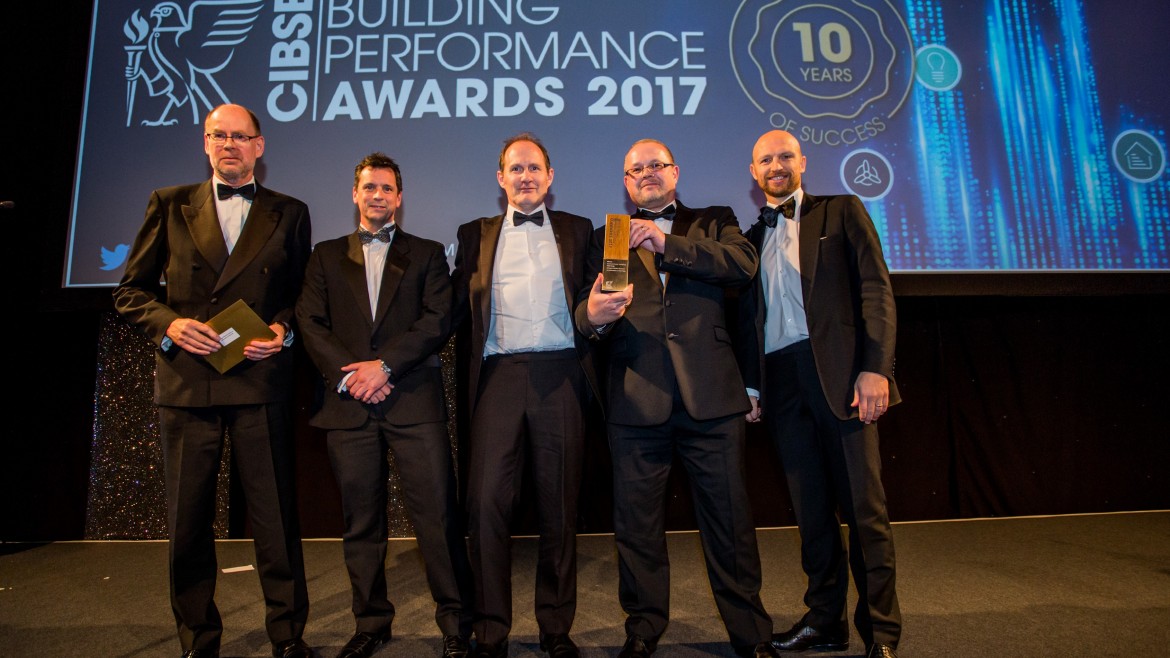
Ventilation manufacturer Vent-Axia has won the Energy Efficient Product or Innovation of the Year from the Chartered Institution of Building Services Engineers (CIBSE) building performance awards 2017.

The award focused on measured and recorded performances, not design intent or speculation, allowing for proven products to be acknowledged for their achievements.

Vent-Axia won the award for the ‘Sentiel Kinetic Advance’ process, which was considered ‘ground-breaking’ for its updated technology, ease of installation and for being made from entirely recycled materials.

Energy efficient and high pressure, the system is aimed at care homes and student accommodation. The system extracts warm, moist air from damp rooms and replaces the aid with incoming and preheated air, which maintains 93 per cent of heat energy that would otherwise be wasted.

Describing their product as ‘innovative,’ Vent-Axia said they were delighted to win the award.

“To be recognised by the industry in this manner, and in such important awards for the built environment, is a real honour” said Ian Mitchell, product marketing manager  for new build residential at Vent-Axia.

The product is a Mechanical Ventilation with Heat Recovery (MVHR), and it is the first British App controlled unit of its kind, a move expected to revolutionise the industry.

“At Vent-Axia we are committed to innovation and continuous development and the Advance really is a new breed of MVHR unit.”

ChinaSavvy clinches $1.3m engineering contract

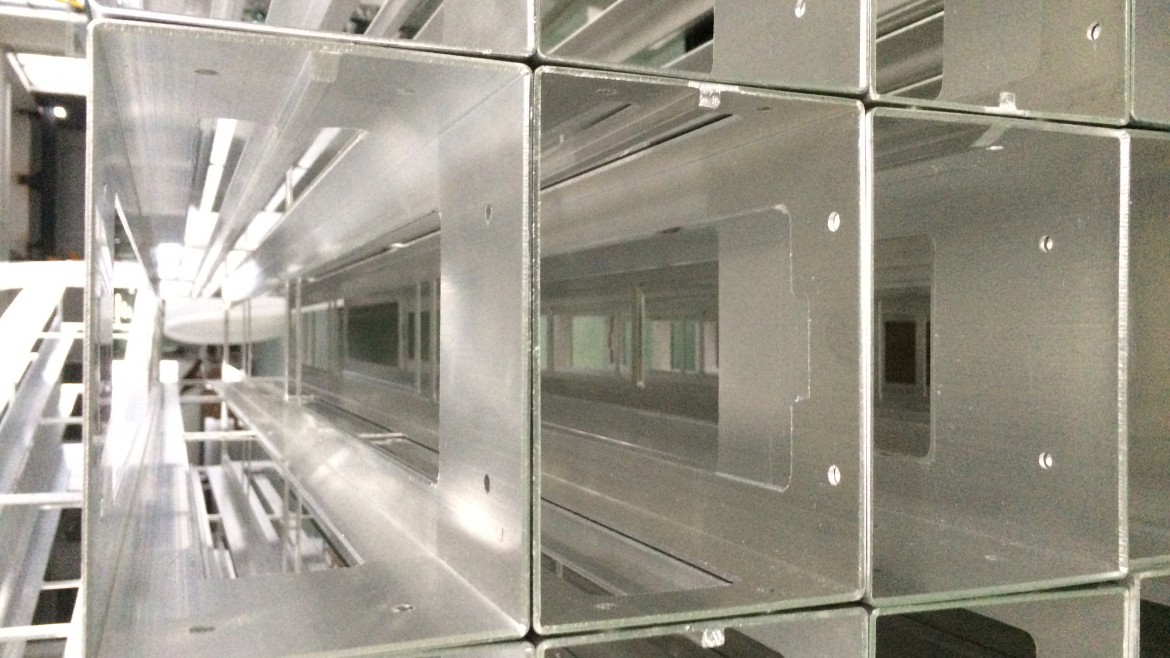
Engineering and manufacturing company ChinaSavvy has announced a $1.3 million contract to supply components for robotic storage systems by global company, Hamilton Storage.

British owned and managed, the China-based company markets its services to high quality ‘blue-chip’ companies worldwide, and has been commissioned to develop components for ultra low temperature robotic storage systems for pharmaceutical companies.

Hamilton is expected to work with ChinaSavvy for future projects, as ChinaSavvy hopes the deal will emphasise the effectiveness and low-costs of manufacturing in China, according to managing director Christopher Devereux.

“Once again we have shown that ‘China pricing’ can go hand in hand with exceptional quality and on-time deliveries,” he explained. “We are committed to ensuring that we deliver exceptional world-class engineering and manufacturing services to Hamilton Storage, to cement the business partnership and prove to them that they have taken the right business decision.”

The search for a new manufacturing partner for Hamilton began last summer, and ChinaSavvy was described by the company as ‘unique’ within Asian vendors for the competitive pricing, ease of English communication and turnaround for quotes.

“We see ChinaSavvy’s commitment to our project and their deep focus on sound engineering and overall product quality,” said John Genereux, director of research and development at Hamilton Storage. “Hamilton Storage looks forward to a long productive partnership with ChinaSavvy and would recommend them to other companies looking for a highly competent partner in Asia.”

Project leaders with high status fail more, according to report

Projects led by high-status managers are less likely to succeed than those with a middle ranking status, according to new research.

The study, run by the Rotterdam School of Management (RSM), found that projects with higher ranking leaders were subject to less scrutiny by others as colleagues were more likely to turn a blind eye.

Middle management is less likely to get unconditional support, with teams more likely to challenge key issues, leading to more successful performances overall than a higher-level equivalent.

Research suggested that if a new idea has to be pitched to top management then support needs to be gathered throughout the organisation, and having a good working relationship with other employees is vital to its success.

“We were interested in whether having a high status as a project leader makes a project better and whether these leaders can gather support for high and low quality projects,” explained Balazs Szatmari, PhD student at RSM.

Szatmari admits that higher status in a project can also be beneficial, as it can speed up the implementation process and help quickly gain support, but the advantages are only worthwhile if managers are aware of the pitfalls.

“This is something organisations should be aware of when they assign the managers of projects or even when they evaluate projects in the past.”

On your marks for the Sports & Leisure Forum

Redesigned from the ground up to cater for the growing industry, the Sports and Leisure Forum 2017 will be the ideal opportunity to forge valuable partnerships and learn about the vibrant sports and leisure industry.

Formerly known as the Sports and Leisure Facilities Forum, the fresh relaunch will focus on an intimate audience of just 45 VIP delegates, as well as featuring some of the industry’s most trusted suppliers.

Sport

Join the massive community of operations, leisure and facilities managers from across the UK for two days of tailor-made, pre-matched meetings, seminars and dining.

Attend a range of seminars from some of the industry’s most dynamic and innovative minds, with each session offering a CPD certification.

Taking place at the Radisson Blu Hotel on June 19th-20th, the event will give you the opportunity to engage with industry professionals to debate and connect in a uniquely bespoke event featuring drinks, dinner and discussions that’ll prepare you for the year to come.

For more information about how to get involved in the event, contact Gillian Small or call us on 01992 374073

Forum Insight: 10 ways to succeed at a Networking Event

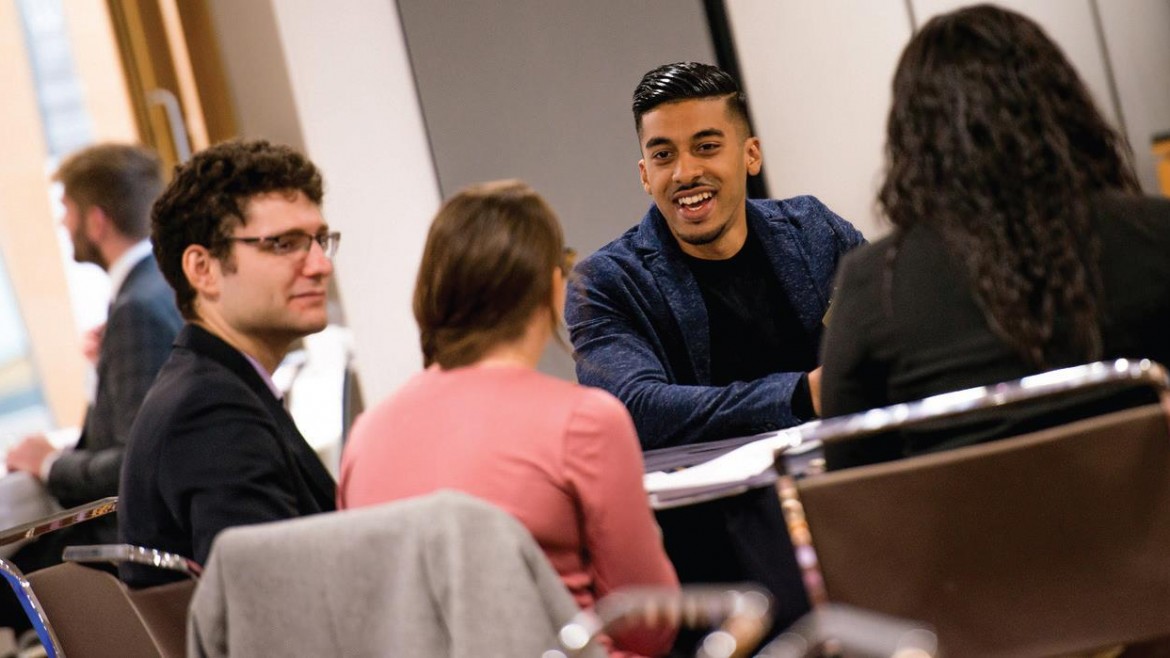
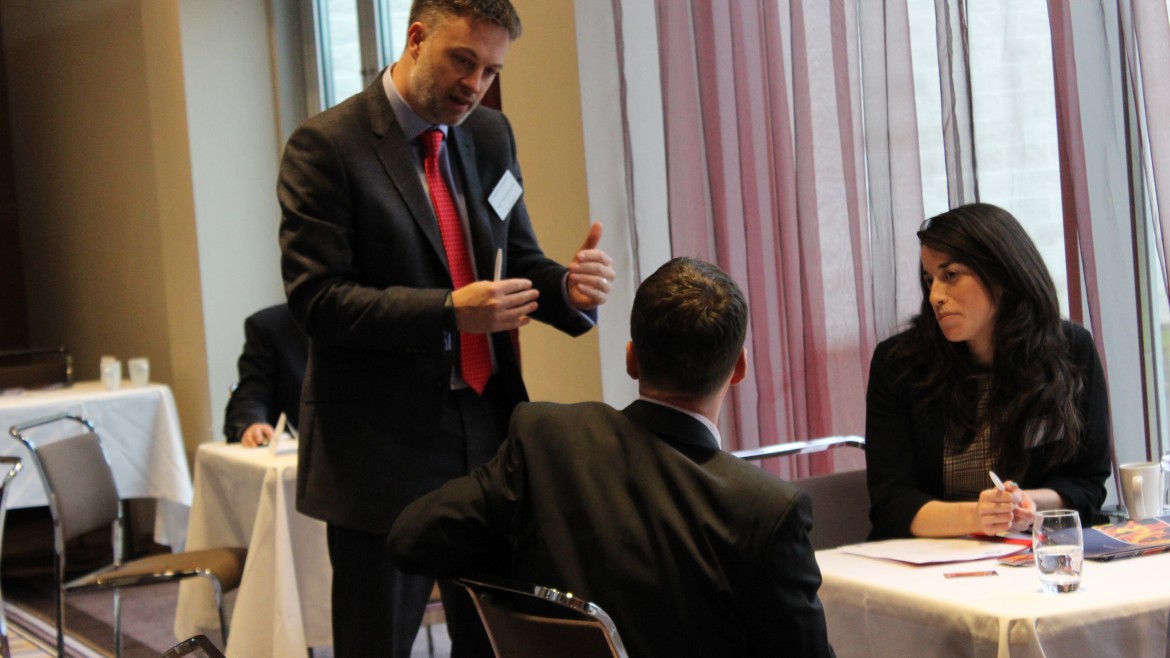
Walking into a meeting room full of people you don’t know can be a scary experience. But there are proven ways to conquer this fear and make ‘networking’ enjoyable, useful and a great way to do business. Paul Rowney is here to present 10 of the best ways to nuke those networking nerves!

  1. Plan ahead: Get the attendees list in advance of the event and highlight who you want to meet. On arrival contact the organiser and say who you are trying to connect with and if they have the chance could they introduce you when they arrive? Occasionally go to Registration and enquire if one of your ‘targeted’ visitors has arrived, they may be able to point him out to you.
  1. Get there early. If you are one of the first to arrive, it is much easier to start up a conversation with only a few people in the room.


  1. Most people arriving will be in the same position as you-not knowing anyone else there, so prepare a few easily answered, conversation opening questions: “Whose presentation are you looking forward to hearing today?”….”What brought you to this event”.
  1. Joining a group. Approaching a group of delegates already in full conversation with each other is daunting. So be bold, and simply ask “May I join the conversation, I’ve just arrived and I’m keen to learn what’s going on”.


  1. Creating a conversation. Ask questions. Be a good listener, don’t dominate the conversation with your own stories and business ideas.


  1. Be helpful: share your knowledge of the industry, your contacts, sources of information. If people perceive you as an expert or knowledgeable, then they will want to keep in contact.


  1. Use you business card as a tactical weapon. I have a friend who renovates old wooden floors, so his business card is made of a thin piece of wood-a guaranteed conversation starter. Be imaginative with your business card design-and also your job title. Anything that says ‘sales’ or ‘business development’ could cause people to fear a sales pitch is on the way. So try and think of a job title that might encourage, not discourage a conversation.


  1. If you receive a business card, make notes on the back to remind you of the conversation and the person.


  1. Following up: If you have had a really constructive conversation, and you have agreed to ‘follow up after the event’, then agree on how and when you’ll do it Email? Phone? Text? Linkedin? And do it promptly.


  1. Don’ts at networking events: Sales pitches: even if asked “what does your company do”, keep your answer to a very brief, light weight explanation: “we help people solve their logistics IT problems”. Don’t ‘work the room’ rushing from group to group like your serving canapes is not the way to start business relationships. It’s better to have had four good conversations, than a dozen meaningless ‘chats’.

Companies paying millions on health and safety fines

Firms paid over 600 per cent more in health and safety fines last year than the previous two as firms felt the impact of stricter guidelines.

19 fines of over £1 million were issued, compared to three in 2015 and none at all the year earlier.

But this has a healthy impact on employers overall, according to the Institute of Occupational Safety and Health (IOSH), which believes it leads bosses will take greater care of their employers now the regulations are tougher.

“The level of fines now being handed out recognises society’s disapproval of serious corporate failures that lead to injury, illness and death,” according to IOSH executive director of policy, Shelley Frost, “Protecting employees and others affected by a business’s operations will not only eliminate the risk of a large financial penalty but can also be key to ensuring and maintaining an organisation’s strong reputation ”

The largest 20 fines for health and safety offenses in 2016 totalled £38.6 million, over £34 million more than 2014, and didn’t necessarily involve death, provided the threat of death was great enough to warrant the penalty.

The largest fine last year was £5 million to Merlin Entertainments after the serious injuries caused at the rollercoaster crash at Alton Towers.

“The increase in fines being issued by the courts demonstrates a desire to drive the message home that ensuring health and safety within a working environment is fundamental,” said Mary Lawrence, IOSH council member and health and safety partner at law firm Osborne Clarke LLP.

“I see many businesses who focus on the safety and health of employees and others experiencing a broad range of benefits, including being better placed to attract and retain talent, scoring points in procurement processes for valuable contracts or even when seeking external investment.”

Natural gas truck wins ‘project of the year’

The first ever truck long-haul designed to run on natural gas was voted Project of the Year at the European Gas Awards of Excellence 2017 at a conference addressing Europe’s energy future.

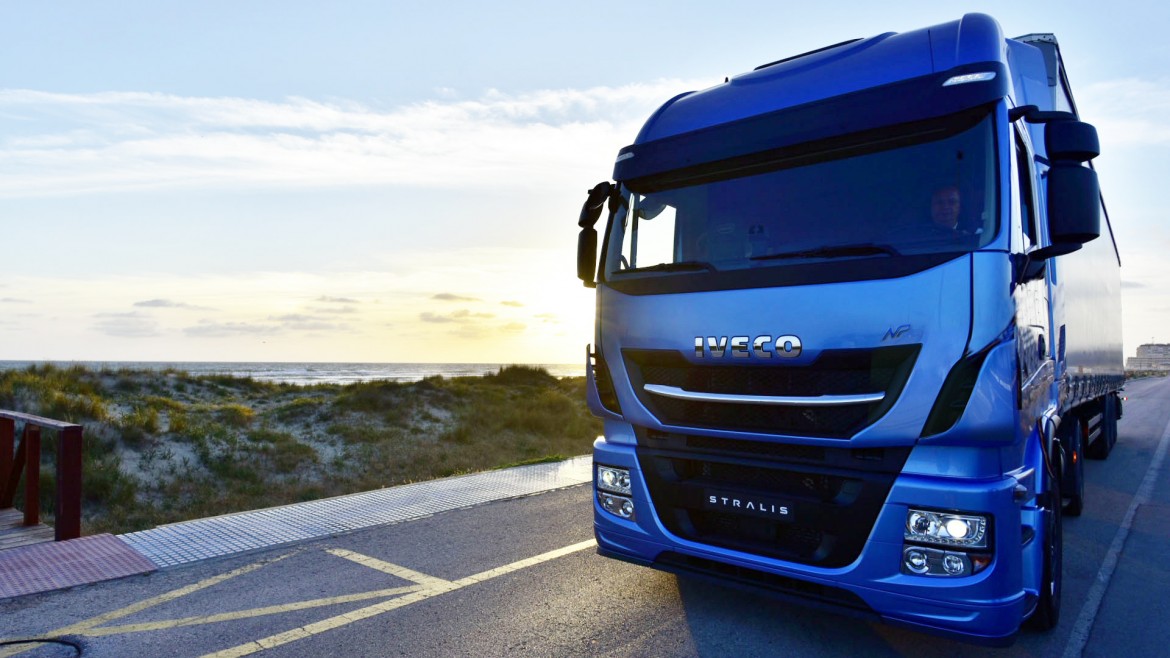
Developed by IVECO, the new Stralis NP is expected to be a success on the market, presenting a balance of high comfort, lower total cost of ownership, sustainable performance and reports to generate 17 per cent more power than its best current competitor, while lowering fuel consumption by five per cent.

One of five in the running for the award, it celebrates ‘pioneering innovation’, and aims to inspire further competition and invention in order to achieve growth for the European gas market.

Winning the award was welcomed by IVECO, who believed it was a testament to their “commitment to sustainability.”

“the future of transport was in sustainable alternatives solutions,” said IVECO brand president, Pierre Lahutte, “it is the first true long-haul gas truck in the market that offers a real alternative to diesel vehicles and the most sustainable long-distance transport truck ever.”