GUEST BLOG: Managing changes to access control panels
As with all technology, access control panels have changed rapidly and frequently over the years. These changes have occurred both to physical access control panels, and digital access control such as smartphones.
Together with 2020 Vision, providers of the latest security solutions such as Cloud CCTV storage, we look at these changes in the past and use this information to predict future changes…
Advancement in technology
Keypads
We’ve come a long way since locks and keys! The way we entered restricted areas has changed over time — and it all started with the famous keypad. Similar to what we now see on ATMs, these were used to access locked areas and would require an individual to type in a specific numerical code to enter. The passcode would usually be around four to six digits long. But was this a viable method to protect a business? At the time, it was a revolutionary idea — but as times progressed, anyone could obtain the code and enter even if they weren’t authorised to do so. This was classed as a non-intelligent reader.
Card Readers
Keypads, however, became outdated technology with the introduction of card readers. Usually, a magnetic strip would be attached to the card which a staff member could then swipe through a narrow slot in order to gain access. However, such cards are now available with a bar code reader, a proximity reader, smart card readers, and biometric readers — tailoring each to specific business requirements.
IP Door Readers
The next stage of advancement came from IP readers, which could be accessed by card or by smartphone signals sent via Bluetooth. Biometrics are now also common in IP readers — unlike card readers and keypads, IP readers can operate independently as they hold an internal memory and if the details you provide do not match what the IP reader has knowledge of, you will not gain access.
The aforementioned changes took place in under 50 years. With such quick development, what’s next for access control panels?
Accessing smartphones
Most smartphones offer a variety of different ‘lock-screens’ as their access control panel. The use of passcodes is still common amongst most devices and are similar to keypads in terms of security. Biometric access, through the use of the fingerprint, is something that is relatively new and has revolutionised the way we get into our phones. However, in 2017, the iPhone X was released which saw tech-mogul company, Apple, introduce facial recognition as the main route to gaining access using a 3D sensor that can recognise the phone owner’s facial features. We suspect that this will be implemented across more smartphone devices in order to compete for the title of being the most accessible and the easiest. However, convenience and simplicity whether facial recognition, fingerprint scanning Bluetooth, and even a short PIN code come at a price they simplify access not only for the authorised user, but also for a potential attacker. So when it comes to implementing an Access Control System always seek the advice of an experienced security integrator.
What does the future hold?
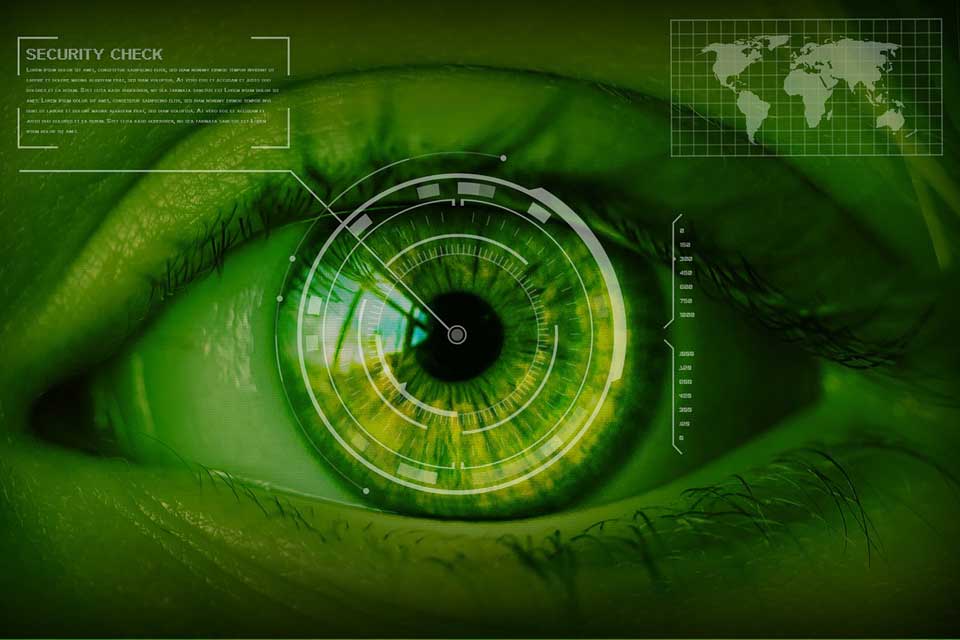
We forecast that the fledgling technology of ‘eyeball recognition’ software will open the way to the next stage of access control panels. As no two people are the same, DNA ensures that access is being granted to the right person. Even in extreme and unlikely circumstances, if someone was to obtain your eyeball, they would still be unable to gain access.
Where imagined technology from movies once seemed out of reach, we are now seeing said technologies become reality. But moviemakers were unaware of how secure they would actually be. In “Diamonds are Forever” in the James Bond franchise, 007 tries to gain access through a ‘copy’ of the required fingerprint. Realistically, if this was to occur, there would be smudges on the fingerprint which would lead to alerts being made and a fail in gaining access.
In “Demolition Man”, we witnessed a group of criminals trying to escape prison with the use of a dead warden’s eye. In reality, this would not get past any sort of IRIS scan, as there is a detection process which determines whether the person is alive or not and a dead person’s pupil would not be responding to any light that is around.
Where do you see access control systems in the future? Will movies this year predict even greater possibilities? And the bigger question is: will they be brought to life? With the evolution of access control happening frequently, and becoming more intelligent, we are sure to see new additions soon.
Sources:
http://securecomminc.com/2014/06/19/the-evolution-of-access-control-systems/
https://en.wikipedia.org/wiki/Keypad
https://en.wikipedia.org/wiki/Card_reader
http://www.tech-faq.com/access-control.html
https://en.wikipedia.org/wiki/IP_reader
https://www.isonas.com/news-education/the-evolution-of-access-control/
https://www.eyelock.com/index.php
http://www.digitus-biometrics.com/blog/biometric-security-in-movies/