buildings Archives - Facilities Management Forum | Forum Events Ltd
Posts Tagged :

buildings

Engineering Wonders of the World

In the UK and beyond, we’re surrounded by stunning feats of architecture and engineering. The Shard is one of the most famous modern architectural pieces and is also the tallest building in the UK.

When compared to structures and skyscrapers across the world though, the Shard seems diminutive in comparison. There’s no doubt that these monoliths are true engineering wonders and inspiration to architects all around the world.

Here, we discuss two of the tallest and most impressive skyscrapers across the world and two more that are in construction and could steal the crown of the most impressive engineering wonder of the world.

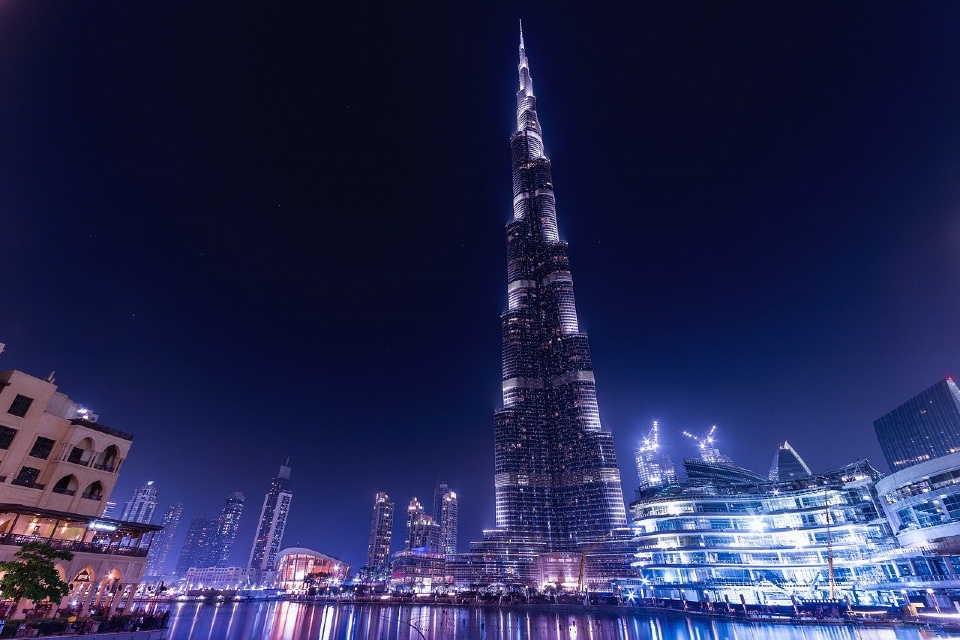
The Burj Khalifa (829.9 metres tall)

The current tallest building in the world, the Burj Khalifa (pictured, above) dwarfs the structures around it. The 162-floor skyscraper sits in the heart of Dubai, a city known for its impressive architecture. When it was completed, the Burj Khalifa broke a lot of records, including the world’s highest outdoor observation deck, the longest elevator travel distance, and the world’s highest occupied floor.

As well as smashing world records, the Burj Khalifa has been nominated for and won prestigious awards. It wasn’t initially intended to reach its now-famous soaring heights – the building was only planned to be 550 metres tall. The Burj Khalifa is well-known for its pioneering concrete technology and innovative spire, which comes out of the top of the building. The Y-shaped design is based on Hymenocallis, a desert flower.

The Shanghai Tower (632 metres tall)

The second tallest building in the world, the Shanghai Tower stands head and shoulders above the Shanghai skyline. It also holds the title of the world’s second-highest hotel, with the 84th-110th floors designated as guesthouses.

Utilising modern innovations in engineering, the Shanghai Tower has a concrete core instead of a steel framework. The building uses 980 concrete piles to make it earthquake-proof because it’s located in an area prone to earthquakes. The cylindrical spiralling design of the building makes it aerodynamic too. All of these factors combine to make the Shanghai Tower a truly spectacular engineering feat.

Jeddah Tower (expected to be 1,000 metres tall)

The Burj Khalifa may soon lose its status as the tallest building in the world if the Jeddah Tower is completed according to plan. Construction on this monolith began in 2013, but progress has stalled in recent years due to the pandemic.

The Jeddah Tower is expected to be so tall that it’ll reach into the clouds – imagine getting a bird’s-eye view of the clouds from a room in the tallest building on Earth! As with many of the existing tallest buildings in the world, the Jeddah Tower will be multi-use and include facilities such as hotels, living quarters, and restaurants. The tower represents Saudi Arabia’s goal to diversify its economy and become a tourist hotspot, thus reducing its reliance on oil revenue.

Like the Burj Khalifa, the tower’s one-of-a-kind shape is inspired by a desert plant. Its concrete pile base, which often requires structural design software to be truly effective, reinforces the building and protects it from dangerous weather.

Merdeka PNB 118 (678.9 metres tall)

A futuristic name to match a futuristic design. The Merdeka PNB 118 is still under construction, but the spire of the building was completed in November 2021. The uniquely designed structure is visible in the Malaysian skyline, with full construction expected to be completed by the end of 2022.

As well as its innovative geometric design, the Merdeka PNB 118 has multiple sustainability accreditations to its name – something that’s becoming more important in architectural design as global efforts to halt climate change continue. This stunning feat of structural engineering is proof that sustainable design and construction is not only important, but can also be done without compromising the structure.

Skyscraper designs require genuine innovation to be effective and durable, and it’s safe to say these current and upcoming structures have innovation at their heart. Not to mention they’re some of the most stunning modern buildings in existence. Will we see the Jeddah Tower overtake the Burj Khalifa as the tallest structure in the world in the near future? Only time will tell.

International WELL Building Institute unveils WELL v2

The International WELL Building Institute (IWBI) has formally launched the latest version of the WELL Building Standard – WELL v2, which it says is the most resilient and responsive version of its rating system to date.

The IWBI describes WELL v2 as a vehicle for buildings and organisations to deliver more thoughtful and intentional spaces that contribute to improved human health and well-being, including a set of strategies that aim to enhance human health through design interventions, operational protocols and policies and a commitment to fostering a culture of health and well-being.

Built upon the first version of the WELL Building Standard (WELL v1), WELL v2 draws expertise from a diverse community of WELL users, medical and design practitioners, public health professionals and building scientists around the world.

WELL v2 consolidates previous iterations and pilots into a single rating system that is designed to accommodate all project types and sectors. The system is intended to grow in specificity and specialty over time, adapting to accommodate diverse project types and geographies and in response to new evidence and ever-evolving public health imperatives.

The standard is centered on 10 concepts – Air, Water, Nourishment, Light, Movement, Thermal Comfort, Sound, Materials, Mind and Community – that impact human health and well-being.

Every feature within these concepts is underscored by available evidence that links design, policy and building-centric strategies to health and well-being outcomes; is third-party verified by Green Business Certification Inc. (GBCI) through documentation and/or performance testing; has been tested through WELL v1 and/or the WELL v2 pilot, demonstrating adoption and uptake by more than 3,300 projects from a wide range of typologies representing more than 413 million square feet across 54 countries; and includes outside input from a diverse community of health and design practitioners, subject matter experts, users and other third parties.

“Better buildings, vibrant communities and stronger organizations have been at the core of our mission since we launched WELL in 2014,” said IWBI Chairman and CEO Rick Fedrizzi. “It was a long road to get here, but we’ve confirmed that WELL v2 is implacably strong, robust and resilient in the face of every challenge. From a global pandemic to social justice, WELL v2 has proved to be a relevant, scalable and global rating system that’s responsive, inclusive, technically robust, customer-focused and applicable for any organization or space type.”

“As the leading tool for advancing health and well-being globally, the WELL Building Standard helps people to work, live, perform and feel their best. With WELL as our vehicle, IWBI helps to translate what we know into what we practice,” said IWBI President Rachel Gutter. “We’ve channeled all that we have learned into a more accessible, adaptable and equitable rating system, which continues to be anchored by the latest scientific research and industry best practices. WELL v2 has demonstrated it is dynamic, resilient, validated and ready to change the world.

“Since the launch of the WELL v2 pilot in 2018, we’ve worked tirelessly to incorporate feedback from thousands of members of our global community – making certain that no stone was left unturned, no strategy left unexamined and no topic left untested. Now, as WELL v2 has graduated from pilot stage, this moment marks the culmination of years of co-creation that will ripple throughout buildings, communities and organizations throughout the world.”

The WELL v2 pilot was adopted by IWBI’s global community and since its release nearly 3,500 projects have registered to pursue WELL Certification under the pilot. A key element of the development process for WELL is securing input from a variety of individuals.

During the two-year pilot phase, WELL v2 underwent continuous improvement and refinement through a rigorous development process, including a six-month public comment period generating hundreds of comments; the review and feedback from more than 150 WELL concept advisors; thousands more comments during the final stakeholder review; and eight published addenda to provide clarifications and strategies supporting the implementation of the WELL v2 pilot across different projects and in different locations.

In addition, the IWBI Task Force on COVID-19, comprised of 16 globally acknowledged thought leaders in the role of co-chair and nearly 600 professional and market leaders and experts from 30 countries, collectively crowdsourced thousands more comments during a 40-day sprint to further assess ways in which WELL v2 could be further strengthened to better support prevention and preparedness, resiliency and recovery.

Through the rest of the year and beyond, IWBI will roll out new resources and tools that it says will transform the way individuals can engage with one another and IWBI’s digital platform. A new WELL v2 Skybridge Tool is designed to help practitioners evaluate key similarities and differences between the WELL v2 pilot and WELL v2.

With the graduation of WELL v2 from pilot, registration for new WELL v2 pilot and WELL v1 projects will close on December 31, 2020. The WELL AP exam will continue to be based on WELL v1 until the end of 2021.

Do you specialise in Building Maintenance & Refurbishment solutions? We want to hear from you!

Each month on FM Briefing we’re shining the spotlight on a different part of the facilities management market- and in February we’ll be focussing on Building Maintenance & Refurbishment.

It’s all part of our ‘Recommended’ editorial feature, designed to help FM industry buyers find the best products and services available today.

So, if you’re a supplier of Building Maintenance & Refurbishment services and would like to be included as part of this exciting new shop window, we’d love to hear from you – for more info, contact Luke Webster on l.webster@forumevents.co.uk.

Here are the areas we’ll be covering, month by month:

January – Health & Safety

February – Building Maintenance & Refurbishment

March – Cleaning

April – Total Facilities Management

May – Energy Management

June – Security

July – Air Conditioning

August – Waste Management

September – Asset Management

October – FM Software

November – Business Continuity

December – Fire Safety & Equipment

For more information on any of the above, contact Luke Webster on l.webster@forumevents.co.uk.