Carbon emissions Archives - Facilities Management Forum | Forum Events Ltd
Posts Tagged :

Carbon emissions

UK ranks among most successful countries for CO2 reductions

The United Kingdom is one of the few countries that managed to actually reduce its CO2 emissions in the last 60 years.
The report by Utility Bidder analyses various countries’ emissions from 1959 and 2019, to reveal who has made the most cuts to their emissions, and predict who will be the worst offenders for co2 emissions in 2032.
Top five countries that have cut emissions the most

Rank

Country

1959 emissions (MtCO2)

2019 emissions (MtCO2)

Annual change

Estimated 2032 emissions (MtCO2)

1

Curaçao

11.0

3.7

-1.78%

2.8

2

Moldova

11.0

7.3

-0.66%

6.7

3

the United Kingdom

545.9

370.1

-0.64%

339.5

4

Ukraine

256.5

223.5

-0.23%

217.0

5

Germany

754.8

703.5

-0.12%

692.9

Only five of the 93 nations saw their emissions decrease in the last 60 years, with the Caribbean island of Curaçao achieving the biggest decrease at -1.78% per year.
Moldova’s emissions have fallen by an average of 0.66% over the last 60 years. if they continue to do so at the same rate, they’ll have fallen to 6.7 MtCO2 by 2032.
Whilst still being one of the countries with the highest emissions, the UK has seen its emissions fall in the last 60 years, from 545.9 MtCO2 in 1959 to 370.1 MtCO2 in 2019.
The countries with the biggest emissions increase 

Rank

Country

1959 emissions (MtCO2)

2019 emissions (MtCO2)

Annual change

Estimated 2032 emissions (MtCO2)

1

Saudi Arabia

3.7

582.6

8.66%

1,238.8

2

Thailand

3.7

289.5

7.43%

568.9

3

Malaysia

3.7

249.2

7.16%

481.1
Saudi Arabia’s emissions grew by  578.9 MtCO2 over the last 60 years, and the annual change is estimated at 8.66%. This increase is expected given the country’s role as the leader in the world’s petroleum industry.
Thailand Increased its emissions by 285.8 MtCO2 since 1959, so it could hit 568.9 MtCO2 by 2032. It is largely due to the simultaneous economy and population growth that the country experienced over the last 60 years.
Malaysia Increased its emissions by 245.5 MtCO2, meaning it could hit 481.1 MtCO2 by 2032.
Further findings: 
The countries with the lowest estimated 2032 emissions:
  • As well as being the country that has cut its emissions the most since 1959, Curaçao is also the nation that has the lowest predicted emissions by 2032, at just 2.8 MtCO2.

  • Democratic Republic of the Congo is at the second-lowest estimated emissions, reaching 3.7 MtCO2 by 2032. The DRC is also home to the second-largest tropical rainforest in the world, which acts as a carbon sink.

  • Moldova has the third-lowest estimated emissions for 2032, with 6.7 MtCO2.
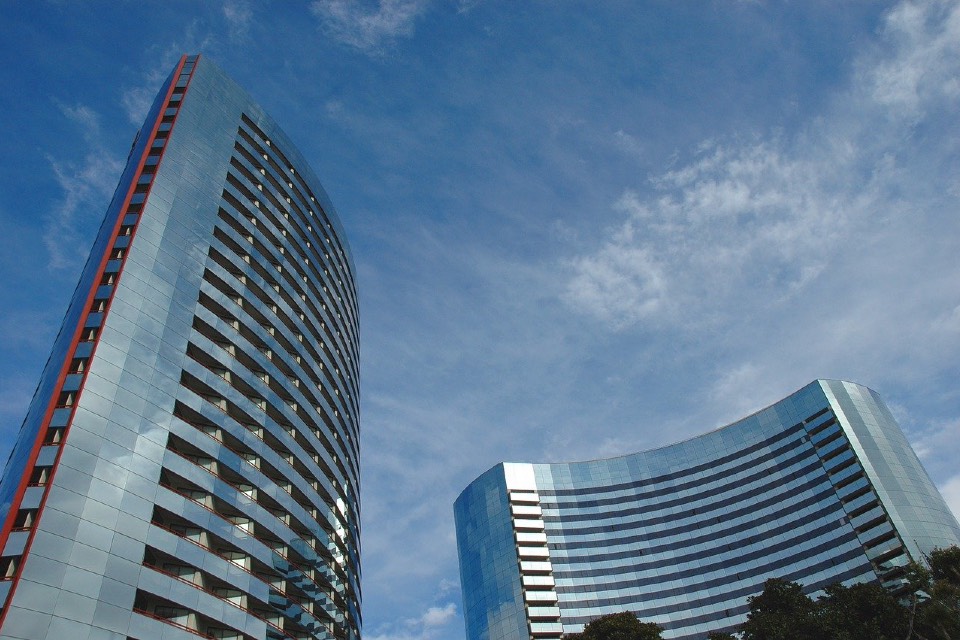
Built environment sector ‘lacks clarity’ on carbon emissions

The majority (58%) of built environment professionals believe the sector is already doing enough to tackle its carbon impact, despite the built environment contributing 36% of total global energy-related CO2 emissions, and the most recent available data showing that CO2 from operational energy use of buildings reached its highest level yet in 2019.

That according to building performance analyst IES’s City of Tomorrow report, which surveyed a wide range of professionals working in the built environment sector about the current status of sustainability methods and targets, including engineers, facilities managers, contractors, developers, planners and architects.

The report revealed that only 29% of those working in the sector felt that it should be doing more to reduce its carbon impact, and 13% were unsure if current efforts would be enough.

The research suggests that this complacency could stem from a lack of awareness around the full extent of the built environment’s carbon contributions.

It’s been demonstrated that the built environment contributes almost 40% of the UK’s total carbon footprint, yet when asked to estimate this figure, 80% of those surveyed answered incorrectly, with 45% underestimating the total percentage. Six percent guessed as low as between 1-10%.

When asked which aspect of the sector they believe is the place where most sustainability gains can be made, 51% of those surveyed said construction. However, only 22% said operation/energy use, and just 4% said materials development.

Don McLean, CEO of IES, said: “While it’s great that awareness of climate issues in general is now pretty widespread, and 79% of organisations in the built environment sector are actively working towards net zero, it’s clear that more needs to be done to communicate the built environment’s role in carbon emissions to those working in the sector.

“In particular, we really need to raise awareness of the environmental impact of buildings’ operational energy use, with the available data showing that emissions from building operations are still a huge problem, that efforts up til now have failed to tackle effectively.

“Reducing the emissions created during the construction process is of course essential, however considering that 80% of the buildings that will be around in 2050 are built already, optimising the operational efficiency of those already in existence is just as, if not more important.”

Energy efficiency ‘gains ground’ despite lower energy prices…

A new report released by the International Energy Agency (IEA) – which focuses on worldwide government commitments on saving energy and reducing carbon emissions under the recently ratified Paris agreement – has demonstrated the progress made by energy efficiency policies over the last 12 months; particularly in emerging economies such as China.

The IEA’s Energy Efficiency Market Report 2016 found overall energy intensity (the amount of energy used per unit of GDP) improved by 1.8 per cent last year – indicating that the global economy needed less energy to grow. The improvement exceeded the 1.5 per cent gain of 2014, and was triple the average rate seen over the past decade.

IEA’s executive director, Dr. Fatih Birol said: “Energy efficiency is the one energy resource that all countries possess in abundance. I welcome the improvement in global energy efficiency, particularly at a time of lower energy prices. This is a sign that many governments push the energy efficiency policies, and it works.”

The report demonstrates the central role of government policy in driving energy efficiency, and indicates how policies must be strengthened and expanded to boost the potential gains from energy efficiency.


Read the report’s findings here