Energy Management Archives - Page 3 of 6 - Facilities Management Forum | Forum Events Ltd
Posts Tagged :

Energy Management

Be wiser on your water to save energy, increase efficiency and cut carbon emissions – with expert help

Water can cut carbon emissions linked to your organisation – and help reduce energy bills – and this really can involve just a few simple steps. 

Mark Taylor, Advanced Services Operations Manager in England for Water Plus, a Green Apple Environment Award winner and the UK’s largest water retailersaid: “Low-cost push taps and aerators can cut flow rates by 16 litres a minute. Showers can be reduced to 6 litres a minute – making a big difference for workplaces, gyms, spas – and leisure facilities. Heating less water helps the environment too, as less water needs to be transported to a site and less energy is needed to make the water hot, reducing carbon emissions linked to this.

“Tracking your water use regularly is also key to exploring opportunities around reducing carbon emissions at your organisation. If you’re an industrial company, or a manufacturer, you could include these in your daily sites checks, if the water meter is safe to access.

“Use a lot of water or have more than one meter? Data loggers, that can be placed on water meters and feed information on water use into an online portal, help you spot saving opportunities too – and highlight additional areas needing attention. This data can also be used to see what seasonal trends there may be for your site – whether the weather is hot – or during the colder months when pipes and the ground can be affected by changes in temperatures.”

Work between the Water Plus Advanced Services team and organisations in the UK – including installing data loggers on water meters in the last year – has resulted in around £4 million of additional water waste being stopped in the space of just 17 months (and an estimated billion litres of water stopped from being lost unnecessarily)*.

To request data loggers, or additional water efficiency services, contact the Water Plus team at: hello@water-plus.co.uk – and include “FM Briefing” in the email subject heading.

More tips to #BeWiseOnWater on the FM Forum website here .

Water Plus, works with organisations across England and Scotland and increased its EcoVadis Sustainability rating from Bronze to Silver in Autumn 2021, following action they started in 2021. It puts them in the top 30% of organisations globally for their approach. The water retailer is also shortlisted for four National Sustainability Awards in 2022 including Water Reduction and Team of the Year as well as its work supporting carbon reduction and biodiversity in the UK.

From 1st January 2021 to 26th May 2022, estimated water loss totalling 1333399.46 m3 (cubic metres of water) at an approximate cost of £4 million – has been stopped due to Water Plus’s engagement with organisations (statistic based on actual water meter readings for water loss that has been stopped through repair or isolation). There are 1,000 litres in a cubic metre of water (m3). Estimate based on if water loss ran for 12 months.
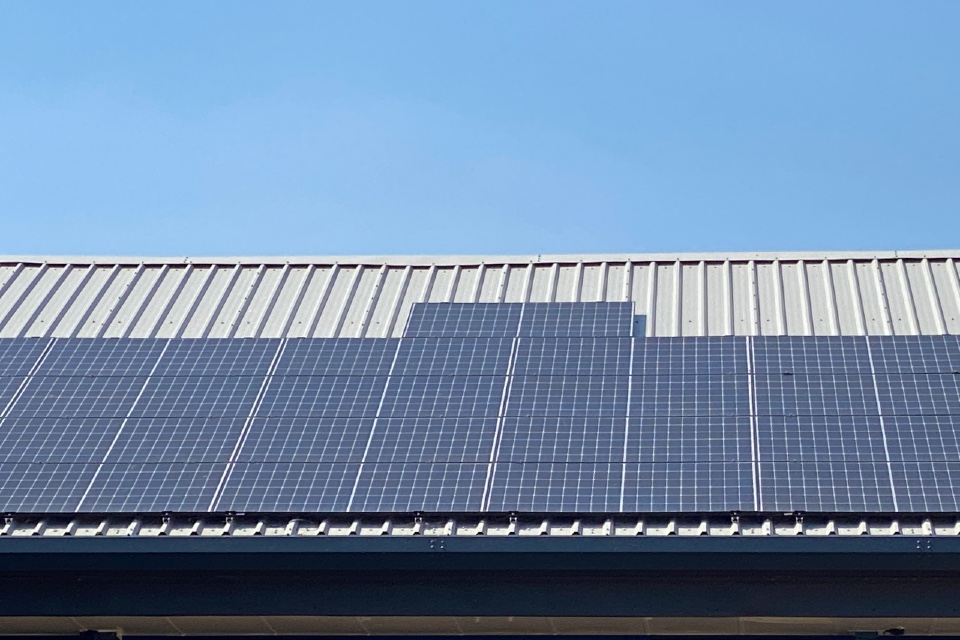

Can solar help you save on electricity bills?

Photovoltaic (PV) solar energy systems present a significant opportunity for facilities managers and landlords to offer value to their tenants and occupants.

Garland UK discuss how a solar installation is a proven way to save money on electricity bills with a fast return on investment whilst reducing operational carbon across entire portfolios, helping to bring properties into line with current standards and add value to your assets…

Reason For Investment

Solar PV systems are one of the most advanced renewable energy technologies and by far the most advantageous for facilities managers to consider. As soon as they are installed, you immediately start to benefit by saving money on the operational running costs of your building, seeing a reduction in the amount of power required from the national grid, which is becoming increasingly more expensive.

Solar PV has the fastest return on investment of any onsite renewable energy generation, potentially in as little as 2 years and typically within 5 years. Ground source heat pumps, for example, usually take around 12 years.

Modern solar PV panels are built to last; for example, Garland UK’s Solarise system will still generate at least 80% of the initial output 25 years after installation, ensuring continued benefits for years to come.

Solar Yield Analysis

On a recent Garland UK project, a 52,000m2 commercial building was looking to significantly reduce its energy bills and operational carbon footprint.

Following a detailed assessment, it was discovered the business would benefit from a return on investment in just 2 years, seeing 21.8 tonnes of carbon emissions negated annually.

A series of yield calculations were carried out to see how solar PV could reduce the building’s electricity dependency on the national grid and operational carbon even further, the results of which are shown in the table below:

PV System Yield Analysis
PV Generator Energy 46,412 kWh
Direct usage by Business 38,500 kWh
Grid Feed-In 7,912 kWh
PV Installation Cost £37,665
First Year Cost Saving On Energy

(based on current energy costs)

£22,613
Return on Investment 2 Years
CO₂ Emissions Avoided 21.8 tonnes per year

Reducing Energy Bills With Solar

It is important to work with a supplier partner who can clearly evaluate your building assets for a potential solar PV installation. At Garland UK, a local Technical Manager will carry out a free site survey to assess the condition of your roof assets and complete a Solar PV Yield Analysis, which will provide:

  • Expert advice on selecting the most suitable system for your business
  • Guidance on how much power your site needs
  • Annual renewable electricity generation
  • Annual carbon emissions that can be negated
  • Clear return on investment and financial analysis
  • Support with Super-Deduction Tax or Financing options

To arrange a free consultation and Solar Yield Analysis for your roof assets, speak to Garland UK today.

www.garlanduk.com

INDUSTRY SPOTLIGHT: Energy cost savings and lower carbon emissions with Solarise PV Solar Systems

Now is the time to consider how solar panels will benefit your business. The government’s environmental incentives, rising energy costs, and shrinking payback durations mean there has never been a better time for businesses to implement a photovoltaic (PV) solar panel system on their roofing assets.

Why Choose Solarise Systems from Garland UK?

  • Decrease your annual energy costs
  • Minimise the impact of energy tariff increases
  • Significantly reduce your carbon footprint
  • Fast return on investment
  • Eligible for Super-Deduction tax relief until March 2023
  • Range of finance options that can offset against energy savings
  • System yield can cover the cost of any roof repair in the future
  • Proactively supports your business toward net-zero carbon

Download the Solarise Brochure here

How long will it take to get a return on my investment?

Installing a Solarise system will provide an excellent return on capital investment, with typical payback between 4-6 years.

Which roof systems are compatible with Solarise?

Solarise is compatible with all Garland roof systems, including bituminous membrane, metal, liquid-coating and green roofs. Giving you complete design flexibility with its interchangeable collection of panels, frames and fixings, you can optimise a building’s green energy output even with a north-facing orientation.

The right solution for every roof

Our Technical Managers will work with you to carry out a detailed survey of your building, creating a tailored report that accurately calculates the energy saving and financial benefits of your Solarise installation.

Want to see how a Solarise system can reduce your building’s energy costs and operational carbon emissions?

For a free Solar PV Yield analysis for your building, speak to your local Garland UK Technical Manager today.

www.garlanduk.com

OPINION: EU carbon market in the crossfire of the energy crisis and legislative changes

By Riham Wahba, Market Analyst at Vertis Environmental Finance
The EU ETS, covering Europe’s carbon-intensive industries, establishes emission reduction targets for more than 11,000 installations. Such entities were responsible for more than 1.3 billion tons of CO2 emissions in 2021.
Besides these companies, in 2018, the European Commission opened the market to financial entities; hence, EUAs (in practice, a “permit” to emit 1 ton of CO2) shared some traits with financial derivatives. However, the allowances have always had more in common with energy commodities than traditional financial instruments. The move, nevertheless, improved the carbon market’s liquidity and sent a stronger price signal to those covered by the system.
Carbon prices in Europe on a roller coaster ride
EUAs experienced a steep price increase, initially driven by its market reform, that later turned into a surge following the covid market turmoil in 2020. On March 18th, 2020, as lockdowns phased out across continental Europe, the price of one ton of CO2 tumbled to as low as €15. Since then, the price curve has only been trending upward. Reaching almost €100 in February 2022, a more than significant 554% increase compared to March 2020.
All market participants anticipated a carbon price of €100 by the end of the compliance cycle in April 2022. It took a war for the price to descend from highs to as low as €55 beginning March 2022. The Inflationary pressure from rising energy prices in the repercussions of the war created a demand-destruction paradox that may or may not prove correct in the long term.
The War in Ukraine and subsequent concerns over shortages had a knock-on effect on industries in Europe. Businesses fretted about the higher cost of inputs, supply chain disruptions, and consumers’ Incomes diminishing purchase power due to the high inflation rate of 8.1% in May.
Impact on the industry and energy production
Volatility continued to grip energy commodities and, by extension, carbon futures as the EU approved several sanctions against Russia. Gas has been red-hot as traders feared supply cuts from Russia in retaliation of European sanctions. The benchmark Dutch TTF gas contract reached an all-time high above €200/MWh in March, and German baseload power neared €500/MWh.
Companies covered by the EU ETS have struggled with these rapidly rising gas and electricity prices, especially in the Mediterranean countries of the EU, Romania and the Netherlands, where the excessive financial burden has taken some companies to bankruptcy or activity suspension. For businesses, it is a real challenge to decarbonize their processes in this economic environment, but just as with Darwin theory, those companies that can adapt the better to the new energy landscape are the ones that will move forward, but at least in the short term they will do it at the expense funnel down their costs increase to end consumers, exacerbating- even further- the cost of living.
The energy transition is not on hold
In some cases, business leaders are well ahead of politicians in term of the environmental ambition of their companies. At the beginning of May, in an open letter signed by 140 CEOs of some of Europe’s largest companies, the Commission was urged to meet the Green Deal targets and increase renewable energy capacity in Europe. The war has not delayed the achievement of these objectives. Rather, it served as a wake-up call for those responsible. Last year’s ‘Fit for 55’ package proposals would have reduced gas demand by 100 bcm.
Now, the REPowerEU proposal aims to reduce consumption by 155 bcm, which is equivalent to imports from Russia in 2021. Financing these plans is, of course, a challenge. Still, the European Commission has developed a detailed strategy which includes, for example, raising EUR 20 billion from auctioning allowances from the market stability reserve, and this must be done without disrupting the proper functioning of the carbon market.
What is coming next?
For the Fit for 55 proposals to become binding law, the EU Council and the Parliament (EP) should adopt the legislative proposal either in its original form or amended.
The European Parliament has largely deemed the Commission’s proposal to lack ambition and came up with counter proposals that aim to tighten the system further. In a surprise vote during June 8th plenary, the Conservatives, Social Democrats, and Greens reverted the EU ETS reform report by Peter Liese to the ENVI Committee. MEPs bout over the cap reduction and the pace of phasing out free allowances to industries. The rejected amendments have no legislative standing but offer a glimpse into different parties’ leaning in the EP.
The ENVI Committee had a procedural vote on June 14th, which ensured that the line-by-line amendment votes carried out during the last session would be voted on again in the next plenary session scheduled for June 22nd and 23rd. Negotiations between MEPs on the reforms will be informal until the ballot date.
Unlike the Parliament, the Council seems to side with the Commission’s initial proposals for the carbon market. France, the current holder of the EU rotating presidency, asked national governments to endorse key parameters of the EU ETS overhaul that the EU Commission proposed. It also requested environment ministers to agree on a common position at their meeting on June 28th. Similar calls emerged from other ten member states, including Germany, Spain and the Netherlands. The countries called the bloc nations against watering down the climate and energy plan.
The final shape of the system overhaul will be decided on in trialogue talks involving the European Council, Commission, and Parliament, most probably after the summer recess. The clock to cut the dependence on Russian fuels is ticking, with energy prices hitting the industry and consumers’ pockets.
The energy transition is not only necessary but -even more- urgent.

Water-saving will help on energy costs – get additional support from our experienced Advanced Services team

Reducing resource use and improving efficiency are key steps organisations will need to take to retain credibility on green steps they’re taking on their Scope 1, 2 and 3 emissions, to help lower impacts on the environment. 

Although water is under Scope 3 on your emissions, it shouldn’t be looked at last as it can help lower energy costs too. Getting more data on where water is used is an important first step.

Green Apple Environment Award winner Water Plus installed more than 400 data loggers on water meters in the space of six months in 2021 – providing further information on how it’s used across buildings.

Mark Taylor, Advanced Services Operations Manager in England for Water Plus, said: “With energy costs in the news, there are some areas where there are low-cost opportunities and options for organisations, particularly if the number of people at sites is fluctuating through a year. This is why tracking what water is used throughout a year is important.

“As there are carbon emissions linked to the water you get through taps, and the wastewater taken away and treated, it also shows that by just boiling the water you need in work kitchen kettles – to reducing water waste from any leaks, including dripping taps, running toilets from cisterns – and elsewhere at your site – soon adds up to lowering running costs, creating less carbon overall and using less energy too.”

Here’s where water-saving can make an impact:

  • In January 2022, a site had a 12 cubic metre an hour water leak but was not sure where on their pipes. They contacted Water Plus Advanced Services, who located the source of the issue and carried out the repair work. The leak, which data loggers on the water meter and the online portal also tracked, would have cost £22,000 in a month.

Work with organisations by Water Plus is also being recognised this year. The water retailer is shortlisted for Water Efficiency Project of the Year in the Water Industry Awards 2022 and was named a Finalist in the Environment Award at the Better Society Awards 2022.

To contact our team, please email hello@water-plus.co.uk – and include “FM Briefing” in the email subject heading. More tips to #BeWiseOnWater on the FM Forum website here – and at: www.water-plus.co.uk/sustainability .

Total Security Summit

Do you specialise in Energy Management services? We want to hear from you!

Each month on FM Briefing we’re shining the spotlight on a different part of the facilities management market – and in May we’ll be focussing on Energy Management.

It’s all part of our ‘Recommended’ editorial feature, designed to help FM industry buyers find the best products and services available today.

So, if you specialise in Energy Management and would like to be included as part of this exciting new shop window, we’d love to hear from you – for more info, contact Paige Aitken on p.aitken@forumevents.co.uk.

Here’s our full features list:

May – Energy Management
Jun – Security
July – Air Conditioning
Aug – Waste Management
Sep – Asset Management
Oct – FM Software
Nov – Intruder & Alarm Systems
Dec – Fire & Safety Equipment

Save Water, Save Energy – And how our experts can help you

By Water Plus

With the spotlight on energy costs and increasing focus on what organisations are doing to reduce impacts on the environment, there are small steps that can be taken now to help in the future.

Using less hot water through small steps like tap aerators in kitchens and facilities and cutting any areas of water waste helps. And using less water overall means lower Scope 3 emissions.

Tracking water use closer during a year allows those managing facilities to spot any issues early – including leaks that can be underground and not easy to spot. Data loggers, which can be attached to water meters, feed updates daily into a smart online portal to help manage multiple sites and spot opportunities for efficiencies.

Barry McGovaney, Sustainability lead at Water Plus, which is the UK’s largest water retailer and a Green Apple Environment Award winner, said: “Hot water can cost between 2 to 4 times more than cold water, once energy costs are considered, and water efficient taps, showerheads and other measures can all help there. It’s important to know what water you’re using, where and when, along with regularly checking site pipes, fittings and water meters, if they’re safe to access, ideally each month.”

Here’s the big impact data loggers, installed through the Water Plus Advanced Services team, have:

  • A manufacturing facility had a leak on one of their main site pipes, which had a fracture and was losing 21 cubic metres of water an hour – that’s 21,000 litres an hour. If this had not been identified, and quick action taken to organise a repair in December 2021, it would have cost around £10,000 a week – and £41,000 if it was running for a month. After contacting Water Plus, the Advanced Services team quickly pinpointed the leak’s location and made the repair.
  • A distribution centre was alerted to a leak that saw 10 cubic metres of water an hour seeping away underground – with a cost around £690 a day.

To contact our team, please email hello@water-plus.co.uk – and include “FM Briefing” in the subject heading.

More tips to #BeWiseOnWater at:  www.water-plus.co.uk/sustainability .

Clarity, consistency, and confidence needed to deliver Net Zero

2021 was an eventful year for anyone working in the sustainable energy sector, with the Government publishing a whole host of policies and strategies, including the long-awaited Heat and Buildings Strategy. There is no question about how much the Strategy was needed; 17% of carbon emissions from heating buildings in 2019 came from homes. That’s comparable to the total emissions from all petrol and diesel cars. Long-term vision is what we have all been waiting for in the hope that it will result in actions being taken to reverse the tide. But does the sector have what it needs to deliver net zero?

Now that we have had the strategy for some time, Jade Lewis (pictured, right), Chief Executive at the Sustainable Energy Association (SEA), has taken the chance to explore what questions and policy gaps remain for our industry, and here is what we found…

CLARITY

Clarity is important. We need roadmaps, dates, and certainty from government to provide a clear direction of travel, set out over the long term. That’s how businesses justify investments, prioritise certain product lines and decommission others. To put this into perspective, the Heat and Building Strategy was originally due in August 2020, and yet the lack of clarity caused by its delay made it all too easy for our industry to lose focus and hold off on investing in much needed capacity building and innovation.

Due to lack of clarity, the questions around how we will engage the ‘able-to-pay’ sector, which makes up 60% of our consumer market, also remain unanswered. In essence, we need direction on how we can work together to transition those who are able-to-pay to willing-to-pay. But this is by no means a new question. It’s one which has challenged the industry for years, and one the SEA tackled again in our 2020 report, ‘Addressing the Able to Pay Sector’.  Yet, we are still waiting for intervention from the Government.

We have seen numerous policies published over the decade, some of which are now well established, like the Energy Company Obligation (ECO), whereas others have fallen prey to cutbacks. It’s so crucial that we get timings right. Without clarity and stability, the industry can become entrenched with rumours about what policies could be ‘cancelled’ or what may or may not be ‘delayed’. As an organisation, the SEA is in a good position to filter out rumours we know to be incorrect due to our policy insight. However, such uncertainty can stifle much-needed investments from more isolated organisations and SMEs.

CONSISTENCY 

Over past years we have seen many policies and schemes launched and then cut short before the industry has had an opportunity to mobilise to deliver. We have seen various funding schemes aimed at supporting different technologies such as PV, renewable heating, biomass, etc., and now heat pumps are very much on the Government agenda. Investigations, set out in our report ‘Designing an Effective Home Upgrade Grant Scheme’, found that short-term funding terminated at the last minute distorts the market, with ‘stop-start’ funding decimating the number of installers in the market. A long-term guarantee instead instils confidence in industry to enable upskilling, product development, service offering, and innovation in the market. To frame this in our current time, we can look at the Boiler Upgrade Scheme due to begin in April this year. But how do we move from 30,000 heat pump installations a year to 600,000 a year from 2028 when there is a general reluctance to fully commit? This hesitation is easy to understand. Previous policies such as the Green Deal, and more recently the Green Homes Grant, have been withdrawn after companies had spent valuable time and resources to prepare to play their part in the delivery.

CONFIDENCE

Finally, and most importantly, we need confidence. Because of the lack of clarity and consistency, the industry lacks the confidence it needs to justify investment in the necessary capacity, resources, and training. Research carried out by the University of Sussex into why heat pumps are so widely adopted in places like Finland found that it is the long-term policy environment that supports business investments and individuals to choose a career in the low carbon heating industry. We need existing installers to retrain and newcomers to commit to a path – this isn’t just about business investment, but time and personal investment. A show of faith and steadfast direction will go a long way to reassure installers, who are the backbone of our industry, that they have made the right decision and have an important role to play in our transition to net zero. We know that many installers have informed local authorities that they have no appetite for future government schemes, so providing reassurance will be a challenge. It has also been suggested that the rollout of short-term policies into an immature market has increased installation costs for eligible measures.

CONCLUSION

Whilst we welcome the Heat and Buildings Strategy, we can appreciate the magnitude of the challenge before us. We are seeing the beginnings of a momentum that will change the way we do things in the energy and the construction sectors for decades to come. Provided we as an industry seek to work collaboratively with the Government to address the questions surrounding clarity, consistency, and confidence, we believe that we will be on the right path towards a just and efficient transition to Net-Zero.

New Energy Management partner for 2022? FM Forum Recommended Supplier Directory can help!

Looking for a new Energy Management supplier for your building, venue, school or company? The FM Forum Recommended Supplier Directory is home to dozens of trusted partners ready to help make your project a reality!

Put simply, there’s something to suit every requirement.

Start Your Search Now

Are you an FM supplier? Get listed!

The FM Forum Recommended Supplier Directory is the perfect platform to raise your organisation’s profile and extend your reach.

Promoted via the FM Briefing newsletter, website and our renowned meet-the-buyer facilities events – this digital FM directory offers a comprehensive list of industry solution leaders.

Click Here To Get Listed!

Or, for more information, please contact Paige Aitken on 01992 374079 or p.aitken@forumevents.co.uk


COP26: Call made for renewable energy job creation

More than 130 renewable energy leaders, under the auspices of the International Renewable Energy Agency (IRENA) Coalition for Action, have launched a Call to Action for COP26, encouraging all governments at national, regional, and local levels to ensure access to high-quality, sustainable jobs during the energy transition.

Limiting the earth’s temperature rise to 1.5oC by 2050 requires a full decarbonisation of the energy sector. As such, the clean energy transition must progress rapidly. But to build a climate-resilient future, the energy transition must advance in a just and inclusive manner, leaving nobody behind.

As countries convene in Glasgow to re-align strategies and renew ambitions at the 26th United Nations Climate Change Conference (COP26), there is an opportunity to increase momentum of the global energy transition – and a transition grounded in renewable energy has been proven to generate widespread socio-economic benefits, including jobs.

“Leaving fossil fuels behind, we need to make sure that everybody can participate in a low-carbon economy. Policies are needed to make the best use of renewable energy players’ insights and best practices in driving a renewable energy market and creating adequate and equal opportunities for all,” says IRENA Director-General Francesco La Camera.

The Renewable Energy and Jobs: Annual Review 2021 report by the International Renewable Energy Agency (IRENA) finds that the renewable energy sector offered employment to 12 million people in 2020 – a steady increase since 2012 at 7.3 million. Renewable energy jobs are also more inclusive, showing better gender balance with 32 per cent women employed in the sector, compared to 22 per cent in the fossil fuels sector. These records provide a very promising insight into a clean energy future.

With the clock ticking, members of Coalition for Action urge governments to consider the following five recommended actions in their decision-making to accelerate a just and inclusive energy transition, at COP26 this week:

  • Comprehensive structural and just transition policies are critical to secure the benefits and manage labour market misalignments that result from the energy transition.
  • Concrete and resilient finance mechanisms are required for countries to equitably transition away from fossil fuels.
  • Job and enterprise creation in the renewable energy sector must be complemented with labour and socio-economic policies in the energy sector.
  • Long-term partnerships between industry, labour unions and governments are essential to ensure job security and social protection, especially in areas particularly impacted by the energy transition (e.g., coal mining regions).
  • Data-driven actions and solutions are needed to support targeted policies that encourage job creation, capacity building and reskilling to empower those disproportionately impacted, such as women, youth and minorities.

See a more detailed view of the IRENA Coalition for Action’s Call to Action for COP26.