Facilities Management Archives - Page 3 of 8 - Facilities Management Forum | Forum Events Ltd
Posts Tagged :

Facilities Management

Can solar help you save on electricity bills?

Photovoltaic (PV) solar energy systems present a significant opportunity for facilities managers and landlords to offer value to their tenants and occupants.

Garland UK discuss how a solar installation is a proven way to save money on electricity bills with a fast return on investment whilst reducing operational carbon across entire portfolios, helping to bring properties into line with current standards and add value to your assets…

Reason For Investment

Solar PV systems are one of the most advanced renewable energy technologies and by far the most advantageous for facilities managers to consider. As soon as they are installed, you immediately start to benefit by saving money on the operational running costs of your building, seeing a reduction in the amount of power required from the national grid, which is becoming increasingly more expensive.

Solar PV has the fastest return on investment of any onsite renewable energy generation, potentially in as little as 2 years and typically within 5 years. Ground source heat pumps, for example, usually take around 12 years.

Modern solar PV panels are built to last; for example, Garland UK’s Solarise system will still generate at least 80% of the initial output 25 years after installation, ensuring continued benefits for years to come.

Solar Yield Analysis

On a recent Garland UK project, a 52,000m2 commercial building was looking to significantly reduce its energy bills and operational carbon footprint.

Following a detailed assessment, it was discovered the business would benefit from a return on investment in just 2 years, seeing 21.8 tonnes of carbon emissions negated annually.

A series of yield calculations were carried out to see how solar PV could reduce the building’s electricity dependency on the national grid and operational carbon even further, the results of which are shown in the table below:

PV System Yield Analysis
PV Generator Energy 46,412 kWh
Direct usage by Business 38,500 kWh
Grid Feed-In 7,912 kWh
PV Installation Cost £37,665
First Year Cost Saving On Energy

(based on current energy costs)

£22,613
Return on Investment 2 Years
CO₂ Emissions Avoided 21.8 tonnes per year

Reducing Energy Bills With Solar

It is important to work with a supplier partner who can clearly evaluate your building assets for a potential solar PV installation. At Garland UK, a local Technical Manager will carry out a free site survey to assess the condition of your roof assets and complete a Solar PV Yield Analysis, which will provide:

  • Expert advice on selecting the most suitable system for your business
  • Guidance on how much power your site needs
  • Annual renewable electricity generation
  • Annual carbon emissions that can be negated
  • Clear return on investment and financial analysis
  • Support with Super-Deduction Tax or Financing options

To arrange a free consultation and Solar Yield Analysis for your roof assets, speak to Garland UK today.


www.garlanduk.com

Delaying fixed wire testing could cost businesses thousands

Businesses run the risk of legal cases and thousands of pounds worth of fines for neglecting their fixed wire testing, says one of the UK’s leading compliance companies.

phs Compliance, which provides facilities management and compliance services across the UK, says that many businesses are not keeping up with their requirements to regularly test and inspect their electrical equipment, especially electrical installations that requiring fixed wire testing.

Darren Blackbird, Sales Director for phs Compliance, said: “This is a challenging time for many businesses, but if you neglect your basic health and safety obligations you are putting your employees and the business at serious risk.

“The Electricity at Work Regulations 1989 state that all electrical equipment in the workplace must be suitable for use and maintained to ensure it is safe, so if a business cannot demonstrate that they are regularly checking and maintaining equipment, they will land themselves in hot water.

“Fixed wire testing, carried out by a professional, is the best way to ensure compliance and have peace of mind that your equipment is safe to use and that you are protecting your employees. And you can prove it!

“Fixed wire testing inspects and assesses an electrical installation’s main electrical wiring system to ensure it is safe to use and complies with  the current version of the British Standard BS 7671. It will identify any overloads, hazards or defects that could cause a fire or injury.

“An electrical installation includes any fixed electrical equipment that is supplied through an electricity meter, including main panels, distribution boards, cables, accessories (like sockets, switches and light fittings), circuit breakers, and residual current devices (RCDs).”

“It is recommended that electrical checks are conducted on an annual basis to ensure compliance. The easiest way to remember is to ensure electrical installations form part of your general workplace risk assessments and to schedule tests in advance.

“Most electrical installations require testing every one to five years, depending on the type of electrical installation, how often it is used and the environment it is in. It’s always best to consult an experienced professional like phsCompliance who can advise on your specific workplace and equipment.”

phs Compliance provides a free Guide to Fixed Wire Testing in the workplace on its website.

With over 50 years’ experience, phs Compliance is one of the UK’s leading providers of facilities management and compliance services. As well as electrical, mechanical and fire safety testing and maintenance services, phs Compliance also provides specialist electrical and mechanical project services, including design, supply and installation for everything from power to lighting.

Could you recognise a sudden cardiac arrest?

By ZOLL Medical

When someone suffers sudden cardiac arrest (SCA), their chance of survival decreases 7 to 10% for every minute without CPR and defibrillation. Early recognition of the signs of SCA is critical to helping save more lives. According to the latest European Resuscitation Council Guidelines, immediate initiation of CPR and defibrillation can double or triple survival rates.

Learn about the signs and symptoms of sudden cardiac arrest, so you’re prepared to help save a life. Download the poster, “Do You Know the Signs and Symptoms of Sudden Cardiac Arrest?” to learn more.

DOWNLOAD THE POSTER:

Could you recognise a sudden cardiac arrest? | ZOLL Medical

Live webinar | The impact of smart building technology on the future of work

Facilitating a superior employee experience and developing a human-centric workplace is now more important than ever. As employee performance can be boosted by 54% through a human-centric workplace model (Gartner, 2022), facility managers and workplace professionals play an important role in the success of the whole organisation.

Smart workplace tools will help you execute your workplace strategy to improve workplace user experience, enhance employee engagement, and increase employee productivity.

Join this live webinar on Thursday, September 15 at 14:00 BST | 15:00 CEST where Planon’s workplace experts will outline the latest trends in the world of workplaces, examine the changing role of facility managers and workplace professionals in offering the optimum employee experience, and discuss how smart building technology is a key component of a successful workplace strategy.

*If you’re not able to join, register anyway and you will receive the recording afterwards.

Global demand for healthcare FM to hit $165bn this year

The global market for Healthcare Facilities Management is estimated to be worth $165.1 billion in the year 2022, driven by the COVID-19 pandemic, and is projected to reach $222.9 billion by 2026, equivalent to a CAGR of 7.2% over the forecast period.

The latest analysis from Dublin-based ResearchAndMarkets says Soft Services, one of the segments analysed in the report, is projected to grow at a 6.5% CAGR, while growth in the Hard Services segment is readjusted to a revised 8.3% CAGR.

Healthcare FM market worldwide continues to grow at a promising rate. With world confronting challenges in the form of rising incidence of lifestyle related diseases, focus is shifting towards health and better lifestyle that is also expected to bear an impact on the FM market. The growing focus on healthcare sector is thus contributing to the increase in FM revenues.

Specifically in regions such as Europe, where governments are slashing healthcare budgets, there is growing demand for outsourced FM services. The rising threat of lifestyle diseases is also expected to foster improvements in building designs, in order to promote comfortable, productive and active lifestyles.

Increasing prevalence of chronic illnesses, rising disposable incomes of urban people, technological advancements designed to improve healthcare, rapid growth of medical tourism, and support for healthcare sector from government departments in developed and emerging economies are also supporting growth of the healthcare FM market.

The market is also benefitting from the rising expenditure on healthcare and associated infrastructure, growing focus on the aspect of hygiene, and the increasing emergence and use of technologies for maintaining sustainability. Increasing priority being given to patient wellness and safety also bodes well for the market.

Private healthcare institutions are generally more focused on implementing healthcare facility management. The growing demand for outsourced FM services remains a key growth driver for the overall healthcare FM market. The market is being driven in part by the increasing trend of hospitals and other healthcare units outsourcing facilities management.

Also driving growth are factors such as rising adoption of IoT and increasing proliferation of cloud-based solutions are expected to open up new avenues of growth in the healthcare FM market. Latest technologies such as Internet of Things (IoT) and automated guided vehicles, among others enable the providers of such services to offer improved customer service. IoT provides a steady flow of data in real-time, which allows better decision making and optimization of processes.

Automation is also increasingly being witnessed in energy management systems of hospitals. IoT and AI support energy flow and its optimization in healthcare facilities. There has also been the emergence of several smart products due to the growing IoT adoption. Smart technology can be used to improve door locks, HVAC, alarms, and security cameras, among others, and facilitates the use of mobile devices to control them, which makes remote management of a facility possible and less time-taking.

Another factor fostering market growth is the rising use of healthcare facility management software, which enables clinics and hospitals to perform routine operations smoothly and enhance patient care. It allows healthcare facilities to use their physical resources and perform automation of management functions.

Facilities management services are of two broad types, soft services and hard services. Hard facility management services refer to those that are integrated into facility or building. These are vital to the workplace environment and cannot be removed. Hard services are known to impact all people in the facility, albeit at different levels. Heating, lighting/electrical, plumbing, fire safety systems, air conditioning, and mechanical are some types of hard services.

Soft services category, especially cleaning and pest control segments, accounts for a major share and is likely to grow at a healthy rate driven by the growing importance of maintain clean environments given the highly contaminated surroundings of various healthcare facilities. The cleaning and pest control segment has considerable importance in the healthcare FM market, due to the high degree of contamination in healthcare settings.

Medical waste management is expected to register strong growth in the forthcoming years. Healthcare facilities produce a significant quantity of non-hazardous and hazardous waste on a daily basis that arises from the diagnosis and treatment of diseases. Such waste needs to be carefully and safely managed to prevent the spread of infections and diseases and to lower impact on the environment.

Government opens £368m Youth Investment Fund to improve facilities & services

Youth services in the country’s most underserved areas are being encouraged to apply for a slice of a £368 million fund to improve the health, wellbeing, skills and opportunities for young people.

Earlier this year £12 million from the fund was fast-tracked to local youth services where supply was short of meeting demand.

The aim was to cover small-scale capital improvements such as providing new laptops to youth groups, small redevelopments of buildings and facilities, and improving transport, such as providing a new minibus for a youth club so they can keep young people safe and extend activities beyond their local area.

The Youth Investment Fund, designed to create, improve and expand local youth facilities and services, is now open for bids from 45 local authorities and more than 600 district wards in some of the most deprived areas in England.

It will provide funding to build or refurbish up to 300 youth facilities over the next 3 years, providing safe spaces in which young people can socialise and participate in a wide range of activities, including those designed to help support them into employment.

The funding forms part of the Government’s ‘National Youth Guarantee’ to ensure every young person right across England will have access to regular out of school activities, adventures away from home and opportunities to volunteer backed by a £560 million investment.

The guarantee also includes offering The Duke of Edinburgh’s Award to every state secondary school for the first time, as well as increased access to social action projects or the opportunity to meet new people and learn life and work skills like money management or public speaking skills through the National Citizen Service.

Minister for Civil Society and Youth Nigel Huddleston said: “We are committed to ensuring that no young person is left out of reach or left behind, and have put it at the heart of our drive to level up this country. I encourage eligible youth services to apply for this life-changing funding.”

Nick Temple, CEO, Social Investment Business said: “All young people deserve access to high-quality youth services and great youth facilities to thrive in life, but youth provision across the country is sadly unequal. That’s why we’re proud to be able to apply our 20+ years’ knowledge and experience of grant programmes and capital projects to design, manage and deliver the Youth Investment Fund.

“Working alongside our partners National Youth Agency, Key Fund and Resonance, we’ll enable up to 300 youth facilities to be built or refurbished over the next three years. This is a wonderful opportunity to prioritise the needs of young people in England and create a more equal society for future generations.”

BBC Children In Need was the grant administrator for the first phase of the Youth Investment Fund and distributed funding to some 418 eligible youth projects in the most in-demand areas which included:

  • The Community Court Yard in Northampton, a social enterprise delivering traditional youth work, bespoke alternative education and creative workshops based on the youth work curriculum. It was awarded a grant of more than £44,740 to fund a vehicle for detached youth work, gaming booth equipment, CCTV and the refit of the gym area. It will help build positive behaviours and communication skills for disadvantaged young people.
  • IMO (Inspire, Motivate, Overcome) Charity in Blackburn and Darwen, which aims to help local young people and their families to combat disadvantage and overcome challenges they face. The grant of £32,155, has funded equipment and furnishings for a new Youth Hub which will provide programmes, activities and a safe environment for young people who struggle at school with their mental health and who are in poverty.
  • Brunswick Youth and Community Centre in Bootle, which provides a wide range of activities for young people, received £10,325 of funding to update a community garden space for the youth community centre. It will help promote wellbeing and healthy eating programmes for young people facing mental health challenges and/or at risk of exposure to gang culture.

Leigh Middleton, CEO, National Youth Agency said: “High quality, universal youth provision supports all young people to have somewhere safe to go, to socialise and learn new skills, with a trusted adult who is skilled and trained to support them.

“We are delighted to be partnering with Social Investment Business on the design and delivery of the Youth Investment Fund. This provides much needed investment for youth centres and dedicated spaces for young people to go in their communities, as part of the government’s National Youth Guarantee.

“Working with SIB, youth sector partners and young people directly, our shared aim is to ensure the funding enables high quality youth work which will have the best outcomes for young people, and for communities to thrive.”

Food waste impacting Net Zero ambitions

Unprecedented pressure on supply chains has led to food buyers in the UK’s biggest organisations reporting a 60% increase in food waste over the last six months.

This surge casts doubt on the food industry’s ability to meet the UN’s Sustainable Development Goal to reduce food waste by 50% by 2030, and hampers progress to net zero.

This is according to a new study commissioned by Sodexo UK & Ireland evaluating how large organisations are navigating the current supply chain crisis and its impact on food waste and carbon emissions. It found 83% of respondents say they have created a more resilient supply chain after the pandemic; however, food waste is increasing for a majority of companies.

Sodexo’s research shows that to increase their resilience, UK food supply chain heads are increasingly diversifying their supplier base by working with smaller suppliers, with over a third (38%) doing so. 35% are also looking to source more food domestically.

SMEs form the backbone of this approach with 81% saying the current supply chain crisis has emphasised the need to source more from SMEs. Some suppliers are eager to collaborate further, with 38% agreeing that the sharing of best practice with SME partners in the supply chain to improve efficiencies will best help address the UK’s supply chain challenges.

Commenting on the findings Aoife Wycherley, Head of Supply Chain & Food Procurement at Sodexo UK & Ireleand, said: “Diversifying the food supply chain is essential for building resilience. SMEs can enable greater agility because they’re more flexible, innovative and, tend to drive domestic food sourcing which, in turn, can reduce carbon by cutting down on air and freight usage. This makes having SMEs in the supply chain essential for those that need to maintain supply and meet climate targets.”

Carbon data reporting is, however, a huge burden for small businesses, and we need greater industry collaboration from large organisations to support them with this challenge in order to achieve net zero in the supply chain.

The findings come as Sodexo continues its work with SMEs. These account for three-quarters of its supply chain and for 44% of its spend, enhancing its resilience to continue delivering meals to customers, despite the external market shocks the industry is facing.

Reducing food waste is a critical part of minimising carbon emissions in the supply chain. Despite this, over one third (35%) of respondents admit to deprioritising food waste due to the ongoing challenges in the supply chain over the past year. A similar proportion (34%), however, do support the introduction of mandatory food waste reporting which is proposed in the Government’s recently published food strategy.

Claire Atkins-Morris, Director of Corporate Responsibility at Sodexo UK & Ireland, said: We welcome the Government’s decision to consult on mandatory food waste reporting, something which we’ve been calling for in our Appetite for Action campaign. The first step towards cutting food waste is tracking and monitoring. More broadly, we urge government to take a holistic approach to all areas which will determine the success of net zero policy making, including food waste, carbon reduction and supply chain resilience. The strategy must be broader than focusing on renewable energy and the introduction of electric vehicles.”

Sodexo, which has pledged to cut its own food waste by 50% by 2025 and achieve net zero by 2045 – found that achieving net zero emissions has become the most important priority for 80% of respondents. Sodexo reduced its greenhouse gas emissions by 38.5% in FY21, (against a 2017 baseline measurement of 1.16million tonnes of carbon) across Scopes 1, 2 and 3 which includes emissions from the supply chain. The research also found two-fifths (40%) of food supply chain heads are calling on businesses to adopt net zero policies to future proof a supply chain adhering to science.

Sodexo partnered with WRAP last year in support of the first ever Food Waste Action Week to tackle food waste and help save the planet. Sodexo is also a signatory of The Courtauld Commitment 2030, a voluntary agreement that enables collaborative action across the entire UK food chain to deliver farm-to-fork reductions in food waste.

Keith James, Head of Policy and Insights, WRAP, added: “Through Courtauld 2030, WRAP has partnered with Sodexo to tackle climate change, food waste and water stewardship. Sodexo’s findings relating to a rise in self-reported food waste are worrying, but not unexpected given the pressures put on supply chains in recent years. WRAP will publish data later this year to show where the UK is in terms of tackling food waste, GHG emissions connected with our food and drink, and water stewardship. Every business can make a difference by instigating the Target-Measure-Act approach, but not all have the flexibility to adopt strategies quickly with competing pressures. That is why WRAP published new Scope 3 protocols for measuring GHG emissions linked to the food we make, sell and eat.”

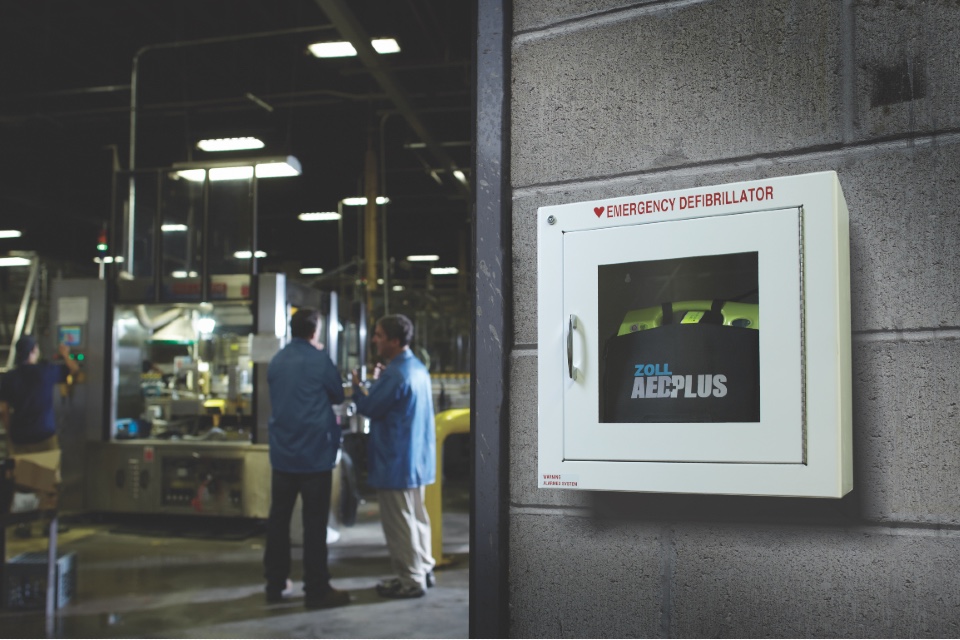
Is your facility prepared for sudden cardiac arrest?

By ZOLL

It happens in a split second. A person collapses — the victim of sudden cardiac arrest (SCA) — and the clock starts ticking in the race to restore a normal rhythm to the heart. A rescuer armed with an automated external defibrillator (AED) and performing CPR is the victim’s best chance for survival until medical personnel arrive.

Having an AED on-site in the case of a sudden cardiac arrest can be a life-saving decision. Learn more about SCAs in the workplace with our free educational flyer.

Is your facility prepared for a sudden cardiac arrest? | ZOLL Medical

Moving to the cloud shouldn’t be daunting for Local Authorities

Local Authorities are under intense pressure to escalate Digital Transformation strategies while also dramatically reducing IT costs, achieving public sector sustainability goals and extending citizen self-service access to key services. With stretched in-house resources and a widely acknowledged skills shortage, the existing IT team is dedicated to keeping the lights on for as long as possible.

With many councils asking where they can find the time, resources or confidence to advance a cloud-first strategy, Don Valentine, Commercial Director, Absoft outlines five reasons for why embracing ERP in the cloud right now will actually solve many of the crisis facing public sector IT…

Unprecedented Challenge

Local Authority IT teams are facing incompatible goals. Is it possible to cut the IT budget by £millions per year over the next five years while also replacing an incredibly extensive legacy infrastructure with an up to the minute cloud based alternative? Or improve operational processes and ramp up citizen self-service while also ensuring stretched staff across departments have constant, uninterrupted access to the information and systems they need to be effective and productive?

With so many stakeholders to satisfy, the future looks daunting. But there are many reasons why Local Authorities should be confident to embrace a cloud-first strategy and the latest ERP solutions.

Reason 1: A Cloud Migration can be Tactical

With growing numbers of local authorities reducing building space to cut costs, IT teams are under intense pressure to accelerate cloud migration strategies. With tight deadlines to close on premise data centres, a tactical cloud migration offers tangible benefits, not least a chance to address the punitive cost base. At Barnsley Metropolitan Borough Council, building closure created a 12 week deadline to migrate its SAP estate, including 128 interfaces, to Microsoft Azure.

By taking a tactical approach, rather than a more complex cloud migration that includes an overview of operational processes, Local Authorities can very quickly achieve a cost effective, future proof IT infrastructure that can become the foundation for on-going innovation and change.

Reason 2: Budgetary Goals can be Achieved

Replacing expensive, dated on premise equipment with a secure, UK based cloud service immediately removes the heavy maintenance costs associated with keeping legacy solutions up and running. It eradicates the burden of perpetual license costs – often for solutions that are no longer required. Moving to a subscription based model also delivers a far more manageable, flexible and predictable annual IT budget. The tactical migration to the cloud undertaken by Barnsley Metropolitan Borough Council led to an immediate saving of £125,000 in ongoing operational support fees and the enablement of the internal team.

Reason 3: Complexity is Reduced

Far too many Local Authorities have over-specified ERP deployments dating back to the pre-austerity era. Times have changed – and so has the core functionality of ERP solutions. There is no longer any need for expensive add-ons – from payroll to procurement, cloud-based ERP technology delivers the vast majority of operational functionality. This allows a significant rationalisation of the software solution set, minimising complexity and avoiding the expensive upgrade costs that can devastate IT budgets. One large local authority was able to achieve a 40% reduction of server hosts through landscape rationalisation, leading to a 50% cut in hosting costs once in the cloud.

Reason 4: Providing a Foundation for Operational Transformation

Rationalising IT systems also frees up talented staff from tedious and stressful maintenance and support activities to focus on innovation. With access to a state-of-the-art ERP solution, individuals can work to streamline processes and improve automation – especially in areas such as citizen self-service.

This, in turn, will release staff across the local authority from time consuming manual activities, ensuring they can use their experience to deliver the more complex services and provide support to vulnerable citizens. Furthermore, with better information councils can embark upon essential business modelling – a key requirement given the impact of inflation and the collapse in business rates – as well as exploring new areas to add revenue streams, such as expanding existing payroll services to schools and academies.

Reason 5: Achieving Sustainability Goals

Local authorities are also tasked with addressing their carbon footprint, along with the rest of the public sector. Moving away from dedicated on-premises data centres to the cloud will be more efficient and support the sustainability goals. Cloud-based data centres offer far more effective energy consumption: one study confirmed that using the Microsoft Azure cloud platform can be up to 93% more energy efficiency and up to 98% more carbon efficient than on-premises solutions. Plus with a commitment to using 100% renewable energy by 2025, to be water positive by 2030, achieve zero-waste certification by 2030 and to be net-zero on deforestation from new construction, the cloud provider’s investment in sustainability will help the council continually improve its position.

In addition, a fully integrated ERP system provides detailed insight to help understand the broader carbon footprint, from procurement to travel, allowing councils to monitor, report and provide transparency around CO2 emissions.

Conclusion

Any significant IT strategic change can appear daunting – especially for stretched IT teams under huge pressure to cut costs while managing out of date and unsuitable legacy systems. The shift to the cloud, however, is not just achievable; it can be made within a tight timeframe and deliver immediate benefits to both budget and resources. Plus, of course, it provides the foundation for on-going digital transformation and provide access to an array of innovative technologies.

Optimise Building Security with Verkada’s Access Control, AI CCTV, Alarms, Sensors and Visitor Management solutions

Verkada simplifies and modernises facility management by combining all physical security needs onto one easy–to–use platform.

Thousands of facility managers globally are utilising Verkada to protect people, assets and facilities, whilst aggregating data onto one platform for actionable insights to ensure efficiency and productivity.

Video Security: Hybrid cloud cameras offer onboard storage and edge–based processing to reliably deliver insights in real–time.

Environmental Sensors: With a collection of eight onboard sensor readings, monitor for the health and safety of all environments.

Access Control: Manage doors, credentials and users across sites at ease with global access and active directory integrations.

Alarms: Catch and respond to break–ins with cloud–managed intrusion detection. 

Visitor Management: Personalise the check–in experience for all types of visitors while integrating with cameras and access control.

Key Benefits of Verkada’s Hybrid Cloud Solution for Facility Managers

  • Oversee all sites on one cloud–based platform, easily accessible through any web browser or mobile device. 
  • Receive instant SMS alerts when a Person of Interest is on–premise or unusual activity is detected afterhours. 
  • Speed up investigations with AI-powered analytics to quickly filter footage based on what is in frame, including people and vehicles.
  • Eliminate unpredictable costs with no NVRs and DVRs, unlimited user seats, and an industry-leading 10-year warranty.
  • Monitor the usage of a space from Occupancy Trends to optimise business operations. 
  • Protect employee health by identifying environmental changes that can lead to air quality and health issues.
  • Share live feeds, floor plans or archived footage via SMS, MP4, or direct link.

If you’re interested in learning more, sign up for a personalised demo today!