Facilities Management Archives - Page 4 of 8 - Facilities Management Forum | Forum Events Ltd
Posts Tagged :

Facilities Management

Water-saving will help on energy costs – get additional support from our experienced Advanced Services team

Reducing resource use and improving efficiency are key steps organisations will need to take to retain credibility on green steps they’re taking on their Scope 1, 2 and 3 emissions, to help lower impacts on the environment. 

Although water is under Scope 3 on your emissions, it shouldn’t be looked at last as it can help lower energy costs too. Getting more data on where water is used is an important first step.

Green Apple Environment Award winner Water Plus installed more than 400 data loggers on water meters in the space of six months in 2021 – providing further information on how it’s used across buildings.

Mark Taylor, Advanced Services Operations Manager in England for Water Plus, said: “With energy costs in the news, there are some areas where there are low-cost opportunities and options for organisations, particularly if the number of people at sites is fluctuating through a year. This is why tracking what water is used throughout a year is important.

“As there are carbon emissions linked to the water you get through taps, and the wastewater taken away and treated, it also shows that by just boiling the water you need in work kitchen kettles – to reducing water waste from any leaks, including dripping taps, running toilets from cisterns – and elsewhere at your site – soon adds up to lowering running costs, creating less carbon overall and using less energy too.”

Here’s where water-saving can make an impact:

  • In January 2022, a site had a 12 cubic metre an hour water leak but was not sure where on their pipes. They contacted Water Plus Advanced Services, who located the source of the issue and carried out the repair work. The leak, which data loggers on the water meter and the online portal also tracked, would have cost £22,000 in a month.

Work with organisations by Water Plus is also being recognised this year. The water retailer is shortlisted for Water Efficiency Project of the Year in the Water Industry Awards 2022 and was named a Finalist in the Environment Award at the Better Society Awards 2022.

To contact our team, please email hello@water-plus.co.uk – and include “FM Briefing” in the email subject heading. More tips to #BeWiseOnWater on the FM Forum website here – and at: www.water-plus.co.uk/sustainability .


FM market set for £3bn sales boost in 2022

A new report on the UK’s facilities management market from MTW Research has found that whilst the cost of Covid-19 will exceed £11 billion in lost revenue by 2026, prospects for the market are positive with a £3 billion sales uplift in 2022.

The 100 page report reviews the legacy of Covid-19, highlighting near term labour, profitability and other operational challenges but places this into context within wider positive FM market trends and opportunities, forecasting double digit growth over the next 4 years.

Proptech represents a key positive FM market trend in 2022 according to MTW, with growth in disruptive technology boosting healthy sales opportunities. Discussing this trend, MTW’s director Mark Waddy said: “Trends in FM technology and process innovation are enabling FM providers to develop an ‘empathic response’ to service provision, boosting added value by more closely integrating with the client and anticipating their needs.”

Public sector FM grew share of the FM market in 2020/21 as commercial demand slowed in response to the pandemic.  MTW identify that this trend is now reversing in 2022 though public spending plans published in March 2022 were further revised upward by 2.8%, on top of a real terms increase of £150bn announced in 2021.  This growth, coupled with a steadily strengthening private FM outsourcing sector underlines a fundamental strength in the FM market for the medium to longer term with MTW forecasting the market will reach 98% of pre-Covid sales in 2022.

Despite high inflation, real term growth is set to return in H2 2022 with full year 2023 growth expected to outpace inflation as international and domestic inflationary pressures steadily ease.  However, MTW also identify a number of issues dampening growth prospects.  One example is the trend of insourcing, with caterers, cleaners, security and maintenance contractors having become so well integrated that they are viewed as the ‘lifeblood’ of the organisation and so are adopted as employees.  This trend is often also supported by unions and so has gained further traction as a result.

The report also highlights growing challenges in the TFM market, with a growing trend of FM contractors focusing on specialism rather than broad spectrum service delivery in order to develop more defined brands and enhance margin opportunities.  More selective tender submissions and enhanced margin protection continue to become increasingly evident across the FM market in 2022 as the quality of service rather than volume of contracts grows in significance.  Nevertheless, bundled FM services continue to dominate the market in 2022, rising by more than 13% over the entire review period.

Best performing sectors in recent years according to MTW include the contract cleaning market and security sectors whilst the property maintenance and catering markets performed generally in line with the overall FM market.  By 2026, sales from these 4 sectors alone will generate more than £55 billion of sales in cash terms.

The report also identifies some of the more recent mergers and acquisitions and forecasts M&A will grow rapidly in 2022, underpinned by private equity which continues to price trade buyers out of the market.  As private equity continues to grow share of the FM market, M&A activity is set to rise by some 35% in 2022 compared to 2019 levels.

How IoT connectivity is reaching new heights

IoT solutions utilising SIM-based cellular technology for connectivity are not new – but the speed with which IoT is expanding, embracing ever more exciting and dynamic use cases is both compelling and creating market confusion in equal measure.

From a market which is reaching maturity – the standardised, tried and tested, M2M SIM IoT deployments – to one (e.g. 5G SIM-based IoT) which is largely in its infancy, separating between those solutions that can be bought with confidence and those where continued innovation warrants discussion and consultation, may not be straightforward. And, for these latter cases, choosing the right cellular (SIM) technology and network type will require an understanding of the technical requirements for each use case and the data profile of the asset to be connected. 

With the definition of IoT expanding almost daily and suppliers increasingly jumping on the IoT bandwagon, this is a complex landscape, requiring knowledge, understanding, and expert partnerships. Nick Sacke, Head of IoT Solutions, Comms365 explains how to navigate the maze of options to optimise and future proof your cellular IoT investments…

From M2M to 5G, a Range of Mature – and less Mature – Capabilities

Mass scale IoT Machine to Machine (M2M) deployments have been around for years, since the days of the inception of 2G cellular technology. Now bundled under (the increasingly broad) ‘IoT’ umbrella, the traditional M2M plastic SIM card we all recognise is giving way to soldered circuits inside the actual device, with data plans and automated network selection handled via software and sophisticated portals to manage the data estate. This is a mature market, with deployments that extend from payment for car washers and car valuation booths; washing machines for student accommodation, vending machines and refrigeration display units; to CCTV, access control, smart lighting, and waste bins fill levels. These M2M SIM-based services have become standardised, they are tried and tested, reliable and practical, enabling organisations to introduce the technology into their businesses with confidence.

Moving through the deployment spectrum, now using 4G and 5G where available, deployments have become much more scalable with the deployment of IoT sensors attached to machines and the bidirectional transmission of data to / from applications, allowing companies to achieve far more granular, tracking visibility and remote management of assets such as wind turbines, heavy equipment, power generation and metering infrastructure, anywhere there is signal. Rapidly expanding SIM network connectivity options now include Low Power WAN (LPWAN) variants such as Narrowband IoT (NB-IoT) and LTE-M (Cat M), which have been specifically developed and incorporated into 5G standalone networks to support millions of battery-powered IoT devices in hard to reach places and are enabling enterprises to radically expand the scale of projects from Phase 1 pilots to mass deployments.

Now known as ‘Massive IoT’, millions of devices and assets can be connected and, with extraordinary innovation in sensor devices, the range of use cases expands daily. Soil sensors are being used by farmers to manage scarce water resources in remote regions; sensors in concrete structures can be used both during construction to track curing and post-build to measure compressive strain and concrete health. From water metering to air pollution, waste management and parking control, the combination of networks, devices and big data analytics is creating the foundation for everything from smart cities to sustainable agriculture. The SIM technology selected for all these use cases was based on a range of critical technical requirements including range, scalability, security and low power consumption.

Time Sensitive

Another fast developing and innovative use case field for SIM-based IoT Networks is ‘Critical IoT’, where applications such as real-time vital signs monitoring at home as an extension of healthcare require ultra-reliable data delivery and low delay in getting measurements to back-office systems (‘latency’). This application area is hugely vibrant in its development, with many technology firms delivering innovations in wearable technologies which record both vital signs (heart rate, Oxygen saturation) and location to keep track of individuals wherever they are, and allow care professionals to intervene quickly in an agile, targeted way.

This sector of the market will scale rapidly with the expansion of high capacity, fast, 5G networks, but given the need for reliable data transmissions typically across mobile locations, one network alone may be unlikely to deliver the quality of coverage required. Organisations will need a SIM-based technology option that can ‘roam’, i.e. work with more than one public network operator to hand off traffic seamlessly.

Conversely, for super-low latency, high-volume operations in fixed locations, such as industry automation IoT, private 5G is now a preferred option, offering the chance to prioritise specific data traffic flows – something that is not currently an option across public 5G networks. This is compelling for factories, warehouses, stadiums and large buildings which have poor or massively contended mobile signal indoors and cannot deliver mobile data services reliably.

Clearly, at the end of the spectrum, SIM-based cellular IoT is far more complex than the ‘plug and play’ experience we’ve come to rely on with our Smartphones, requiring design, planning and deployment by experts.

Maximising Potential

With substantial growth in IoT connectivity globally, customers are now demanding simplified contracts and service models from their providers to take care of their requirements – from low power connections for sensors, to high bandwidth applications to connect their real estate assets to provide primary and failover internet access. This is a complex challenge, especially internationally, due to different commercial agreements and service models amongst competing carriers, as well as limitations on certain types of network access on a per country basis (almost all countries have a 4G service, but 5G is a work in progress, and low power network coverage needs to be checked for availability).

Network operators need to be flexible, but have not always proven to be so, allowing the growth and development of a new generation of network aggregators and smaller service providers that are geared to cater to customer needs. Aggregators are now playing a significant role in SIM-based mobile market development and growth, particularly if managed network operators (MNO’s) are inflexible, by negotiating directly with multiple network operators to create a tailored, multi-network solution to support each use case.

There are several questions that should be asked to qualify your provider’s capability to supply IoT, including: How long is the contract? What are the data costs and do they reflect current and future data profiles? Can one network operator provide the full coverage required for all mobile assets, both now and in the future? Can the customer benefit from access to new Low Power SIM technologies including NB-IoT, LTE-M (Cat M) or other IoT connectivity types, including non-cellular, as a blended service? Does the provider offer automation tools to configure, monitor and manage the SIM-based connectivity service, including changes? Does the SIM have automated, built-in failover to a second or third network option if the primary network fails? Is the Core Network of your provider proven to be secure against external threats?

Using a confluence of different networks can be incredibly powerful as a complete solution to connect all parts of a customer’s estate, but it may require a service provider who is capable of orchestrating the multiple SIM-based technologies to acquire the right networks in the asset location and provide seamless provisioning, management and changes via automation to provide a good and reliable customer experience.

Conclusion

5G will transform the landscape for SIM-based IoT. It will provide a step change in capacity, allowing 100,000s of connections per square kilometre, compared to just hundreds today. It will offer more speed, more reliability and, in time, enable the market to provide real Service Level Agreements. But with so many providers jumping on the SIM-based IoT bandwagon it is necessary to ask the right questions to make the right decision for your use case.

This is a fast-evolving market. There is tremendous growth and vitality and energy in the SIM-based IoT area which is hugely exciting. However, in the quest for innovation, let us not forget the mature M2M SIM IoT deployments that offer huge opportunities for business transformation with confidence.

Fundamentally, across the broad IoT spectrum, it is vital to understand the use cases, applications, technologies and the commercials before making final decisions about suppliers and providers.

Global FM market hit $43.4 billion in 2021

The facility management market is growing at a high CAGR because of the rising investments towards infrastructure development and increasing construction activities across different parts of the world.

That’s according to a study conducted by BlueWeave Consulting, which reveals that the global facility management market was worth $43.4 billion in 2021, and is forecast to grow at a CAGR of 12.2% to reach revenues of around $94.1 billion by 2028.

The growth is attributed to rising investment towards infrastructure development and increasing construction activities along with flourishing tourism in different parts of the world.

Furthermore, the rising adoption of advanced technologies such as cloud computing, SaaS, IoT, artificial intelligence (AI), etc., is also offering lucrative growth opportunities.

Increased Tourism

Growing tourism is emerging as the major driving factor for the growth of the facility management market across the globe, with governments, along with private players, significantly investing post-pandemic in developing commercial spaces such as hotels, public houses, restaurants, etc., along with the management of historical sites, which is fuelling the demand for facility management services.

Rising Business Collaborations and Partnerships

With the increasing potential of facility management, several players are adopting various competitive strategies to exploit the growth potential of the market. Strategies such as partnerships, mergers, collaborations, etc., are increasingly becoming common. For instance, Dexterra Group Inc. recently announced the acquisition of the privately-owned TRICOM Facility Services group of companies. This acquisition is aimed at expanding the integrated facility management business unit of the Dexterra Group.

Facility Management Market – By End-User

Based on end-user, the global facility management market is segmented into commercial and retail, manufacturing and industrial, government, infrastructure, public entities, institutional, and others. The commercial segment accounts for the largest market share owing to the rising number of commercial spaces such as offices, hospitals, hotels, airports, sports facilities, restaurants, etc., in different parts of the world. These commercial facilities are opting for in-house facility management services to comply with regulatory guidelines regarding safety and hygiene. However, the manufacturing and industrial segment are projected to witness the highest growth rate during the forecast period.

Facility Management Market – Regional Insights

Geographically, the Asia-Pacific region dominates the facility management market. However, the Middle East & Africa is also growing at a substantial rate during the forecast period. The economic diversification in Middle Eastern countries such as Saudi Arabia, Israel, Iran, Turkey, etc., and the rising establishment of commercial facilities such as offices, manufacturing plants, hotels, etc., is significantly propelling the growth of the facility management market.

Impact of COVID-19 on Facility Management Market

The facility management market was among the worst affected industries due to the COVID-19 pandemic outbreak. The rapidly escalating COVID-19 cases around the world prompted the government of various countries to impose strict lockdown and social distancing measures. This resulted in the operations of different end users industries of facility management including construction, manufacturing, retail, commercial, etc. The commercial spaces including offices, hotels, airports, etc., were forced to close to prevent the community transmission of the virus. Due to this, the demand for facility management services witnessed a significant drop during the COVID-19 period.

Competitive Landscape

According to the report, the leading market players are Archibus Inc., Trimble Navigation Ltd, Broadcom Inc., Satnav Technologies, FM System Inc., SAP SE, IBM Corporation, Planon Corporation, iOffice Corporation, Oracle Corporation, CB Richard Ellis, Veolia Environment, Colliers International, Planon Corporation, Compass Group, Cushman & Wakefield, Jones Lang LaSalle Incorporated, GDI Integrated Facility Services, Inc., EMCOR Group, Inc., and others.

INDUSTRY SPOTLIGHT: Visualise and manage your safety procedures with Brady Link360

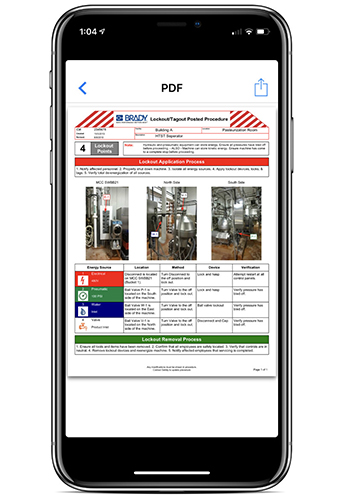
One of the biggest challenges in maintaining a safe facility is information management. There are Lockout/Tagout procedures, confined space permits, maintenance schedules and other important documents. They all need to be regularly updated and reviewed. Discover how you can easily manage your safety procedures with LINK360 Software from Brady!

At Brady, we provide personalised consultation services to improve employee safety, productivity and equipment reliability, both today and down the road.

Link360™ Software is the first software to give you a complete view of the activities associated with creating, reviewing and updating visual information.

Link360 Software enables users to create, scale, update and validate visually instructive safety procedures. The software provides an easy way to keep safety procedures accurate, compliant and sustainable in multiple facilities.

  • Create clear and easy-to-follow, visually instructive safety procedures
  • Quickly scale and deploy standardised and approved safety procedures across facilities

Interested? Go for free 30 day trial!

Easily complete procedures using a smartphone

The Smart Lockout App sends the most recently approved, and relevant Lockout/Tagout procedures from LINK360 to the smartphones of coworkers servicing specific machines. Via their smartphone, coworkers receive one lockout instruction at a time and can confirm its completion before receiving the next step. The smart lockout app can send a report back to LINK360 including all lockout procedure steps marked as completed.

Watch the short video and discover benefits of LINK360 Software >>

Visit Brady’s booth at Safety & Health Expo in London, Stand SH1400 and discuss any workplace safety or facility identification topics with our specialists!

Save Water, Save Energy – And how our experts can help you

By Water Plus

With the spotlight on energy costs and increasing focus on what organisations are doing to reduce impacts on the environment, there are small steps that can be taken now to help in the future.

Using less hot water through small steps like tap aerators in kitchens and facilities and cutting any areas of water waste helps. And using less water overall means lower Scope 3 emissions.

Tracking water use closer during a year allows those managing facilities to spot any issues early – including leaks that can be underground and not easy to spot. Data loggers, which can be attached to water meters, feed updates daily into a smart online portal to help manage multiple sites and spot opportunities for efficiencies.

Barry McGovaney, Sustainability lead at Water Plus, which is the UK’s largest water retailer and a Green Apple Environment Award winner, said: “Hot water can cost between 2 to 4 times more than cold water, once energy costs are considered, and water efficient taps, showerheads and other measures can all help there. It’s important to know what water you’re using, where and when, along with regularly checking site pipes, fittings and water meters, if they’re safe to access, ideally each month.”

Here’s the big impact data loggers, installed through the Water Plus Advanced Services team, have:

  • A manufacturing facility had a leak on one of their main site pipes, which had a fracture and was losing 21 cubic metres of water an hour – that’s 21,000 litres an hour. If this had not been identified, and quick action taken to organise a repair in December 2021, it would have cost around £10,000 a week – and £41,000 if it was running for a month. After contacting Water Plus, the Advanced Services team quickly pinpointed the leak’s location and made the repair.
  • A distribution centre was alerted to a leak that saw 10 cubic metres of water an hour seeping away underground – with a cost around £690 a day.

To contact our team, please email hello@water-plus.co.uk – and include “FM Briefing” in the subject heading.

More tips to #BeWiseOnWater at:  www.water-plus.co.uk/sustainability .

FM firms reporting rise in vacancies of over 250% – how new tech can help 

Facilities Management and their staff have been hit hard by vacancies and absences, and although there is no magic cure to such endemic problems – digital tools can make operations more efficient, writes mpro5 Sector Director Dan Teare…

The cleaning and hygiene industry is suffering “severe” staff shortages with the rate of vacancies having increased dramatically, according to a survey carried out by the British Cleaning Council (BCC) in late January.

11 of the biggest facilities management (FM) firms reported some 1,917 vacancies in total. One firm said their number of vacancies increased by 252% in the last six months, and another by 267%. This was due to many factors – with companies reporting the main causes being foreign nationals going home, and staff finding new jobs in different industries.

As the pandemic started to recede, modernised economies have had to face “The Great Resignation”. Although vacancies in FM have been caused by some industry-specific factors, every industry has felt the impact of staff re-evaluating their career paths en-masse. Within the UK alone, the ONS reported that vacancies increased to 1.2 million as workers changed jobs in October 2021.

Furthermore, although the isolation law is about to change in the UK as we learn to live with Covid-19, it was not long ago that isolating from the ‘pingdemic’ caused absences to reach an all-time high – with 1 in 10 absent from work due to covid.

Ultimately, whether due to a pandemic or shifts in the global economic and employment landscape, businesses have had to try and continue operating as best they can while severely understaffed – and this has impacted morale, stress levels, and results. It is therefore vital that companies, particularly in industries as labour-intensive as facilities management, employ new systems and digital tools to work more efficiently.

‘Smart buildings’, powered by the Internet of Things and sensor technologies, and all underpinned by adaptive, real-time software, enables FM businesses to work smarter, not harder; and ultimately be just as efficient with fewer people.

In many countries, the pandemic may feel like it’s gone, but the other issues effecting staffing have not – and we never know what may be around the corner. Enabling digital transformation now is the best thing you can do to operate efficiently and reduce the stress felt by current staff.

By utilising an IoT-driven workflow management platform, FM companies can easily harvest and unify the data around them; viewing patterns and creating tasks from a centralised platform – with all the knowledge at their fingertips. Teams can instantly view and act upon this data, rather than fixed, out of date schedules, so they can do what it is needed to be done, as it happens.

For example, if a sensor on a toilet door has been opened 100 times, then cleaning staff may well need to check the bathroom facilities are  still functional and clean. Inversely, if they go to clean as their schedule insists, and no one has been in that toilet or even on that floor, it is simply a waste of their time. Viewing these patterns form over time gives you the power to predict more accurately – so your future-facing schedules can be more accurate, and peoples’ time used more efficiently.

This gives teams and businesses the power to prioritise jobs and the right people to do them. Teams can spend less time worrying about covering for missing staff, and instead can trust that all tasks are being accounted for and covered; improving overall operational effectiveness while leaving no gaps.

Ultimately, it is about doing the same with less. Smart buildings, real-time data, and the ability to act upon it, gives FM organisations and their staff a better chance at effectively continuing operations – despite any vacancies or absences.

How can we achieve digitised services through construction?

The use of smart technology has surged in the past decade, with the global market doubling in value from $43.4bn in 2017 to an expected $91bn in 2022. From its use in the home to integration in most sectors of the economy from banking to shopping, it’s been adopted to enhance the experience of consumers.

The time is right for local governments, architects and builders to understand the best ways to deploy technology to support health and care needs in a range of environments, and the benefits of considering its inclusion as part of construction design.

Gavin Bashar, UK managing director at Tunstall Healthcare, discusses why technology should be integrated into buildings from the design and specification stage…

A digitally enabled future

Technology has a key role to play in services being delivered in innovative ways, placing citizens at the heart of decision making, and enabling health, housing and care providers to target support where it’s needed most

Using technology to support people is low cost, and helps citizens to live independently for longer with an increased quality of life. Relatively low-cost telecare systems can help to avoid hospital admission, delay and prevent the need for residential care, and reduce carer burnout. Architects and developers therefore have a crucial role to play in driving cost savings, and enhancing the lives of vulnerable service users.

We must lead from the top to ensure buildings have technology integrated at construction to enable stakeholders to support citizens effectively, and provide a platform to make the most of future advances in technology. Too often, technology is considered as an afterthought, rather than a system that can be central to the way the building is lived, used and worked in, and therefore this is pivotal to the way it is designed.

Case study

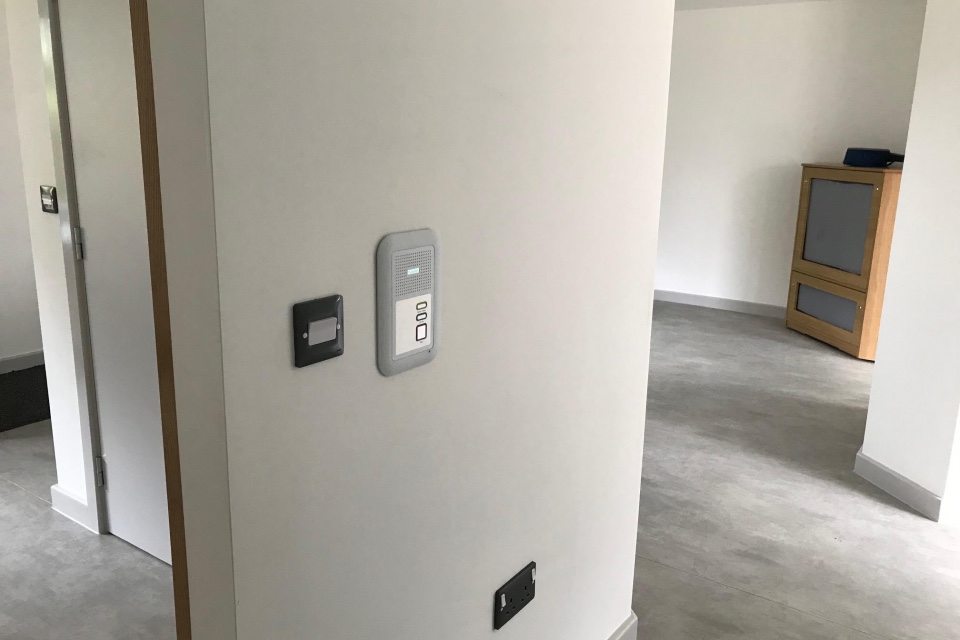
Northampton Partnership Homes (NPH) and construction firm, Jeakins Weir recently worked together to integrate smart technology into a new innovative housing development comprising eight semi-detached bungalows that will support the independence of young adults with learning disabilities and complex needs.

Smart technology was integrated at the planning stage of the development to provide more person centred support, as well as offering greater insight into how best to allocate resources to meet the needs of the people living there.

The system supports the use of telecare sensors and wearable technology, such as fall detectors, which will automatically raise an alert if help is required, enabling care to be given where and when it is needed, but supporting independence when it isn’t.

The next steps

A healthcare system fit for the 21st century must have digital innovation at its core which is embraced by architects and commissioners. As innovative technology continues to transform every aspect of modern life, there is a growing body of evidence demonstrating the impact this is having on population health and wellbeing.  Where it has not already done so, digitisation is set to touch every corner of health and social care, and in turn this needs to impact upon the way we design and build.

As the UK’s communications network is set to complete its transition from analogue to digital by 2025, technology has an even greater role to play in enhancing the lives of service users. Although this will require significant engagement from architects and builders, it brings a once in a generation opportunity to modernise, improve and shift thinking from a reactive, to a proactive delivery model which can empower users and enable care to become more intelligent and personalised.

Free Analyst Report – Technologies for Sustainable Facility Management

The way we manage our buildings will play an enormous part in achieving a net zero future.

For several years, the global building technology and facility management (FM) market has been going through an unprecedented period of change. The transformation has been driven by a host of mega trends including new business models, technology innovation, sustainability, health and wellbeing, and a new vision for the future workplace.

The time is right to embrace smart, sustainable buildings, new service delivery models and transformational technologies such as IoT and integrated workplace management systems (IWMS) to generate, collect, and manage data.

This report from Frost & Sullivan identifies the top 8 transformational technologies and trends helping shape how organisations approach their building management and operations in a sustainable way.

It also provides insight into how an IWMS can help organisations address their sustainability challenges around the convergence of:

  • Corporate social responsibility (CSR)
  • Regulatory compliance, Environmental, Social, and Corporate Governance (ESG)
  • Customer and staff expectations
  • Risk Management
  • Business Objectives
  • Cost Reduction

DOWNLOAD FREE REPORT


UK FM market to hit £52bn in 2026

The UK facilities management market was valued at £47.2 billion in 2020, and it is expected to reach $71. 43 billion by 2026, equivalent to a CAGR of 1. 41% according to new research.

A report from ReportLinker asserts that the is one of the largest markets for facility management services in Europe in terms of maturity and sophistication.

In addition, given the high penetration of facility management services, several service vendors operating in the country have been focused on expanding their presence to leverage the growing demand for facility management, especially with the recent trend favouring the outsourcing of non-core operations.

The report’s executive summary says the market is highly competitive, owing to the presence of several organised players and the strong presence of top global companies, such as CBRE, JLL, and Emcor, among others.

According to a BCIS study, maintenance expenditure in the UK stands just under 3% of the country’s GDP; BCIS’s life cycle cost benchmark estimates indicate that maintenance (fabric and services maintenance and decorations) represents around 40% of total facilities management costs, including cleaning and utilities, thus, valuing the FM market at around 7.5% of the country’s GDP.

Owing to such developments in the country driven by the growing trend of outsourcing, the market is expected to see further growth over the coming years.

The report says COVID-19 has had a mixed business impact on facilities management firms, as the restrictions on the movement of people have resulted in a decline in project work and a reduced level of activity across many customer sites, adding that major players in the market, such as Mitie, CBRE Group, and others, were adversely affected due to the pandemic lockdown.

FM providers have been experiencing supply chain disruptions leading to difficulties in procuring materials and supplies. Also, they have found it harder to cope with staff shortages owing to various factors that include lockdown restrictions, self-isolation, and illness. However, the readily built environment has played an important role in supporting various industries from health and social care to transport and utilities and helped tackle the spread of the virus.

However, since the facility management industry is heavily reliant on workers from the European Union and with soft FM services are primarily dependent on this source of labor, restricted access post-Brexit can have significant implications. FM businesses, particularly those holding EU contracts, are expected to be affected by potential changes to migrant labor, the supply chain, and other regulations in the post-Brexit scenario.

Single FM Service is Expected to Witness a Significant Growth

Working with a single facility management service provider entails primarily delegating task management to separate entities. It also entails having a different service provider for each service the organization requires, such as cleaning, reception, and vending machines. Using the services of specialised service providers has several advantages, the report says.

According to The Q2 2021 RICS UK Facilities Management Survey, in Feb 2021, approximately 6% of the respondents believed that the single FM sector was going to witness the highest growth in the next 12 months.

The response rate increased in May 2021 as 10% of the respondents believed single FM to witness the highest growth. However, substantial respondents in the survey believed that other services such as bundled FM and in-house services are poised to see the highest growth rate in the next 12 months.