Facilities Management Archives - Page 5 of 8 - Facilities Management Forum | Forum Events Ltd
Posts Tagged :

Facilities Management

Get your facilities into shape with this free guide

Facilities are among companies’ most important business assets, so are you still making the most of them? Are they maximised to support your needs and goals? Brady offers all of the solutions, and the know-how, to label your facilities into shape – with some extras, all from a single source.

Quality solutions, expert guidance

Brady offers a wide range of reliable identification solutions to increase the efficiency and safety of any industrial facility. Along with these solutions, we bring worldwide facility identification insights, best practices, standards and regulatory compliance to your doorstep, so you can apply the best identification solutions in the best way, with a single supplier.

Check out our tips >>

Optimise safety

Use reliable floor marking, pipe markers, safety signs, tags, spill control and Lockout/Tagout to visually and effectively optimise safety in the workplace. Guide, inform, caution and protect coworkers, counter risks and avoid accidents to send people back home safely, all while considerably contributing to facility efficiency and effectiveness.

Maximise efficiency

Fully support professionals on the workfloor with clear instructions printed on your signs and labels. Enable them to easily find the tools they require, and know these are in working condition. You could even include passive RFID antennas in any label to fully optimise tool tracking, inventory audits and item picking.

Print at your premises

No need to wait on deliveries or to store large amounts of printed solutions, when a set of blank label rolls and a versatile safety printer have got you covered. Our accompanying Brady Workstation software keeps your solution future-proof with regular updates to stay safe, efficient, and compliant with the latest standards and regulations.

Download the free guide: ”Work faster with clear maintenance visuals” >>

Brady Corporation

Tel: +44 (0) 1295 228 288
csuk@bradycorp.com

www.brady.co.uk

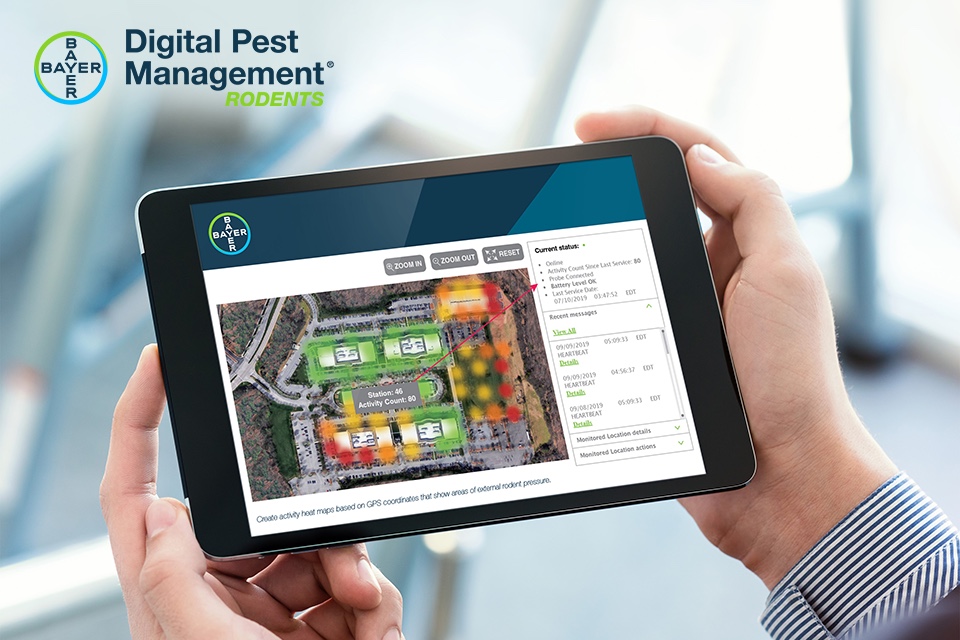
Technology provides a more sustainable future for rodent management

The use of technology is the ‘norm’ for facility managers and is already being used to improve efficiencies and sustainability in many areas of the business. However, pest management has been slow to the party, with limited digital options on the market, but there’s now a solution available.

Gary Nicholas, the Digital Pest Management sales manager at Bayer Environmental Science, says with all aspects of sustainability high on the agenda for businesses, facility managers should be adopting the technology out there to help improve the efficiency, traceability, accountability and transparency of rodent management.

“Facility management businesses use technology such as vehicle recognition on entering sites and digital login systems and pest management, should not be any different,” he says.

This tool can provide facility managers with accountability for rodent management on their site, as it gives them access to all the required resources to be confident in the system they have in place.

“Digital Pest Management provides a full trap activity history, ensuring complete traceability and transparency. It also helps reduce the manual aspect of rodent management and reporting, which can be inaccurate and hard to interpret. Live reporting removes the risk of any mistakes and is always up to date.

“It also allows facility managers to adhere to current stewardship guidelines. It uses smart traps, allowing rodenticides to be integrated into the wider rodent management programme and used in a very controlled, precise and targeted way,” adds Gary.

“When it comes to sustainability, an automated, digital system like this can help improve efficiency and effectiveness, which can reduce the financial investment required for rodent management. The targeted and precise use of rodenticides also helps improve environmental sustainability,” he explains.

“From a social aspect, this system is also much safer for people and wildlife, as there’s a greatly reduced need for rodenticides on site, which are of course toxic.”

Gary says facility managers have been using technology for several years and so now a solution is available for rodent management, it makes sense to use it to help improve the sustainability and efficiency of this across facilities.

For more information, please visit www.environmentalscience.bayer.co.uk/pest-management/digital-pest-management or contact the Pest Solutions Team on pestsolutions@bayer.com

Global integrated FM market to hit $116.25 billion by 2026

A rise in demand for standardisation and simplification of facilities in industries and residential buildings due to the need for good working environment and reduced energy output costs are expected to positively influence the global integrated FM market, says new research.

Reportlinker expects the market to grow from $84.65 billion in 2020 to $116.25 billion by 2026, having segmented into hard services and soft services, where hard service segment held a market share of around 53% in 2020 due to rise in investments in energy and project management to achieve long-term efficiency.

Based on service, the market is segmented into building and property management, cleaning and hygiene, security and staffing, IT support and others. Among these, the market share of building and property management segment was around 26% in 2020.

The report says the increasing development of sustainable infrastructure and growing presence of many enterprises to adopt changing organisational structure and work management are the key drivers for the growth of the global FM market.

The largest contributor to demand is North America, with around 39.15% value share in 2020.

The leading players as ranked in the report are JLL Inc (Jones Lang LaSalle IP, Inc), ISS A/S (International Service System), CBRE Group Inc, Cushman & Wakefield plc, Sodexo, Compass Group plc., Aramark Corporation, Coor Service Management Holding AB, Mitie Group PLC, MacLellan Integrated Services, Inc.

The Future Workplace – Making it seamless and secure

Rob Hancock, Head of Platform at Giacom

After many months of changing lockdown rules where companies have had to implement remote and hybrid working policies accordingly, businesses are looking to the future beyond COVID-19 as workforces return to their offices. But what will the future workplace look like? 

According to new research, businesses have found that their employees prefer a mixture of remote and office-based working, with over three-quarters of staff wanting a hybrid approach long term. Proving that they can work just as successfully and productively from home, it is now the employer’s job to adapt their business model to support both remote and office-based working. Rob Hancock (pictured), Head of Platform at Giacom explains how the channel can support organisations when making this transition in a seamless and secure way.

An Evolving Landscape

The pace of change businesses in all industries had to undergo over 2020 highlighted the importance of being agile during challenging times. COVID-19 has accelerated the need for digital transformation, as without the right technology in place, organisations will either sink or swim.

The role of the channel has been to continuously support its customers through the journey of adapting to remote working and digitally transforming in order to stay ahead. By educating customers on the importance of security, as well as the available technologies and strategies that can support their transition, they will have the right support system in place to maintain business as usual – or even unlock additional productivity – during unprecedented times.

Organisations are trying to be agile to survive, but there is always room for improvement. Quickly and easily responding to change needs to become a core competence natively for all businesses to be able to adapt, as it’s clear that this is not a problem that’s going to go away overnight. By working with a reliable partner, companies will have the right tools in place in order for them to succeed through the pandemic and into the future.

Leveraging Existing Technologies to Collaborate

Technology plays a key role in the smooth transition to a ‘new normal,’ keeping virtual teams engaged while enabling seamless and secure communication within a dispersed workforce. Digital solutions must be able to support both employees who choose to work from home, as well as those who have returned to the office.

The channel’s role in enabling seamless collaboration and communication is vital in order to combat any further disruption and keep businesses functioning. MSPs must rethink how they can best support their customers, while embracing new and innovative ways of working to fulfil their demands and expectations. Vendors who offer a range of products to fit diverse needs and the tools to deliver outstanding customer service won’t only help businesses right now, but will help unlock long term productivity, security and collaboration.

The pandemic has significantly accelerated the adoption and usage of cloud solutions to support remote working. Many businesses already had these tools in place, but just weren’t using them effectively across their workforce. For example, many companies have Microsoft 365 deployed, which includes Microsoft Teams. These organisations have had access to such video conferencing tools, but had not needed to use it effectively until COVID-19. Since March 2020 Microsoft Teams has experienced a mass surge of users, jumping by 70% to 75 million daily active users.

Additionally, COVID-19 has acted as a catalyst for the interest in virtual desktop solution such as Microsoft Windows Virtual Desktop (WVD), which provides each member of the workforce with the same IT environment, regardless of the device including Bring Your Own Device (BYOD) they’re using and whether they are remote or office-based. The desktop effectively becomes cloud-hosted, providing a more secure electronic perimeter which replicates that of the physical office, making it easier to manage one central location.

The Importance of Security

When implementing a hybrid approach, security becomes a complex issue, as the risk landscape has changed. In the office, it’s easier to manage and control security within a physical perimeter and managed environment. As soon as you have a scattered workforce, this perimeter disappears, and now organisations have to put in place additional digital protocols to mitigate any cyber risks. Having a good quality MSP partner that understands the importance of security, and thinks about it in a proactive way is key for end customers.

Using technologies such as a Virtual Private Network (VPN) to provide secure access from home into remote business systems enables users to securely access systems that the business wants them to gain entry to, but more importantly, making sure that outsiders can’t.

However, fundamentally, the biggest weakness in an organisation’s security infrastructure is the human user. Cybercriminals are always upgrading their tactics, often more quickly than businesses can train their staff. In order to keep up to date, businesses must take a more proactive approach and utilise cybersecurity resources, such as security training and threat detection tools.

Conclusion

Without education and support from the channel, businesses will struggle to keep pace with the amount of change and understand what tools they need to survive and thrive. Reliable partners are needed now more than ever to support companies with workforces working from home and also in the office.

Offices will become places that people visit less frequently, perhaps only to collaborate and to host necessary meetings. Successfully implementing a hybrid approach is still a work in progress for many, and collectively, the channel will begin to find better ways of working and implementing this strategy. Of course, existing and new technologies will continue to play a key role in this transition as we undergo the next digital transformation.

Two events in the FM industry have gone VIRTUAL!

Next month, the Facilities Management Forum and Energy Management Summit will both be held as virtual events!

Facilities Management Forum – Monday 5th October
Energy Management Summit – Tuesday 6th October 

Both events will bring the industry’s leading buyers and suppliers together for business collaboration.

Your bespoke place is entirely free and includes benefits such as;

Prepare for every eventuality – We can build you a bespoke 1-2-1 itinerary of meetings with innovative and budget savings suppliers who match your requirements.
Gaining industry insight – Enjoy a series of topical webinars led by industry thought leaders.
Flexibility – Your attendance is flexible, you can either attend for half a day or the whole duration.
Save time – We will handle everything for you, saving you time and money by arranging all the meetings for you based on your requirements.

Click here to secure your FM Forum free pass  OR Click here to secure your Energy Management Summit free pass

Don’t miss out – Both events have extremely limited places remaining.

Lloyds Energy to create 700 jobs in liquid gas trade

Lloyds Energy Group LLC has submitted a formal application to export Liquefied Natural Gas (LNG) to countries with a Free Trade Agreement (FTA) with the US, creating a large number of jobs in the process.

Production involves extreme compression of natural gas, often methane, in order to improve the transportation process. The volume in a liquid state is 600 times less than in a gaseous form.

Exporting from their facility in Calhoun County, Texas, the project will be known as Point Comfort LNG and aims to significantly benefit the south central Texas coastal region, in part in the creation of around 700 direct, long-term jobs.

Lloyds Energy expects the project to also indirectly lead to thousands more jobs, as well as economic benefits and a predicted hundreds of millions of dollars in revenue.

“Lloyds Energy is strongly positioned to meet client demand, and submitting our Point Comfort LNG FTA application is an important first step towards making the final investment decision,” said Philip Holland, Lloyds Energy CEO. “The U.S. has an abundant supply of natural gas and the international market has a growing demand for cleaner, more-efficient fuel.”

 The company hopes to expand further into new territories, and with a potential new deal between the US and UK on the cards, many more could start setting their sights on Britain within the coming year.

Crises, CCTV and Cyber Crime top the total security summit

The global landscape has experienced a rather monumental change over the last year, with security being more relevant than ever as we go into 2017.

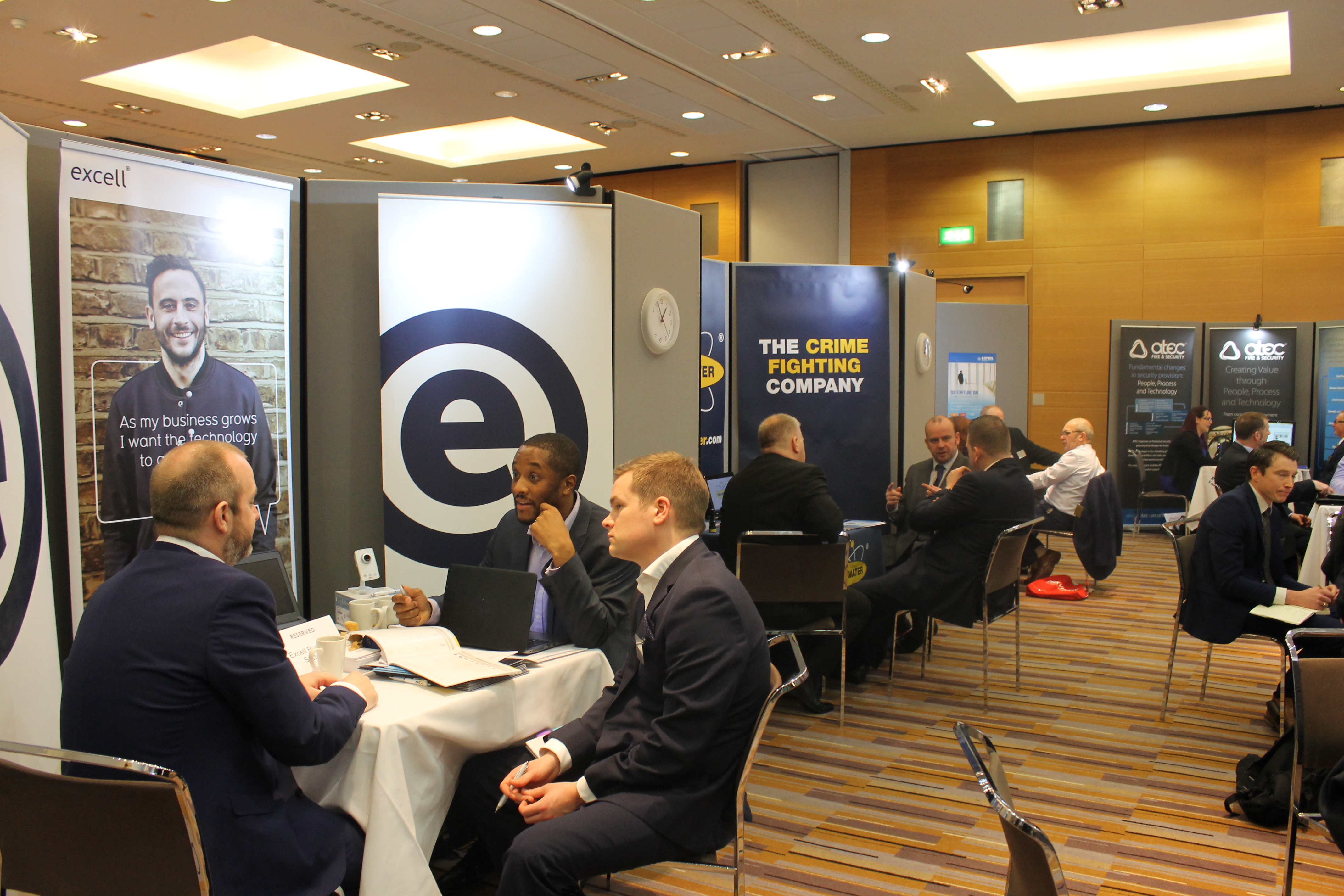
The first Total Security Summit of the year is determined to address these issues and uncertainties in a bespoke two-day event for security professionals.

Meet, share, connect and debate business relevant to your current and future projects with matchmade face-to-face meetings, experience a day of dining, drinks and discussion as you network with fellow business professionals and attend seminars covering a range of relevant topics.

Reaching a landmark age in political global challenges and uncertainties, it’s vital to prepare for the future, protecting crowded areas, addressing terror threats and discussing counter-terrorism is Dr Anna Maria Brudenell, Lecturer in Military and Security Studies,
Cranfield Defence and Security for the first seminar on Global Security Strategy.

As terror threats continue to rise and evolve without warning, discussing and understanding the implications is crucial to develop your security in a crisis. Chris Phillips, Managing Director, International Protect and Prepare Security Office (IPPSO) is presenting seminar 2 on Crisis Management and Communications

Video surveillance is being used in greater quantity and with higher quality expectations, with Britain among the leaders in CCTV operation, but are the benefits worth the cost? With few resources and increasing legal parameters, Simon Lambert, Independent CCTV Consultants, Lambert Associates is discussing  CCTV and Video Surveillance in seminar 3.

axis-excell-4

John Marsden, Head of Fraud, Equifax, is discussing how to identify and tackle theft as it happens, assessing risk, detecting threats and ensuring on-going training in Seminar 4: Keeping your Business’ Cash and Assets Safe and Secure

Going into your second day, and following morning networking, James Willison, Founder, Unified Security Ltd goes digital. As our dependency on technology grows, many companies are more vulnerable than ever, between data and privacy risks to ransomware, hackers are becoming more sophisticated, and businesses need to adapt quickly for Seminar 5 on Cyber Crime – the United Security Response.

With a continuing rise in companies at risk of fraud, from physical fraud to high level hacking, security needs to be tight across the board, and the final seminar before more discussion and networking addresses these fears. Fraud Prevention with David Lee, Fraud Prevention Manager, Transport for London sees the summit almost to a close.

Taking place between the 13-14 March at the Radisson Blu Hotel, London Stansted, this year’s Total Security Summit is the industry go-to for professionals.

To secure a complimentary delegate place at either of the two annual Total Security Summit events, call Liz Cowell on 01992 374 072 or email l.cowell@forumevents.co.uk.

Or, to attend either event as a supplier, call Nick Stannard on 01992 374 092 or email n.stannard@formumevents.co.uk.

For more information, visit www.totalsecuritysummit.co.uk.

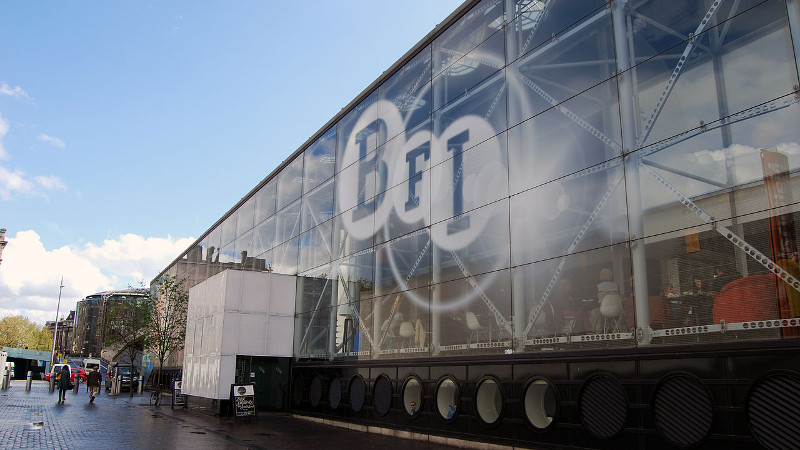
Imtech Inviron in blockbuster contract with BFI

Imtech Inviron have announced a three year deal with the British Film Institute (BFI).

The major project involves full time mobile engineering, helpdesks, energy solutions and further services across BFI’s five UK sites.

The meticulous planning and organising involves covering film premier events, as well as protecting the Master Film Store, a £12 million Warwickshire archive securing highly sensitive film reels dating back to the birth of film.

The almost half a million make up the world’s largest collection of moving image and film, which consists of cellulose nitrate, an incredibly flammable material that requires specially trained HVAC engineers.

“We are delighted,” said Duncan McKeich, BFI’s head of facilities, “The team have a great attitude and knowledge of all our sites, which is vital.”

“Their technical expertise and experience in this sector has ensured the smooth operation of our portfolio and through new initiatives, the partnership continues to evolve.”

The continued upkeep of the Master Film Store, according to McKeich, ensures “preserving the National Collection for future generations.”

Guest Blog, Cathy Hayward: FM in 2016 – what we’ve learnt and 2017 predictions…

The end of a calendar year provides the perfect opportunity for lines to be drawn, and predictions forecast. And while 2016 will largely be remembered for the number of famous lives it took, the surprise Brexit decision and election of Donald Trump, there were also more positive developments in the FM and workplace sector.

This year saw the word wellbeing become part of the workplace lexicon and that’s only going to intensify in 2017. Workplace design will focus on creating less sedentary work practices, says Adrian Powell, director at office design and build firm Active, through encouraging movement around the office space. “Companies recognise this will lower absenteeism and help to attract talent. Employees are certainly more educated now about healthy living and have become much more health conscious. Companies also realise that workplace stress is a massive health issue, so designing and creating a healthier and more relaxed environment will create true benefit.”

Powell predicts a real emphasis on ‘teams’, continuing the theme of collaboration spaces which took centre stage in 2016. “Employers are beginning to recognise that companies structured into high performing teams are enabling themselves to compete and win! This will be pushed for by millennials and gen Z workers who have grown up playing team sports, who may have the same expectations of their office.”

With a growing millennial workplace population, technological innovations will continue to make a major impact on the FM world. There will be more connection, more automation, and more significant impact in business and investment than ever before. “Service companies will need to be more technology savvy in the delivery of services and production of management information, as technology is shaping the human life at a rapid pace and service delivery needs to keep a pace with that ‘instant’ culture,” says Glen Cardinal, managing director of Platinum Facilities and Maintenance Services.  But he acknowledges that there’s a balance to be had with old fashion face-to-face customer relationships.

The Internet of Things which started being talked about in 2016 will become more affordable and be used by leading organisations to support enhanced workplace experiences. That’s the prediction of Andrew Mawson, founder and MD of Advanced Workplace Associates. And it’s backed up by Andrew Sugars, director of corporate development at Servest Group. “Data analytics and IoT will be more entrenched in FM’s way of thinking, in terms of helping the decision making process of where to direct their focus. The move from service focused KPIs to enhancing customer experience metrics will be driven predominantly through apps, that are changing the way end users interact day to day with their work environment.”

2017 will yield even more integration of CAFM and other systems within a building, adds Gary Watkins, CEO of CAFM provider Service Works Group.  “Effective management of the facilities lifecycle is often cited as an enterprise’s second largest expense, and system integration will allow better access to information, with intelligent workflows automating processes for high efficiency.  We expect data across all applications to be standardised, driving the market forward in areas such as automated guided vehicles, increasing productivity and work place safety.” Watkins also forecasts increased mobility, the rise of ruggedised devices, more wearable technology, increased location-based services and bigger big data.

There will also be a fundamental shift in service delivery models. Traditional FM service delivery models are going to come under increased pressure following the uncertainty of the Brexit decision, the recent election of Donald Trump as US president, Government policies around the apprenticeship levy, the new minimum wage level and the pressure, in the public sector at least, to involve SMEs in the supply chain.

“We are going to see more innovation around FM models, particularly for organisations with large property portfolios,” says Colin Kenton, managing director, FM services at KBR. “The Integrator model, whereby one outsourced organisation offers the client a cohesive solution by integrating process, technology, reporting and performance measurement/management across all service providers in the supply chain, will gain ground,” he predicts. This matured and adapted version of the managing agent model provides the client with a stand-alone matrix of processes, resources, skills and knowledge to manage all of its services, which crucially, meet their specific needs. Its innate flexibility responds well in changing economic and political times.

There will be further consolidation in the FM supply base, as service providers become unprofitable after further cost cutting. That’s the prediction from AWA’s Andrew Mawson. “Meanwhile larger SMEs and more thoughtful occupiers will seek out boutique FM supply companies to provide more innovative partnership based ‘workplace management’ services.”

With all these changes, there will be a major push by companies to attract and retain the top talent in the industry, forecasts Dave Kentish from people development specialists Kentish and Co. “This means that they will have to invest in developing people within their business and making sure they get known for being the company to work for. It’s all about growing your own.”

That’s certainly something that Nikki Dallas, MD and founder of FM recruitment business Talent FM, agrees with. She forecasts a need for more project management and space management professionals once the timetable for Brexit is known and banks and other financial services firms decide if they’re leaving or staying in London.  There will also be a demand for UK qualified talent in the Middle East with Expo 2020 Dubai and the FIFA World Cup in Qatar in 2022. “These large events require an improvement in infrastructure which means more need for built environment and FM professionals,” she predicts.  

What’s clear is the ramifications of the big decisions of 2016 are going to be felt throughout next year and beyond, but the enthusiasm for the FM sector to innovate, grasp the nettle of new technology and new service delivery models will ensure it triumphs over any further adversity.


Cathy Hayward is a communications specialist with over 18 years’ experience in a range of journalistic and marketing roles. She founded Magenta in 2011 after 13 years as a business journalist where she launched FM World and edited Charity Finance as well as working on titles such as Financial Management, Supply Management, Unions Today, Marketing Week, Soccer Analyst and Director.

Industry Spotlight – ide Systems: Powering the future of business…

A major topic of discussion this year has been around the topic of digital strategy. The development of IT infrastructure has culminated in businesses being expected to uphold a comprehensive digital strategy. However, this drives a pressing need for an electrical power supply that is continuous and reliable.

It isn’t unusual to be constantly barraged with IT buzzwords like big data and cloud computing, concepts that they are told offer a wealth of benefits if adopted. These trends, in addition to a shifting business landscape through globalisation and outsourcing, have made it necessary for facilities managers to invest in the right infrastructure to support digitisation.

However, beyond the software and hardware, facilities managers often overlook the power being supplied to IT systems. While it’s important that businesses choose the right IT system, so too is ensuring that these systems continue to operate in the event of a power failure or an emergency.

For example, there was an incident in 2015 where one of Google’s data centres experienced a power failure. This down time was a result of transient voltages caused by lightning striking the local power grid in Belgium. Unfortunately, several disks worth of data remained inaccessible after the incident.

This highlights the need for two things: first, facilities managers should ensure that power equipment is protected against lightning strikes and, secondly, that a building’s power supply is connected to an effective changeover system that can keep systems running in the case of an emergency. If a company the size of Google can fall foul of power failure on such a scale, so too can smaller businesses.

Changeover power

How can facilities managers keep IT systems operational? An important step is to invest in a changeover system that meets the needs of the application. These are designed to facilitate a power supply shift from mains electricity to a backup generator with minimal disruption to service, so they come with a multitude of configurations available.

For example, ide Systems was recently approached by a large London-based business to design a 400A manual changeover panel to ensure reliable power to the building’s IT systems. To maximise its effectiveness, our engineers designed the panel with a lightning protection unit and, interestingly, a multifunctional power meter that included text message functionality.

A powerful feature for remote monitoring, the text functionality offers an additional level of reliability to the system. The power meter’s text message facility works on the incoming mains supply so that, in the event of a mains failure, facilities managers receive a text instructing them to switch the supply over. This gives peace of mind that important IT systems will not lose power.

Innovations such as this can only be designed into electrical equipment if facilities managers give due consideration to emergency systems. While it is easy to think of IT systems as the sole responsibility of IT managers and technicians, facilities managers have a key role in ensuring the ongoing power required to sustain an effective digital business strategy.


Words by Matt Collins, business development manager at ide Systems

ide Systems is an integrated electrical engineering company and a recognised name in the design and manufacture of permanent and temporary power distribution equipment for events and onsite backup power. The company is committed to the quality electrical engineering of both core and bespoke products, distributed across the whole of the UK and Europe for sales and hire.