FM Archives - Page 3 of 7 - Facilities Management Forum | Forum Events Ltd
Posts Tagged :

FM

Live webinar | The impact of smart building technology on the future of work

Facilitating a superior employee experience and developing a human-centric workplace is now more important than ever. As employee performance can be boosted by 54% through a human-centric workplace model (Gartner, 2022), facility managers and workplace professionals play an important role in the success of the whole organisation.

Smart workplace tools will help you execute your workplace strategy to improve workplace user experience, enhance employee engagement, and increase employee productivity.

Join this live webinar on Thursday, September 15 at 14:00 BST | 15:00 CEST where Planon’s workplace experts will outline the latest trends in the world of workplaces, examine the changing role of facility managers and workplace professionals in offering the optimum employee experience, and discuss how smart building technology is a key component of a successful workplace strategy.

*If you’re not able to join, register anyway and you will receive the recording afterwards.

INDUSTRY SPOTLIGHT: Energy cost savings and lower carbon emissions with Solarise PV Solar Systems

Now is the time to consider how solar panels will benefit your business. The government’s environmental incentives, rising energy costs, and shrinking payback durations mean there has never been a better time for businesses to implement a photovoltaic (PV) solar panel system on their roofing assets.

Why Choose Solarise Systems from Garland UK?

  • Decrease your annual energy costs
  • Minimise the impact of energy tariff increases
  • Significantly reduce your carbon footprint
  • Fast return on investment
  • Eligible for Super-Deduction tax relief until March 2023
  • Range of finance options that can offset against energy savings
  • System yield can cover the cost of any roof repair in the future
  • Proactively supports your business toward net-zero carbon

Download the Solarise Brochure here

How long will it take to get a return on my investment?

Installing a Solarise system will provide an excellent return on capital investment, with typical payback between 4-6 years.

Which roof systems are compatible with Solarise?

Solarise is compatible with all Garland roof systems, including bituminous membrane, metal, liquid-coating and green roofs. Giving you complete design flexibility with its interchangeable collection of panels, frames and fixings, you can optimise a building’s green energy output even with a north-facing orientation.

The right solution for every roof

Our Technical Managers will work with you to carry out a detailed survey of your building, creating a tailored report that accurately calculates the energy saving and financial benefits of your Solarise installation.

Want to see how a Solarise system can reduce your building’s energy costs and operational carbon emissions?

For a free Solar PV Yield analysis for your building, speak to your local Garland UK Technical Manager today.

www.garlanduk.com

phs launches new bundle range to reduce compliance costs 

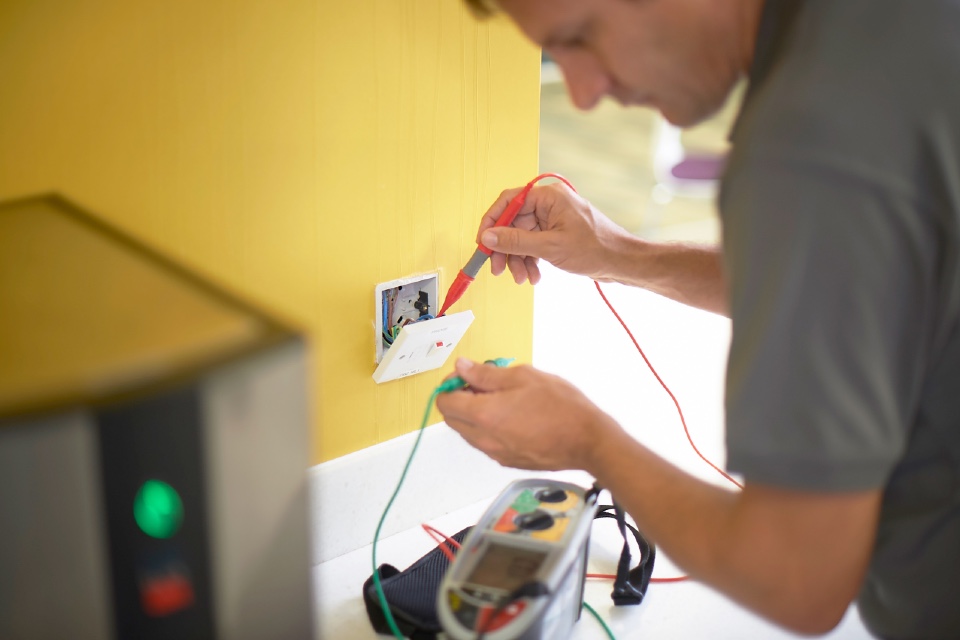
phs Compliance has launched a new range of testing bundles to help businesses cut the cost of their electrical and fire safety obligations.  

The Compliance Testing Bundles allow businesses to select from 12 different packages of PAT tests, fixed wire electrical tests and fire safety tests, with some bundles offering savings of up to 40% compared to individual test prices.  

The testing bundles also aim to minimise disruption for businesses by carrying out the different compliance assessments on the same date, ensuring minimal downtime. 

“It’s about helping our customers carry out vital compliance duties in the most efficient and cost-effective way,” said Darren Blackbird, Sales Director for phs Compliance. “We find a lot of businesses have separate companies carrying out their different electrical tests and fire risk assessments, or different times of year for each test, and that is a really expensive way of staying compliant.  

“Our Compliance Testing Bundles combine the key tests required to ensure businesses are meeting the legal obligations – PAT tests, fixed wire electrical tests and fire equipment safety tests. These ensure businesses are fulfilling their duties, which are outlined in the Electricity at Work Regulations 1989 and the relevant health and safety and fire safety regulations, including England and Wales’ Regulatory Reform (Fire Safety) Order 2005. 

“By pulling these tests into packages, we can offer significant savings to our customers, both in terms of price and time. There are 12 different bundles which include electrical testing and emergency lighting, thermal and fire alarm testing and extinguisher testing. They are designed to offer the best deal whatever your business needs.” 

With over 50 years’ experience, phs Compliance is one of the UK’s leading providers of facilities management and compliance services with over 400 engineers across the UK.  

As well as electrical, mechanical and fire safety testing and maintenance services, phs Compliance also provides specialist electrical and mechanical project services, including design, supply and installation for everything from power to lighting. 

phs Compliance offers free advice on key compliance testing on its website. Click to view its PAT Testing Guide, Fixed Wire Testing Guide and its Fire Safety Testing Guide. 

To find out more about the new Compliance Testing Bundles, contact the phs Compliance team. 

Global demand for healthcare FM to hit $165bn this year

The global market for Healthcare Facilities Management is estimated to be worth $165.1 billion in the year 2022, driven by the COVID-19 pandemic, and is projected to reach $222.9 billion by 2026, equivalent to a CAGR of 7.2% over the forecast period.

The latest analysis from Dublin-based ResearchAndMarkets says Soft Services, one of the segments analysed in the report, is projected to grow at a 6.5% CAGR, while growth in the Hard Services segment is readjusted to a revised 8.3% CAGR.

Healthcare FM market worldwide continues to grow at a promising rate. With world confronting challenges in the form of rising incidence of lifestyle related diseases, focus is shifting towards health and better lifestyle that is also expected to bear an impact on the FM market. The growing focus on healthcare sector is thus contributing to the increase in FM revenues.

Specifically in regions such as Europe, where governments are slashing healthcare budgets, there is growing demand for outsourced FM services. The rising threat of lifestyle diseases is also expected to foster improvements in building designs, in order to promote comfortable, productive and active lifestyles.

Increasing prevalence of chronic illnesses, rising disposable incomes of urban people, technological advancements designed to improve healthcare, rapid growth of medical tourism, and support for healthcare sector from government departments in developed and emerging economies are also supporting growth of the healthcare FM market.

The market is also benefitting from the rising expenditure on healthcare and associated infrastructure, growing focus on the aspect of hygiene, and the increasing emergence and use of technologies for maintaining sustainability. Increasing priority being given to patient wellness and safety also bodes well for the market.

Private healthcare institutions are generally more focused on implementing healthcare facility management. The growing demand for outsourced FM services remains a key growth driver for the overall healthcare FM market. The market is being driven in part by the increasing trend of hospitals and other healthcare units outsourcing facilities management.

Also driving growth are factors such as rising adoption of IoT and increasing proliferation of cloud-based solutions are expected to open up new avenues of growth in the healthcare FM market. Latest technologies such as Internet of Things (IoT) and automated guided vehicles, among others enable the providers of such services to offer improved customer service. IoT provides a steady flow of data in real-time, which allows better decision making and optimization of processes.

Automation is also increasingly being witnessed in energy management systems of hospitals. IoT and AI support energy flow and its optimization in healthcare facilities. There has also been the emergence of several smart products due to the growing IoT adoption. Smart technology can be used to improve door locks, HVAC, alarms, and security cameras, among others, and facilitates the use of mobile devices to control them, which makes remote management of a facility possible and less time-taking.

Another factor fostering market growth is the rising use of healthcare facility management software, which enables clinics and hospitals to perform routine operations smoothly and enhance patient care. It allows healthcare facilities to use their physical resources and perform automation of management functions.

Facilities management services are of two broad types, soft services and hard services. Hard facility management services refer to those that are integrated into facility or building. These are vital to the workplace environment and cannot be removed. Hard services are known to impact all people in the facility, albeit at different levels. Heating, lighting/electrical, plumbing, fire safety systems, air conditioning, and mechanical are some types of hard services.

Soft services category, especially cleaning and pest control segments, accounts for a major share and is likely to grow at a healthy rate driven by the growing importance of maintain clean environments given the highly contaminated surroundings of various healthcare facilities. The cleaning and pest control segment has considerable importance in the healthcare FM market, due to the high degree of contamination in healthcare settings.

Medical waste management is expected to register strong growth in the forthcoming years. Healthcare facilities produce a significant quantity of non-hazardous and hazardous waste on a daily basis that arises from the diagnosis and treatment of diseases. Such waste needs to be carefully and safely managed to prevent the spread of infections and diseases and to lower impact on the environment.

Food waste impacting Net Zero ambitions

Unprecedented pressure on supply chains has led to food buyers in the UK’s biggest organisations reporting a 60% increase in food waste over the last six months.

This surge casts doubt on the food industry’s ability to meet the UN’s Sustainable Development Goal to reduce food waste by 50% by 2030, and hampers progress to net zero.

This is according to a new study commissioned by Sodexo UK & Ireland evaluating how large organisations are navigating the current supply chain crisis and its impact on food waste and carbon emissions. It found 83% of respondents say they have created a more resilient supply chain after the pandemic; however, food waste is increasing for a majority of companies.

Sodexo’s research shows that to increase their resilience, UK food supply chain heads are increasingly diversifying their supplier base by working with smaller suppliers, with over a third (38%) doing so. 35% are also looking to source more food domestically.

SMEs form the backbone of this approach with 81% saying the current supply chain crisis has emphasised the need to source more from SMEs. Some suppliers are eager to collaborate further, with 38% agreeing that the sharing of best practice with SME partners in the supply chain to improve efficiencies will best help address the UK’s supply chain challenges.

Commenting on the findings Aoife Wycherley, Head of Supply Chain & Food Procurement at Sodexo UK & Ireleand, said: “Diversifying the food supply chain is essential for building resilience. SMEs can enable greater agility because they’re more flexible, innovative and, tend to drive domestic food sourcing which, in turn, can reduce carbon by cutting down on air and freight usage. This makes having SMEs in the supply chain essential for those that need to maintain supply and meet climate targets.”

Carbon data reporting is, however, a huge burden for small businesses, and we need greater industry collaboration from large organisations to support them with this challenge in order to achieve net zero in the supply chain.

The findings come as Sodexo continues its work with SMEs. These account for three-quarters of its supply chain and for 44% of its spend, enhancing its resilience to continue delivering meals to customers, despite the external market shocks the industry is facing.

Reducing food waste is a critical part of minimising carbon emissions in the supply chain. Despite this, over one third (35%) of respondents admit to deprioritising food waste due to the ongoing challenges in the supply chain over the past year. A similar proportion (34%), however, do support the introduction of mandatory food waste reporting which is proposed in the Government’s recently published food strategy.

Claire Atkins-Morris, Director of Corporate Responsibility at Sodexo UK & Ireland, said: We welcome the Government’s decision to consult on mandatory food waste reporting, something which we’ve been calling for in our Appetite for Action campaign. The first step towards cutting food waste is tracking and monitoring. More broadly, we urge government to take a holistic approach to all areas which will determine the success of net zero policy making, including food waste, carbon reduction and supply chain resilience. The strategy must be broader than focusing on renewable energy and the introduction of electric vehicles.”

Sodexo, which has pledged to cut its own food waste by 50% by 2025 and achieve net zero by 2045 – found that achieving net zero emissions has become the most important priority for 80% of respondents. Sodexo reduced its greenhouse gas emissions by 38.5% in FY21, (against a 2017 baseline measurement of 1.16million tonnes of carbon) across Scopes 1, 2 and 3 which includes emissions from the supply chain. The research also found two-fifths (40%) of food supply chain heads are calling on businesses to adopt net zero policies to future proof a supply chain adhering to science.

Sodexo partnered with WRAP last year in support of the first ever Food Waste Action Week to tackle food waste and help save the planet. Sodexo is also a signatory of The Courtauld Commitment 2030, a voluntary agreement that enables collaborative action across the entire UK food chain to deliver farm-to-fork reductions in food waste.

Keith James, Head of Policy and Insights, WRAP, added: “Through Courtauld 2030, WRAP has partnered with Sodexo to tackle climate change, food waste and water stewardship. Sodexo’s findings relating to a rise in self-reported food waste are worrying, but not unexpected given the pressures put on supply chains in recent years. WRAP will publish data later this year to show where the UK is in terms of tackling food waste, GHG emissions connected with our food and drink, and water stewardship. Every business can make a difference by instigating the Target-Measure-Act approach, but not all have the flexibility to adopt strategies quickly with competing pressures. That is why WRAP published new Scope 3 protocols for measuring GHG emissions linked to the food we make, sell and eat.”

IFMA reveals diverse new board with international outlook

The International Facility Management Association (IFMA) has announced its member-elected executive committee and appointees to its global board of directors for the 2022-23 fiscal year, with diversity high on the agenda.

Laurie A. Gilmer, P.E., CFM, FMP, SFP, LEED AP has been installed as board chair, joined by First Vice Chair Dean Stanberry, CFM, LEED AP O+M, and Second Vice Chair Francisco Antonio de Souza Abrantes. Two returning and seven newly appointed directors round out the global board.

With members based in Italy, Trinidad and Tobago, Mexico, Canada, Brazil, Singapore, Spain and the United States, supporting facility, real estate, project and global portfolio management; process improvement and performance management; office optimization and consolidation; technology; and corporate workplace strategy and design for organizations worldwide, IFMA says its new board members reflect the breadth of experience and global reach of the facility management (FM) industry.

“Each year, IFMA benefits from the expertise and unique perspectives of its board and presiding chair. Every volunteer working on the association’s behalf is a valuable part of our growth; but our chair contributes strategy and vision essential to our progress. I’m excited to see what new doors Laurie will open for us, building on the accomplishments of her predecessors and imbuing IFMA with her own perspectives and passions,” said IFMA President and CEO Don Gilpin.

A published author, accomplished speaker, a strong proponent of professional education and credentialing, and an advocate for sustainable building performance, Laurie Gilmer takes the helm at a time of elevated recognition for the FM industry and increased opportunities to rekindle community connections that are the very foundation of IFMA.

“One of the overriding post-pandemic realizations for us as an association, an industry and a society is the importance of connection. Being physically cut off from one another sparked a strong desire to develop and maintain our personal and professional relationships. Cross-functional teamwork and multi-industry partnerships have flourished. As a result, more organizations and related professions now fully grasp the true value of FM, and we’re benefiting from a broad range of working partners from the ground floor to the C-Suite,” said Gilmer. “As chair, I’m looking forward to strengthening our network and engaging with our community – fostering the connections that are not only vital to our future, but truly embody the IFMA experience.”

After serving two back-to-back terms as chair (2020-22) – recommended by IFMA’s Nominating Committee due to the irregular circumstances presented by the COVID-19 pandemic – Peter Ankerstjerne, MBA, COP, IFMA Fellow will remain involved with the board as past chair.

“Our community is indebted to Peter’s crisis management, foresight and enterprise. He accomplished so much for IFMA and FM, leading us through an ever-changing landscape of work and workplace, focusing our energies on buckling down, rather than buckling under, in adapting to new realities,” said Gilpin.

Kingdom completes The Colvin Cleaning Group acquisition

Kingdom Services Group has acquired The Colvin Cleaning Group – the Sussex based professional cleaning services provider to the private and public sector.

As from 1st July 2022, the company will be rebranded and become part of Kingdom Cleaning.

Colvin Cleaning Group business owner Gerald Colvin will remain as a consultant to support the full integration of the Colvin business, with his existing team all being retained.

It will be business as usual for the Colvin customers and colleagues – but with Kingdom providing capabilities, specialist knowledge, opportunities and added value that come from being part of a 7000+ colleague and £200m turnover organisation operating across a UK-wide office network.

Kingdom Services Group has a UK-wide network of 18 offices including Glasgow, Birmingham, London and Belfast with their National Support and Command Centre based at Newton-le-Willows. Kingdom also operates in India.

Gerald Colvin (pictured, above right), business owner at Colvin Cleaning, said: “I am delighted with the acquisition and the integration of our two businesses. Kingdom Service Group, like The Colvin Group has been established for over 30 years with an excellent reputation in our industry. Kingdoms nationwide coverage and portfolio of services will provide wider service support opportunities to our clients.”

Terry Barton (pictured, above left), CEO of Kingdom Services Group, said: “2022 was always going to be a busy year for Kingdom. We have very exciting growth plans for all the companies within the Group. Kingdom remains a family-owned business with family values and when I was introduced to Gerald there was an immediate culture match. I personally welcome the Colvin team into the Kingdom Group.

“Colvin provide a best-in-class local cleaning service. The acquisition will further strengthen our ability to truly deliver a national and local best-in-class cleaning service. We can support the existing delivery with Group-wide synergies and added value.”

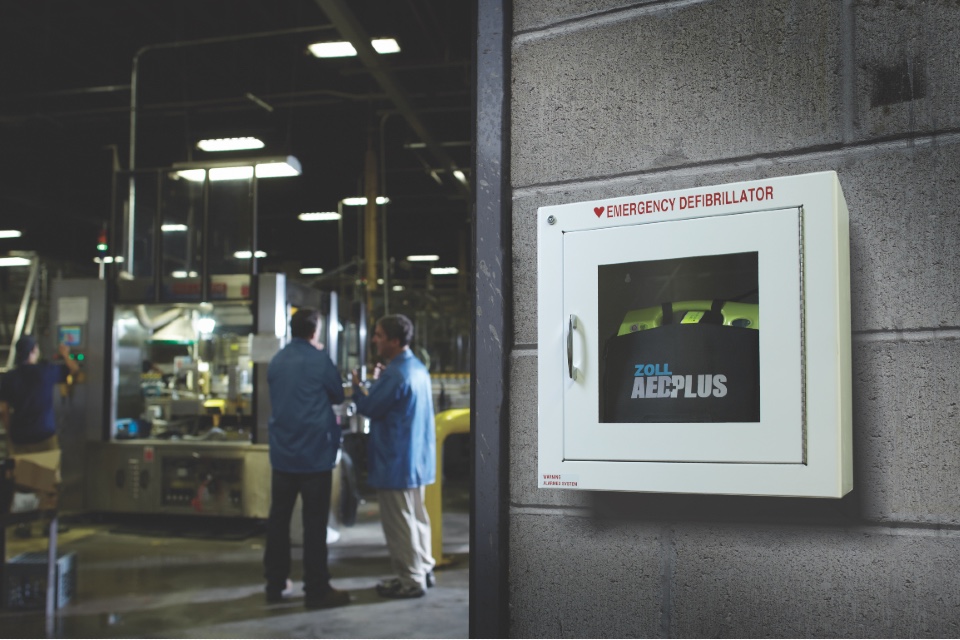
Is your facility prepared for sudden cardiac arrest?

By ZOLL

It happens in a split second. A person collapses — the victim of sudden cardiac arrest (SCA) — and the clock starts ticking in the race to restore a normal rhythm to the heart. A rescuer armed with an automated external defibrillator (AED) and performing CPR is the victim’s best chance for survival until medical personnel arrive.

Having an AED on-site in the case of a sudden cardiac arrest can be a life-saving decision. Learn more about SCAs in the workplace with our free educational flyer.

Is your facility prepared for a sudden cardiac arrest? | ZOLL Medical

OPINION: EU carbon market in the crossfire of the energy crisis and legislative changes

By Riham Wahba, Market Analyst at Vertis Environmental Finance
The EU ETS, covering Europe’s carbon-intensive industries, establishes emission reduction targets for more than 11,000 installations. Such entities were responsible for more than 1.3 billion tons of CO2 emissions in 2021.
Besides these companies, in 2018, the European Commission opened the market to financial entities; hence, EUAs (in practice, a “permit” to emit 1 ton of CO2) shared some traits with financial derivatives. However, the allowances have always had more in common with energy commodities than traditional financial instruments. The move, nevertheless, improved the carbon market’s liquidity and sent a stronger price signal to those covered by the system.
Carbon prices in Europe on a roller coaster ride
EUAs experienced a steep price increase, initially driven by its market reform, that later turned into a surge following the covid market turmoil in 2020. On March 18th, 2020, as lockdowns phased out across continental Europe, the price of one ton of CO2 tumbled to as low as €15. Since then, the price curve has only been trending upward. Reaching almost €100 in February 2022, a more than significant 554% increase compared to March 2020.
All market participants anticipated a carbon price of €100 by the end of the compliance cycle in April 2022. It took a war for the price to descend from highs to as low as €55 beginning March 2022. The Inflationary pressure from rising energy prices in the repercussions of the war created a demand-destruction paradox that may or may not prove correct in the long term.
The War in Ukraine and subsequent concerns over shortages had a knock-on effect on industries in Europe. Businesses fretted about the higher cost of inputs, supply chain disruptions, and consumers’ Incomes diminishing purchase power due to the high inflation rate of 8.1% in May.
Impact on the industry and energy production
Volatility continued to grip energy commodities and, by extension, carbon futures as the EU approved several sanctions against Russia. Gas has been red-hot as traders feared supply cuts from Russia in retaliation of European sanctions. The benchmark Dutch TTF gas contract reached an all-time high above €200/MWh in March, and German baseload power neared €500/MWh.
Companies covered by the EU ETS have struggled with these rapidly rising gas and electricity prices, especially in the Mediterranean countries of the EU, Romania and the Netherlands, where the excessive financial burden has taken some companies to bankruptcy or activity suspension. For businesses, it is a real challenge to decarbonize their processes in this economic environment, but just as with Darwin theory, those companies that can adapt the better to the new energy landscape are the ones that will move forward, but at least in the short term they will do it at the expense funnel down their costs increase to end consumers, exacerbating- even further- the cost of living.
The energy transition is not on hold
In some cases, business leaders are well ahead of politicians in term of the environmental ambition of their companies. At the beginning of May, in an open letter signed by 140 CEOs of some of Europe’s largest companies, the Commission was urged to meet the Green Deal targets and increase renewable energy capacity in Europe. The war has not delayed the achievement of these objectives. Rather, it served as a wake-up call for those responsible. Last year’s ‘Fit for 55’ package proposals would have reduced gas demand by 100 bcm.
Now, the REPowerEU proposal aims to reduce consumption by 155 bcm, which is equivalent to imports from Russia in 2021. Financing these plans is, of course, a challenge. Still, the European Commission has developed a detailed strategy which includes, for example, raising EUR 20 billion from auctioning allowances from the market stability reserve, and this must be done without disrupting the proper functioning of the carbon market.
What is coming next?
For the Fit for 55 proposals to become binding law, the EU Council and the Parliament (EP) should adopt the legislative proposal either in its original form or amended.
The European Parliament has largely deemed the Commission’s proposal to lack ambition and came up with counter proposals that aim to tighten the system further. In a surprise vote during June 8th plenary, the Conservatives, Social Democrats, and Greens reverted the EU ETS reform report by Peter Liese to the ENVI Committee. MEPs bout over the cap reduction and the pace of phasing out free allowances to industries. The rejected amendments have no legislative standing but offer a glimpse into different parties’ leaning in the EP.
The ENVI Committee had a procedural vote on June 14th, which ensured that the line-by-line amendment votes carried out during the last session would be voted on again in the next plenary session scheduled for June 22nd and 23rd. Negotiations between MEPs on the reforms will be informal until the ballot date.
Unlike the Parliament, the Council seems to side with the Commission’s initial proposals for the carbon market. France, the current holder of the EU rotating presidency, asked national governments to endorse key parameters of the EU ETS overhaul that the EU Commission proposed. It also requested environment ministers to agree on a common position at their meeting on June 28th. Similar calls emerged from other ten member states, including Germany, Spain and the Netherlands. The countries called the bloc nations against watering down the climate and energy plan.
The final shape of the system overhaul will be decided on in trialogue talks involving the European Council, Commission, and Parliament, most probably after the summer recess. The clock to cut the dependence on Russian fuels is ticking, with energy prices hitting the industry and consumers’ pockets.
The energy transition is not only necessary but -even more- urgent.

4 in 10 would take unpaid leave to get more time off

New research shows Brits are increasingly willing to take measures to achieve better work-life balance, as over 4 in 10 (43%) of UK employees would take unpaid leave to get more time off – the second highest amount of all European countries surveyed after Sweden.

The research from European HR and Payroll solutions provider, SD Worx, found that while Brits want to prioritise taking time off, the struggle is disconnecting from the working world. Findings show that almost a third (32%) of UK employees check their work while they should be offline, and 34% say that it’s difficult to let go of workload when on holiday.

The new research also shows the UK could be filled with ‘workaholics’. When British employees were asked about the amount of time off they think they need to recharge their batteries, respondents say 8.5 days on average. This is the shortest of all European workers surveyed, showing that even taking a week away from the office to disconnect can leave someone refreshed on their return.

The research also found UK employees like routine when it comes to holidays, with 34% preferring to take time off during the same periods each year.

When it comes to booking time off, despite increasing digitalisation in the workplace, surprisingly only slightly more than half (52%) of European survey respondents said they could easily request leave via their desktop, and even less (38%) via their smartphone.

UK employees also said they have to book time off around 27 days in advance – the lower end of the European spectrum compared to countries like Germany (75 days), Spain (61 days) and the Netherlands (55 days) who must really plan ahead of time.

“People work to live, not live to work, and that’s why it’s so important businesses create a culture where personal time and annual leave is respected, and team members are encouraged to completely disconnect,” said Colette Philp UK HR Country Lead at SD Worx.

“This type of culture shows a company prioritises individual wellbeing, and it can help prevent staff burnout in the lead up to a break and limit any anxious feeling about returning to work after. Instead, it helps team members ensure they take essential time off to re-set, and that they come back refreshed, re-energised, and ultimately more productive.”