garland Archives - Facilities Management Forum | Forum Events Ltd
Posts Tagged :

garland

How commercial roof surveys help you to save money

The roof is integral to the building’s protective envelope – it must be designed to keep the weather out and maintain a stable internal temperature. It also has many secondary functions, including aiding fire protection, structural rigidity, and constructional support for other services like air conditioning units, ducting, and insulations.

As capital works and refurbishment budgets are reviewed and finalised ahead of summer projects, it makes sense for estate managers to consider their roofing systems and ensure they are in good working order. 

Building Envelope Health Check

A commercial roof inspection and survey is essential to any organisation’s proactive approach to asset management. From the outset, it is crucial to remember that a survey’s purpose isn’t just to identify the condition of a specific building’s roof but to act as a gauge for the overall health and maintenance programmes for your entire estate. By carrying out a commercial roof inspection, you identify an y potential causes of degradation and potentially head off a costly repair or restoration bill in the future.

Many factors can affect the performance of a roof system over time, including wear and tear, ageing, temperature changes, poor quality installation and exposure to the elements. These roofing issues can lead to changes in appearance and defects, such as splits or cracks forming on the roof’s surface. Other signs include damaged flashings or sealants and penetrations around areas where plant equipment has been mounted.

Minimise Disruption

Regular commercial roof surveys and maintenance programmes help ensure the systems perform at their best for longer. Taking care of your business’s roof will continue to ensure that the occupants will have a safe and comfortable environment to work in, with minimal business disruption, for years to come.

At Garland UK, we strongly recommend that all commercial estates conduct a comprehensive commercial roof inspection of their facilities annually to help safeguard their future. Our Technical Managers are expertly trained and have years of industry experience providing free roof condition surveys as part of their service.

Roof Survey Process

A typical roof condition survey begins with assessing the building’s operational requirements and challenges. Once on-site, a thorough roof condition examination will be underway to investigate any roof defects, locating any areas of water ingress or system issues.

U-Value calculations will help identify the building’s operational thermal performance, and carrying out a core sample will determine the roof’s existing build-up and condition under the surface. Once the roof has been evaluated, a thorough condition report outlining the technical analysis and findings from the site visit will be provided, with a tailored selection of solutions to remedy any issues.

To ensure your roof receives the best possible service and expertise, we recommend choosing a reputable and experienced roofing partner to conduct the survey, preferably accredited by the National Federation of Roofing Contractors (NFRC).

The Benefits

Ben Whitemore, Product Manager at Garland UK, adds, “Identifying a defective roof can be challenging, especially when the source of a building’s leaks can be completely untraceable to the naked eye. We always recommend regular checks on your roof to ensure it stays in optimum condition, year after year.”
www.garlanduk.com

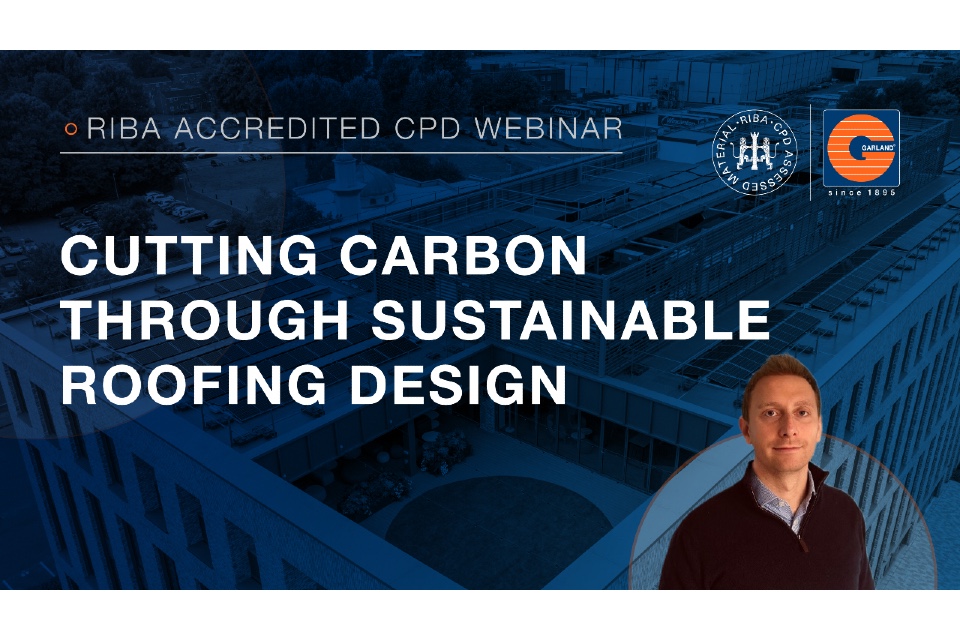
WEBINAR: Garland UK launches CPD to cut carbon with sustainable roofing design

Sustainable building initiatives are now more prevalent than ever before, and the UK has committed to achieving Net-Zero carbon by 2050 across all sectors of the economy. The built environment currently accounts for almost 40% of total carbon emissions and, as such, is an industry that offers significant opportunities for positive climate change.

Specially tailored to specifiers and surveyors, the RIBA-accredited ‘Cutting Carbon through Sustainable Roofing’ CPD by Garland UK gives a masterclass in carbon emissions during the entire lifecycle of your building project, from construction through to operational use and provides clear guidance on how sustainable roofing design can play a pivotal role in reducing emissions in commercial buildings and support your organisation’s key environmental initiatives.

Garland UK has taken a significant step in its commitment to sustainability, with the recent announcement that it will be a net-zero carbon company by 2032, 18 years earlier than the Government’s 2050 net-carbon zero targets. John Mather, National Sales Manager at Garland UK, played an integral role in the development of the Sustainability Commitment, explains, ‘now more than ever, we are working with clients who each have progressive carbon reduction targets to meet in the coming years. There was so much more we could do as a business to be more sustainable. Now, with our Commitment in place, we have a clear path to net zero and a better way to support our customers’ environmental initiatives in the future.’

Garland UK’s Sustainability Lead, Alex Priddle, explained: “The Cutting Carbon through Sustainable Roofing Design CPD has been developed as a direct response to the challenges our customers are currently facing in the industry, to reduce commercial building’s carbon emissions, increase thermal efficiency and, where possible, reduce those ever rising energy bills.”

Alex added: “It is essential for us to keep raising the standard in the industry and keep improving how we educate our customers and peers. We are responsible for ensuring the longevity of our roofing specifications that comply with current legislation and building regulations. We know that this CPD will help to advise the best sustainable roofing practices in the industry today.”

Live CPD Registration

Register via the link below to book your place on Garland UK’s live CPD webinar: Cutting Carbon Through Sustainable Roofing Design, with Sustainability Lead Alex Priddle. The session will be held at 12.00 pm on the 1st of December 2022.

All attendees will receive a personalised RIBA CPD certificate via email after the live session.

Register for the Live CPD Webinar here

www.garlanduk.com

5 Minutes With… Garland UK’s Ben Whitemore

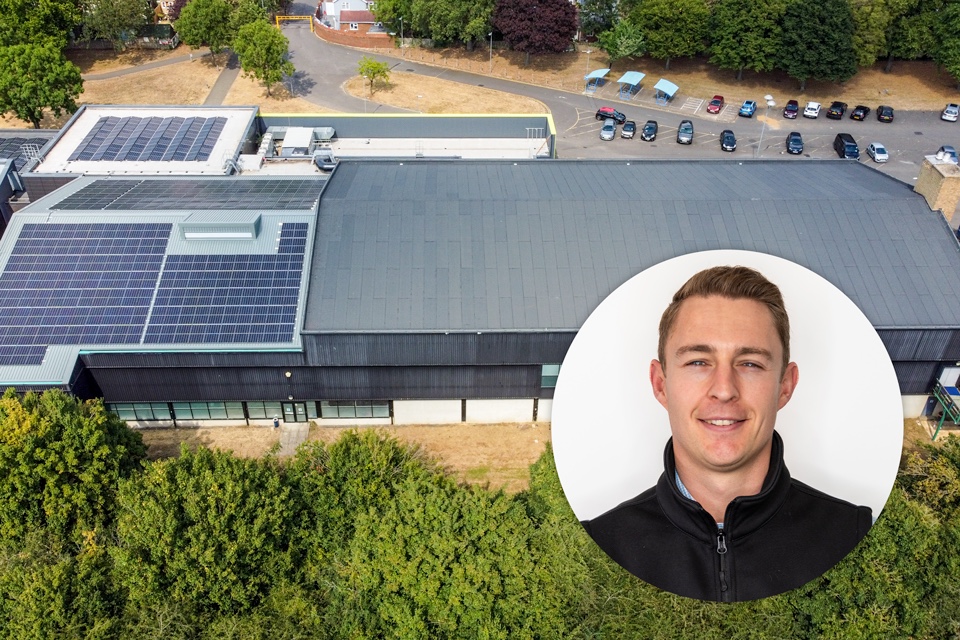
For the latest instalment of our FM industry executive interview series, we spoke to Ben Whitemore (pictured), Technical Product Manager at Garland UK, about the roofing challenges faced by facilities managers and how sustainable roof systems can help meet environmental targets… 

Tell us about your company and services

Garland UK manufactures high-quality roofing and waterproofing systems for the commercial, residential, industrial and public sectors. We partner with facilities managers, surveyors, and architects to deliver proactive and long-term waterproofing solutions for all roofing assets. For over 20 years now, our Technical Managers have developed partnerships with over 4,500 private companies, education estates, NHS Trusts and councils across the UK as a single point of contact for each customer.

What have been the biggest challenges the FM industry has faced in recent months?

In recent months we have seen a fundamental shift in conversations around sustainability and how we can make our buildings more sustainable. We’ve seen the FM industry respond to increasing government regulations and ensure their organisation’s environmental initiatives are met.

The energy crisis has put significant pressure on facilities managers, stretching budgets to tackle these issues, making budgetary planning a real challenge. At the moment, our conversations with FM clients revolve heavily around reducing operational carbon and how we can improve the thermal efficiency of their buildings and generate renewable energy at scale through solar PV roof installations.

What are the most prominent roofing challenges for commercial buildings?

The obvious roofing challenges are around maintenance, with water ingress, standing water and blocked gutters, to name a few. However, one of the most significant roofing challenges we have at the moment is ensuring sustainable roofing systems are fully utilised to help reduce commercial buildings’ embodied and operational carbon impact on the environment.

What solutions can help FMs overcome these challenges?

We always recommend a life cycle costing assessment which allows for the total cost of a given roof project or roofing component to be analysed over its life cycle. It provides an easy and accurate comparison for FMs to review against alternative options for new build and refurbishment projects.

When comparing sustainable roofing systems, such as 100% recyclable metal roofs, green roof systems or even water management blue roofs, our clients can see the cost savings that a long-life system can bring to overall building management and helps to encourage a more robust maintenance program.

You mentioned reducing operational carbon; how can roofing make a difference?

The energy savings that can be achieved through a more insulated roof or a green roofing system can realise immediate environmental benefits and reduce carbon emissions. Installing a renewable energy system, like solar PV, is a brilliant way to reduce operational carbon and the need for fossil fuel consumption and lower your energy bills. We’d always recommend carrying out a Solar Yield Analysis to see what kind of kWh yields are generated, annual carbon emissions avoided and the return on investment, which can be in as little as 4 years.

Can solar help you save on electricity bills?

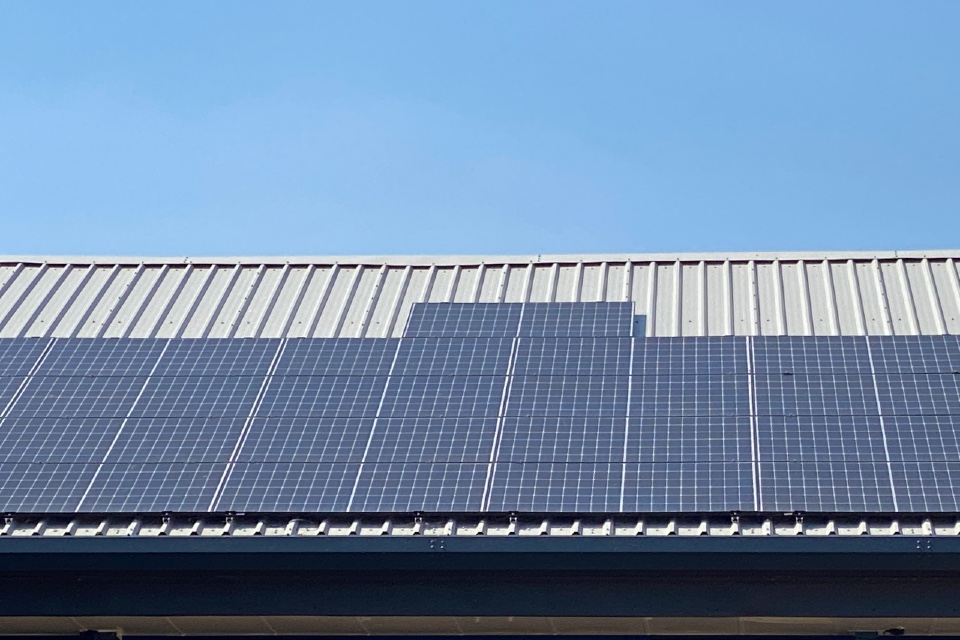
Photovoltaic (PV) solar energy systems present a significant opportunity for facilities managers and landlords to offer value to their tenants and occupants.

Garland UK discuss how a solar installation is a proven way to save money on electricity bills with a fast return on investment whilst reducing operational carbon across entire portfolios, helping to bring properties into line with current standards and add value to your assets…

Reason For Investment

Solar PV systems are one of the most advanced renewable energy technologies and by far the most advantageous for facilities managers to consider. As soon as they are installed, you immediately start to benefit by saving money on the operational running costs of your building, seeing a reduction in the amount of power required from the national grid, which is becoming increasingly more expensive.

Solar PV has the fastest return on investment of any onsite renewable energy generation, potentially in as little as 2 years and typically within 5 years. Ground source heat pumps, for example, usually take around 12 years.

Modern solar PV panels are built to last; for example, Garland UK’s Solarise system will still generate at least 80% of the initial output 25 years after installation, ensuring continued benefits for years to come.

Solar Yield Analysis

On a recent Garland UK project, a 52,000m2 commercial building was looking to significantly reduce its energy bills and operational carbon footprint.

Following a detailed assessment, it was discovered the business would benefit from a return on investment in just 2 years, seeing 21.8 tonnes of carbon emissions negated annually.

A series of yield calculations were carried out to see how solar PV could reduce the building’s electricity dependency on the national grid and operational carbon even further, the results of which are shown in the table below:

PV System Yield Analysis
PV Generator Energy 46,412 kWh
Direct usage by Business 38,500 kWh
Grid Feed-In 7,912 kWh
PV Installation Cost £37,665
First Year Cost Saving On Energy

(based on current energy costs)

£22,613
Return on Investment 2 Years
CO₂ Emissions Avoided 21.8 tonnes per year

Reducing Energy Bills With Solar

It is important to work with a supplier partner who can clearly evaluate your building assets for a potential solar PV installation. At Garland UK, a local Technical Manager will carry out a free site survey to assess the condition of your roof assets and complete a Solar PV Yield Analysis, which will provide:

  • Expert advice on selecting the most suitable system for your business
  • Guidance on how much power your site needs
  • Annual renewable electricity generation
  • Annual carbon emissions that can be negated
  • Clear return on investment and financial analysis
  • Support with Super-Deduction Tax or Financing options

To arrange a free consultation and Solar Yield Analysis for your roof assets, speak to Garland UK today.

www.garlanduk.com