Health & Safety Archives - Page 5 of 6 - Facilities Management Forum | Forum Events Ltd
Posts Tagged :

Health & Safety

GUEST BLOG: Insights on protective equipment & how it can impact your business

All businesses that employ staff will be familiar with Personal Protective Equipment (PPE). Last year, the PPE Directive 89/686/EEC was replaced by the Regulation 2016/425 in a bid to improve health and safety at work.

As many businesses operate within the UK and neighbouring countries in the EU, many managers will be wondering what this means for them. Opposed to the former directive, the new regulation is a binding legislative act that must be applied in its entirety across the EU without requiring separate national legislation.

There have been tremendous changes in regard to working practices, especially as technology continues to advance, making processes more efficient — this includes equipment and workwear. Because of this, changes were required and expected to occur around PPE after it first came into action over two decades ago.

Not too long ago, the PPE Directive was only a focus for manufactures who put their own products on the market. However, this new regulation that was put into action on 21stApril 2018 will involve the entire supply chain. As a result, anyone who is part of the supply or distribution chain must abide by PPE and meet the standard requirements that have been set out — while also having an understanding that only products that meet the standards will be made available on the market.

What are the standards?

  • Making sure PPE complies with the essential health and safety requirements.
  • Making sure technical documentation has be drawn up.
  • When compliance has been demonstrated the EU declaration of conformity has been drawn up and a CE mark affixed.
  • Retention of documents for ten years.
  • Sample testing.
  • Duty to take action in relation to non-conforming PPE.
  • Labelling requirements.
  • Providing instructions and cooperating with the national authority.

There is a one-year transition place currently in place, which is set to end on the 21stApril this year. This means that the former Directive and current Regulation are still applicable to businesses, meaning you must be prepared for when the Regulation is the only one that matters. However, any EC type-examination certificates and approvals issued under the Directive will remain valid until the 21stApril 2023 unless they have an earlier expiry date.

PPE Categories:

When it comes to workwear, and their determined use, here are the categories that businesses must understand:

Category I (simple design)

This is all about minimal risks, and workers can assess the level of protection needed themselves. This could include the use of garden gloves, footwear or ski goggles for example.

Category II (neither simple or complex)

Including workwear such as dry and wet suits, clothing in this category don’t fall within the first or third set of categories.

Category III (complex design)

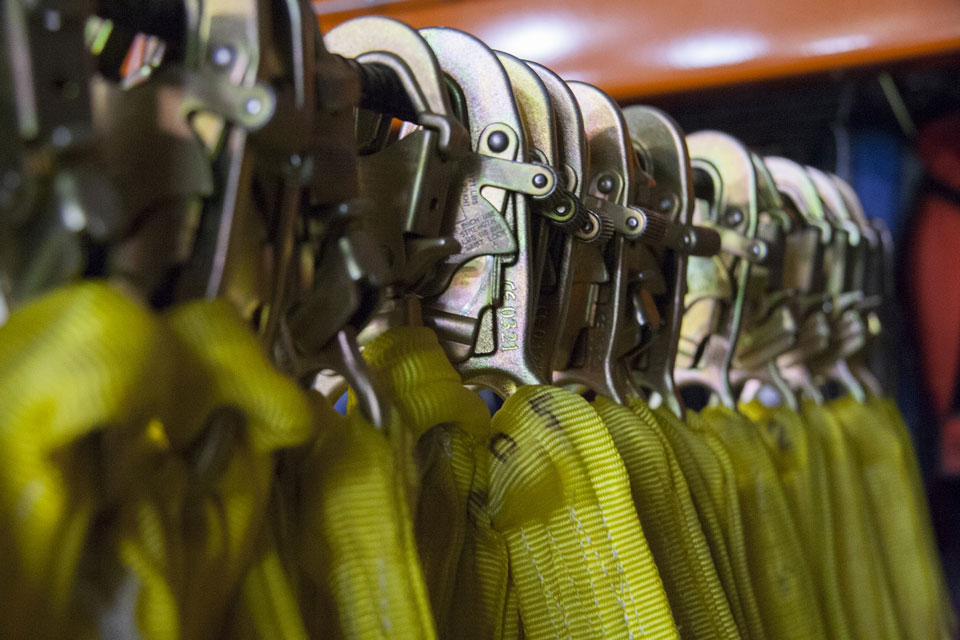
Aimed to protect employees against mortal danger, these items are complex in design and prevent any irreversible harm. To give you an idea, this could potentially include harnesses and respiratory equipment.

Staff and their PPEP compliance

Businesses will look to implement the correct PPE workwear, but are staff willing to wear it? Figures have suggested that 98% of employees have seen colleagues not wearing PPE when they were supposed to, with a further 30% saying this happens on a regular basis. Excuses varied as to why employees were not wearing the appropriate workwear with some suggesting that it looked unattractive, made them too hot, was a poor fit and was not very practical which should most definitely not be the case for such corporate workwear.

But why is it so important? Did you know that 9% of all injuries are head injuries because 84% of such occurrences have not been wearing the proper headwear? Or that 50% of construction workers experience a serious injury during their career? If workers wore proper safety eyewear, injury could be reduced by up to 90%.

Astonishingly, 25% of workplace injuries were to do with a staff members hand. This could be reduced by 60% if gloves are worn. 25% of employees are exposed to noise that are higher than the recommended level too, but such damage can be reduced 99% by wearing the right type of hearing protection.

Learning from this, it’s important that employees learn more about PPE and why it has been put in place. However, businesses must also take away from this article that workers feel uncomfortable in the PPE workwear that has been distributed to them – you must strike a balance between safety requirements and comfort to ensure that staff wear such equipment when needed.

This article was provided by tailored uniform specialists, Dimensions.

Sources:

https://ec.europa.eu/growth/sectors/mechanical-engineering/personal-protective-equipment_en

https://www.bsigroup.com/en-GB/blog/Built-Environment-Blog/ppe-directive-changes/

http://www.hse.gov.uk/toolbox/ppe.htm

http://www.legislation.gov.uk/uksi/2018/390/made

https://legislationupdateservice.co.uk/news/new-personal-protective-equipment-regulation/

https://outlook.office.com/owa/?path=/mail/sentitems

INDUSTRY SPOTLIGHT: Spend time improving EHS performance, not implementing software

Introducing SAI 360 FastStart, the fast, ready-to-use, cost-effective software solution to meet Environmental, Health & Safety requirements.

Implementing a new software platform can be perceived as challenging by even the most experienced Environmental, Health & Safety professional, but not anymore.

SAI360 FastStart delivers pre-configured workflows, dashboard and reports based on industry best practice. As the solutions are ready to use the cost is much lower and implementation can be delivered in just weeks enabling a fast return on investment.

Download brochure

Some of SAI Globals most popular out-of-the box FastStart options for EHS include:

  • Incident Management, including Near Miss and Injury Management
  • Action Management
  • Hazard Management
  • Inspections
  • Audits

Spend time improving your environmental, health & safety performance instead of implementing software, contact SAI Global about FastStart now and get the insights you need to enhance operational efficiency.

www.saiglobal.com/EHS | 01926 523149 | info.emea@saiglobal.com

Health & Safety

Do you provide Health & Safety services? We want to hear from you!

Each month on FM Briefing we’re shining the spotlight on a different part of the facilities management market- and in January we’ll be focussing on Health & Safety services.

It’s all part of our ‘Recommended’ editorial feature, designed to help FM industry buyers find the best products and services available today.

So, if you’re a supplier of Health & Safety services and would like to be included as part of this exciting new shop window, we’d love to hear from you – for more info, contact Luke Webster on l.webster@forumeventas.co.uk.

Here are the areas we’ll be covering, month by month:

January – Health & Safety

February – Building Maintenance & Refurbishment

March – Cleaning

April – Total Facilities Management

May – Energy Management

June – Security

July – Air Conditioning

August – Waste Management

September – Asset Management

October – FM Software

November – Business Continuity

December –

For more information on any of the above, contact Lisa Carter on lisa.carter@mimrammedia.com.

100% Hackitt initiative to ‘drive cultural change in construction’

A new industry initiative has been launched to encourage the government to deliver all of the recommendations contained within Dame Judith Hackitt’s report in the wake of the Grenfell tragedy.

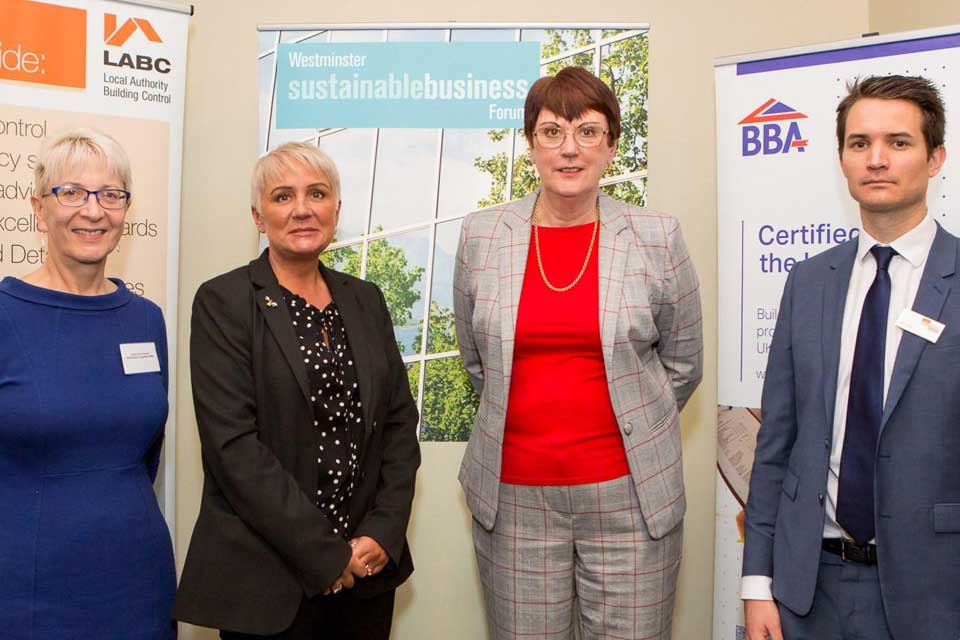
100% Hackitt is being led by Local Authority Building Control (LABC) and the British Board of Agrément (BBA), who say they have united to bring focus to industry calls for a full adoption of Dame Judith’s Independent Review of Building Regulations and Fire Safety.

The initiative has a dedicated website at www.100-hackitt.co.uk and has ‘pledge cards’ for supporters to sign up to the initiative and pushing for an Early Day Motion debate in the House of Commons.

Dame Judith attended the launch, delivering a keynote speech to a large number of cross-party politicians, policy advisors and industry body representatives, telling them there was ‘massive need’ for culture change throughout the industry, with responsibilities clearly defined at every stage of a building’s lifecycle.

“Much remains to be done to bring the construction industry up to the standards of other industries in terms of accountability, transparency and record keeping,” she said. “Don’t tinker, don’t tweak, it has to be fundamental.”

Claire Curtis-Thomas, BBA Chief Executive, said: “The BBA is backing this initiative as strongly as we possibly can because we want to see bad practices in the industry eliminated and protection for the public and companies that are fully committed to high standards of delivery.”

Paul Everall, LABC Chief Executive, added: “The LABC and the BBA share the same outlook and are determined to make a difference in our industry. But we’re not waiting, we’re getting on with building a safer future together – right now. The 100% Hackitt initiative is a space for everyone who wants to see systemic change in the construction industry and I hope the whole industry gets behind it.”

The launch event was facilitated by cross-party think tank Policy Connect through its parliamentary forum for the built environment, the Westminster Sustainable Business Forum.

The initiative has the support of senior figures across the construction and fire safety sector including the Fire Sector Federation, whose Executive Officer Dennis Davis said: “We are backing the 100% Hackitt initiative because we need a mandatory, controlled system that allows us to balance what we want – innovation, good buildings, new ideas, growth in our economy – with sensible restraint that ensures short cuts and economies aren’t made and shows that people are competent, resulting in safe building for those who occupy them.”

Jonathan Shaw, Chief Executive of Policy Connect, added: “The Hackitt review represents a once in a generation opportunity to recast the building system and start to build safer, better designed homes. We will discuss how the review can bring about positive change in the construction industry, what still remains to be done and where the Hackitt review could have gone further so that we can encourage the industry to push for change.”

100% Hackitt unites those who wish to see cultural change in the construction industry, promoting safety and public trust via a forum which provides on-going opportunities to discuss cross-discipline issues whilst keeping pressure on Ministers to adopt all of the Hackitt review recommendations.

“Dame Judith’s review of building regulations and fire safety showed systemic change is required within our industry,” added Curtis-Thomas. “Her report came with a warning that cherry-picking recommendations would compromise their overall effectiveness and it is this ‘pick and mix’ approach that the BBA and LABC are urging the government to avoid by accepting the recommendations in full.

“The construction industry has overwhelmingly taken on board her views and aspirations and wants to drive change – shifts in practices and working relationships have already been voluntarily introduced by many – but we need government backing to ensure this happens across the board. Many of the recommendations fall to government rather than industry. We are doing our bit and it now needs to do its bit and if this needs new regulation or even legislation it will have our backing and the backing of those who recognise that business as usual is not an option any of us want to consider.”

For full information about 100% Hackitt and to keep abreast of its latest developments visit: www.100-hackitt.co.uk

Fire Door Survey 2018 yields surprising results

By Precise UK Managed Services

Half of all tradespeople do not feel confident about advising customers on fire door safety, according to a poll of 2,000 individuals carried out by online trade supplier Ironmongery Direct, which was supported by the Fire Industry Association.

The survey results have been published after Fire Door Safety Week, which was 24th to 30th September to raise awareness of the importance of fire doors in saving lives.

Less than 20 per cent of the tradespeople polled had seen an increase in demand for fire safety products or, just as importantly, replacement intumescent (smoke seal) strips for fire doors.

The poll illustrated an alarming lack of general public and industry awareness of the life-saving role of fire doors, which are a legal requirement in all commercial, public and multi-occupancy buildings.

Fire Industry Association chief executive Ian Moore said that fire doors were one of many essential elements to keeping people safe from fire.

He added: “A fire risk assessment should determine, through thorough inspection, any potential risks or hazards so that they may be resolved.”

Whatever building you work in or visit ask yourself these questions: ‘how do I get out of this building?’; ‘are the Fire Doors actually fire doors?; and beware the signs on the door, as the fact that there is a sign doesn’t necessarily mean that it’s a Fire Door.

Precise Managed Services undertake Fire Risk Assessments, Fire Risk Assessment audits and Fire Door Inspections and reports and are members and are trained by the Fire Protection Association.

Revealed: Britain’s most bizarre health and safety rules

Not being allowed to give a colleague a paracetamol, filling out a form to use plasters and a ban on birthday cake candles are among Britain’s most bizarre health and safety rules.

Researchers who polled 2,000 workers also found one in five aren’t allowed to change light bulbs in their workplace.

And another fifth are banned from wearing flip-flops in the office amid safety concerns.

The study, conducted by international animal charity SPANA, also found some workers are only provided with plastic knives and forks, while others must tuck in their shirts when shredding paper.

The study also found more than a third of respondents believe the health and safety laws in their workplace are too strict.

One noted that a wound as minor as a paper cut was required to be logged in their company’s ‘injuries book’.

Another wasn’t allowed to change the clocks on the wall to fit in with daylight savings – being forced to call an engineer to complete the task.

And a bamboozled employee was shocked to find that tinsel was banned from their Christmas decorations, ‘in case someone got tangled up in it’.

It also emerged nearly four in 10 respondents are happy to break rules in their place of work they deem unnecessary, or generally don’t agree with.

One fifth have fallen foul of management and been disciplined for ignoring what they believed to be an overly-strict ruling at work.

In fact, for 14 per cent of respondents, things got so bad that they considered looking for a new place of employment.

Half of British workers think health and safety regulations have got stricter since they started working at the company – with the average employee having been in place for more than eight years.

More than four in 10 have even had to utter the immortal words “It’s health and safety gone mad” after some new rule was introduced.

And one in four said they’d have preferred to work 50 years ago, when health and safety regulations were much less strict.

Although of those who have been injured in the workplace, a quarter admit they were contravening health and safety rules at the time.

THE TOP 40 BIZARRE HEALTH AND SAFETY RULINGS

1. No leaving doors open, as it’s a fire hazard
2. No wearing of shorts
3. No heavy lifting
4. No open toed sandals in case you drop something on your foot
5. Do not wear flip-flops in the office due to safety concerns
6. Do not change light bulbs
7. No running
8. Do not climb a ladder
9. No drinks near a PC or laptop
10. No toasters
11. Only allowed hot drinks in certain areas
12. Do not give each other painkillers, such as paracetamol
13. Do not take get any medication from the first aid box
14. No candles on someone’s birthday cake
15. Do not take a plaster without filling out a form
16. No heaters
17. No open windows
18. Must hold handrail when walking up or down stairs
19. No tinsel to be put up anywhere near work stations
20. No hats
21. Do not carry drinks up or down stairs
22. No carrying boxes
23. Water bottles only – no cups or glasses
24. Nobody is allowed to bring nuts into the building
25. No Christmas tree to be put up
26. No fans
27. No eating while walking
28. No turning things off
29. Do not shred documents
30. No hot drinks
31. Do not attempt to remove paper jams from the printer
32. Do not move office chairs
33. Must wear a headset to be on the phone
34. Do not share food food from home, such as cakes, with colleagues due to the potential food poisoning risk
35. No balloons in the building
36. Employees must clock out before engaging in chit-chat
37. No facial hair
38. Anything left on your desk gets thrown in the bin
39. Only plastic knives and forks to be used
40. No more than one personal item on your desk

BIFM steps up fire safety with accreditation and training

The British Institute of Facilities Management (BIFM) has confirmed plans to develop a certified accreditation and suite of training for facilities managers in charge of life safety in buildings.

Responding to Building a Safer Future, the final report by Dame Judith Hackitt published earlier this month, the Institute wants to ensure that FMs have access to high quality training and professional development that can certify their competency to uphold the highest standards of life safety in the buildings they manage.

BIFM says it’s keen to work with other bodies representing the built environment to ensure a joined-up response.

The Institute’s Life Safety Working Group (LSWG) will play a role in the development of a specific competency programme for facilities managers, alongside relevant CPD. The Group has been a participant in the Hackitt Review team’s work, helping to articulate how fire safety can be achieved best when maintaining buildings as well as feeding into work to develop competency in such maintenance.

LSWG Chair Rob Greenfield said: “Given the vital role that FMs can and do play in ensuring high standards of life safety in buildings, it’s important to strengthen the competency of those involved. My experts group will lead work to develop a dedicated accreditation programme for a specific FM standard as a first step in ensuring that FM best practice plays a part in the response to Hackitt”.

CEO Linda Hausmanis said: “We are fully behind Dame Judith’s proposals to strengthen competencies in building management and across the wider construction and built environment professions. As the leading professional body for facilities management, I am keen to ensure that BIFM leads the way in setting and upholding fire and system related professional competencies for facilities managers; and that the Institute contributes fully in ensuring coherence across the piece”.

Health & Safety

RECOMMENDED: Health & Safety Services – Part Two

A solid health and safety strategy, backed up with the products and solutions to help you achieve that, is imperative for any business. FM Briefing takes a look at the companies and solutions to help you achieve your health and safety goals…

Logical Safety

If your company is the type of place where it takes an accident to prevent an accident or where EHS investment is seen as just a cost, Logical Lock could be for you.

A smart EHS solution able to predict risk and prevent accidents, Logical Lock promises to make work in the most high risk places safer and more productive.

An all-in-one hardware and software package, Logical Lock is made up of three parts: a data analytics and management platform, a wearable health monitor and a mobile app for lockouts.

These three interconnected elements make it possible to prevent vehicle collisions, detect falls, block access to unsafe tasks and anticipate hazards.

Developed in partnership with businesses in heavy industry, the team behind the ‘data driven’ safety solution, Logical Safety, claims that in testing alone the system reduced accidents by over 60%, operation costs by 90% and time on task by over 30%.

Currently in limited beta phase, five forward thinking companies can get early, discounted access to trial the system in exchange for feedback.

www.lsafety.com

Sportsafe

Sportsafe offers installation, service and sales of sports and fitness equipment to more than 16,000 customers from the Shetland Isles to the South Coast in the UK, and as far afield as the Falklands, Qatar, Saudi Arabia and Bangkok, including private schools, sports centres, care homes and more than 120 county councils and fire, police and NHS authorities.

The Association of Physical Education (AfPE) recommends that all sport equipment both fixed and portable be inspected on an annual basis.

It is the sites’ responsibility to maintain the equipment for safe usage by their customers, however regular inspection and maintenance gives other benefits:

  • Optimise equipment availability
  • Prolong equipment life
  • Minimise overall maintenance costs
  • British Standard 1892 Part 1: 1986 states that ‘it is important that all physical education apparatus is maintained in a first class, fully safe condition’
  • For peace of mind.

Sportsafe only uses electronic reporting, which guarantees that engineers’ reports and quotations will be delivered within 48 hours of the service. The company only offers pre-booked and confirmed repair and inspection appointments so that you don’t get any unexpected visit ensuring your sites security. All inspections meet British and European recognised standards and all engineers are DBS registered, uniformed and carry photo ID.

In addition, Sportsafe holds CHAS, Constructionline and Safecontractor health and safety accreditations and are members of the AFPE.

www.sportsafeuk.com

Workplace Accidents

GUEST BLOG: Workplace medical emergencies – What should you do?

Would you know what to do in the event of a workplace emergency? If one of your co-workers had an accident or became seriously unwell at work, who would take charge of the situation?

Each year, approximately 30,000 people in the UK have a sudden cardiac arrest (SCA) outside of a hospital environment. Without immediate emergency medical treatment, 90-95% of SCA victims will die.

Knowing what to do if a co-worker suffers a cardiac arrest at work can make the difference between life and death. When someone has a cardiac arrest, every second counts. Every minute that passes without a victim being given effective CPR and defibrillation reduces their chance of survival by 7-10%.

If a defibrillator is used and effective CPR is performed within 3-5 minutes of cardiac arrest, the victim’s chance of survival and recovery increases dramatically, from 6% to 74%.

Just like accidents and injuries, heart attacks and cardiac arrests can strike at any time without any warning. Although not always required by law, having someone in the workplace who has been trained in emergency first aid at work could help to save a life.

Knowing how to perform CPR and having access to a defibrillator in the workplace are life-saving first-aid essentials. Everyone should know what to do if they become a bystander to a cardiac arrest or heart attack. Would you

Sudden Cardiac Arrest or Heart Attack?

It’s important to understand the difference between a sudden cardiac arrest and a heart attack, as each requires very different treatment.

What Is a Heart Attack?

A heart attack occurs when a blockage in an artery prevents blood from reaching the heart. Heart-attack victims can experience a range of different symptoms, including…

  • Discomfort in the chest, back or jaw
  • Shortness of breath
  • Cold sweats
  • Nausea

Symptoms can come on suddenly or gradually over the course of a few days or weeks. Although the heart does not usually stop beating, heart attacks can lead to cardiac arrest if they are left untreated. If the blocked artery isn’t cleared and blood flow isn’t restored, that affected section of heart can begin to die. The longer the blockage remains, the greater the damage caused.

What Do I Do if Someone at Work Suffers a Heart Attack?

Step One

If you suspect someone is having a heart attack…

  • Phone 999 immediately
  • Advise the operator of the victim’s symptoms

Step Two

If the victim is not allergic, give them an aspirin tablet and ask them to chew and swallow it. This will help to thin the blood and allow it to flow more easily.

Step Three

If the victim loses consciousness, begin CPR to help pump blood to vital organs. Stay with them until the paramedics arrive.

What Is a Sudden Cardiac Arrest?

A sudden cardiac arrest is an electrical malfunction of the heart, which stops the heart beating and prevents blood from being pumped around the body. As the name suggests, SCAs can occur very suddenly, often with no warning. The victim will collapse immediately and death can occur within minutes if the correct treatment isn’t used.

Someone who has suffered an SCA will have no pulse, meaning they are clinically dead. The only way to save a person who has had an SCA is to help immediately by using CPR and a defibrillator.

What Is a Defibrillator and Why Do I Need One?

A defibrillator is a device that analyses the victim’s heart rhythm and delivers a shock to them if needed.

What Should I Do If Someone Near Me at Work Suffers a Sudden Cardiac Arrest?

Step One

If someone collapses…

  • First check their responses and see if they are breathing. Can’t detect breathing? This could be a sign that they have suffered an SCA.
  • Phone 999 immediately.
  • The 999 operator will guide you through CPR and tell you where the nearest defibrillator is.

Step Two

After you have called the emergency services and established that the victim is suffering from an SCA, you will need to begin CPR:

  • Place the heel of your hand on the breastbone in the centre of the victim’s chest. Your other hand should be placed on top, with your fingers interlocked.
  • With your shoulders positioned directly above your hands, press down 5-6cm using your bodyweight.
  • Keeping your fingers interlocked and your hands on the victim’s chest, allow their chest to come back to its original position.
  • Repeat this process rate of 100-120 compressions per minute until the paramedics arrive or a defibrillator is located.

If you have been trained in CPR, including rescue-breaths, you should give chest compressions with rescue-breaths. Do not do this unless you have been trained and feel confident using your skills; attempt hands-only CPR instead (as above).

Step Three

If an automated external defibrillator (AED) is available, you must being using it as soon as possible.

How to use an AED:

  • Turn the AED on and follow the voice or visual prompts.
  • The AED will advise you when to stop administering CPR so that it can analyse the victim’s heart rhythm.
  • If a shock is needed, the AED will administer one. An AED can’t perform a shock on someone who is not suffering from an SCA.
  • Continue with CPR between shocks until the paramedics arrive.

Portable Defibrillators for the Workplace

Each week in the UK, 100 people are struck down by sudden cardiac arrests in the workplace. Without CPR and defibrillation, many of these people will die. Does your workplace have an AED in place? Sudden cardiac arrests can strike anytime, anywhere. Invest in a portable AED for your workplace and help prevent more needless deaths from cardiac arrest.

whirlpool-logo

Whirlpool UK fatality leads to £70,000 fine

A company at the centre of one of the UK’s biggest product safety scandals in recent years has been fined £70,000 after a man died in a workplace incident.

Whirlpool UK Appliances Ltd was handed down a substantial fine and costs following the death of one of its contractors after falling from a mobile elevated work platform (MEWP).

The incident occurred on the 21st March 2015, when the contractor had been installing revised fire detection equipment using the MEWP at a height of over five metres on the site of the former Indesit factory in Yate, Bristol.

Unaware that the contractor was nearby, Whirlpool UK maintenance workers started an overhead conveyer, with the resulting movement causing the MEWP to tip over, knocking the 66-year old man from the platform to the floor below, causing serious injuries from which he later died.

A Health and Safety Executive (HSE) investigation found that there was no process in place to inform workers that conflicting tasks were being carried out.

Bristol Crown Court fined Whirlpool UK Appliances £70,000 with costs of £11,466 after it pleaded guilty to breaching Section 3 of the Health and Safety at Work Act, 1974.

The act places general duties on employers and the self-employed to conduct their undertakings in such a way to ensure, so far as is reasonably practicable, that persons other than themselves or their employees are not exposed to risks to their health or safety.

Speaking after the hearing, HSE inspector Matt Tyler said: “This is a tragic case where the incident could have been prevented if the company had planned and controlled the work properly.”