Industry Spotlight Archives - Page 3 of 4 - Facilities Management Forum | Forum Events Ltd
Posts Tagged :

Industry Spotlight

PCMG

INDUSTRY SPOTLIGHT: PCMG

PCMG is a world-class operating cost consultancy. Many companies are slowly bleeding precious cash through billing errors and hidden contract anomalies. Our job is to restore financial health and maintain it for the future by looking deeper at operational expenditure and thoroughly checking every detail.

Our Energy specialism is at the heart of what we do. By employing the leading specialists in this complex area of cost management, we’ll identify and stop cash flow leaks in their tracks, seek to recover your money and optimise future arrangements.

To date we’ve secured over £144m in refunds and savings for our energy clients.

www.pcmg.co.uk/services/energy

Envira Products

INDUSTRY SPOTLIGHT: Envira Products

Envira Products own and distribute an innovative range of industrial and commercial de-icers specially formulated to combine high performance de-icing with a caring approach to the environment.

How we do it

Customer service is at the core of all that we do and we work closely with our customers to provide a comprehensive support structure that maximises the benefits of our products and improves winter de-icing operations.

Our market locations include the UK, Europe, Scandinavia and the Balkans.

We are committed to providing high quality eco-products that perform to the highest standards and offer our customers a compelling value for money proposition along with an improved green footprint. Our aim is to develop long term relationships with our customers and our approach is very simple: if it isn’t right for any reason, we put it right.

www.enviraproducts.com

LCC Support Services

INDUSTRY SPOTLIGHT: LCC Support Services

LCC Support Services is a leading national cleaning provider, independently owned with over 20 years experience in customer care. From LCC’s inception the passion led by its Chairman, Bob Vincent, has permeated through the business and created trust and solidarity simultaneously between the company and its clients.

LCC Support Services is committed to building strong, long term relationships with its clients and also with the people it employs. The comapny’s service provision encompasses all aspects of specialist requirements associated with the cleaning industry of today.

LCC Support Services plays an active role within the industry and is a member of the Cleaning and Support Services Association (CSSA), the British Institute of Cleaning Science (BiCSC) and is also on the committee at the Worshipful Company of Environmental Cleaners.

www.lccss.co.uk

INDUSTRY SPOTLIGHT: Salisbury Group

Salisbury Group is one of the UK’s leading providers of commercial facilities management solutions. With a truly customer-focussed approach, Salisbury is trusted to deliver flexible, worry-free facilities management services that meet a varying array of operational and commercial needs.

Salisbury Group currently manages more than 320 business premises and over 11 million sq ft across the UK.

www.salisburygroup.com

Industry Spotlight: Advice and tips on attracting future engineers…

Doug Anderson, sales and marketing manager at Guttridge, discusses the importance of attracting future engineers and offers a few top tips along the way.

As a company, it’s important to not only chase the next customer, but also chase the next employee. The engineering sector should constantly attract new talent and actively encourage more females into what has traditionally been a male-dominated environment. It’s vital that future engineers should be motivated and passionate at the earliest stage in their professional development…

Why work in engineering?

The engineering sector is regarded as a cornerstone of the UK’s economic progression. In the future, engineers will be charged with producing cutting-edge technology and building structures that will help the UK tackle any renewable energy issues. To achieve this, there needs to be as many people entering the industry as possible. Organisations must remove any existing preconceptions and make engineering an attractive career path for all young people, by taking actions to promote and encourage working in the industry. How do we do this? Well here are four tactics to help secure the future engineering talent.

Generate interest early

Firstly, it’s vital to ensure that children and students of all ages, male and female, are informed about engineering. There are many different disciplines within the sector, offering different opportunities. Young students who are passionate about engineering and keen to enter the industry should have the opportunity to make informed educational decisions in order to realise their ambition.

The education sector and schools are improving increasing awareness in the sector, by using dynamic teaching methods to help bring science, technology, engineering and maths (STEM) to life. Attracting girls to the industry is a huge priority as they are still scarce in the engineering profession despite the career opportunities it offers.

As well as emphasising the importance of STEM to students, male and female, it is just as important that teachers and parents are aware of the importance and benefits that working in engineering can bring.

Earning and learning

In the past, engineering companies tend to lack an on-campus presence at schools, colleges and universities which hasn’t helped graduate intake into the sector. However, in recent years the visibility in terms of career potential are now in front of young talent.

The cost of attending university deters many young people, so it’s crucial to make them aware of the existence of other routes to a successful and rewarding career. Apprenticeships and internships offer an opportunity to learn whilst earning a wage, and can become a huge step to further education later in life. In-house training is offered alongside fully funded qualifications to help employees enhance their formal education. Organisations need to provide these development opportunities to help attract engineers from a wider range of social backgrounds. Learning on the job can produce more well-rounded employees – as it requires hard work and dedication.

Removing industry preconceptions

In the past engineering has been perceived as a male-oriented industry, and the lack of female engineers in the UK suggests that very little has changed. Given the diversity roles within the sector, there is absolutely no justification for this.

Perhaps as an industry we need to effectively relay the message that a career in engineering offers a wealth of opportunities that actually take place in very modern and high-tech environments, as opposed to grubby ones.

Wealth of opportunity

The scale of opportunity that engineering can provide for entry level students is superb. Engineering is an exciting career field to be involved in, and new opportunities are always available for qualified engineers. It is a flourishing and fast growing sector, not to mention engineering graduates earn some of the best salaries in the country.

Many engineering businesses have offices overseas, so there are also opportunities for graduates to travel abroad, especially to the MENA area.

When it comes to interviews and the selection process, recruitment of new staff in the engineering sector needs to be based on talent alone, rather than gender or any other arbitrary factor. The more that a company builds its female workforce, the more women will be attracted to fill positions in the industry, and the industry will thrive.

It is therefore up to those currently involved in the engineering sector, to spread the word and improve the appreciation of a career which knows no bounds, and continue to do what we can for our future engineers.

At Guttridge we encourage the STEM subjects by working with The Imagineering Foundation to introduce school children to the fascinating world of engineering and technology. We are seeing extremely encouraging results with our local school and are working hard to ensure the children are inspired to consider a career in engineering.

Access the original article here


Industry Spotlight – ide Systems: Powering the future of business…

A major topic of discussion this year has been around the topic of digital strategy. The development of IT infrastructure has culminated in businesses being expected to uphold a comprehensive digital strategy. However, this drives a pressing need for an electrical power supply that is continuous and reliable.

It isn’t unusual to be constantly barraged with IT buzzwords like big data and cloud computing, concepts that they are told offer a wealth of benefits if adopted. These trends, in addition to a shifting business landscape through globalisation and outsourcing, have made it necessary for facilities managers to invest in the right infrastructure to support digitisation.

However, beyond the software and hardware, facilities managers often overlook the power being supplied to IT systems. While it’s important that businesses choose the right IT system, so too is ensuring that these systems continue to operate in the event of a power failure or an emergency.

For example, there was an incident in 2015 where one of Google’s data centres experienced a power failure. This down time was a result of transient voltages caused by lightning striking the local power grid in Belgium. Unfortunately, several disks worth of data remained inaccessible after the incident.

This highlights the need for two things: first, facilities managers should ensure that power equipment is protected against lightning strikes and, secondly, that a building’s power supply is connected to an effective changeover system that can keep systems running in the case of an emergency. If a company the size of Google can fall foul of power failure on such a scale, so too can smaller businesses.

Changeover power

How can facilities managers keep IT systems operational? An important step is to invest in a changeover system that meets the needs of the application. These are designed to facilitate a power supply shift from mains electricity to a backup generator with minimal disruption to service, so they come with a multitude of configurations available.

For example, ide Systems was recently approached by a large London-based business to design a 400A manual changeover panel to ensure reliable power to the building’s IT systems. To maximise its effectiveness, our engineers designed the panel with a lightning protection unit and, interestingly, a multifunctional power meter that included text message functionality.

A powerful feature for remote monitoring, the text functionality offers an additional level of reliability to the system. The power meter’s text message facility works on the incoming mains supply so that, in the event of a mains failure, facilities managers receive a text instructing them to switch the supply over. This gives peace of mind that important IT systems will not lose power.

Innovations such as this can only be designed into electrical equipment if facilities managers give due consideration to emergency systems. While it is easy to think of IT systems as the sole responsibility of IT managers and technicians, facilities managers have a key role in ensuring the ongoing power required to sustain an effective digital business strategy.


Words by Matt Collins, business development manager at ide Systems

ide Systems is an integrated electrical engineering company and a recognised name in the design and manufacture of permanent and temporary power distribution equipment for events and onsite backup power. The company is committed to the quality electrical engineering of both core and bespoke products, distributed across the whole of the UK and Europe for sales and hire.

Industry Spotlight: Delivering renewable heat – a 2020 vision…

In my previous column, I looked back on the renewable energy targets that were set across the UK in 2009 and looked ahead to consider the likelihood of these being met by 2020.

The biomass heat sector is experiencing low growth at present, primarily due to the collapse in fossil fuel prices and continuing RHI (Renewable Heat Incentive) uncertainty; so until this changes our renewable heat target won’t be met.  Arguably, there is an inadequate appreciation of the current situation and its impact on progress to meeting renewable heat targets.

The good news is the biomass heat sector is willing and able to respond to demand and can grow its capacity.  But ideally, demand needs to grow at a sustainable pace and in line with realistic targets.

Those of us involved in the sector are looking for some clear policy direction and support. Surely it would be in the interests of government to offer this if they want to deliver anything like the targets set for 2020, let alone anything more after that.

With fossil fuel being so cheap at present, the initial financial carrot (to biomass investment) has been reduced for the time being. Clearly government policy can’t and shouldn’t force up fossil fuel prices (though a strong argument for this approach could be made), but the public sector does buy a massive amount of fossil-sourced heat for its building estate. Maybe it’s time to mandate that a small percentage of this is renewable? The stick rather than the carrot.  

There are 32 local authorities in Scotland, each owning many schools, sheltered housing complexes, leisure centres and civic offices. There are also 14 health boards, numerous housing associations (with high rise flats especially), prisons and a range of other public sector buildings (courts, MOD, higher education sector etc). The development of new public buildings under the Hub process also represents renewable heat investment opportunity.

To put some metrics around this, a typical council spends about £3 million a year on heating and owns, say, 100 buildings.  If 20 of those buildings were converted to renewable heat over four years by our 32 councils, that becomes 160 installation contracts a year. Add in the rest of the public building estate and the new builds described above, and it is possible to imagine 300 to 400 installs a year are achievable although still representing a very small percentage of the total public sector building estate.  Only the ‘low hanging fruit’ would need to be addressed.

A mandated process would mean that biomass heat would contribute an important percentage of the remaining 6,420GWh 2020 target. Without this, demand seems unlikely to pick up ‘naturally’ until fossil fuel prices rise for several consecutive years.  In that period, the installation capacity gained in the sector could be permanently lost, so I think there is a need to act now or lose any opportunity to grow the amount of renewable heat in our energy mix.

The methodology for mandating public sector renewable heat targets would need to be developed and structured to ensure that only appropriate and viable projects are developed. At the moment (with current fossil fuel prices and RHI tariffs), a simple biomass heat install will show a 10 to 15 year payback. That has risen from a six to eight year payback three years ago, when fossil fuels were more expensive and RHI rates were higher. Based upon clear financial guidance, the public building estate might well be looked at in terms of any project with a sub-15 year payback, backed with prudential borrowing limits to enable the capital investment.

The long term economic and carbon benefits are especially strong with biomass heat (it creates many more jobs than other forms of renewable investment and saves more carbon), so mandating a target delivers not only on renewable energy policy, but also saves money long term.  So the only question remains, why not?


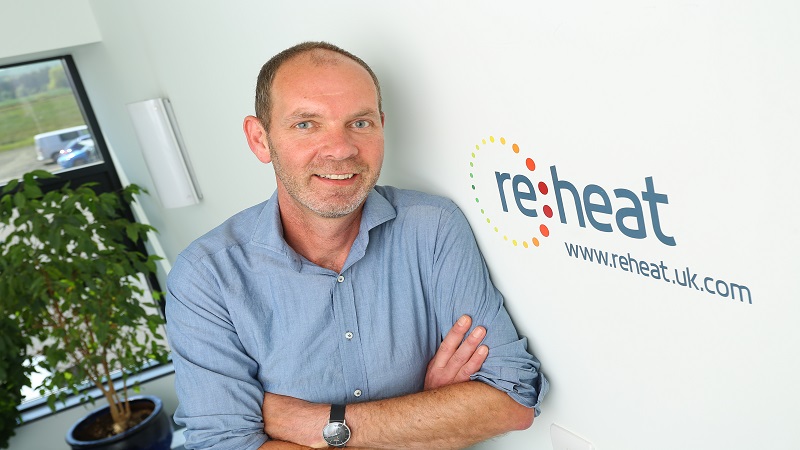
Steve Luker is principal consultant at re:heat, specialists in biomass heat with offices in North East England and Scotland. Before entering consultancy, Steve worked for Scottish Enterprise as a renewables and sustainability consultant. Steve is a recognised expert in bio-energy, advising local and national government, development agencies and the private sector in the UK and overseas on supply chains, energy contracts, tendering and procurement.  For further information, please visit www.reheat.uk.com.


Read part one of Steve’s column here

Industry Spotlight: Delivering Renewable Heat – what have targets got to do with it?

In 2009, the UK and Scottish governments of the day set renewable energy targets, theoretically binding, to be reached by 2020.  With just four years to go, how are we doing?

So, as we are only four years away, I wanted to examine where we are with the Renewable Heat Target and the role of biomass heat in delivering this. For this article, I want to focus on the renewable heat target and the role biomass is playing in delivering it.  And I’m going to pay specific attention to Scotland where some intriguing new data has emerged.

The Scottish Renewable Heat Target for 2020 is 11 per cent, while for reasons unbeknown to me; it’s 12 per cent in the rest of the UK. Beyond the obvious question of whether we will actually meet the target, it’s particularly interesting as the Scottish Government is embarking on an energy review and is setting out its objectives for post-2020. 

If the Scottish Renewable Heat Target is going to be met, then 6,420GWhs of annual renewable heat output are needed by that date. At present, Scotland produces 3,031GWhs of renewable heat annually.  Biomass heat contributes 1,716GWhs of that total at present and biomass CHP contributes most of the rest.

We can roughly calculate how many heat only biomass installations 1,716GWhs is equal to, as each MW of installed capacity provides around 2,600MWhs of heat output.  On that basis, the current biomass heat output represents roughly 660MWs of installed capacity. 

In cash terms it represents £561 million of investment in renewable heat capacity.  A great achievement, if somewhat modest compared to many other northern European countries.

However, if we assume biomass heat will constitute the same proportion of our renewable heat in 2020 (57 per cent) and that the 6,420GWhs of heat is actually provided to meet the target, then an additional 2,000GWhs of biomass heat must be provided by 2020.  I should say to assume biomass CHP provides a bit more is perfectly reasonable, but if you ‘do the math’ on all other forms of renewable heat, you’ll see they can’t deliver anything like what is needed – never mind making up any biomass shortfall.  In other words, biomass heat may well need to be more than 57 per cent, but let’s stick with this figure for now…

So biomass has a key role to play in meeting the target and for modelling purposes this can be split into four years, which requires 500GWhs of biomass heat output to be added annually.

That means 192MWs of new installed capacity must be added annually for four years.  That’s going to be quite a challenge.

We know that 1MW of good quality biomass heat capacity costs about £850,000 to install.  As we need 192MWs a year, that requires annual capital investment to run at £163 million for four successive years…totalling more than has been achieved in the last 15 years combined.

If we assume an average installation size of 250kW, it means 768 installation contracts a year, each worth about £212,500.  Bringing that down to monthly figures it comes to 64 installs a month with a monthly spend rate of £13.6 million.

Typically, each MW of biomass heat capacity creates two jobs, so around 1,500 new jobs would be created if 2,000GWhs of biomass heat were produced.

Each scheme will take around four to six months to plan, design and install. Biomass heat installs require a range of design and contracting skills in M&E, civils, architecture, engineering and a co-ordination expert in biomass to oversee this.

There are no reliable figures on how many companies are involved in the design and installation of biomass heat. My own guess is that we have around 10 to 15 specialist biomass companies operating in Scotland, with fewer than 150 direct employees in total. 

Total sector capacity could probably expand quite quickly, but key skills shortages in specialist areas like biomass boiler specification/commissioning and fuel handling system design will hamper progress.  However, even if demand were to actually run at 64 x 250kW installs a month, it is hard to see how the required capacity could be mobilised sufficiently quickly.

I have reached the clear conclusion that unless things change, the Scottish Government will fall way short of its 2020 renewable heat target.  More on that next time…


Steve Luker is principal consultant at re:heat, specialists in biomass heat with offices in North East England and Scotland. Before entering consultancy, Steve worked for Scottish Enterprise as a renewables and sustainability consultant. Steve is a recognised expert in bio-energy, advising local and national government, development agencies and the private sector in the UK and overseas on supply chains, energy contracts, tendering and procurement.  For further information, please visit www.reheat.uk.com.

Industry Spotlight – Adler & Allan: Riding out environmental forces…

The winter can be a particularly costly time for businesses, with risks such as flooding, snowfall and freezing temperatures potentially causing equipment breakdowns and closures. Henry Simpson, commercial director for leading FM support provider and disaster response experts, Adler & Allan, explains how to mitigate seasonal risks and deal with issues effectively, safely and with minimal impact on business operations.

Flooding has hit the headlines in recent years with excessive rainfall, bursting river banks and extreme high tides a regular component to a modern British winter. Causing devastation to countless homes and businesses, it is a risk that is unfortunately here to stay; one that many more businesses have to deal with and should be prepared for…

Apart from flooding, winter can mean frozen pipes and equipment failures, with the knock-on effect of all of these problems resulting in issues such as power outages and subsequent downtime. The best line of defence is planning; to save machinery and keep staff safe.

Know your risk

The first step in mitigating risk is understanding what could possibly go wrong. When it comes to flooding, just because you haven’t been flooded yet, it doesn’t mean this won’t happen in the future. A Flood Risk Assessment (FRA) will help identify potential problems, which can then be dealt with before they become an issue. In general, risk assessing a business will help tighten up operations and safeguard employees.

Mitigate risk

Once you know where potential problems lie, you can take steps to minimise their impact or stop them all together. For businesses in high risk flooding areas, this could include installing flood defences, or less permanent steps such as putting together a plan designed to limit damage. Procedures like moving electronic equipment, stock and critical records, will save your business thousands of pounds and keep downtime to a minimum.

As far as safety goes, making sure electrical appliances are disconnected and the gas supply is shut off in the event of excessive rain or snowfall will reduce the risk of fire. Staff must all be briefed on evacuation procedure, with a designated person in charge of disaster planning and response.

In an ideal world, your business should have a ‘plan b’, for example, an alternative location to operate out of. This may be difficult for organisations that rely on heavy machinery, but for office staff at least, there are work spaces to rent or you could let staff work from home.

Essential maintenance

Keeping a building and its equipment in good order is essential to efficient operations regardless of any potential disaster. In the winter, issues caused by freezing can be minimised by keeping pipes and any associated tanks in good working order. This is particularly important for tanks that store fuel, used for back-up power supplies – often the case for data centres. And, regardless of the weather conditions, regular servicing and fuel testing will ensure that if disaster does strike, loss of productivity is avoided.

When it comes to reducing flood risk, maintaining drains is key. Floodwaters are often contaminated with sewage or other hazardous materials, which can cause pollution in addition to general water damage. Closing hand operated valves on piping will prevent backflow through floor drains or plumbing fixture.

If pollution is a risk to your business, then a designated employee in charge of correct spill procedure and any associated clean-up kits must be assigned. This is essential for ISO14001 compliance.

Best practice

As a facilities management provider, demonstrating your ability to keep businesses operational is essential. Organisations that are able to avoid losses most of the time, despite operating in environments where there is a high potential for error, are identified as ‘High Reliability Organisations’ (HROs). As an HRO, business streams may increase, with potential customers more likely to put their trust in a company that has a good asset resilience track record.

Be prepared

Strategy and planning is key to ensuring your business or that of your clients, rides difficult periods; be they due to market or environmental forces. Planned Preventative Maintenance (PPM) and preparing for the worst will help keep downtime to a minimum, stop pollution and safeguard employees.


Words by Henry Simpson, commercial director at Adler & Allan


Henry spent 10 years in the army before joining Adler & Allan in 1998. He has been commercial director since 2000. Adler & Allan was instrumental in the flood clean-ups in recent years and work alongside FM providers to deliver disaster planning and response, fuel services, PPM and asset resilience.

Adler & Allan supplies a range of FM support services; PPM, fuel polishing, flood mitigation and protective coating and linings. For more information, visit: www.adlerandallan.co.uk


Industry Spotlight – Guardian Water Treatment: Clean water equals energy saved…

Water is essential to any building, needed for sanitation, drinking and HVAC system operation. When we think ‘clean’ water it is usually in terms of the first two purposes. Apart from human health, however, water hygiene is also essential for HVAC operation, ensuring systems run efficiently, preventing downtime and minimising energy wastage. How this water is cleaned can have an impact on energy consumption too. Steven Booth, associate director for Guardian Water Treatment, explains this relationship…

Facilities managers responsible for water hygiene may primarily think of this task in terms of keeping building occupants safe, preventing Legionella and other waterborne pathogens. These pathogens also pose a risk to water system function; however, with Pseudomonas in particular causing fouling which can lead to clogging, corrosion, inefficiencies and breakdowns. Where energy saving is in your remit, ensuring water used for HVAC equipment is clean should be a priority.

Steps to water hygiene

The first step in this process begins before the FM gets involved, when a building and/or its water systems are constructed. Correct water system design is essential, such as avoiding dead legs in the pipework, which can become breeding grounds for bacteria. At this point, in-built water treatment options are often chosen, with supposedly ‘fit and forget’ solutions a problem we see time and time again.

One common example is magnetic water conditioning, favoured due to its low energy and low maintenance credentials. Lime-scale formation is not controlled throughout the entire water system as effectively as with traditional salt-based water softeners, however, creating maintenance issues.

Once in-situ, water systems need fit for purpose maintenance and treatment, based on actual usage, rather than a ‘one-size-fits-all’ approach. Water monitoring will allow FMs to create a bespoke water treatment plan, catch small problems before they become big ones and identify the root causes of any issues to stop poor water hygiene in its tracks, rather than just throwing in more chemicals. In general, overdosing should be avoided, it puts operatives at risk from overexposure to nasty substances and in-itself can cause corrosion. Bromine, for example, commonly used in cooling towers, can degrade pipes. By reducing chemical usage, expenditure will be reduced too.

Further money and energy can be saved by exploring non-chemical water treatment options. Photocatalytic water purifiers greatly reduce bacterial levels without the use of biocides. And, as water is continually treated, maintenance requirements are also dramatically cut, as water systems do not need to be so regularly flushed out and dosing is reduced considerably, saving money across the board.

Our own non-chemical water treatment solution, Wallenius AOT, simply needs a light changing a couple of times a year. AOT can be used to treat water in closed-circuit systems where Pseudomonas is a particular problem, as well as on the incoming mains and for specific applications, such as spas and swimming pools.

Getting water treatment right could save FMs money, time and energy, allowing HVAC equipment to run more efficiently, while reducing an over-reliance on chemicals and the maintenance requirement that goes alongside dosing. What’s important is that the approach is integrated, managed and fit for a specific building, rather than a knee jerk reaction to a problem.


Guardian Water Treatment provides a range of water hygiene services. Its non-chemical alternative to water treatment, Wallenius Advanced Oxidation Technology (AOT) is a safe, environmentally friendly and cost-effective option for controlling bacterial growth, minimising environmental impact by reducing chemical usage. For more information, visit: www.gwtltd.co.uk.