pat testing Archives - Facilities Management Forum | Forum Events Ltd
Posts Tagged :

pat testing

Staying compliant: How to navigate hybrid working and electrical testing 

With many businesses now settled into a hybrid working structure, employers are being reminded of their legal obligation to ensure electrical equipment is safe even when being used by workers at home.  

Dan Lee, Managing Director of phs Compliance, one of the UK’s leading providers of facilities management and compliance services, says that many businesses are not ensuring compliance of employees’ home offices alongside equipment in the main office. 

He said: “It’s fairly standard now across many sectors for employees to be spending some of the working week in the office and some at home, but your responsibilities for health and safety don’t end when employees leave the site.  

“Under the Health & Safety at Work Act 1974, employers are responsible for the health, safety and well-being of all employees, whether they work on site or remotely. The Electricity at Work Regulations 1989 also state that all electrical equipment in the workplace must be suitable for use and maintained to ensure it is safe, including any equipment used at home to carry out their job.  

“It’s a difficult situation for businesses. They are still liable if employees injure themselves at home, but mitigating the risks remotely is more challenging. Employees may not understand the risks that electrical equipment like laptops, printers and extension leads can pose, and dangerous practices, like overloading sockets or leaving laptops charging on sofas, can be commonplace.  

“All users of electrical equipment should have some basic training in how to use the equipment safely, as well as what danger signs to be aware of. Users should feel confident in visually checking the equipment regularly for obvious signs of damage, as well as potential risks, such as cables trapped under desks or water hazards. 

“However, the best way to protect your employees, and demonstrate your compliance with legislation, is to carry out regular PAT testing on all electrical equipment, whether on site or used remotely.  

“PAT testing (Portable Appliance Testing) involves an examination of portable electrical equipment and appliances to ensure they are safe to use.  This should be carried out by a competent person with the correct training and equipment. It is strongly recommended to employ an experienced and qualified PAT tester to test equipment every year. 

A great opportunity is for colleagues to bring their equipment back into the office for testing when there is a staff meeting, as several pieces of equipment can be tested in one session to save costs.   

“If you are unsure how to meet your health and safety obligations for electrical testing, phs Compliance can help with advice, guidance and over 400 experienced and trained engineers across the UK ready to start testing wherever you are.” 

Click to view phs Compliance’s free PAT Testing Guide. 

With over 50 years’ experience, phs Compliance is one of the UK’s leading providers of facilities management and compliance services. As well as electrical, mechanical and fire safety testing and maintenance services, phs Compliance also provides specialist electrical and mechanical project services, including design, supply and installation for everything from power to lighting. 

Don’t neglect electrical testing for home workers

Businesses are being reminded of their legal obligation to ensure electrical equipment is safe to use at all times, even when being used by workers at home.

It comes as Dan Lee, Managing Director of phs Compliance, one of the UK’s leading providers of facilities management and compliance services, warns that many businesses are potentially not ensuring full compliance as staff continue to work from home.

He said: “The pandemic brought with it many challenges, including the concept of working from home for the first time for many businesses. Unfortunately, in the rush to get employees set up at home, many may have neglected to consider how they would continue to fulfil their legal health and safety obligations as staff worked remotely and clearly continue to do so.

“Under the Health & Safety at Work Act 1974, employers are responsible for the health, safety and well-being of all employees, whether they work on site or remotely. The Electricity at Work Regulations 1989 also states that all electrical equipment in the workplace must be suitable for use and maintained to ensure it is safe, including any equipment used at home to carry out their job.

“It’s a difficult situation for businesses. They are still liable if employees injure themselves at home, but mitigating the risks remotely is more challenging. Employees may not understand the risks that electrical equipment like laptops, printers and extension leads can pose, and dangerous practices like overloading sockets or leaving laptops charging on sofas can be commonplace.

“All users of electrical equipment should have some basic training in how to use the equipment safely, as well as what danger signs to be aware of. Users should feel confident in visually checking the equipment regularly for obvious signs of damage, as well as potential risks, such as cables trapped under desks or water hazards.

“However, the best way to protect your employees, and demonstrate your compliance with legislation, is to carry out regular PAT testing on all electrical equipment, whether on site or used remotely.

“PAT testing (Portable Appliance Testing) involves an examination of portable electrical equipment and appliances to ensure they are safe to use.  This should only be carried out by a competent person with the correct training and equipment. It is strongly recommended to employ an experienced and qualified PAT tester to test equipment every year.

“PAT engineers can be dispatched to employee’s homes to carry out the tests there, or employees can bring their equipment back into the office for testing. This may be a good option if there was a staff meeting, for example, as several pieces of equipment can be tested in one session.

“If you are unsure how to meet your health and safety obligations for electrical testing, phs Compliance can help with advice, guidance and over 400 experienced and trained engineers across the UK ready to start testing wherever you are.”

Click to view phs Compliance’s free PAT Testing Guide

With over 50 years’ experience, phs Compliance is one of the UK’s leading providers of facilities management and compliance services. As well as electrical, mechanical and fire safety testing and maintenance services, phsCompliance also provides specialist electrical and mechanical project services, including design, supply and installation for everything from power to lighting.

Getting the facts straight about electrical testing

“Electrical testing is something that every single business has to do, regardless of current restrictions, but there is a lot of conflicting information about what electrical items need to be tested, and how often,” says Darren Blackbird, Sales Director at leading electrical testing and maintenance provider phs Compliance.

“The advice does not always take into account different types of business environments either, making it all the harder to ensure compliance.

“The Electricity at Work Regulations 1989 state that all electrical equipment in the workplace must be suitable for use and maintained to ensure it is safe. However, it does not specify how equipment should be maintained, how often it needs attention or who should carry out any maintenance, often leaving a question mark hanging over this important issue.

“Adding to the confusion is the misconception that you can simply delay or push back electrical testing because of the current pandemic, and that is leaving many businesses vulnerable. No-one wants to put their employees, their job or their business at risk.

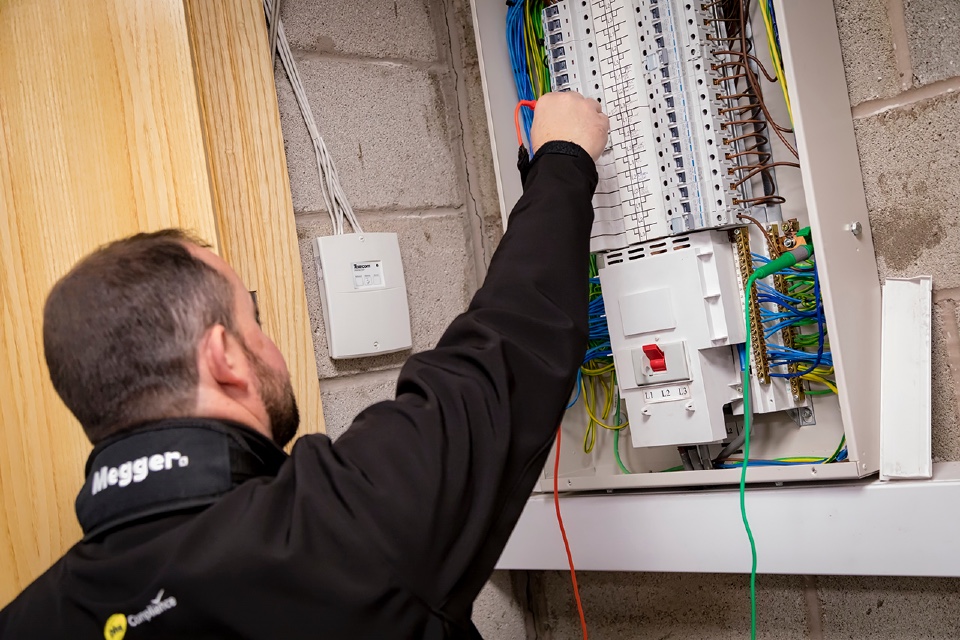
“Generally, regular PAT testing and fixed wire testing are recommended by the experts as the best way to feel confident that you are meeting your legal obligations.

“PAT testing applies to portable electrical items, such as kettles, drills, laptops and computers, and fixed wire testing is relevant to fixed electrical installations, such as lighting or heating systems.

“The responsibility is placed on the duty holder to assess the risk level and decide on the frequency of inspections. This is usually determined by the type of equipment, how often it is being used and whether the working environment is considered high risk or low risk. Good practice is an annual test.

“For example, a drill used multiple times every day on a construction site will need more frequent inspections than a vacuum cleaner in a holiday let.

“Within BS 7671 it is recommended that electrical installations are tested everyone to five years, however this is dependant on the type of electrical installation, how often it is used and whether it’s in a low or high-risk environment. These frequencies are the maximum recommended, but again it is at the discretion of the duty holder and should depend on the type of electrical installation, how often it is used and whether it’s in a low or high-risk environment.

“Most offices require less frequent testing – once every five years, for example. However, a higher risk environment, like a swimming pool, which would be exposed to high levels of moisture, or an industrial unit with high dust levels, would require more frequent testing to ensure safety. This would more likely be everyone year for swimming pools and three years for industrial sites.

“It can be a minefield, which is why many businesses turn to a professional to ensure their equipment is correctly maintained. With expert advice, guidance and testing, they can feel confident that they are compliant.”

Click to view phs Compliance’s free PAT Testing Guide or Fixed Wire Testing Guide for further information.

With over 50 years’ experience, phs Compliance is one of the UK’s leading providers of facilities management and compliance services with over 400 engineers across the UK. As well as electrical, mechanical and fire safety testing and maintenance services, phs Compliance also provides specialist electrical and mechanical project services, including design, supply and installation for everything from power to lighting.