smart buildings Archives - Facilities Management Forum | Forum Events Ltd
Posts Tagged :

smart buildings

Is the UK ready for the smart city technology of the future?

It’s no secret that smart technology and artificial intelligence are becoming more widespread. With 54% of the world’s population living in cities, a figure predicted to rise to 66% by 2050, there is a clear need for technological advancements to keep up with the increase in population.

So-called smart cities focus on making life easier for all inhabitants, encouraging advancements not only in technology but also sustainability. Lower emissions, reduced energy usage and carbon neutrality have possible via technological advancements. There are roughly 140 smart cities already operating across the world and this number is only predicted to grow!

Zurich is currently the leading smart city in the world, closely followed by Oslo, Canberra and Copenhagen. London achieves the sixth spot, providing smart solutions such as an advanced 5G network and heavy investment in AI. But how ready is the UK for our technologically-advanced future?

Electric cars

Lower emissions and a reduction in the use of fossil fuels are some of the key markers of a sustainable, smart city. Electric cars are leading the charge when it comes to minimising emissions.

At the end of last year, there were a total of 2.7 million public charging points for electric vehicles worldwide. China boasts over 1.7 million of these chargers, with Europe installing around 530,000. The United States is lagging behind in terms of EV charger availability, with the lowest growth rate among the major market players at only 9%.

The UK government have committed to a plan for 100% electric vehicle dominance by 2035, with a ban on the sale of petrol and diesel cars coming into effect in 2030. With a total of 11.6% of all new UK car registrations relating to electric cars in 2021, it does seem that the UK is moving towards an all-electric future.

But the current number of electric charging points across the country totals just 44,400, with 13,382 of these in London. This provision is not enough to keep pace with the number of electric cars predicted to be on the roads in the coming years. In order for the UK to reach its target of 300,000 charging points, our monthly installation rate needs to increase by a huge 288%!

The reliability of charging points is also uncertain, with recent research revealing problems with accessibility and functionality. 30% of Londonderry’s charging points experience extended downtimes. Newcastle follows close behind, with over 21% of charging points within the city non-functional.

Further technological innovations need serious consideration and investment to combat this issue. For example, anti-vandal measures, such as toughened touch screens, will reduce the number of broken charging points. The UK government’s proposal of a streetlamp capable of charging an electric vehicle and selling power back to the National Grid also provides hope for a smarter, more sustainable future.

Sustainable advancements

Sustainability is an essential part of the smart city, as technology strives to make urban life easier and more efficient. The UK must be net zero by 2050. Denmark, Finland and Spain are currently leading the race towards carbon neutrality, but it seems Copenhagen will be the first city to claim the title. To reach the goal, 100% of a city’s heating must come from sustainable, renewable sources.

Initiatives such as Copenhagen’s CopenHill are setting them apart from other cities. CopenHill is a sports centre which sits atop a waste-to-energy plant that supplies power to a large number of homes and businesses within the city. Lahti in Finland are also making strides with their carbon-free symphony orchestra – a world first achieved by cutting down on transportation and energy usage!

Many of these initiatives are possible with AI and the ability this technology holds to help reduce emissions. In the last two years, the use of AI to attain granular data on a business’ carbon performance and improve power efficiency has helped reduce greenhouse gases by 13%!

The UK aren’t far behind, with Nottingham unveiling plans to achieve carbon neutrality by 2028. Recent encouraging findings reveal the city has reduced its emissions by 52.3% since 2005 – the highest reduction of any UK core city! The city is also following in Copenhagen’s footsteps by turning waste into energy used to power over 5,000 homes and 200 businesses.

Smart transport

There’s more to smart transport than just electric cars. Advancements in technology now allow for larger vehicles, such as buses, to run on low-carbon biogas and hireable e-scooters are currently undergoing a trial period across 23 areas within the UK, including London and Newcastle.

Newcastle’s bright orange scooters have proven popular with locals, travelling more than a million miles during their trial period! However, the trial has seen a number of extensions and there are frustrations around the government’s willingness to fully introduce the sustainable travel method. With 97% of users viewing the scooters as having a positive impact on the local economy, it surely makes sense for them to be fully legalised, enhancing the sustainability factor of the city.

Hull is another UK city looking to technology to enhance the experience of its community. Their Smart Bus trial began at the start of this year, communicating essential information to passengers waiting at bus stops in an accessible fashion. The ‘Sm@rt’ app is available to download from the app store and gives customers the option to access timetables and important updates from their own phone or to have it read aloud. This will open up the bus service to a wider range of passengers, thereby increasing the efficiency of transport whilst also encouraging a more sustainable method of transportation than a car or taxi.

Nottingham has harnessed technology to achieve their net carbon reduction, installing over 130 EV charging ports, ensuring 46% of taxis and 30% of public buses run on either low-carbon biogas or electricity.

Mark Cambridge, CEO at Zytronic, comments: “The vision of cities such as Newcastle and Nottingham and their use of technology is encouraging when it comes to the UK meeting our net zero goal.

If the UK continues to innovate and reaches the proposed targets for the coming years, our cities will become truly smart and capable of thriving within the technologically focused future.”


Planon’s Richard Bellairs on the impact of smart building technology and more

Planon’s Solution Product Marketeer Richard Bellairs (pictured, right) and his colleagues recently hosted a webinar, ‘The impact of smart building technology on the future of work’. Here FM Briefing talks to Richard about the themes and issues covered in the webinar, along with wider industry opportunities and trends…

Tell us about your company, products, and services.

Planon is the leading global provider of Smart Sustainable Building Management software. This means we connect buildings, people, and processes. We generate unique insights for decision makers and reduce costs by automating facility management processes.

Consistently rated as the global leader in our field by independent market analysts, we have over 2,500 customers, and an extensive partner ecosystem around the world.

What have been the biggest challenges the FM industry has faced over the past 12 months?

The past 12 months have arguably been the most challenging period ever for the FM industry. Only a year ago we were managing our facilities according to various COVID protocols. As those requirements moved away, we faced uncertainties about the number of people returning to work in our buildings. We have a serious skills shortage. Many people left the profession during the pandemic, and it’s hard to replace them. And now, as we need to adapt workplaces to meet the needs of hybrid working models, high inflation and interest rates are putting the brakes on investment.

Energy bills are rising and so today’s big question for FM professionals is: how do we strike a balance between efficiency and workplace experience? The cheapest, most sustainable office is a closed one, but we must facilitate and stimulate the kinds of interpersonal relationships and interactions we’ve missed during the lockdowns of the last two years.

And what are the biggest opportunities?

The great thing is that everyone now accepts that we must make changes. There is more agreement that the changes FM professionals pushed for in the past are not just ‘nice-to-haves’, but important contributors to successful organisations. Senior managers see the value in providing a great work experience to attract and retain the best staff.

And while doing this we can transform workplaces to be more sustainable and energy efficient.

The biggest opportunities are:

  • To work alongside HR, developing an integrated approach with FM as a key component in delivering a word-class employee experience.
  • To configure and design spaces to suit different and changing tasks, work styles, preferences, and user demographics. 
  • To use technology to capture data and analyse how buildings are really used, to detect opportunities for energy saving, without harming the office experience.

What will be the biggest priority for the FM industry in 2023?

Without people we don’t have an industry, so the biggest priority must be to invest in our human capital. Retain great people and invest in their training and personal development. Recruiting people into the industry is difficult now, so we need to promote how FM can offer a rewarding career path.

What are the main trends you are expecting to see in the market in 2023?

On the one hand, the uncertain economic climate will bring the primary focus back to efficiency and energy savings, so I think the main trends will be related to doing more things better, with fewer resources. This means smart building analytics and process automation will grow in importance during 2023. On the other, more on the soft side – our society is changing – for example, Diversity, Equity & Inclusion (DEI) becomes more established and so is our population of co-workers. This will lead to different workstyles, preferences, and behaviours we’re expected to enable.

What technology is going to have the biggest impact on the market this year?

There is a vast array of technologies used by the FM sector. And it’s not necessarily the newest technologies that will have the biggest impact. If I think about the opportunities, priorities and trends already mentioned, then the time has come for easy to use, cloud-based systems that gather data and make it available for FM teams to make the best decisions, automate daily operations, and provide an optimum experience for building users. I think the latest generation of CAFM/IWMS systems will have the biggest impact.

In 2025 we’ll all be talking about…?

Nuclear fusion. The world needs this to meet its energy needs.

Which person in, or associated with, the FM industry would you most like to meet?

It’d be great to meet Neil Usher, Chief Workplace and Change Strategist at GoSpace 

What’s the most surprising thing you’ve learnt about the FM sector?

The FM sector is about people using spaces. The cogs of FM are turning in the background of almost everything people do. What surprises me is how most people outside the industry don’t realise the importance and impact of the sector.

You go to the bar at the Facilities Management Summit – what’s your tipple of choice?

Gin and tonic.

What’s the most exciting thing about your job?

Seeing new customers adopt the technology we bring to market.

And what’s the most challenging?

Identifying where to invest our budget to deliver the greatest value to customers.

What’s the best piece of advice you’ve ever been given?

Always make sure your belt is the same colour as your shoes.

City or United?

City 🙂

Richard and his colleagues recently hosted a webinar, ‘The impact of smart building technology on the future of work’. Click here to watch the recording.

WEBINAR REWIND: The impact of smart building technology on the future of work

Don’t worry if you missed this month’s fantastic Planon webinar addressing the trends and issues within the smart building technology space – You can now re-watch the entire session online.

The nature of the workplace continually adapts to the needs of society and business. Hybrid working models, employee experience and engagement are today’s top priorities. Employees now expect to be able to decide where, when and how they work. So facility managers and workplace professionals need to offer a flexible and human-centric workplace.

How can you facilitate such a human-centric office that meets the needs of employees and helps to attract the best talent for your business? In the webinar Planon’s smart workplace experts:

  • Give you an overview of the latest trends in the world of workplaces, and today’s workplace management challenges
  • Examine the changing role of facility managers and workplace professionals in creating a human-centric office
  • Explore how to gain insights to make smarter, data-driven decisions relating to workplace management
  • Showcase how smart building technology helps in creating a smart workplace that enhances the workplace user experience

The speakers include Solution Director Bram Aarntzen, Solution Product Marketeer Richard Bellairs and Solution Services Specialist Rebecca Dean.

Click Here To Watch Again

Live webinar | The impact of smart building technology on the future of work

Facilitating a superior employee experience and developing a human-centric workplace is now more important than ever. As employee performance can be boosted by 54% through a human-centric workplace model (Gartner, 2022), facility managers and workplace professionals play an important role in the success of the whole organisation.

Smart workplace tools will help you execute your workplace strategy to improve workplace user experience, enhance employee engagement, and increase employee productivity.

Join this live webinar on Thursday, September 15 at 14:00 BST | 15:00 CEST where Planon’s workplace experts will outline the latest trends in the world of workplaces, examine the changing role of facility managers and workplace professionals in offering the optimum employee experience, and discuss how smart building technology is a key component of a successful workplace strategy.

*If you’re not able to join, register anyway and you will receive the recording afterwards.

How can we achieve digitised services through construction?

The use of smart technology has surged in the past decade, with the global market doubling in value from $43.4bn in 2017 to an expected $91bn in 2022. From its use in the home to integration in most sectors of the economy from banking to shopping, it’s been adopted to enhance the experience of consumers.

The time is right for local governments, architects and builders to understand the best ways to deploy technology to support health and care needs in a range of environments, and the benefits of considering its inclusion as part of construction design.

Gavin Bashar, UK managing director at Tunstall Healthcare, discusses why technology should be integrated into buildings from the design and specification stage…

A digitally enabled future

Technology has a key role to play in services being delivered in innovative ways, placing citizens at the heart of decision making, and enabling health, housing and care providers to target support where it’s needed most

Using technology to support people is low cost, and helps citizens to live independently for longer with an increased quality of life. Relatively low-cost telecare systems can help to avoid hospital admission, delay and prevent the need for residential care, and reduce carer burnout. Architects and developers therefore have a crucial role to play in driving cost savings, and enhancing the lives of vulnerable service users.

We must lead from the top to ensure buildings have technology integrated at construction to enable stakeholders to support citizens effectively, and provide a platform to make the most of future advances in technology. Too often, technology is considered as an afterthought, rather than a system that can be central to the way the building is lived, used and worked in, and therefore this is pivotal to the way it is designed.

Case study

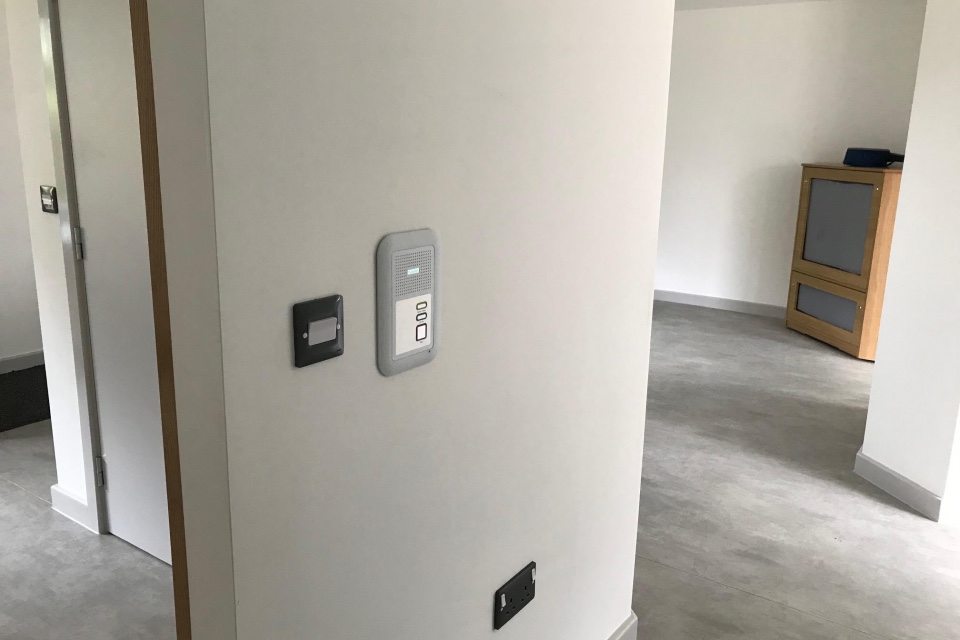
Northampton Partnership Homes (NPH) and construction firm, Jeakins Weir recently worked together to integrate smart technology into a new innovative housing development comprising eight semi-detached bungalows that will support the independence of young adults with learning disabilities and complex needs.

Smart technology was integrated at the planning stage of the development to provide more person centred support, as well as offering greater insight into how best to allocate resources to meet the needs of the people living there.

The system supports the use of telecare sensors and wearable technology, such as fall detectors, which will automatically raise an alert if help is required, enabling care to be given where and when it is needed, but supporting independence when it isn’t.

The next steps

A healthcare system fit for the 21st century must have digital innovation at its core which is embraced by architects and commissioners. As innovative technology continues to transform every aspect of modern life, there is a growing body of evidence demonstrating the impact this is having on population health and wellbeing.  Where it has not already done so, digitisation is set to touch every corner of health and social care, and in turn this needs to impact upon the way we design and build.

As the UK’s communications network is set to complete its transition from analogue to digital by 2025, technology has an even greater role to play in enhancing the lives of service users. Although this will require significant engagement from architects and builders, it brings a once in a generation opportunity to modernise, improve and shift thinking from a reactive, to a proactive delivery model which can empower users and enable care to become more intelligent and personalised.

Free Analyst Report – Technologies for Sustainable Facility Management

The way we manage our buildings will play an enormous part in achieving a net zero future.

For several years, the global building technology and facility management (FM) market has been going through an unprecedented period of change. The transformation has been driven by a host of mega trends including new business models, technology innovation, sustainability, health and wellbeing, and a new vision for the future workplace.

The time is right to embrace smart, sustainable buildings, new service delivery models and transformational technologies such as IoT and integrated workplace management systems (IWMS) to generate, collect, and manage data.

This report from Frost & Sullivan identifies the top 8 transformational technologies and trends helping shape how organisations approach their building management and operations in a sustainable way.

It also provides insight into how an IWMS can help organisations address their sustainability challenges around the convergence of:

  • Corporate social responsibility (CSR)
  • Regulatory compliance, Environmental, Social, and Corporate Governance (ESG)
  • Customer and staff expectations
  • Risk Management
  • Business Objectives
  • Cost Reduction

DOWNLOAD FREE REPORT


The forgotten element of Smart Buildings

By Avire

Smart buildings are sometimes referred to as ‘automated buildings‘, ‘intelligent buildings‘ or buildings that incorporate smart technology. A smart building is any structure that uses automated processes to automatically control the building’s operations including heating, ventilation, air conditioning, lighting, and other systems. These buildings typically use sensors, actuators, and microprocessors, to collect and manage data according to a building’s functions and services.

The infrastructure in a smart building allows building owners, operators and facility managers to improve asset reliability and performance. All buildings, no matter the age, can have smart features installed but there is one area that many buildings don’t consider.

Smart Buildings and Lifts

A smart lift does not mean a new lift. With ever-improving technology it is possible to retrofit certain systems and have the data that you need at your fingertips without a disruptive and expensive project to install new lifts.

The Avire Ecosystem uses sensors located within the lift shaft and on the lift car which collect data and provide real time monitoring of the performance. This can provide significant value to the lift maintenance company and Facilities Management, providing more insight into how the lifts are running. This ultimately helps to maintain up-time, to optimise people movement through the building and ensure that this important accessibility route is available for building users.

Lifts that go down for unscheduled maintenance are hugely inconvenient to building users and can catch maintenance personnel off guard. This results in frustration and can make some areas inaccessible to building users. With an effective monitoring solution, facilities managers can keep a close eye on the operational efficiency of the lifts. This means one less concern, knowing that problems with their lifts will be detected early and dealt with swiftly. The Avire Ecosystem can be used for things such as to remotely test lifts before busy periods, to check that emergency telephones are functioning correctly and if light curtains on the doors are fully operational. Other uses include inputs for pit flood sensors and updating of lift displays easily and remotely.

www.avire-global.com/en-gb/facilities_management