Technology Archives - Facilities Management Forum | Forum Events Ltd
Posts Tagged :

Technology

Five FM trends that will save you time in 2024

In this article, experts from TAP, a leading property management software company, share five current key trends that can speed up your work and improve outcomes in 2024 and beyond…

  1. Improving efficiency through automation in Facilities Management

For Facilities Managers, leveraging technology to enhance efficiency remains pivotal—an evolution that doesn’t mean relinquishing control to robots but rather embracing software capable of automating repetitive, labour-intensive, or error-prone tasks.

For example, TAP’s property management platform is a robust system designed to seamlessly alleviate the burden of manual tasks. Our permit tool streamlines the entire permit process, starting from request initiation, progressing RAMs collection, contractor check-ins, and securely storing the associated paper trail.

  1. Unlocking the power of data in the property sector

In today’s world, data is ubiquitous, and is integral to most industries. In recent years, the property sector has begun to embrace the transformative potential of data and analytics.

The TAP platform not only collects data but also provides comprehensive analytics through an intuitive dashboard. This powerful tool reports and analyses a wide range of property operations, from identifying peak periods to monitoring permit requests on a monthly basis, and even tracking energy consumption.

  1. Empowering facilities managers with proactive maintenance solutions

Preventive and predictive maintenance strategies are aimed at bolstering building performance while mitigating unforeseen repair expenditures. Regular upkeep ensures operational efficiency and safeguards against sudden, unexpected repair costs.

TAP’s helpdesk module and its innovative analytics dashboard is designed to facilitate optimal maintenance planning. This advanced software enables FMs to strategically schedule maintenance during opportune times, reducing disruptions for tenants and capitalising on quieter periods.

  1. The rise of IoT technology

The FM industry is poised to embrace IoT technology to a greater extent in the upcoming years. The Internet of Things refers to connected devices that engage with the physical environment through sensors, facilitating seamless data transfer. Integrating your property management software with these devices wherever feasible can significantly enhance the automation of data collection processes.

  1. Sustainable benefits for commercial property management

The focus on sustainability in commercial property isn’t a passing trend; it’s an imperative that continues to increase in significance. It is also poised to become increasingly pivotal from a building compliance standpoint, with the expansion of ESG reporting and likelihood of more stringent legislation. Energy efficiency is a key focus area both ethically and economically.

TAP’s sustainability module serves as a comprehensive tool, providing an encompassing overview of a building’s energy usage, allowing for the identification of areas that can be improved.


Visit: www.tap-in.co.uk/

The software and apps revolution in facilities management

Facilities management has undergone a radical transformation over the past few decades, propelled forward by the rise of software and application technologies. These digital tools have reshaped the landscape, offering enhanced efficiency, precision, and scalability. Here we explore the paramount uses of software in the realm of facilities management, based on input from delegates and suppliers at the FM Forum, Energy Management Summit and Total Security Summit…

  1. Asset Management: Gone are the days when assets were tracked using unwieldy spreadsheets or paper ledgers. Modern asset management software provides a holistic view of all assets, tracking their lifecycle from acquisition to disposal. This helps facilities managers maintain, replace, or upgrade assets in a timely manner, ensuring optimal performance and longevity.
  2. Space Optimization: Space management tools allow managers to design, modify, and visualize spatial layouts. This ensures optimal space allocation, enhancing workforce productivity and efficient usage of facilities. Especially in a post-pandemic world, these tools are invaluable for ensuring social distancing and safe workspace configurations.
  3. Maintenance and Work Order Management: Automated maintenance software assists in scheduling routine maintenance tasks, generating work orders, and ensuring timely repairs. This not only prolongs the life of assets but also reduces downtimes, promoting a smooth operational flow.
  4. Energy Management: With sustainability at the forefront, energy management applications enable facilities managers to monitor and control energy consumption. They offer insights into usage patterns, highlighting areas of inefficiency and recommending avenues for energy conservation, leading to significant cost savings and a reduced carbon footprint.
  5. Security and Access Control: Software solutions in this domain provide integrated systems for surveillance, access control, and alarm management. This ensures that only authorised individuals can access certain areas, enhancing the overall security of the facility.
  6. IoT Integration: The Internet of Things (IoT) is increasingly becoming intertwined with facilities management. IoT devices, when integrated with FM software, offer real-time data collection from various sensors. This can range from occupancy sensors providing insights into room usage to environmental sensors monitoring air quality or temperature.
  7. Vendor and Contract Management: Dealing with multiple vendors and contracts can be a complex task. Dedicated software streamlines this process, keeping track of contract renewal dates, vendor performance metrics, and payment schedules, ensuring transparency and compliance.
  8. Reporting and Analytics: One of the most transformative aspects of FM software is the ability to generate comprehensive reports. These analytical insights aid in decision-making, allowing managers to identify trends, forecast future needs, and make data-driven strategic moves.
  9. Mobile Capabilities: Many facilities management applications are now offering mobile capabilities, allowing managers and staff to access data, receive notifications, and execute tasks on the go. This flexibility is especially beneficial for large facilities or multiple-site operations.

The infusion of software and applications into facilities management has elevated the sector to new heights. These tools not only simplify complex tasks but also introduce a level of precision and foresight previously unattainable. As technology continues to evolve, it’s evident that its symbiotic relationship with facilities management will only grow stronger, driving further innovations and efficiencies.

Do you need FM software solutions for your organisation? The Facilities Management Forum can help!

Image by Pexels from Pixabay

BUYING TRENDS: Technology solutions FM professionals are sourcing for their 2023/24 projects

Energy Monitoring, Computer-Aided FM (CAFM) and Remote Monitoring are topping the list of technologies the UK’s FM professionals are sourcing for 2023/24, according to our exclusive research.

The findings have been revealed in the run up to the FM Technology Forum, which takes place on October 10th & 11th in London and are based on delegate requirements.

Delegates registering to attend are asked which technologies they needed to invest in during 2023/24 and beyond.

Hybrid Working and Smart Building technologies rounded out the Top 5.

Top 10 technologies being sourced by FM Technology Forum delegates 2023/24:

Energy Monitoring

Computer-Aided FM (CAFM)

Remote Monitoring

Hybrid Working

Smart Buildings

EV Charging

Sensors

Advanced HVAC

Internet of Things (IoT)

Workspace Management

Sarah Beall, Managing Director at Forum Events & Media, said: “The way we match buyers and suppliers at the FM Technology Forum gives us a unique insight into the types of products and services the industry is looking for right now. Not only does it mean we can deliver a highly-targeted B2B event with proven outcomes for all attendees, but we can deliver valuable insights into how the market is developing at what is a hugely exciting time for all stakeholders.”

To find out more about the FM Technology Forum, visit https://facilitiesmanagementforum.co.uk/fm-technology-forum.

For more information about the buying trends data and the FM Technology Forum, contact Paige Aitken on 01992 374079 | p.aitken@forumevents.co.uk.

What does 2022 hold for supply chain evolution?

In recent months we have seen shortages and supply chain disruptions in the lead-up to Black Friday and Christmas. With 2022 fast approaching, Antony Francis, Consultant at software and technology services company, Endava, shares his perspective on how supply chains will evolve in the coming year…
Connectivity will remain the single most important aspect for the sector
Companies will need to fully analyze their ability to view their entire, global supply chain. They must have visibility of all their trading partners, including manufacturers, shippers, forwarders and others and have the connectivity to deliver real-time updates throughout the process.
In 2022 we will see a real need for supply chain technology companies to consider and provide the best platforms to achieve this. One-size-fits-all solutions might not always work across every module so we could see a trend for organizations looking to own specific spaces and provide the best solution for a particular subset of partners.
Supporting digital acceleration will be the key to success
In 2022 it’s going to be important that supply chain technology companies can really provide solutions that enhance connectivity and visibility. There is a lot of work going on to ensure that systems are up to scratch, and companies that are able to provide digital acceleration solutions to enhance end-to-end visibility of the supply chain will do well.
Systems will become more resilient, both to react to immediate issues and to protect against future disruptions
Many companies’ technology was found wanting, even before the COVID-19 pandemic and other external factors placed further stress on supply chains. The level of connectivity and readiness was low, and companies had only really just started to look at issues such as visibility and real-time updates to shipping information. When the pandemic hit, companies were already lagging, which only increased the impact of issues arising from disruptions.
It will likely take well into the first quarter of 2023 to absorb the disruptions from 2021 and 2022. There needs to be a significant digital acceleration to make sure systems are more connected and resilient. This will both close existing gaps and serve to manage any future, unforeseen events. Companies should insist that their shippers, forwarders, third-party logistics providers, etc. are connected in real time and able to move swiftly to react to any changes in supply. Coupling this with AI and machine learning predictive analytics to anticipate issues will go a long way to keeping supply chains running smoothly.

Technology provides a more sustainable future for rodent management

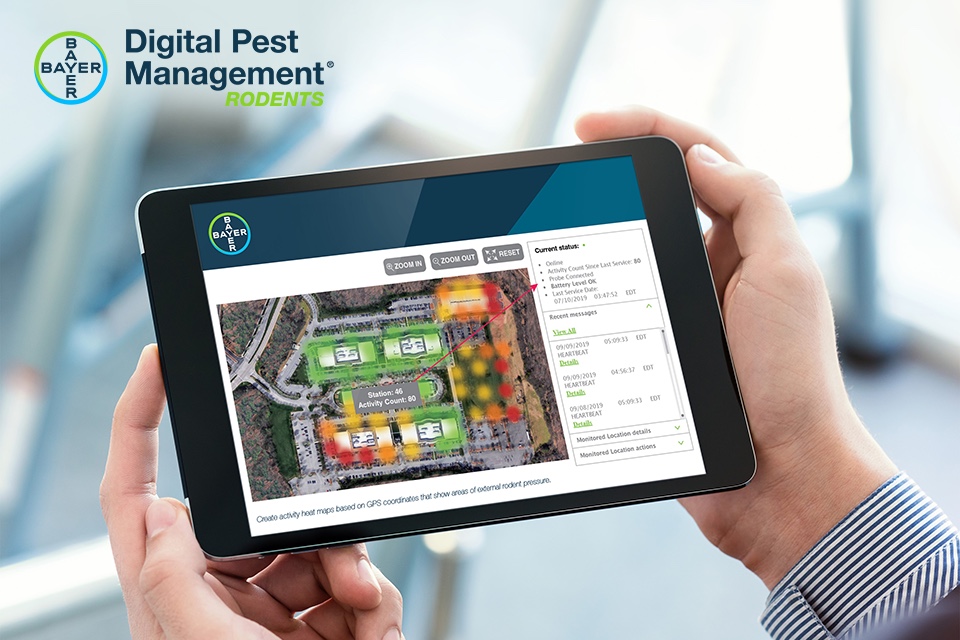
The use of technology is the ‘norm’ for facility managers and is already being used to improve efficiencies and sustainability in many areas of the business. However, pest management has been slow to the party, with limited digital options on the market, but there’s now a solution available.

Gary Nicholas, the Digital Pest Management sales manager at Bayer Environmental Science, says with all aspects of sustainability high on the agenda for businesses, facility managers should be adopting the technology out there to help improve the efficiency, traceability, accountability and transparency of rodent management.

“Facility management businesses use technology such as vehicle recognition on entering sites and digital login systems and pest management, should not be any different,” he says.

This tool can provide facility managers with accountability for rodent management on their site, as it gives them access to all the required resources to be confident in the system they have in place.

“Digital Pest Management provides a full trap activity history, ensuring complete traceability and transparency. It also helps reduce the manual aspect of rodent management and reporting, which can be inaccurate and hard to interpret. Live reporting removes the risk of any mistakes and is always up to date.

“It also allows facility managers to adhere to current stewardship guidelines. It uses smart traps, allowing rodenticides to be integrated into the wider rodent management programme and used in a very controlled, precise and targeted way,” adds Gary.

“When it comes to sustainability, an automated, digital system like this can help improve efficiency and effectiveness, which can reduce the financial investment required for rodent management. The targeted and precise use of rodenticides also helps improve environmental sustainability,” he explains.

“From a social aspect, this system is also much safer for people and wildlife, as there’s a greatly reduced need for rodenticides on site, which are of course toxic.”

Gary says facility managers have been using technology for several years and so now a solution is available for rodent management, it makes sense to use it to help improve the sustainability and efficiency of this across facilities.

For more information, please visit www.environmentalscience.bayer.co.uk/pest-management/digital-pest-management or contact the Pest Solutions Team on pestsolutions@bayer.com

Why FM professionals urgently need to switch to virtual receptionists

By Bringme

Many FM professionals are currently struggling to adapt their buildings to the new, hybrid way of working. They’re afraid that they will have to do a lot of adaptations to their infrastructure and that they will have to invest a lot.

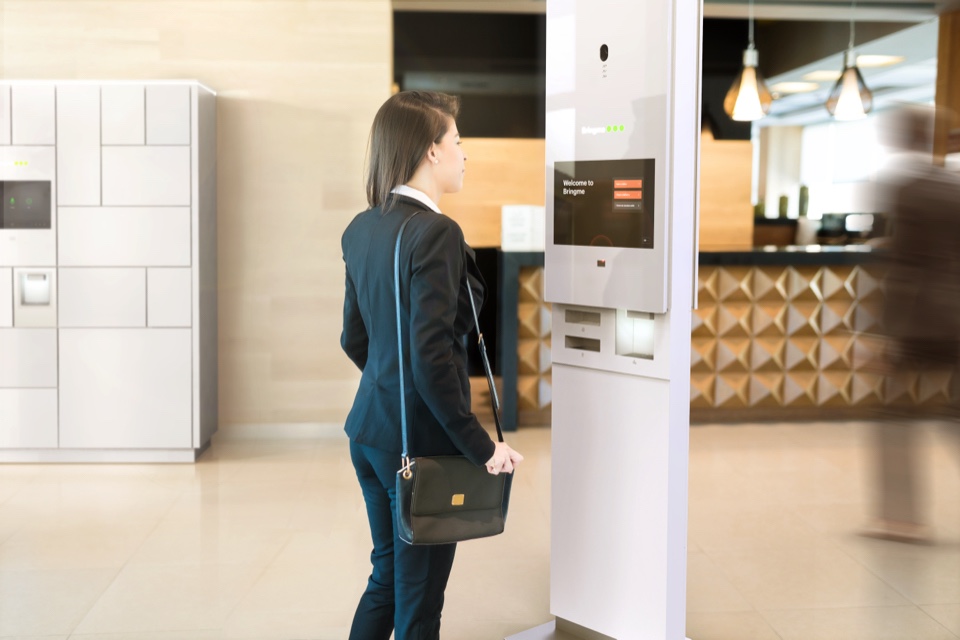
The good news is that there is an innovative solution that they can implement swiftly and easily. A solution that solves most of their problems in one fell swoop, saving them money in the process. It’s called Bringme’s virtual receptionist. And it comes with a number of really interesting benefits.

The benefits at a glance:

• A permanent access, delivery, visitor & asset management system facilitating hybrid work.

• No more complaints or lost parcels: the system signs for parcels, even when nobody is there.

• The FM’s presence is no longer required: the virtual receptionist welcomes visitors automatically and registers them. 24/7.

• The virtual receptionist is never ill, absent or ‘out of office’ yet it performs a quick health check and keeps everyone safe.

• And best of all: it doesn’t cost a thing, on the contrary! By installing this system, companies can save up to up to 45,000 pounds a year.

“We set out looking for a solution to just collect parcels and ended up with Bringme’s virtual receptionist – a system that has transformed the way we manage our buildings. What more could we want?”
George Barclay – Building manager Liverpool Science Park

>> Discover the virtual receptionist

Technology provides a more sustainable future for rodent management

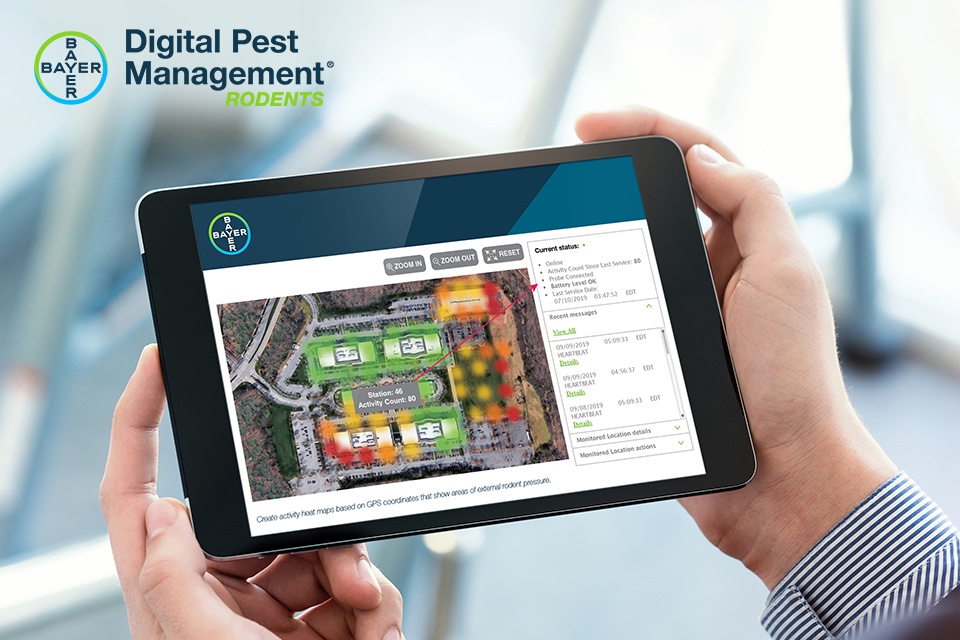
The use of technology is the ‘norm’ for facility managers and is already being used to improve efficiencies and sustainability in many areas of the business. However, pest management has been slow to the party, with limited digital options on the market, but there’s now a solution available.

Gary Nicholas, the Digital Pest Management sales manager at Bayer Environmental Science, says with all aspects of sustainability high on the agenda for businesses, facility managers should be adopting the technology out there to help improve the efficiency, traceability, accountability and transparency of rodent management.

“Facility management businesses use technology in waste management, cleaning and security services and pest management, should not be any different,” he says.

This tool can provide facility managers with accountability for rodent management on their site, as it gives them access to all the required resources to be confident in the system they have in place.

“Digital Pest Management provides a full trap activity history, ensuring complete traceability and transparency. It also helps reduce the manual aspect of rodent management and reporting, which can be inaccurate and hard to interpret. Live reporting removes the risk of any mistakes and is always up to date.

“It also allows facility managers to adhere to current stewardship guidelines. It uses smart traps, allowing rodenticides to be integrated into the wider rodent management programme and used in a very controlled, precise and targeted way,” adds Gary.

“When it comes to sustainability, an automated, digital system like this can help improve efficiency and effectiveness, which can reduce the financial investment required for rodent management. The targeted and precise use of rodenticides also helps improve environmental sustainability,” he explains.

“From a social aspect, this system is also much safer for people and wildlife, as there’s a greatly reduced need for rodenticides on site, which are of course toxic.”

Gary says facility managers have been using technology for several years and so now a solution is available for rodent management, it makes sense to use it to help improve the sustainability, transparency and compliance of this across facilities.

For more information, please visit www.environmentalscience.bayer.co.uk/pest-management/digital-pest-management or contact the Pest Solutions Team on pestsolutions@bayer.com.

5 Minutes With… Bayer Environmental Science’s Gary Nicholas

In the latest instalment of our FM industry executive interview series we spoke to Gary Nicholas, UK & IE Sales Manager (DPM) at Bayer Environmental Science, about Digital Pest Management, the role data & analytics can play in controlling pests and the rewarding nature of working with the facilities management community…

Tell us about your company, products and services.

The Bayer Group is managed as a life science company with three divisions – Pharmaceuticals, Consumer Health and Crop Science, Bayer are very well known for our chemical products and we’re now combining these with digital solutions.  Solutions such as Digital Pest Management (DPM) to enhance our professional pest management products range.

What benefits and ‘value adds’ does DPM offer FMs?

DPM allows for real time 24/7/365 chemical-free remote rodent monitoring.  The software is able to produce trend analysis and other analytics from the data capture. Benefits and ‘value adds’ of this for FMs are such thing as:

  • Real time live digital site plans showing the precise location of each individual trap. Smart traps that can be represented on the digital site plan by coloured icons which change colour depending on their status.  No more guessing or ‘not knowing’ where traps are located and what state of service they are in.
  • Real time trigger and capture notifications which can be sent to QA and pest manager’s devices, or indeed anyone who is authorised to receive alerts through the system software. Vastly reduced reaction lead time to pest sightings and activity.
  • Reducing the use of chemicals and rodenticides to a point where usage is very precise and very targeted and used only when absolutely necessary.
  • Heat mapping technology which provides invaluable data on current and historic rodent activity, where activity is reducing, increasing and importantly where there is no activity.
  • Daily diagnostic system checks on every trap on every site, which provides QA and pest managers with automated digital, data driven reports on status and activity. This is the equivalent of having all traps inspected, serviced and digitally reported on 365 days a year.  Real time 24/7 integrated pest management systems.
  • Audit ready systems supported by the manufactures.
  • Transparency of service.

All of this would be impossible to achieve without DPM.

Do different types of site require different DPM solutions – what are the key considerations?

Not necessarily different solutions, but each site will have individual needs.  The system is flexible enough to allow bespoke solutions to meet those – Key considerations would be:

  • Nature of the business.
  • Size of the particular sites where DPM is to be installed.
  • Are non-chemical solutions preferable? I.e. food & beverage manufacturing, critical health care, and the impact of using chemicals on the business and surrounding environment.
  • Levels and locations of recent, current and historic rodent activity
  • Will the customer benefit from an audit ready digital platform? Invariable the answer to this will almost always be ‘Yes’.
  • Tailoring the system to the exact requirements of individual managers and their sites.

What is your biggest priority in 2021 (in terms of developing the DPM solution)?

To ensure businesses managers, FM managers and pest managers are aware that our system is available and on the market.  To demonstrate its functions and all the benefits of DPM.  We’ll also be ensuring that everyone’s able and confident to work with our system on their sites. Myself and the Bayer DPM team are dedicated to offering our full support to all users for as long as it is needed.

Tell us about the underlying technology in Bayer’s DPM solution

It’s a cloud based, remote management system, developed in conjunction with Microsoft that uses LoRa technology to connect smart traps, both rat and mouse, to a central Gateway.  It can be used indoors and out, plus smart traps are water and dust resistant. Continual development and data refreshes bring new features and functionality – ultimately the solution is designed to enhance and compliment the skills and abilities of the service technicians and the wider pest management industry, bringing all the benefits of digital to their customers.

What role does data and analytics play in more effectively managing pests?

In short, monumental improvements in ‘knowing’ the pest status of sites, every day of the year.  In particular, trend analysis helps PCOs understand and get to the ‘root causes’ of infestations, control infestations in a very targeted and much quicker manner, and predict when and where future activity may occur, understanding the rodent behaviour and  acting accordingly. Therefore, the data protects people, property, assets and reputations from rodent damage. Plus, using data to ensure when chemicals and rodenticides are needed and employed means the system is very targeted, precise and therefore sustainable.

In 2025 we’ll all be talking about…?

The widespread use of mobile apps to self-manage medication and personal healthcare. Providing real-time status on such things as vaccinations and wellbeing.

Which person in, or associated with, your industry would you most like to meet?

All of my Bayer colleagues in our team. COVID restrictions have so far meant that we have been unable to meet in person since I joined Bayer last October.

What’s the most surprising thing you’ve learnt about the FM sector?

Not surprising, but certainly what I have learnt most is just how much I enjoy working with the FM industry. It’s challenging at times in terms of tailoring specific solutions to such diverse needs and requirements, but always great fun and very rewarding.  I’ve met a lot of lovely, interesting people, surveyed some iconic and often fascinating buildings and locations, and made some life-long friends from within the FM industry/sector.

You go to the bar at the Facilities Management Summit – what’s your tipple of choice?

Sauvignon Blanc – Chilean if available, and a large one, thank you!

What’s the most exciting thing about your job?

Being the person at Bayer ES leading the commercialisation of, in my opinion, professional pest management’s latest and most exciting innovation in the past 50 years or more. I get let loose on the technology and get to showcase it to businesses and people across the UK, Ireland and also into Europe! That’s amazing!

And what’s the most challenging?

Helping the pest management industry to shift its mindset from age-old ways of thinking and working and getting those people to share our vision that digital innovation brings.

What’s the best piece of advice you’ve ever been given?

Be yourself. Trust and believe in your own ability and never stop learning.

About Gary Nicholas

Over 35 years working within the pest control industry, the last 20 of which have been working closely with Facility Managers and Building Managers, previously as Surveyor & Account Manager and now as UK & IE Sales Manager (DPM) for Bayer Environmental Science. Lives in NW England in the beautiful Fylde coastal town of Lytham St Anne’s with wife Paula. Outside of work, enjoys watching Rugby and MotoGP as well as having a keen and active interest in aviation and flying.

Cloud AV to accelerate ROI and improve virtual meetings in the WFH era

The COVID-19 Pandemic, along with extreme weather conditions, civil unrest and other disruptive events are shaping how businesses operate and how people work on a global scale.

Employees need to be engaged and productive, from an office, meeting room, at home or out on the road, with connectivity between all employees throughout an organisation essential for future business gains.

Now, research carried out by industry analysts Frost & Sullivan for a new White Paper: ‘7 Steps To Improve Meetings In The New Era Of Work’, addresses the key factors for successful collaboration, including:

  • Prioritise Cloud Conferencing Service Adaption
  • Upgrade Meeting Room Technology for the New Era of Work
  • Improve Collaboration with Audio for All
  • Instil Confidence and Boost Productivity with Seamless Audio
  • Drive Meeting Room Effectiveness with Best-In-Class Audio
  • Adopt an Ecosystem Approach
  • Focus on Ownership, Experience, Standardisation and Interoperability

The report, augmented by global market leading audio manufacturer Shure’s ‘Future of Conferencing’ survey, reveals how IT and business leaders are future-proofing organisations, with technologies being replaced due to various factors within individual businesses:

  • Quality and reliability – 35%
  • Security concerns – 34%
  • Limited interoperability with 3rd party solutions – 26%
  • Lack of the latest features and capabilities – 25%

The world has shifted to flexible, cloud-based deployment and consumption models with richer functionality, with a broad range of communication applications to choose from.

However, without the foundation of any meeting, audio, no meeting can actually take place:

  • 95% of meeting rooms have minimal technology
  • 83% of professionals depend on technology to conduct meetings and collaborate.
  • 87% of professionals are frustrated and stressed due to technology failures in meeting rooms.

Expected proliferation of distributed work is among the top factors causing organisations to re-think their meeting rooms, with 82% of managers expecting flexible work from him polices post-pandemic.

Top Drivers for Technology Investments:

  • Improve teamwork – 35%
  • Improve information management – 32%
  • Improve customer experience – 31%
  • Improve operational cost – 29%
  • Improve marketing effectiveness – 29%
  • Boost creativity and innovation – 28%
  • Accelerate decision making – 26%

“Once offices reopen, health and well-being regulations will require employees to have minimal contact with shared surfaces. Therefore, there will be a great demand for touch-less conferencing,” explained Robert Arnold, Principal Analyst, Connected Work, Frost & Sullivan. “As enterprises build a robust conferencing ecosystem, the adoption of A/V technologies that aid simple deployment, intuitive operation, and seamless compatibility with leading collaboration platforms will experience significant growth.”

Jim Schanz, Vice President, Global Integrated Systems Sales at Shure, said, “To optimize audio performance in rooms connected to any conferencing service as well as to streamline room audio management, organizations must emphasize standardization of certified audio devices. As no meeting can be effective without quality audio, investing in a scalable infrastructure can position businesses of any size for greater success as they battle evolving market factors.”

Click here to read the full report.

Understand occupancy and adhere to social distancing with Genetec

Facilities managers will be at the forefront of social distancing compliance. Leveraging technology is the best way to achieve this – keeping people safe in an efficient and non-evasive manner.

Genetec makes this possible via its Occupancy Management Package , which includes analytics and reporting tools like no other. Users can easily count the number of people in a building, visualise data, and alert employees when occupancy limits are being reached. Facilities managers responsible for monitoring the situation can receive alerts on a mobile device, via email, or on their Security Center dashboard.

It even produces audit reports to demonstrate a business’s compliance with physical distancing regulations.

Click here to find out more.

  • 1
  • 2